Author: Denis Avetisyan
Researchers have harnessed the unique properties of dissipative Rydberg atom time crystals to achieve multi-parameter sensing with accuracy surpassing classical limitations.
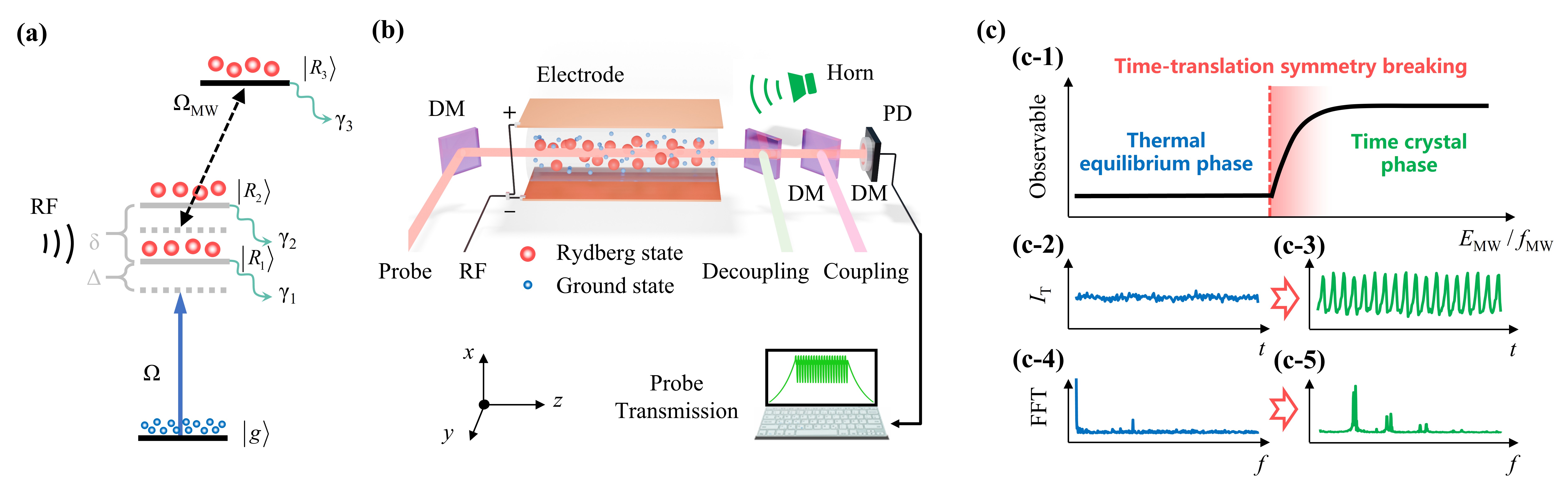
This work demonstrates enhanced metrology capabilities in a continuous-time crystal platform, leveraging non-equilibrium physics and criticality for advanced measurement technologies.
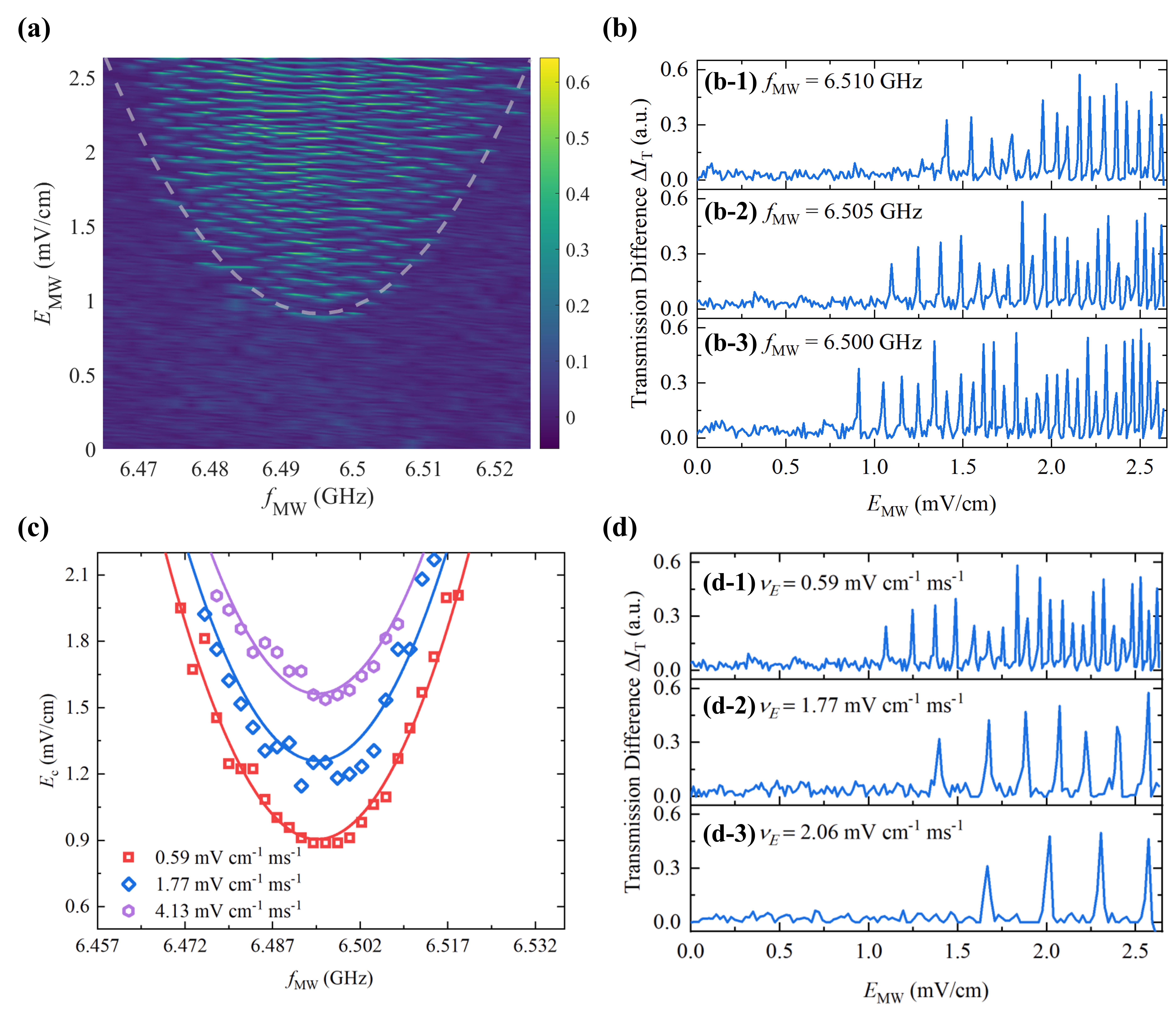
Achieving unprecedented sensitivity in quantum metrology demands exploration beyond conventional approaches, particularly in non-equilibrium quantum systems. This work, ‘Enhanced multi-parameter metrology in dissipative Rydberg atom time crystals’, investigates a platform based on engineered time crystals to enhance the precision of simultaneous parameter measurements. By mapping the phase diagram of a driven Rydberg atomic gas, we demonstrate multi-parameter sensing-specifically, frequency and amplitude-with a precision exceeding the Standard Quantum Limit at the boundary of a continuous time-crystal phase. Could this critical regime unlock new avenues for advanced quantum sensors and fundamentally reshape precision measurement technologies?
Orchestrating Quantum States with Rydberg Atoms
Conventional quantum simulations often struggle with the inherent difficulty of establishing and sustaining the intricate many-body states necessary to accurately represent complex physical systems. This limitation stems from the delicate nature of quantum superposition and entanglement, which are easily disrupted by environmental noise and decoherence. As the number of interacting quantum particles increases – a hallmark of realistic materials and phenomena – the computational resources required to maintain these states grow exponentially, quickly exceeding the capabilities of current technologies. Consequently, researchers are actively exploring alternative platforms and techniques to overcome these hurdles, seeking methods that can reliably create and control these complex quantum states for extended periods, ultimately enabling the simulation of previously inaccessible systems and fostering breakthroughs in fields like materials science and drug discovery.
Atomic gases, when excited to highly energetic Rydberg states, become a promising arena for investigating previously inaccessible quantum phenomena. These Rydberg states, where an electron occupies a principal quantum number n significantly larger than the ground state, exhibit exaggerated properties like increased sensitivity to external fields and enhanced interactions. However, harnessing this potential demands exceptionally precise control over the interactions between atoms; even minor deviations can disrupt the delicate quantum state and obscure the phenomena under investigation. Researchers are therefore focused on developing techniques-using tailored laser pulses and carefully engineered atomic arrangements-to manipulate these interactions and create stable, controllable Rydberg systems, ultimately unlocking new avenues for quantum simulation and the exploration of many-body physics.
Rydberg atoms, created by exciting atoms to extremely high energy levels, exhibit dramatically enhanced interactions – a consequence of their diffuse electron clouds. These interactions, which scale with considerable distance, present a unique opportunity to engineer complex quantum states not readily accessible in systems with short-range interactions. Unlike systems where interactions quickly diminish with separation, Rydberg atom arrangements maintain strong correlations across significant distances, effectively creating long-range entanglement. This property allows for the creation of highly connected quantum systems where many atoms participate in collective behavior, enabling investigations into exotic phases of matter and providing a powerful platform for quantum information processing. Researchers leverage precise control over laser fields and atomic positioning to tailor these interactions, sculpting desired quantum states and probing the fundamental limits of many-body physics.
Unveiling the Symmetry-Breaking Dance of Time Crystals
Continuous Time Crystals (CTCs) constitute a novel, non-equilibrium phase of matter distinguished by the spontaneous breaking of time-translation symmetry. In conventional systems, the laws of physics remain constant over time; however, CTCs exhibit sustained, periodic motion in their ground state without requiring external energy input. This persistent oscillation isn’t merely a response to a driving force, but an intrinsic property of the system’s many-body interactions. The system settles into a state where it oscillates at a frequency determined by its internal dynamics, effectively selecting a specific moment in time as distinct from all others, which violates the continuous symmetry of time translation. This behavior is fundamentally different from traditional oscillating systems and represents a new form of order in matter.
The persistent oscillations observed in Continuous Time Crystals (CTCs) originate from the collective behavior of interacting atoms within a Rydberg gas. Specifically, these interactions are induced by a precisely controlled excitation scheme, typically involving microwave or optical driving fields. This scheme elevates atoms to highly excited Rydberg states, significantly increasing their interaction range and strength. The many-body interactions-primarily dipole-dipole interactions between Rydberg atoms-then lead to a periodic modulation of the atomic energy levels. This modulation, when carefully tuned, results in a stable, self-sustaining oscillatory pattern without requiring external driving after the initial excitation, effectively breaking time-translation symmetry.
The experimental realization of Continuous Time Crystals (CTCs) confirms predictions made by non-equilibrium statistical mechanics regarding the possibility of systems exhibiting spontaneous time-translation symmetry breaking. This demonstration of controllable, emergent temporal order represents a significant advancement in precision measurement capabilities; CTCs have achieved a sensitivity exceeding the Standard Quantum Limit (SQL) by approximately 25 dB. This enhancement stems from the collective, synchronized behavior of the many-body system, allowing for the detection of signals with greater accuracy than classically limited sensors. The achieved precision indicates potential applications in areas requiring highly sensitive temporal metrology and quantum sensing.
Pushing the Boundaries of Precision with Criticality
The Standard Quantum Limit (SQL) represents a fundamental constraint in many traditional measurement techniques. This limit arises from the inherent quantum noise present in any measurement process, specifically fluctuations in phase and amplitude of the measured signal. Consequently, the SQL defines a lower bound on the precision with which certain physical quantities can be determined; signals below this threshold are often indistinguishable from noise. This is particularly problematic when attempting to detect weak signals or characterize subtle quantum effects, as the signal-to-noise ratio becomes insufficient for accurate measurement. The SQL’s precision scales inversely with the square root of the number of particles or photons used in the measurement 1 / \sqrt{N} , necessitating substantial resources to achieve higher precision.
Criticality-enhanced metrology utilizes the principle that systems poised at a critical point exhibit dramatically amplified responses to external stimuli. This amplification arises from long-range correlations and increased susceptibility near the critical point, allowing for the detection of signals significantly weaker than those detectable by conventional methods limited by the Standard Quantum Limit (SQL). The SQL defines a fundamental limit to measurement precision based on classical noise; however, operating a system at criticality enables surpassing this limit by effectively increasing the signal-to-noise ratio. This approach does not introduce new physics, but rather optimizes the system’s existing response to maximize sensitivity and improve the resolution of measurements, allowing for the characterization of subtle quantum phenomena and weak interactions.
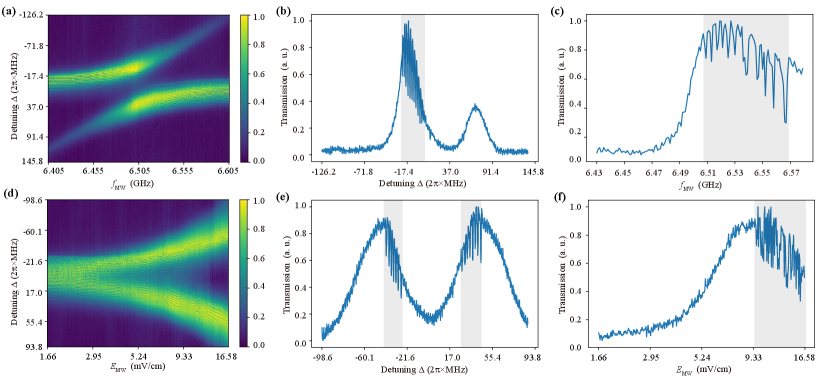
Tuning a Rydberg atomic gas to its critical point enables enhanced detection of weak signals and improved precision in quantum state characterization. This is achieved by exploiting the amplified response of the system at criticality, resulting in a demonstrated sensitivity enhancement of approximately 25 dB. This performance metric indicates a substantial improvement over traditional methods limited by the Standard Quantum Limit (SQL). Specifically, measurements utilizing this technique have shown the ability to reduce error beyond the SQL, ultimately approaching the inherent noise floor of the system and maximizing the potential for detecting subtle quantum phenomena.
Sculpting Quantum Control with Precision Techniques
Precise manipulation of Rydberg atomic gases hinges on techniques like Electromagnetically Induced Transparency (EIT) and frequency scanning, which serve as the foundational tools for both preparation and investigation of these delicate quantum systems. EIT creates a medium with enhanced light transmission, allowing researchers to selectively address and control individual atomic states, while frequency scanning systematically probes the atomic response across a range of frequencies. By carefully tuning the laser frequencies and intensities, scientists can coherently prepare the gas in specific Rydberg states – atoms with highly excited electrons – and subsequently map their properties. This level of control is essential not only for understanding fundamental quantum phenomena, but also for building advanced quantum technologies, as these methods facilitate the precise orchestration of quantum interactions within the atomic gas.
The strength of interaction between light and matter within Electromagnetically Induced Transparency (EIT) is fundamentally dictated by the Rabi frequency. This parameter, proportional to the amplitude of the applied light field, determines the rate at which atoms transition between energy levels. A higher Rabi frequency implies a stronger coupling, enabling faster and more efficient control over the atomic gas. Precisely tuning the Rabi frequency allows researchers to sculpt the quantum state of the Rydberg atoms, influencing phenomena like light storage and quantum information processing. Understanding and manipulating this critical parameter is therefore essential for harnessing the full potential of EIT-based quantum technologies, as it directly impacts the system’s coherence and responsiveness to external stimuli. Ω often represents the Rabi frequency in theoretical models.
Accurate modeling of Rydberg atom dynamics requires a comprehensive approach that extends beyond ideal unitary evolution, and incorporates the inevitable effects of dissipation and decoherence. These processes, stemming from interactions with the surrounding environment, degrade the quantum coherence of the system and limit the duration of observable phenomena. The Lindblad Master Equation provides a powerful framework for systematically accounting for these effects, describing how the density matrix of the atomic gas evolves over time, not just in response to external fields, but also due to spontaneous emission and other decay mechanisms. By incorporating Lindblad operators, which represent the possible decay pathways, researchers can predict the rates at which coherence is lost, and thus accurately interpret experimental results – distinguishing genuine quantum behavior from what appears to be signal loss due to environmental noise. Ultimately, this careful treatment of dissipation and decoherence is essential for both understanding the fundamental physics of Rydberg atom systems and developing robust quantum technologies based on these platforms.
Unlocking a New Era of Quantum Sensing Capabilities
Criticality within a physical system unlocks the potential for multi-parameter sensing, a technique capable of simultaneously measuring several physical quantities with a precision previously unattainable. This enhanced sensitivity arises because the system, poised at a critical point, exhibits amplified responses to even subtle changes in multiple parameters. Rather than requiring separate measurements for each quantity, the system’s collective behavior encodes information about all of them within a single, highly sensitive readout. This holistic approach not only streamlines measurement processes but also reveals correlations between parameters that might otherwise remain hidden, opening avenues for deeper insights in diverse fields. The ability to detect and quantify multiple variables concurrently represents a significant advancement, promising more comprehensive and nuanced understandings of complex phenomena.
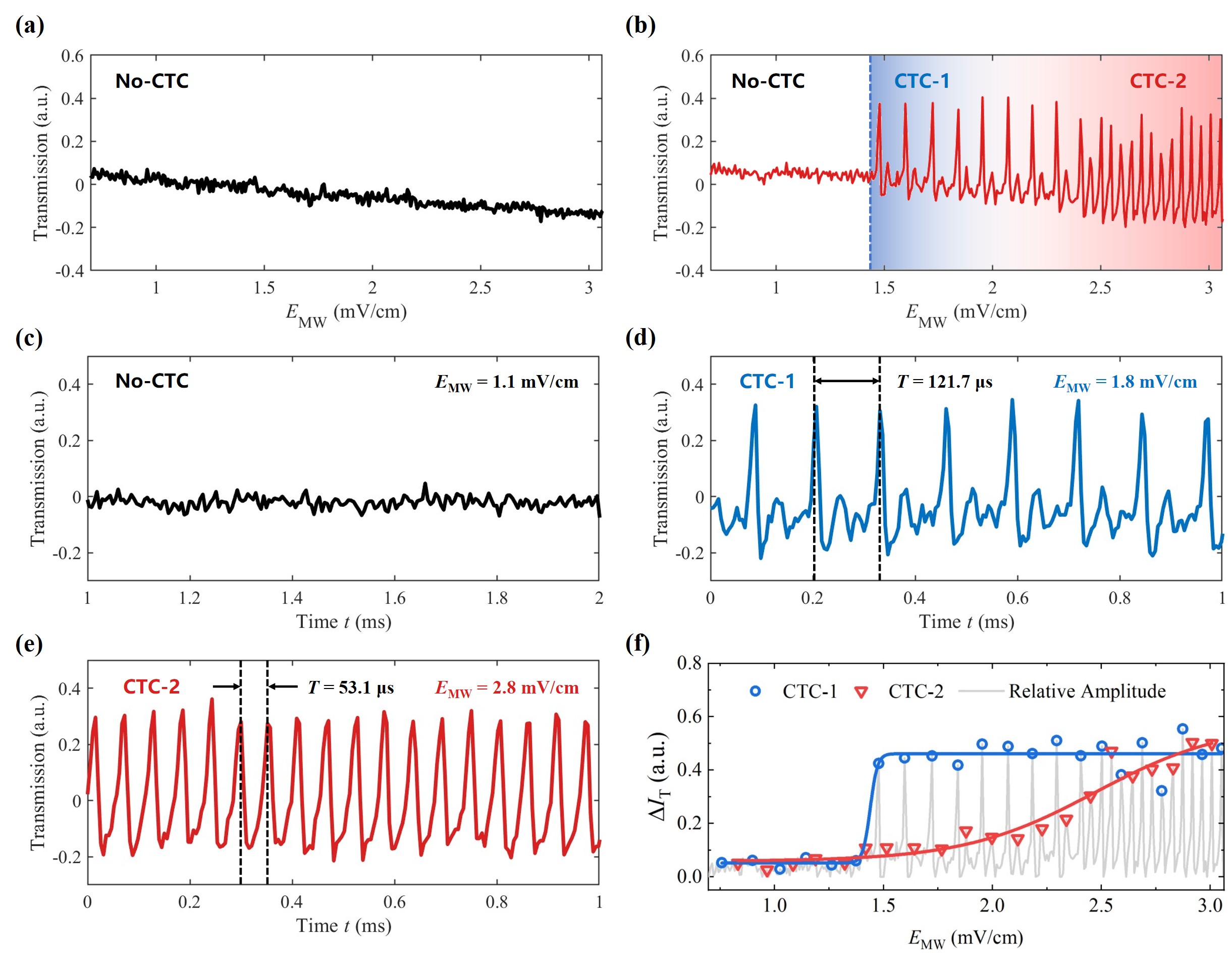
Within the Rydberg atomic gas, the Autler-Townes effect emerges as a powerful mechanism for amplifying sensitivity to targeted parameters. This phenomenon, arising from the interaction between a strong control field and the atomic system, effectively splits the atomic resonance into distinct peaks, creating a ‘dressed’ state. By probing transitions near these dressed states, researchers can achieve enhanced contrast and resolution, significantly improving the detection of weak signals. The effect functions by broadening the absorption linewidth, enabling the system to respond more effectively to subtle changes in external fields-such as electric or magnetic fields-and ultimately surpassing the limitations of traditional spectroscopic methods. This tailored sensitivity proves crucial for precise measurements in diverse applications, ranging from characterizing material properties to probing fundamental physical constants.
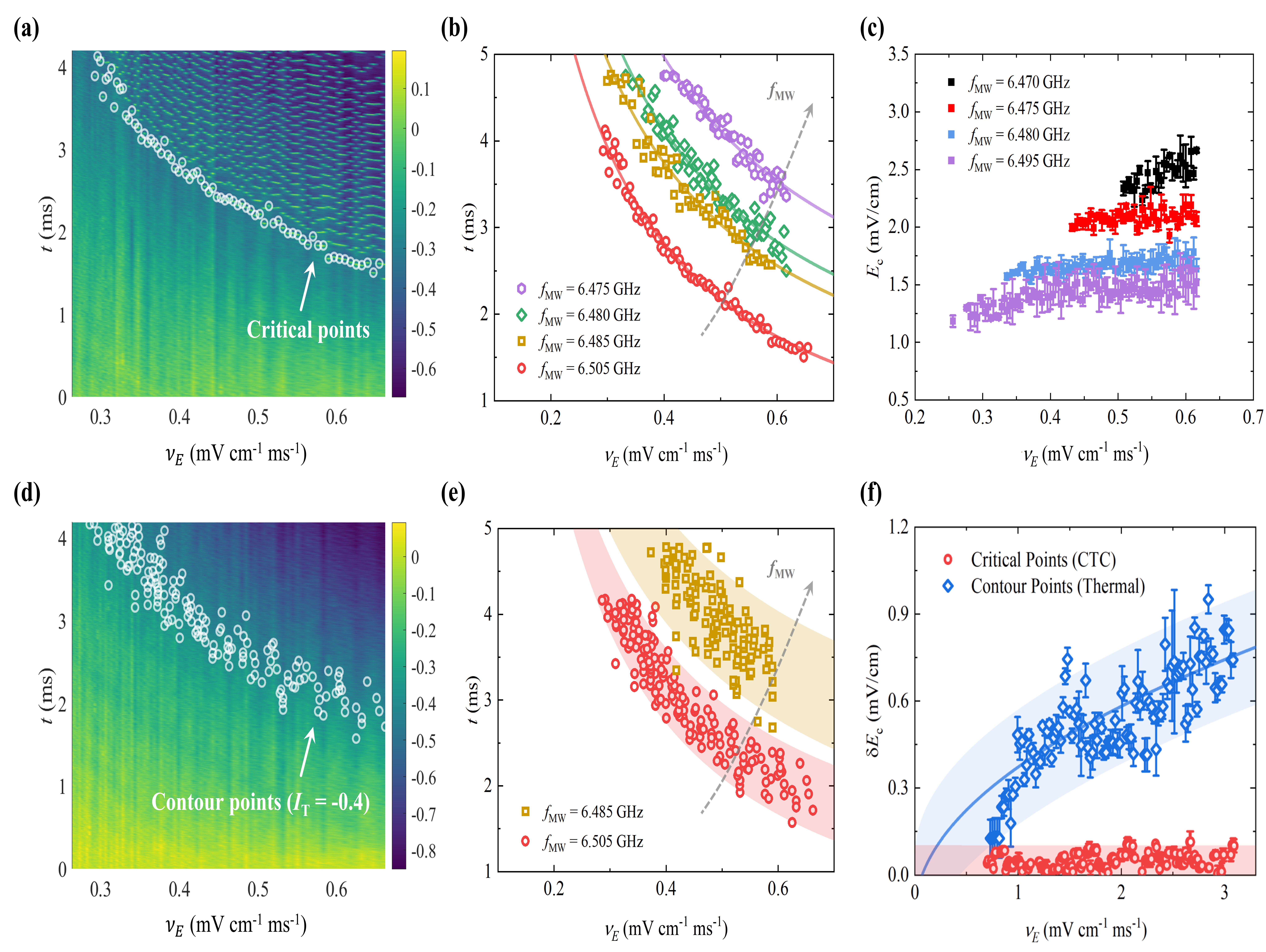
The realization of highly sensitive quantum sensing promises transformative advancements across scientific disciplines. Recent developments demonstrate a capability to measure physical parameters with a sensitivity enhanced by approximately 25 dB, a substantial improvement over conventional methods. Crucially, this system exhibits error reduction that surpasses the Standard Quantum Limit (SQL), with the scaling of error inversely proportional to the square root of the excitation energy ∝ 1/√νE within the thermal phase. This heightened precision opens doors to detailed investigations in materials science, allowing for the characterization of subtle material properties and defect analysis. Furthermore, the advancement holds implications for fundamental physics research, potentially enabling more accurate tests of physical laws and the exploration of exotic phenomena. Beyond these immediate applications, the technology could contribute to the development of more robust and efficient quantum information processing systems, paving the way for future quantum technologies.
The pursuit of enhanced metrology, as demonstrated in this creation of a continuous-time crystal platform, echoes a fundamental principle of order amidst complexity. It recalls Thomas Hobbes’ assertion, “The passions that incline men to peace, are fear of death, desire of fame, desire of power, and desire of plenty.” This research, by pushing the boundaries of quantum sensing beyond the Standard Quantum Limit, seeks a kind of ‘plenty’ of information – a richer, more precise understanding of the physical world. The meticulous control over Rydberg atom interactions, establishing a non-equilibrium phase transition, isn’t merely a technical achievement, but a refined expression of seeking order – a predictable state – from inherently chaotic systems. This precision isn’t just about measurement; it’s about establishing a degree of control, and ultimately, a form of ‘peace’ within the quantum realm.
What Lies Ahead?
The demonstration of enhanced multi-parameter metrology within a dissipative Rydberg atom time crystal establishes a platform, not a destination. The elegance of a continuously driven, non-equilibrium state capable of surpassing the Standard Quantum Limit is undeniable, yet the current iteration feels…constrained. Scaling this system beyond a few parameters presents a formidable challenge; the cross-talk inherent in many-body systems threatens to drown subtle signals in noise. Beauty scales – clutter doesn’t.
Future investigations will likely focus on refining the control mechanisms, moving beyond simple drive schemes toward adaptive, feedback-driven protocols. Refactoring, rather than rebuilding, appears the more fruitful path. The true power of this approach won’t be realized until it can probe genuinely complex systems-those where the very act of measurement perturbs the state being measured. This demands a deeper understanding of the interplay between dissipation, criticality, and the emergent properties of the time crystal itself.
One suspects the ultimate limitation won’t be technological, but conceptual. The pursuit of ever-greater precision is valuable, but risks obscuring the fundamental question: what, precisely, are we hoping to measure? The most profound insights often arise not from minimizing uncertainty, but from embracing the inherent ambiguity of the quantum world.
Original article: https://arxiv.org/pdf/2601.10347.pdf
Contact the author: https://www.linkedin.com/in/avetisyan/
See also:
- The Super Mario Galaxy Movie: 50 Easter Eggs, References & Major Cameos Explained
- All 13 Smash Bros. Characters in the Super Mario Galaxy Movie
- Highly Anticipated Strategy RPG Finally Sets Release Date (And It’s Soon)
- Dune 3 Gets the Huge Update Fans Have Been Waiting For
- Sydney Sweeney’s The Housemaid 2 Sets Streaming Release Date
- TV legend Carol Kirkwood reveals the reasons why she decided to retire after 28 years with BBC
- Welcome to Demon School! Iruma-kun season 4 release schedule: When are new episodes on Crunchyroll?
- Why is Tech Jacket gender-swapped in Invincible season 4 and who voices her?
- Marathon is Taking Aim at Bubble Shields, Knives, Snipers and More in Upcoming Balance Patches
- Darwin’s Paradox! drops Switch version for Switch 2, delayed to 2026
2026-01-16 08:11