Despite a quick dip below $70,000 over the weekend, Bitcoin (BTC) has remained fairly stable, currently trading around $70,000-$71,000. This shows strength compared to previous drops caused by events in the Middle East, which were made worse by low trading volume.
According to a recent analysis from QCP Capital, the recent tension with Iran and the temporary closure threat to the Strait of Hormuz influenced the start of the week for Bitcoin. Initially, concerns about potential conflict caused investors to sell off risky assets, including Bitcoin, fearing attacks on Iranian infrastructure. However, when former President Trump announced a delay in military action following what he called “productive conversations,” those fears eased, and the crypto market, along with other risk assets, recovered.
An Era Shift For Bitcoin?
As I’ve been observing, Bitcoin’s current resilience might be due to less leverage being used in the market right now. However, it also feels like we could be seeing the start of something new – a phase where Bitcoin doesn’t necessarily move in the same way as traditional risky assets anymore. It’s a shift in behavior I’m watching closely.
The QCP report indicates that Bitcoin may become a safe haven as the US national debt exceeds $39 trillion, with growing concerns about stagflation and a difficult situation for central banks. They’re stuck between raising interest rates (which could cause a recession) and lowering them (which could worsen inflation).
Bitcoin could offer a safe haven because, unlike traditional money, it has a limited supply – only 21 million coins will ever exist. Governments can print more and more traditional currency, leading to inflation and potentially devaluing its worth. As debt grows around the world, traditional currencies rely on measures like inflation, limiting financial freedom, or raising taxes to remain stable. Bitcoin, however, operates on fixed rules that can’t be changed by governments or central banks. This is why many investors view Bitcoin as a neutral and independent asset, offering a potential way to avoid the risks associated with growing debt and the possibility of traditional currencies losing value.
Geopolitical Unrest Drags On
Iran has suggested accepting Chinese yuan instead of US dollars for passage through the Strait of Hormuz. While this is currently just a proposal, it represents a small step toward reducing the dollar’s dominance in global trade. Although the dollar remains strong and the US bond market is stable, ongoing geopolitical tensions and the threat of sanctions continue to fuel discussions about alternative payment systems, like Bitcoin, that aren’t controlled by any single country.
As I’ve noted in previous analyses, Bitcoin has moved beyond being a simple, high-risk, high-reward asset, but it hasn’t fully established itself as a safe haven either. It’s currently in a transitional phase. With the ongoing conflict and rising US debt, every new market event is essentially a test to see if Bitcoin will act more like a growth stock, a hedge against inflation like gold, or something entirely different within investment portfolios.
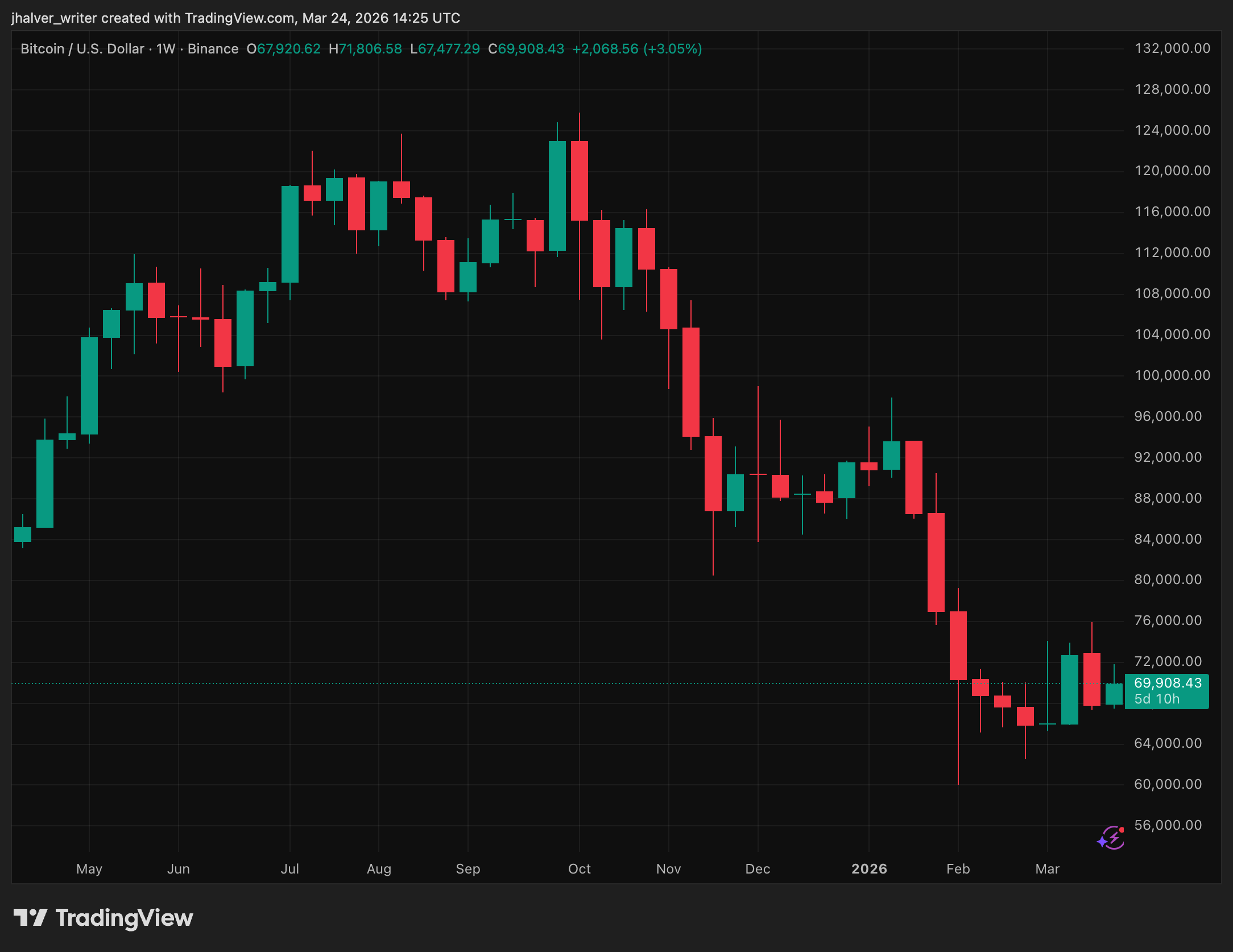
Cover image from Perplexity, BTCUSD chart from Tradingview
Read More
- Gold Rate Forecast
- Hazbin Hotel Secretly Suggests Vox Helped Create One of the Most Infamous Cults in History
- Every Creepy Clown in American Horror Story Ranked
- 22 actors who were almost James Bond – and why they missed out on playing 007
- Chill with You: Lo-Fi Story launches November 17
- Everything We Know About Gen V Season 3 (& Why It’ll Be a Very Different Show)
- Jack Osbourne Shares Heartbreaking Tribute to Late Dad Ozzy Osbourne
- Kingdom Come: Deliverance 2 – Legacy of the Forge DLC Review – Cozy Crafting
- Jason Statham’s Hit Creature Feature Is Heading to Streaming for Free
- Best X-Men Movies (September 2025)
2026-03-24 18:05