Author: Denis Avetisyan
New research reveals a consistent logarithmic correction to the entropy of near-extremal black holes, stemming from subtle quantum effects.
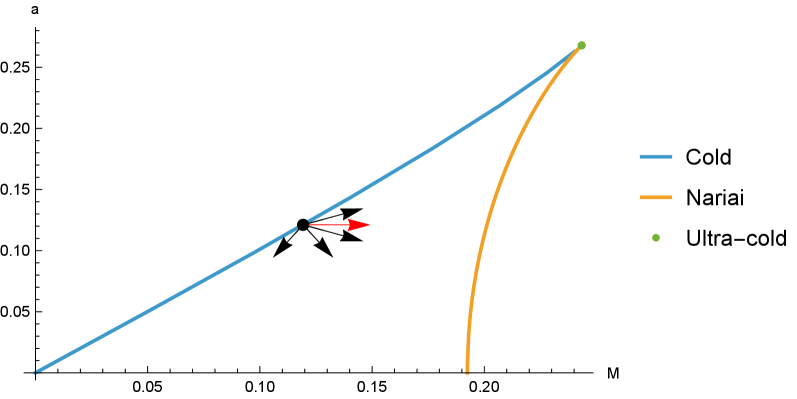
A universality theorem is proven for one-loop quantum corrections to black hole entropy, arising from tensor zero modes and confirmed via the Lichnerowicz operator in dimensions four and higher.
The conventional understanding of black hole entropy often neglects subtle quantum corrections arising from near-extremal configurations. This is addressed in ‘A Universality Theorem for the Quantum Thermodynamics of Near-Extremal Black Holes’, where we demonstrate a universal logarithmic correction – specifically, \frac{3}{2}\log(T_{\rm Hawking}/T_q) – to the thermodynamic entropy stemming from one-loop contributions of tensor zero modes. This theorem applies across various spacetime geometries and black hole symmetries, revealing a consistent behavior in dimensions four, five, and six. Does this universality suggest a deeper connection between near-extremal black holes and the underlying quantum gravity landscape?
The Fragile Foundation of Black Hole Entropy
The calculation of black hole entropy has long relied on the Euclidean path integral, a powerful tool in quantum field theory. Within this framework, the saddle-point approximation – a technique for finding the dominant contribution to the integral – proves remarkably effective for a broad range of black holes. This approach essentially treats the black hole spacetime as a classical background, allowing for a relatively straightforward computation of its entropy, which aligns with the Bekenstein-Hawking formula S = \frac{A}{4G}, where S is the entropy, A is the event horizon area, and G is the gravitational constant. The success of this method for many black holes reinforces the idea that, at least in certain regimes, classical gravity provides a valid approximation for understanding their thermodynamic properties, offering a crucial stepping stone towards a complete quantum description.
The conventional methods for calculating black hole entropy, reliant on the saddle-point approximation within the Euclidean path integral, encounter significant difficulties when applied to near-extremal black holes. These are black holes approaching the limit of possessing maximal charge or angular momentum for a given mass. The approximation, generally robust, begins to fail because the very assumptions underlying its validity – that fluctuations around the saddle point are small – are no longer met. As a black hole nears its extremal limit, certain modes of the graviton fluctuations become increasingly dominant, threatening the stability of the classical solution and rendering the standard perturbative approach unreliable. This breakdown isn’t merely a technical issue; it signals a fundamental limitation in understanding the black hole’s quantum properties using purely classical approximations, necessitating a more nuanced approach to accurately describe its entropy in these extreme regimes.
The conventional calculation of black hole entropy, relying on the saddle-point approximation within the Euclidean path integral, encounters difficulties when applied to near-extremal black holes due to the appearance of zero modes in the graviton fluctuations. These zero modes represent solutions to the equations of motion with zero energy, indicating an infinite number of degenerate classical configurations. The presence of these modes isn’t merely a mathematical artifact; it signifies that the classical picture, where a single, well-defined spacetime geometry describes the black hole, is breaking down. Essentially, the system becomes too sensitive to quantum fluctuations, and the classical approximation-which assumes a smooth, predictable gravitational field-can no longer accurately capture the underlying physics. This breakdown highlights the necessity of a full quantum gravity treatment to properly account for the black hole’s entropy and its microscopic degrees of freedom, as the classical approach loses its predictive power in the presence of these zero-energy graviton modes.
The accurate calculation of black hole entropy hinges on a complete understanding of zero modes appearing in graviton fluctuations. These modes, solutions to the field equations that vanish at the black hole horizon, represent infinite degrees of freedom not captured by classical calculations – and their presence signals a fundamental limitation of the standard saddle-point approximation near extremality. Investigating these zero modes isn’t merely a technical correction; it’s a pathway to resolving the information paradox and constructing a consistent quantum theory of gravity. The nature of these modes dictates how information can escape a black hole, and their detailed analysis promises a more complete picture of the black hole’s microscopic structure, potentially revealing the underlying quantum states responsible for its entropy S = k_B \log \Omega, where Ω represents the number of microstates.
Unveiling the Ghosts: Zero Modes and Infrared Shadows
Zero modes are null eigenvectors of the Lichnerowicz operator \mathcal{D}, which arises when studying perturbations of a Riemannian manifold. Specifically, these modes represent solutions to the equation \mathcal{D}\psi = 0 where ψ is a function on the manifold. In the context of quantum gravity, the Lichnerowicz operator describes the kinetic energy of metric fluctuations, and its zero modes are directly related to the propagation of gravitons – the quantum excitations of the gravitational field. These modes are ‘zero’ because they do not contribute to the usual kinetic term, signifying a distinct behavior from massive or propagating fields, and are fundamentally linked to the gauge freedom inherent in general relativity.
As the temperature approaches zero, the zero modes of the Lichnerowicz operator exhibit increasingly strong coupling. This behavior invalidates the saddle-point approximation, a standard technique used to simplify calculations in quantum field theory and general relativity. The saddle-point approximation relies on a well-defined minimum of the action, but strong coupling between these modes causes the action to become flat or exhibit multiple degenerate minima, rendering the approximation inaccurate. Specifically, the contributions from these zero modes, which represent fluctuations around a background spacetime, become dominant at zero temperature, preventing a stable and unique saddle-point solution from being identified. Consequently, perturbative methods based on this approximation break down, necessitating alternative computational strategies.
Infrared divergences, arising from the long-wavelength behavior of quantum fields, necessitate regularization techniques to yield finite, physically meaningful results. Specifically, in the context of calculations involving zero modes, these divergences stem from the unboundedness of the relevant integration domains. Introducing a small temperature perturbation, effectively T \neq 0, provides a practical method for regularization. This perturbation introduces a finite mass scale, modifying the propagator and damping the long-wavelength contributions that cause the divergences. The resulting calculations, performed at a non-zero temperature, can then be analytically continued to the zero-temperature limit, providing a well-defined result that avoids the initial infrared issues.
Infrared divergences within the Lichnerowicz operator formalism originate from the presence of zero modes, and these divergences are not attributable to a single field type. Both tensor and gauge zero modes contribute to the instability; specifically, fluctuations in the metric tensor (tensor modes) and fluctuations in gauge fields (gauge modes) each generate zero eigenvalues for the operator, leading to unbounded solutions in the functional integral. Consequently, any attempt to address these divergences through regularization or renormalization must account for contributions from both field types; neglecting either tensor or gauge zero modes will result in an incomplete and inaccurate treatment of the system’s behavior, particularly as the temperature approaches zero.
Quantum Whispers: Correcting Black Hole Entropy
Quantum corrections to black hole entropy are computed via analysis of one-loop contributions to the Euclidean path integral. The path integral, representing a sum over all possible field configurations, is initially calculated in the saddle-point approximation, yielding the classical Bekenstein-Hawking entropy S_{BH} = \frac{A}{4G_N}, where A is the event horizon area and G_N is Newton’s gravitational constant. One-loop corrections introduce quantum fluctuations around this classical background, modifying the entropy. These corrections are obtained by evaluating the one-loop determinant, which involves integrating over the fluctuations and accounting for the zero modes. The resulting change in the entropy is a function of the black hole’s parameters, including its mass and charge, and represents a quantum deviation from the classical result. This methodology provides a framework for understanding how quantum effects alter the thermodynamic properties of black holes.
Calculations of one-loop quantum corrections to black hole entropy demonstrate a universal logarithmic correction to the entropy of near-extremal black holes. This correction takes the specific form of 3/2 \log(T), where T represents the Hawking temperature of the black hole. This result is independent of the black hole’s specific parameters, indicating a general feature of quantum gravity near the extreme limit. The logarithmic dependence arises from the integration over zero-mode fluctuations in the path integral and is a key deviation from the classical Bekenstein-Hawking entropy formula, S = A/4, where A is the event horizon area.
Gauge fixing is a crucial procedure in computing quantum corrections to black hole entropy because it addresses the inherent redundancy in the metric fluctuations that arise when quantizing gravity. The path integral for gravity involves integrating over all possible metric configurations, but many of these configurations represent physically equivalent states differing only by coordinate transformations – these are gauge degrees of freedom. Without gauge fixing, the path integral diverges due to the unrestricted integration over these redundant configurations. Specifically, the process involves identifying a gauge-fixing condition and adding a corresponding term, often involving the DeWitt superoperator, to the action. This effectively restricts the integration to a unique representative from each gauge orbit, rendering the path integral well-defined and allowing for a meaningful calculation of quantum corrections, such as those affecting the black hole’s entropy.
Gaussian null coordinates, denoted as (u, v, z), are employed to simplify the analysis of the near-horizon geometry of black holes due to their specific properties. These coordinates are constructed such that the null surfaces u = \text{constant} and v = \text{constant} are hypersurface generators of the event horizon. This construction inherently fixes the gauge freedom associated with coordinate transformations near the horizon and facilitates the separation of variables in the wave equation used to quantize metric fluctuations. The z coordinate labels points along the generators, effectively providing a local coordinate system on the horizon. Utilizing Gaussian null coordinates allows for a straightforward implementation of boundary conditions and significantly simplifies the calculation of one-loop corrections to the black hole entropy by focusing the analysis on the relevant degrees of freedom in the near-horizon region.
Echoes of a Hologram: Implications and the AdS/CFT Correspondence
The emergence of logarithmic corrections, specifically quantified as 3/2 \log(T), within the calculations reveals a surprising sensitivity to the very small scales of physics – the ultraviolet regime. This isn’t merely a technical detail; it indicates that the system’s behavior isn’t fully determined by the long-wavelength, low-energy dynamics typically considered. Instead, the presence of these logarithmic terms hints at the influence of previously uncounted degrees of freedom becoming relevant at high energies, potentially altering the fundamental description of the system. These corrections suggest that the effective theory being used requires modification to accurately capture the physics at these extreme scales, opening the possibility of discovering new, high-energy phenomena or particles influencing the observed behavior.
The emergence of Schwarzian modes within the study of black hole evaporation reveals a deep connection to the dynamics governing its dual conformal field theory. These modes, mathematically linked to tensor zero modes, describe fluctuations in the black hole’s geometry that are not fixed by classical general relativity. Importantly, these fluctuations directly translate into chaotic behavior within the boundary conformal field theory; the more pronounced the Schwarzian modes, the more chaotic the dual system becomes. This correspondence suggests that the seemingly complex dynamics of a black hole can be understood as arising from a fundamentally simpler, chaotic system existing on its boundary, offering a novel perspective on the relationship between gravity and quantum information, and potentially resolving long-standing questions about the information paradox by indicating how information about infalling matter is encoded in these boundary fluctuations.
The Anti-de Sitter/Conformal Field Theory (AdS/CFT) correspondence offers a unique lens through which to examine the observed logarithmic corrections and the behavior of Schwarzian modes. This duality posits a precise relationship between quantum gravity in a higher-dimensional AdS space and a conformal field theory residing on its boundary-effectively translating gravitational problems into the more tractable language of quantum field theory. By leveraging this correspondence, researchers can interpret the ultraviolet sensitivity signaled by the 3/2 \log(T) terms as arising from the detailed structure of the boundary conformal field theory, and connect the dynamics of tensor zero modes to specific features of its energy transport. The framework doesn’t simply provide a mathematical tool; it suggests that the information paradox and the nature of quantum gravity itself may be fundamentally encoded within the properties of these dual field theories, offering a pathway to resolve long-standing puzzles in theoretical physics.
Recent investigations into black hole microstates and their associated logarithmic corrections are fundamentally reshaping perspectives on the long-standing information paradox. The subtle deviations from classical black hole behavior, captured by terms like 3/2 \log(T), suggest that information isn’t entirely lost during black hole evaporation, but rather encoded in a complex, potentially infinite number of states at the Planck scale. This nuanced understanding challenges traditional notions of spacetime and gravity, indicating that quantum gravity may necessitate a fundamentally different description of black holes – not as information sinks, but as intricate quantum systems preserving unitarity. Consequently, these findings aren’t merely resolving a paradox; they are providing crucial clues about the very fabric of quantum gravity, hinting at a holographic principle where gravity emerges from the entanglement of quantum information and demanding a re-evaluation of spacetime’s fundamental degrees of freedom.
The study reveals an intrinsic order emerging from seemingly complex quantum corrections around near-extremal black holes, much like a coral reef building an ecosystem from individual polyps. This work demonstrates a universal logarithmic correction to black hole entropy, a result stemming from the interplay of tensor zero modes and one-loop quantum effects. It suggests that constraints – in this case, the extreme conditions near the black hole event horizon – are not limitations, but invitations to uncover fundamental properties. As Marie Curie observed, “Nothing in life is to be feared, it is only to be understood.” This pursuit of understanding, even in the face of seemingly insurmountable complexity, is precisely what drives this exploration of quantum gravity.
The Horizon Beckons
The demonstrated universality of this logarithmic entropy correction is not, perhaps, a testament to the elegance of engineering a specific result, but rather to the inevitability of it. Robustness emerges, it’s never engineered. The near-extremal black hole, it seems, is not a particularly special configuration, but a sensitive indicator of underlying principles – the mathematics simply allow for this behavior, and the one-loop corrections merely reveal it. The true challenge now lies not in confirming this specific correction, but in understanding the broader implications for the information paradox, and whether this logarithmic behavior signals a fundamental discreteness to the black hole’s degrees of freedom.
Further investigation should move beyond perturbation theory. While the Euclidean path integral provides a powerful tool, its reliance on a fixed background may obscure more profound, non-perturbative effects. The Lichnerowicz operator, useful as it is, hints at a deeper geometric structure yet to be fully elucidated. One anticipates that small temperature perturbations, like ripples in spacetime, will not remain localized. Small interactions create monumental shifts, and the search for these cascading effects – the emergent behavior from local rules – must become central.
The theorem’s limitation to dimensions four and higher is not a constraint, but an invitation. Lower-dimensional black holes may exhibit entirely different, and potentially simpler, corrections. Exploring these lower-dimensional cases could provide a crucial foothold for understanding the full complexity of the higher-dimensional solutions, and perhaps reveal that the universe doesn’t bother with grand designs – it simply is, and order arises spontaneously.
Original article: https://arxiv.org/pdf/2602.16767.pdf
Contact the author: https://www.linkedin.com/in/avetisyan/
See also:
- What Song Is In The New Supergirl Trailer (& What It Means For The DC Movie)
- Gold Rate Forecast
- Eurogamer Gives ARC Raiders 2/5 Over AI Voices, Dropping Metacritic Score from 94 to 84
- 10 Best Connie Episodes of King of the Hill
- Netflix’s Run Away is the latest show to fail the Gen Z social media test
- The Simpsons Makes Major Change to Patty and Selma After 36 Years (And Includes a Big Makeover)
- Jujutsu Kaisen Is Returning With a Special Release After Sequel’s Finale
- How to Get the Bloodfeather Set in Enshrouded
- Why High on Life 2 added skateboarding, explained by the developer
- Robinhood’s Tokenized Stock Fiasco: A Tale of Tokens and Tussles
2026-02-22 05:30