The current peak in television quality—often called a new Golden Age—owes a lot to the rise of complex, flawed characters. Shows like Breaking Bad, The Shield, Mad Men, The Wire, Boardwalk Empire, and The Sopranos all feature protagonists who aren’t simply ‘good’ or ‘bad.’ As author Brett Martin observed, these shows were populated by ‘difficult men’ – characters with shifting morals operating in morally gray worlds. Whether they were criminals, law enforcement, troubled professionals, or ordinary people making bad choices, these characters moved away from traditional heroism and defined this era of television.
Shows from TV’s ‘Golden Age’ flipped the script by making complex, flawed characters the heroes instead of the villains. This was a refreshing change from older shows, and it allowed viewers to connect with and even feel for people doing terrible things. For nearly twenty years, these antiheroes – like Tony Soprano, Don Draper, Vic Mackey, and Walter White – captivated audiences and became cultural icons. While many shows explored this trend, Boardwalk Empire is often considered to have mastered it, creating one of the most compelling and tragic antiheroes ever seen on television.
Boardwalk Empire Had Plenty of Antiheroes and Outright Villains to Choose From
HBO’s Boardwalk Empire arrived with a lot of buzz when it debuted in September 2010. The show, a gangster story set in Atlantic City during the Prohibition era, boasted strong credentials: it was created by Terence Winter and its first episode was directed by the acclaimed Martin Scorsese, with a budget of $18 million. Over five seasons, the series ran for 56 episodes and received 57 Emmy nominations, winning 20 awards.
Although the show is highly regarded, it hasn’t reached the iconic status of series like The Sopranos. It’s generally considered among a group of excellent shows, including Ray Donovan, Narcos, and Ozark. Whether that assessment is fair is a discussion for another day, but I believe this show stood out from its peers, particularly in how compelling its flawed main characters were.
The HBO series Boardwalk Empire didn’t feature many truly good characters. The few honorable individuals within the show constantly faced opposition from dangerous figures like Gyp Rosetti, a psychopathic gangster played by Bobby Cannavale, and Dr. Valentin Narcisse, a charismatic but ruthless character portrayed by Jeffrey Wright.
The show truly excelled with its complex characters. It featured a wealth of compelling antiheroes, including Steve Buscemi as Enoch “Nucky” Thompson, a politician who gradually becomes fully immersed in organized crime. There was also Jimmy Darmody, played by Michael Pitt, a WWI veteran haunted by his past and working as a tough enforcer; Michael Shannon as Nelson Van Alden, a troubled Prohibition agent who descends into criminality; Michael K. Williams as Albert “Chalky” White, a relatively moral leader in Atlantic City’s Black community; and Richard Harrow, a ruthless bootlegger with a surprisingly tender side due to his love for his deaf son.
However, the Show’s Best Antihero Was the Tragic Sharpshooter Richard Harrow
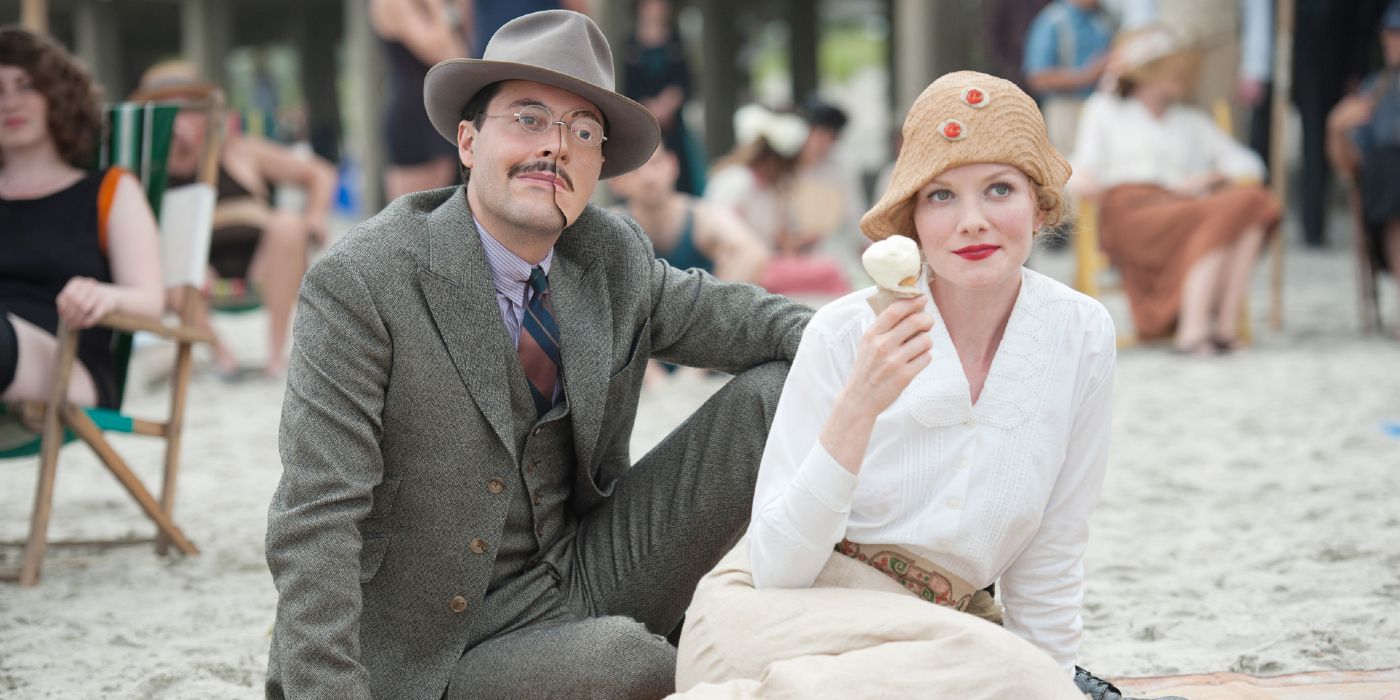
The show featured a cast of complex characters, each existing in shades of gray – they weren’t simply good or bad, relatable or unlikeable. One character truly stood out. In the first season’s seventh episode, Darmody visits a Chicago hospital to have a leg injury treated – it was caused by shrapnel from a German grenade during wartime. There, he encounters another veteran: a reserved, dark-haired man who wears a strange metal mask covering the left side of his face.
Richard Harrow is a former U.S. Army sniper severely disfigured by a bullet wound. He lost an eye, much of his upper jaw and cheekbone, and the injury left him with a raspy, painful voice – a slow, guttural croak when he speaks.
Although Harrow’s appearance can be intimidating, Darmody recognizes a connection with him. Harrow is kind, considerate, and well-mannered, and he’s a good listener, making him easy to confide in. However, Darmody soon discovers there’s more to Harrow than meets the eye – he’s deeply loyal and dedicated, even outside of combat.
Though Harrow is a quiet and private person, he’s still a ruthless killer, demonstrated when he murders the man who attacked a prostitute that Darmody cared about. This act earns him a place in Darmody’s illegal alcohol business as a strong-arm enforcer, and ultimately leads to him becoming a hitman for Thompson.
Over the following three seasons, Harrow is a complex and contradictory character. He commits far more murders than anyone else in the series, including a particularly violent scene at the end of Season 3 where a brothel is transformed into a scene of mass death as he kills many of Rosetti’s men.
He once proposed a shockingly violent plan to draw out a rival: targeting the man’s mother, sisters, and even his dentist. Though his associate, Darmody, convinced him not to go through with it, what was truly unsettling was how calmly he described such a brutal act, showing almost no emotion at all.
Despite his dangerous profession, Harrow is deeply emotional and longs for a close family. After Darmody’s death, he finds a sense of belonging living with his friend’s mother, Gillian, and her son Tommy, quickly becoming very close to the boy. He shares a strong and loving bond with his twin sister, Emma, and eventually marries Julia, a woman who knows nothing about his life of violence, guns, and hired killings.
Harrow Meets a Tragic End, and Star Jack Huston Wouldn’t Have Had It Any Other Way
Harrow was a tricky character to play; it would have been easy for an actor to misinterpret him, as his real personality isn’t revealed until the very end. Some might have focused too much on making him intimidating, while others could have made him seem overly gentle.
As a film fan, I was really impressed with Jack Huston’s performance in this. He managed to make his character incredibly relatable and sympathetic, but he always kept a little bit of mystery there, making you slightly uneasy. It was fascinating – in the violent scenes, he was like a cold, robotic figure, completely detached. But then you’d see him with Tommy, and it felt completely genuine; you could absolutely believe that little boy would have loved having this gentle, quiet man read him a bedtime story. It was a really nuanced performance.
Ultimately, Harrow dies as many criminals do—shot by someone else. He hadn’t committed murder in a long time and, surprisingly, was actually content with his personal life.
Despite the risks, he takes the job, and as expected, things quickly fall apart. He unintentionally kills Dr. Narcisse’s daughter, and realizes he has to face the consequences. He delays for a moment too long, allowing Narcisse’s men to shoot him. Wounded, he collapses back under the boardwalk where he and Julia first met.
As Harrow nears death, he’s given a brief, comforting vision: he pictures himself happily returning home by train to his family, his disfigurement gone. For the first time, he appears truly at peace, leading the audience to briefly wonder if he’s somehow achieved the happy ending he always deserved.
However, the show quickly returns to a harsh reality, depicting him fatally wounded beneath the boardwalk, his metal mask discarded in the sand beside his bleeding hand. It’s a strikingly poignant image, and a perfectly bittersweet ending for the show’s tragic villain.
Actor Huston originally signed on to play the character of Harrow for just three episodes, but ended up portraying him for four years. He did an excellent job with the role, and told Rolling Stone that he never doubted Richard Harrow’s basic goodness, saying, “I don’t think I ever questioned him, which is so odd.”
He believed that if Harrow hadn’t died from his injuries, he would have taken his own life following the accidental death of Dr. Narcisse’s daughter. He saw her as an innocent victim, and felt he couldn’t live with the guilt. However, Huston ultimately felt thankful for how Harrow’s story played out, explaining, “He finally found love and a family, and his tragic death felt inevitable given his past. I was moved by the ending, not saddened by it.”
Found an error? Send it so it can be corrected.
Read More
- The Super Mario Galaxy Movie: 50 Easter Eggs, References & Major Cameos Explained
- Surprise Isekai Anime Confirms Season 2 With New Crunchyroll Streaming Release
- 10 Best Free Games on Steam in 2026, Ranked
- Sydney Sweeney’s The Housemaid 2 Sets Streaming Release Date
- Skate 4 – Manny Go Round Goals Guide | All of the Above Sequence
- Why is Tech Jacket gender-swapped in Invincible season 4 and who voices her?
- Preview: Sword Art Online Returns to PS5 as a Darker Open World Action RPG This Summer
- Welcome to Demon School! Iruma-kun season 4 release schedule: When are new episodes on Crunchyroll?
- Overwatch 2 G.I. Joe Crossover Launches July 1: Join the Battle Between Heroes and Villains
- Shonen Jump Officially Cancels Yet Another Major Series in 2026 (& Fans Saw It Coming)
2026-02-08 03:40