No Regular Beat: A Deep Look at FRB 20240114A
![The periodogram analysis of 3196 bursts from FRB 20240114A, conducted on data from March 12, 2024, reveals no significant peaks beyond those initially observed even when extending calculations to frequencies implying a neutron star with a magnetic field strength parameter [latex]\mu_{33} \ll 1[/latex], suggesting the observed radio bursts are not readily explained by standard magnetar models.](https://arxiv.org/html/2512.24936v1/x1.png)
New research fails to detect a consistent periodic signal from the fast radio burst source FRB 20240114A, challenging models linking these energetic events to rotating magnetars.
New research fails to detect a consistent periodic signal from the fast radio burst source FRB 20240114A, challenging models linking these energetic events to rotating magnetars.
![The study demonstrates a correlation between the enhanced muon spin depolarization rate [latex]\Delta\lambda(T=0)[/latex] in strontium ruthenate and its derivatives, and the density of inhomogeneities or defects, suggesting [latex]\Delta\lambda(T=0)\propto nJ_{s}[/latex], where [latex]n[/latex] represents this density and [latex]J_{s}[/latex] the strength of spontaneous currents; specifically, La-doped samples and those under hydrostatic pressure maintain a relatively constant defect density, resulting in a depolarization rate proportional to the square of the critical temperature [latex]\Delta\lambda\propto T_{c}^{2}[/latex], while samples containing ruthenium inclusions or exhibiting random disorder demonstrate significantly enhanced depolarization rates driven by increased defect density.](https://arxiv.org/html/2512.24585v1/x3.png)
New research sheds light on the origins of intrinsic magnetic fields within strontium ruthenate, a material with unconventional superconducting properties.
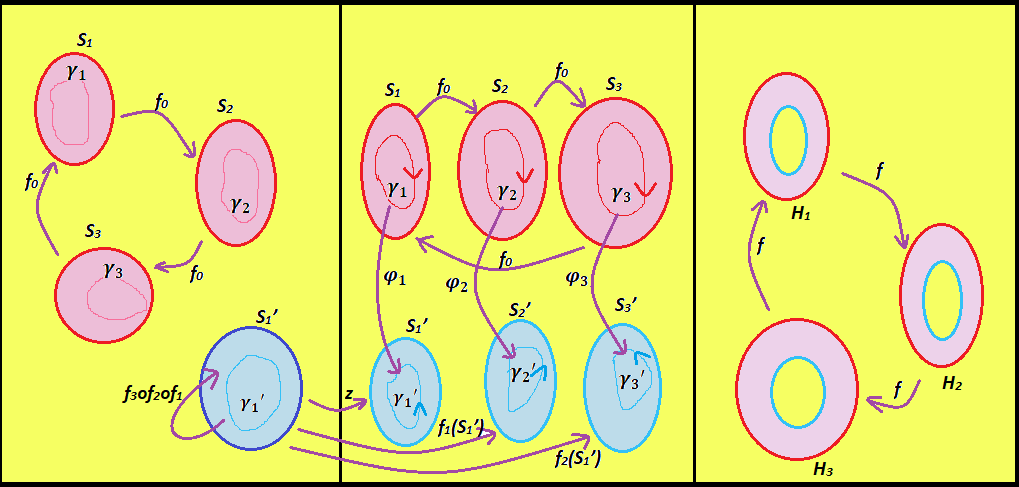
This review delves into the fascinating world of Herman rings, complex dynamical systems exhibiting a delicate balance between order and unpredictability.
![The study demonstrates how the Wehrl entropy-decomposed into transverse and entanglement components-varies with longitudinal momentum fraction at different virtuality scales ([latex]Q=2[/latex], [latex]5[/latex], and [latex]10[/latex] GeV), revealing the inherent uncertainty-quantified by [latex]1\sigma[/latex] bands-associated with the underlying parton distribution function parametrization.](https://arxiv.org/html/2512.24855v1/x9.png)
New research connects the entanglement of partons within a proton to a classical description of their momentum distribution, offering a richer understanding of hadronic entropy.
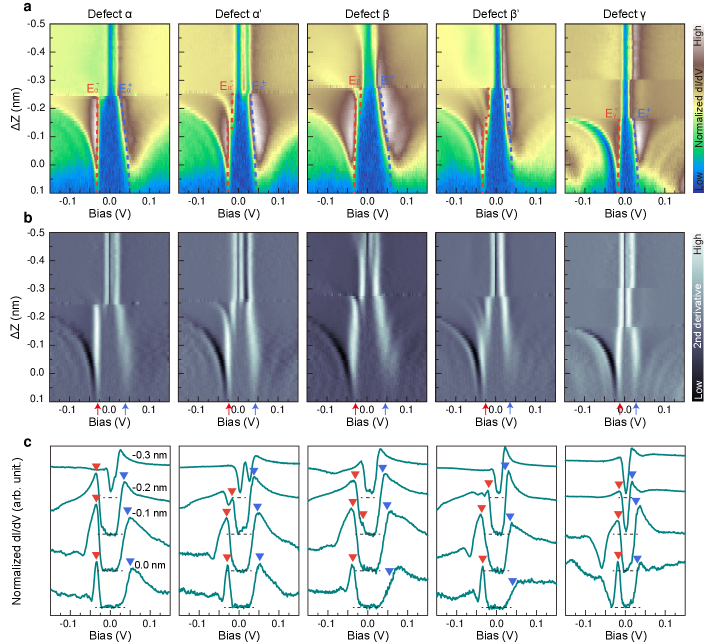
New research directly observes impurity states within an excitonically insulating material, confirming the role of charge dipoles formed by material vacancies.
New research reveals a deep connection between two-dimensional integrable systems and the asymptotic symmetries of three-dimensional Chern-Simons theories, offering insights into their underlying mathematical structure.

New research reveals a crucial link between the properties of black holes and the central charge of their corresponding quantum field theories.
![Repeated application of [latex]3\times 3[/latex] translation filters, modulated by a parameter β, reveals a surprising sensitivity in pattern evolution-specifically, when β equals one, a circular test pattern effectively sheds its core, with the remaining edge exhibiting maximum translational velocity.](https://arxiv.org/html/2512.24338v1/x63.png)
A new theory reveals that the fundamental way convolutional neural networks process information is surprisingly akin to the behavior of waves and particles in physics.
![The study demonstrates how the JQ parameter-a characteristic within a heavy quark model defined by [latex]\mu=1[/latex], [latex]\nu=4.5[/latex], and [latex]c_B=-0.05[/latex]-exhibits a nuanced dependence on temperature, shifting predictably across orientations of θ ranging from 0 to [latex]\pi/2[/latex], a relationship further clarified through detailed magnification.](https://arxiv.org/html/2512.24204v1/x4.png)
New research uses holographic models to explore how energetic particles are suppressed as they travel through the hot, dense matter created in heavy-ion collisions.
![Spin-orbit coupling offers a nuanced pathway to detect quasiparticles - initially revealing Fermi polarons through short-time linear response at low momenta [latex]\bar{k} << k_F[/latex], but faltering at higher momenta near the Fermi wavevector, necessitating an adiabatic evolution from a strongly coupled ground state to unveil molecular dispersions via center-of-mass momentum distribution as the coupling strength diminishes towards zero.](https://arxiv.org/html/2512.23918v1/x1.png)
Researchers are leveraging spin-orbit coupling to visualize the energy dispersions of Fermi polarons and molecules, offering new insights into their complex interactions and transitions.