Simulating Quantum Fields: Matter’s Impact on Lattice Interactions
![The study models a system of hard-core bosons on a two-dimensional lattice, intricately linked to a [latex]\mathbb{Z}_2[/latex] gauge field, where the configuration of the electric field-visualized by marking links with yellow lines for [latex]\tau^{x}_{\langle i,j \rangle} = -1[/latex]-constrains the possible states of both matter and gauge fields according to a Gauss’s law, and magnetic interactions are defined by the product of gauge fields on each plaquette.](https://arxiv.org/html/2602.13192v1/x1.png)
New research reveals that adding matter to a simplified model of quantum fields can dramatically alter the interactions needed for accurate simulation.
New research reveals that adding matter to a simplified model of quantum fields can dramatically alter the interactions needed for accurate simulation.
![The deceleration parameter’s qualitative evolution, as influenced by initial conditions ([latex]x\_{2}[0]=0.1[/latex], [latex]x\_{3}[0]=0.1[/latex], [latex]x\_{5}[0]=0.1[/latex]) and parameter values of [latex]\lambda\_{0}[/latex] and [latex]\mu\_{0}[/latex], demonstrates sensitivity to these variables with a fixed [latex]h=0.5[/latex] value, suggesting a complex interplay governing the system's dynamic behavior.](https://arxiv.org/html/2602.12981v1/x4.png)
Researchers propose a novel approach to understanding cosmic acceleration by coupling a scalar field to a modified theory of gravity based on non-metricity.
![The behavior of moiré rhombohedral pentalayer graphene-specifically its Chern number and resulting electronic states-reveals how subtle shifts in interlayer potential and twist angle Δ and θ can induce transitions between an anomalous Hall crystal ([latex]C=1[/latex]) exhibiting honeycomb charge density and a Wigner-like insulator ([latex]C=0[/latex]) characterized by triangular charge density, demonstrating a system exquisitely sensitive to geometric perturbations and poised between states of topological order.](https://arxiv.org/html/2602.12737v1/x3.png)
New research reveals how stacking graphene with hexagonal boron nitride creates exotic quantum phenomena and opens doors to tunable topological electronics.
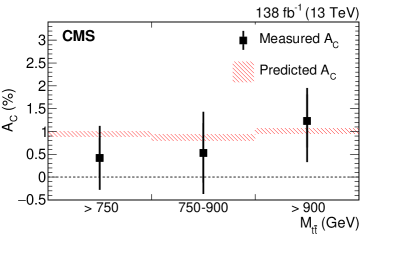
New analyses from the ATLAS and CMS experiments continue to probe the subtle imbalances in top quark production and decay.
New research unveils a powerful framework connecting symmetry, anomalies, and the emergence of robust, gapless states in three-dimensional fermionic systems.
New measurements of top quark production from the ATLAS and CMS experiments are pushing the boundaries of our understanding of particle physics.
![The search for charged lepton flavor violation has progressed from early limits established by cosmic ray measurements to increasingly sensitive experiments utilizing stopped pion and muon beams, focusing on rare decays like [latex]\mu^{+}\rightarrow e^{+}\gamma[/latex], [latex]\mu^{+}\rightarrow e^{+}e^{-}e^{+}[/latex], and [latex]\mu^{+}\rightarrow e^{+}\gamma\gamma[/latex], as well as muon-nucleus conversion processes and muoniun-antimuonium conversion, with current and proposed experiments poised to further refine these boundaries and potentially reveal physics beyond the Standard Model.](https://arxiv.org/html/2602.12442v1/x4.png)
A decade of advances in muon physics is pushing the boundaries of the Standard Model and opening new avenues in the search for physics beyond it.
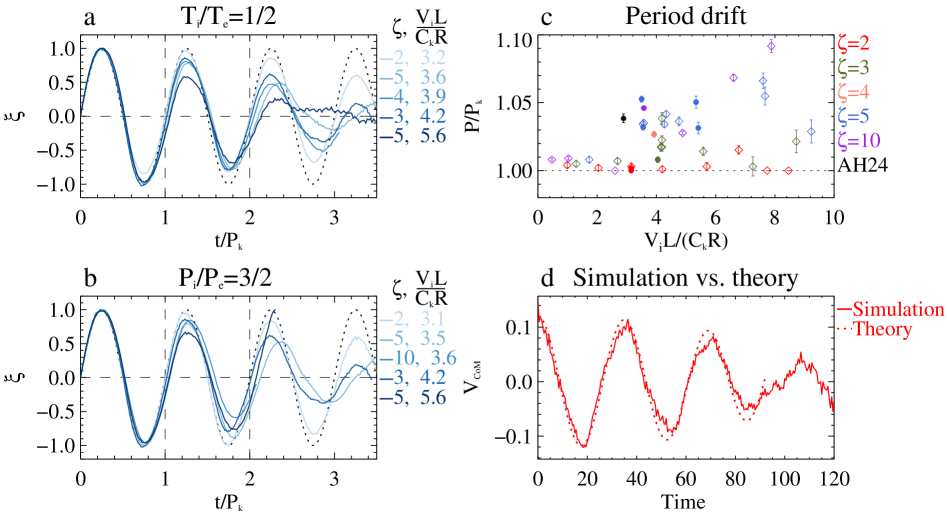
New research reveals that turbulence generated by the Kelvin-Helmholtz instability significantly alters the behavior of waves within coronal loops, impacting our understanding of plasma conditions in the solar corona.
New research reveals that certain complex phases of matter are fundamentally difficult for neural networks to learn, challenging the limits of AI in materials discovery.
New research demonstrates a pathway to electrically control magnetism in van der Waals heterostructures, bypassing the need for relativistic effects and opening doors for low-power spintronic devices.