Seeing Beyond the Average: A New Microscope for Quantum Matter
Researchers are developing a matter-wave microscope capable of directly visualizing the subtle correlations that define exotic states of quantum matter.
Researchers are developing a matter-wave microscope capable of directly visualizing the subtle correlations that define exotic states of quantum matter.
![The framework, [latex]\text{SB-QOPS}[/latex], defines a measurement process through a set comprising a Pauli family [latex]\mathit{F}[/latex], its corresponding eigenvalues [latex]\mathit{EV}[/latex], and a designated measurement outcome [latex]\mathit{M}[/latex] determined by a compact program specification [latex]\mathit{PS\_{compact}}[/latex], effectively linking abstract quantum operations to concrete measurement results.](https://arxiv.org/html/2602.11487v1/Overview.png)
A novel search-based testing approach dramatically improves the detection of errors in quantum circuits, bringing us closer to reliable quantum computation.
![The study details a coordinate system transformation for analyzing the decay of [latex]e^{+}e^{-}\rightarrow\gamma^{\*}/\psi\rightarrow Y\bar{Y}[/latex], establishing a consistent chirality between hyperon Y and antihyperon [latex]\bar{Y}[/latex] through defined axes-[latex]{\hat{\mathbf{x}}, \hat{\mathbf{y}}, \hat{\mathbf{z}}}[/latex] for Y and [latex]{\hat{\mathbf{x}}^{\prime}, \hat{\mathbf{y}}^{\prime}, \hat{\mathbf{z}}^{\prime}}[/latex] for [latex]\bar{Y}[/latex]-derived from momentum vectors and cross-product calculations, ensuring a mirrored relationship where the antihyperon’s axes are inversions of the hyperon’s.](https://arxiv.org/html/2602.10389v1/x1.png)
New research demonstrates control over quantum entanglement and Bell nonlocality in hyperon-antihyperon pairs created from polarized electron-positron annihilation.
![The system exhibits tunable, non-reciprocal hopping-characterized by strengths of [latex]J e^{\pm\alpha}[/latex]-coupled with a quasiperiodic onsite potential [latex]\lambda_{j}[/latex], and further refined by an impurity bond whose hopping strength is adjustable via parameter μ.](https://arxiv.org/html/2602.11155v1/x1.png)
New research reveals how introducing quasiperiodic order into non-Hermitian systems can dramatically alter electron behavior, leading to either extended states or the emergence of the non-Hermitian skin effect.
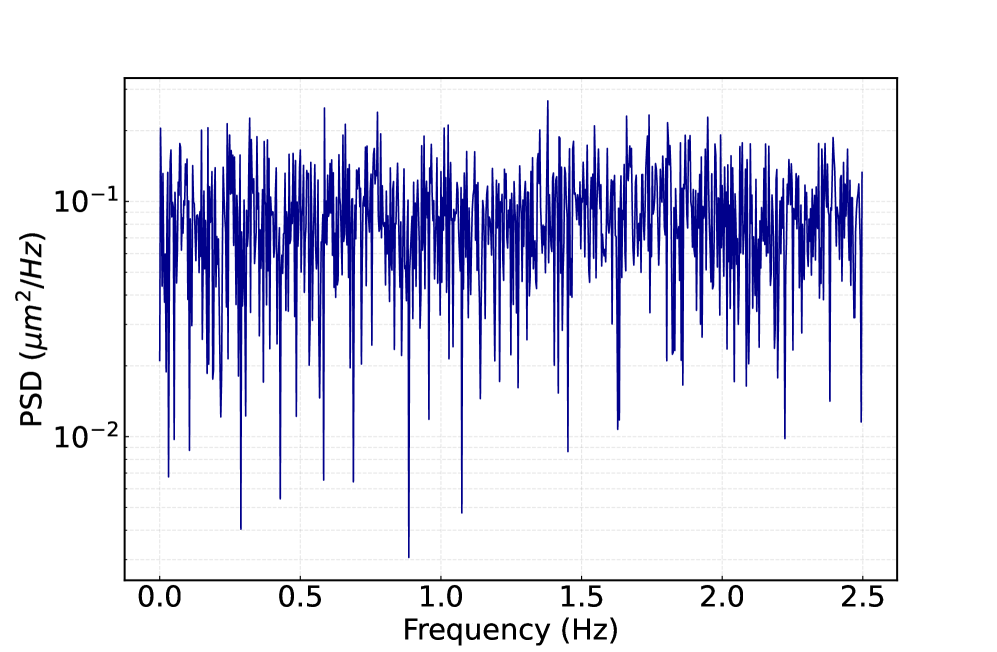
Researchers have demonstrated a novel technique to suppress noise in interferometric measurements, pushing the boundaries of our ability to detect the subtle nonlinear effects of the quantum vacuum.
![The study defines helicity angles for the decay process [latex]e^{+}e^{-}\to Y\bar{Y}[/latex], where Y subsequently decays into a Lambda baryon and a pion, establishing a consistent framework applicable to both the initial particle pair and the resulting anti-baryon-pion combination.](https://arxiv.org/html/2602.10398v1/diagram_new.png)
New research demonstrates that entanglement between hyperons and anti-hyperons can be dynamically altered through sequential decay processes, potentially leading to enhanced quantum correlations.
This review explores how breaking the symmetry of interactions in many-body systems leads to fundamentally new physics and exotic states of matter.
![Four-wave mixing (FWM) experiments demonstrate momentum state manipulation in atomic gases, utilizing sequential Bragg pulses at [latex]790.00\ \mathrm{nm}[/latex] to generate distinct momentum states [latex]\mathbf{p}\_{1}, \mathbf{p}\_{2}, \text{ and } \mathbf{p}\_{3}[/latex] from a single spin component, and, with a [latex]769.35\ \mathrm{nm}[/latex] lattice configuration and a bias magnetic field, to reveal symmetric momentum transitions [latex]\lvert\pm 2\hbar k\rangle[/latex] within a two-spin component system, evidenced by the formation of scattered wave packets visualized through absorption imaging.](https://arxiv.org/html/2602.10873v1/x1.png)
Researchers have demonstrated precise control over matter-wave four-wave mixing in a potassium Bose-Einstein condensate, paving the way for advanced quantum technologies.
![The study demonstrates how a surrounding dark matter halo, modeled with a Hernquist density profile and anisotropic distribution, subtly alters the expected inertial frame dragging effect - specifically, the angular velocity [latex]\omega(r)[/latex] - deviating from the vacuum prediction and manifesting as a measurable shift in the spacetime geometry around a slowly rotating massive object.](https://arxiv.org/html/2602.10579v1/x2.png)
New research explores how surrounding dark matter halos warp the spacetime around slowly rotating black holes, altering orbital dynamics and influencing gravitational wave signatures.
New research provides the most detailed look yet at how top quarks interact with the fundamental forces, revealing potential pathways to physics beyond the Standard Model.