The Physics of Thought: Unlocking AI’s Inner Workings
![A novel transformer architecture, leveraging a momentum-based approach to attention, overcomes the traditional [latex] N \geq 2 [/latex] barrier in single-layer induction-achieving 83.4% peak accuracy-and exhibits an attenuated scaling law ([latex] \gamma^* = 4.17 \times N^{-0.74} [/latex]) demonstrating that depth and momentum function as interchangeable computational resources, and confirming the theoretical prediction of signal attenuation across layers.](https://arxiv.org/html/2602.04902v1/figures/Fig-5.png)
A new approach, Momentum Attention, leverages principles of Hamiltonian mechanics to illuminate how neural networks learn and make decisions.
A new approach, Momentum Attention, leverages principles of Hamiltonian mechanics to illuminate how neural networks learn and make decisions.
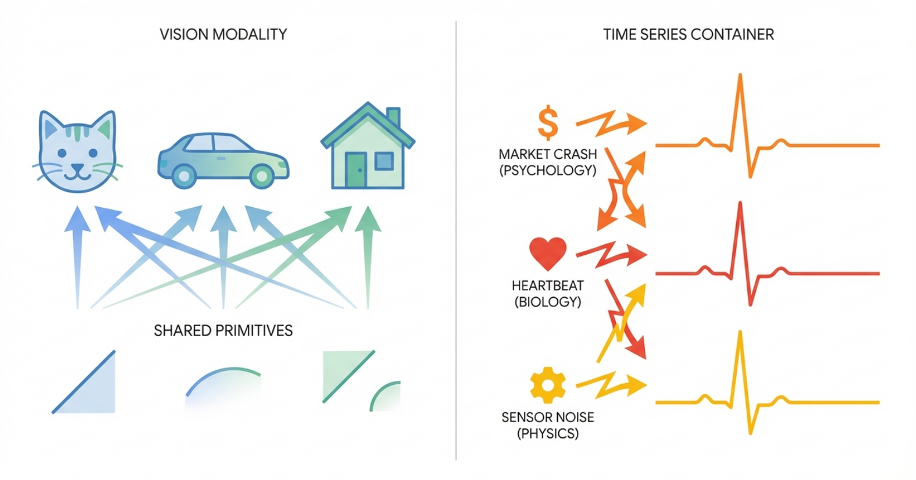
The push to apply large, pre-trained models to time series data is built on a critical misunderstanding of how these datasets differ from natural language or images.
![The quantum Fisher information (QFI) - depicted with blue curves as a function of [latex]L/E[/latex] - exhibits a strong correlation with the oscillation probability [latex]P(\nu_{\mu}\to\nu_{e})[/latex] shown in red, as demonstrated by data from the NuFit-6.0 IC24 dataset inclusive of Super-Kamiokande atmospheric data, and further corroborated by the IC19 dataset excluding such data.](https://arxiv.org/html/2602.05221v1/x1.png)
A new analysis demonstrates how quantum information tools can unlock the full potential of upcoming long-baseline neutrino experiments.
![Embedded within a hexagonal boron nitride slab, two color centers facilitate the resonant excitation of a polariton source, launching a propagating polariton at frequency [latex]\omega_{HPP}[/latex]; detection of emission from a downstream color center-triggered only when supplied with the missing energy from the arriving polariton-and subsequent time-correlation with the source’s initial emission demonstrates the single-polariton nature of the launched wave and confirms antibunching behavior.](https://arxiv.org/html/2602.05736v1/x6.png)
Researchers are exploring how to harness the unique properties of hexagonal boron nitride to create a new platform for strong light-matter interactions and advanced quantum photonic devices.
New research reveals that controlling the excitation wavelength significantly alters the behavior of spin defects in hexagonal boron nitride, opening doors for improved quantum sensing performance.
![Within a closed anti-de Sitter (AdS) universe, the expectation value and its square for a patch operator demonstrate inherent properties of the spacetime geometry, revealing how quantum fluctuations manifest within this constrained cosmological model [latex]AdS[/latex].](https://arxiv.org/html/2602.05939v1/x2.png)
New research suggests that the quantum reality experienced by observers within a de Sitter space can emerge from a broader description of a ‘baby universe’ and its statistical properties.
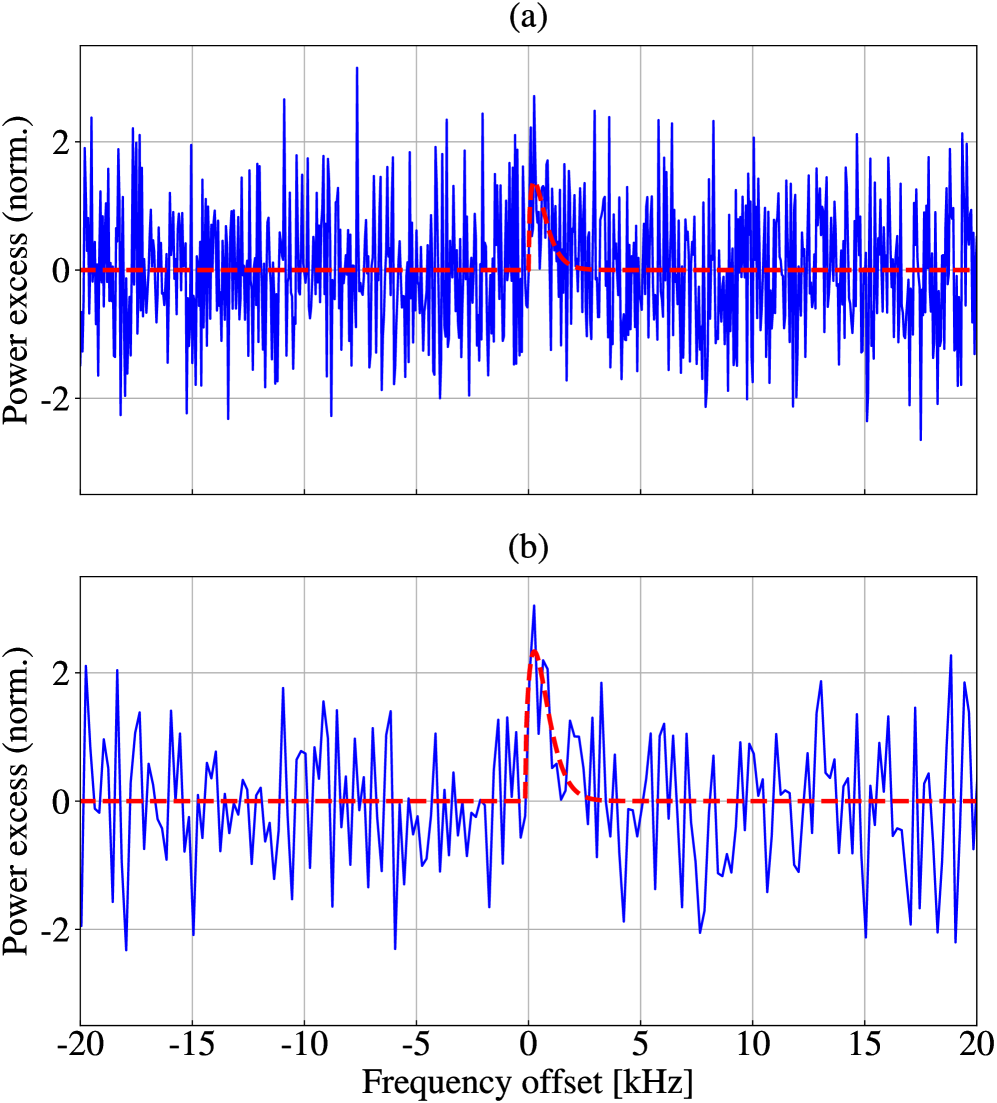
Researchers pushed the boundaries of dark matter detection with a highly sensitive haloscope experiment, refining the search for axions-hypothetical particles that could make up the universe’s missing mass.
![The convergence of [latex]\mathcal{Z}(g\_{\text{YM}},\phi)[/latex] and [latex]\mathcal{Z}\_{\text{ScYM}}(g\_{\text{YM}},\phi)[/latex] is dictated by rotational symmetry-a φ rotation of the integration contour induces a corresponding rotation of the divergent region, expanding until, at [latex]\phi=\pi/4[/latex], divergence dominates the second and fourth quadrants, after which convergence is localized within figure-eight domains through continued rotation beyond [latex]\arg(a)>\pi/4[/latex], with the formal sum of residues converging within the shaded regions and mirrored across the yy-axis for the negative contour.](https://arxiv.org/html/2602.05733v1/x4.png)
New research connects the seemingly complex world of four-dimensional superconformal Yang-Mills theory to a surprisingly simple two-dimensional picture, revealing a deep link between instantons and unstable configurations.
A new method for extracting mesoscopic chemical potentials from experimental data offers insights into the equation of state governing dense nuclear matter.
![The study of a superconducting/ferroelectric/superconducting structure reveals distinct ferron-polariton and ferron excitations, characterized by parameters [latex]\alpha_{1,2,3} = \{-2.012, 3.608, 1.345\} \times 10^{9} \text{ Nm/C}^{2}[/latex] and [latex]\Omega_{p} = 6.39 \text{ THz}[/latex], demonstrating that the [latex]\delta p_{x}[/latex]-ferron-polariton branches ([latex]\omega_{u,l}[/latex], shown in blue) diverge from the [latex]\delta p_{x}[/latex]-ferron dispersion ([latex]\omega_{1}[/latex], shown in red) as effective wavelength approaches infinity, while the [latex]\delta p_{y,z}[/latex]-ferron frequencies ([latex]\omega_{\pm}[/latex], shown in blue-red dashed curves) remain consistent both with superconducting screening and in the limit of infinite effective wavelength.](https://arxiv.org/html/2602.05473v1/dispersion.png)
Researchers have demonstrated the creation of novel light-matter quasiparticles in layered superconductor/ferroelectric materials, paving the way for exploring quantum phenomena at terahertz frequencies.