Quark Matter’s Stickiness: Unraveling Viscosity Across Phase Boundaries
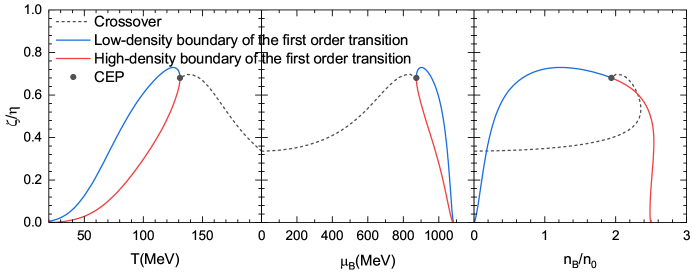
New research delves into the complex viscous properties of quark matter, revealing how its resistance to flow changes as it transitions between different states.
New research delves into the complex viscous properties of quark matter, revealing how its resistance to flow changes as it transitions between different states.
![Proton density distributions were mapped for representative configurations of the [latex] ^{21}_{+2}\_{1} [/latex] states in both [latex] ^{10}Be [/latex] and [latex] ^{10}C [/latex], revealing the influence of deformation parameters β and squared overlaps - quantified as percentages - on nuclear structure.](https://arxiv.org/html/2601.10172v1/x7.png)
New research reveals subtle differences in the quadrupole transitions of carbon-10 and beryllium-10, challenging expectations of perfect isospin symmetry in these exotic nuclei.
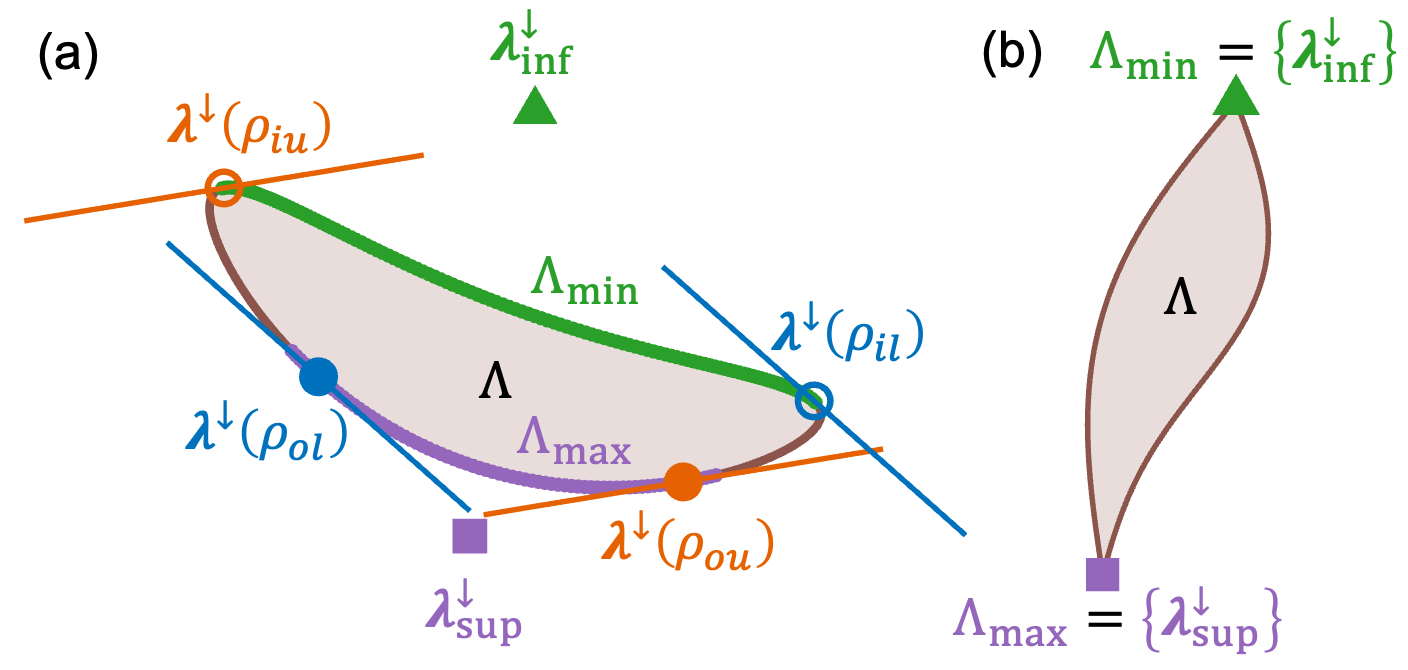
A new theory leverages the full spectrum of wave coherence-from its weakest to strongest points-to establish universally optimal limits on observable wave characteristics.
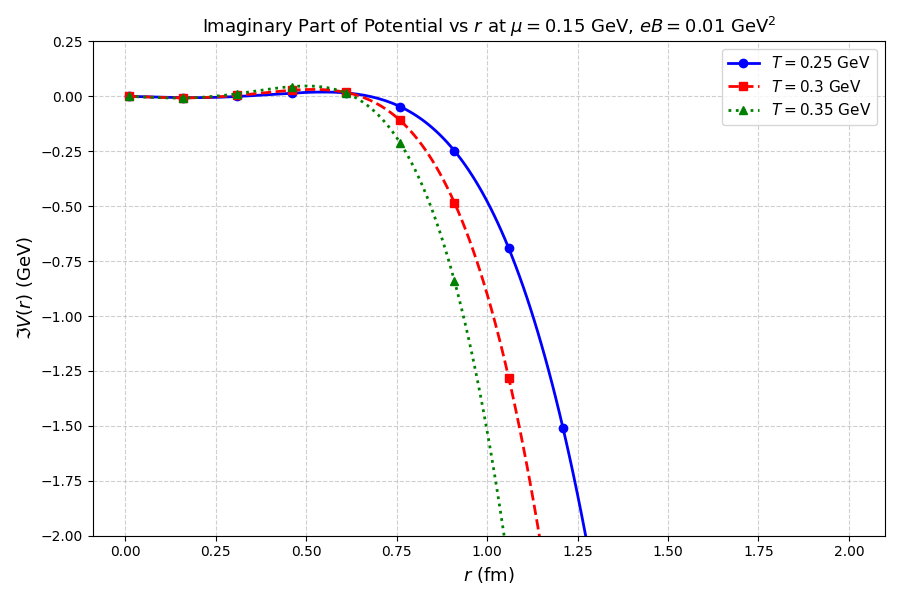
New research explores how hot, dense matter and magnetic fields affect the stability of heavy quarkonium particles.
New research reveals a surprisingly robust form of localization where the dynamic response of a system becomes independent of its initial conditions and underlying structure.
![The study reveals that energy transfer to fluctuations in axion fields occurs in tandem with energy transfer to the gauge sector, a phenomenon observed across varying values of κ - specifically, at [latex]\kappa \approx 0.2[/latex] and [latex]\kappa \approx 2.0[/latex] - suggesting a simultaneous excitation of both components during the field's evolution.](https://arxiv.org/html/2601.09784v1/x13.png)
New simulations reveal how energy transfer between axion-like particles and gauge fields could have seeded the early universe.
![The study of a quasiperiodic potential within the [latex]GAAH[/latex] model reveals a clear delineation between extended and localized states, demarcated by an analytically derived mobility edge, and further substantiated by finite-size scaling of typical conductance at energies coinciding with this edge, demonstrating exponential decay consistent with numerically computed Lyapunov exponents [latex](\sigma=0.0003)[/latex], alongside a corresponding finite-size scaling of the typical spectral gap around energies [latex]E_{c,1}=1.84[/latex], [latex]E_{c,2}=0.24[/latex], and [latex]E_{c,3}=-2.32[/latex].](https://arxiv.org/html/2601.10056v1/x5.png)
New research reveals how the unique spectral properties of quasiperiodic lattices govern the flow of electrons, leading to unexpected transport phenomena.
New research delves into the geometric foundations of quantizing symmetric spaces, revealing connections between algebraic structures and potential applications in fundamental physics.
A new study unveils a quantum-geometric framework for understanding the behavior of rotating shallow water, linking band geometry and topology to wave patterns.
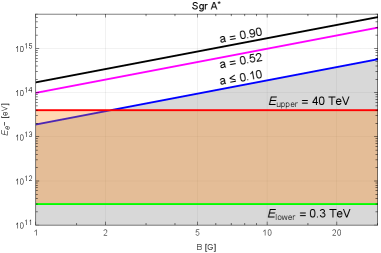
New research reveals a surprising relationship between magnetic field strength and energy extraction around rotating black holes, potentially explaining the origin of high-energy particles in extreme astrophysical environments.