Holographic Entanglement in Deformed Spacetime
![The system demonstrates how variations in a deformation parameter influence energy distribution-specifically, the real part of the Hawking-Eberhardt function [latex]\text{HEE}[/latex] and quantities [latex]\mathcal{Q}\_{\pm}[/latex]-for both purely timelike intervals and scenarios with non-vanishing chemical potential, suggesting a nuanced relationship between spacetime geometry and energy fluctuations at [latex]t=2[/latex], [latex]\beta=\sqrt{8}\pi[/latex], [latex]\Omega=0[/latex], and [latex]c=12\pi[/latex].](https://arxiv.org/html/2601.10213v1/x4.png)
New research explores how entanglement behaves in two-dimensional quantum field theories distorted by specific types of deformation, using a powerful connection between gravity and quantum mechanics.
New research explores how entanglement behaves in two-dimensional quantum field theories distorted by specific types of deformation, using a powerful connection between gravity and quantum mechanics.
Researchers have demonstrated the ability to engineer complex topologies in space and time using a novel type-II hyperbolic lattice structure.
![Light can induce magnetization through the intrinsic quantum geometry of a material, specifically via the quadrupole density of the quantum metric and a weighted quantum metric term [latex]\partial\left(Gv\right)[/latex], demonstrating a pathway where polarized light directly influences magnetic properties.](https://arxiv.org/html/2601.09637v1/x1.png)
New research reveals that light can induce magnetism in materials through subtle geometric properties of their electronic structure.
![The study demonstrates how the Zeeman effect, parameterized by [latex] R_s [/latex], modulates Landau levels and their corresponding oscillations, revealing that a strong Zeeman effect ([latex] R_s = -1 [/latex]) can induce a π phase shift in the oscillating conductivity, precisely mirroring the signature of a non-trivial Berry phase ([latex] \beta = 0.5 [/latex]) observed with [latex] R_s = 1 [/latex], under conditions of oscillation frequency [latex] F = 129.5 T [/latex], Fermi energy [latex] E_F = 60 meV [/latex], and effective mass [latex] m^* = 0.25 m_0 [/latex].](https://arxiv.org/html/2601.09560v1/x4.png)
A new analysis reveals significant challenges in uniquely determining the Berry phase of materials using only quantum oscillation measurements.
![Simulated annealing reveals that complex spin configurations-including single and double-[latex]QQ[/latex]-spiral and staggered states-emerge from local interactions, with the resulting magnetic order dependent on parameters like temperature [latex]K[/latex], static interaction strength [latex]J_{sta}[/latex], and spiral wavevector [latex]Q_{sp}[/latex], as demonstrated by the variety of observed patterns and the unnormalized superposition [latex]\bm{S}_{i}[/latex] serving as a comparative reference.](https://arxiv.org/html/2601.09267v1/x2.png)
New research reveals how competing magnetic interactions can create complex, multi-state spin arrangements with potentially unique electronic properties.
New research explores how applying principles of critical phenomena to memristor devices can unlock deeper, more stable, and energy-efficient memory architectures.
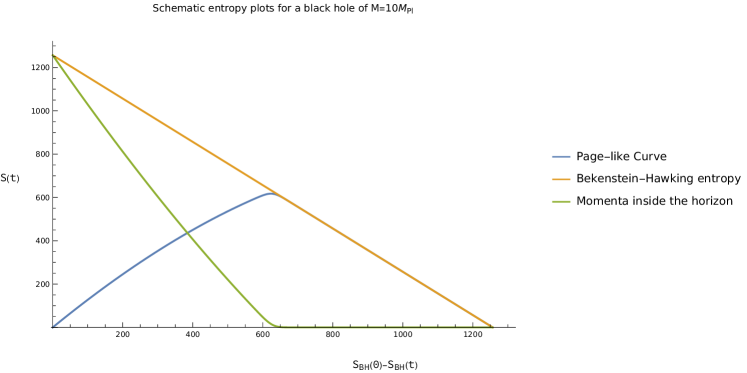
New research reveals a surprising duality between particle and field behavior near black hole horizons, offering potential corrections to our understanding of Hawking radiation and quantum gravity.
![The study demonstrates that, for fermion dark matter with a [latex]\psi \sim (3,1,1)[/latex] representation, the test statistic varies predictably with the fermion mass [latex]m_\psi[/latex], allowing for the determination of the best-fit value for the new physics parameter Λ as a function of that same mass.](https://arxiv.org/html/2601.08907v1/x2.png)
New research explores whether anomalies observed in the decay of B and K mesons could be explained by interactions with dark matter particles.
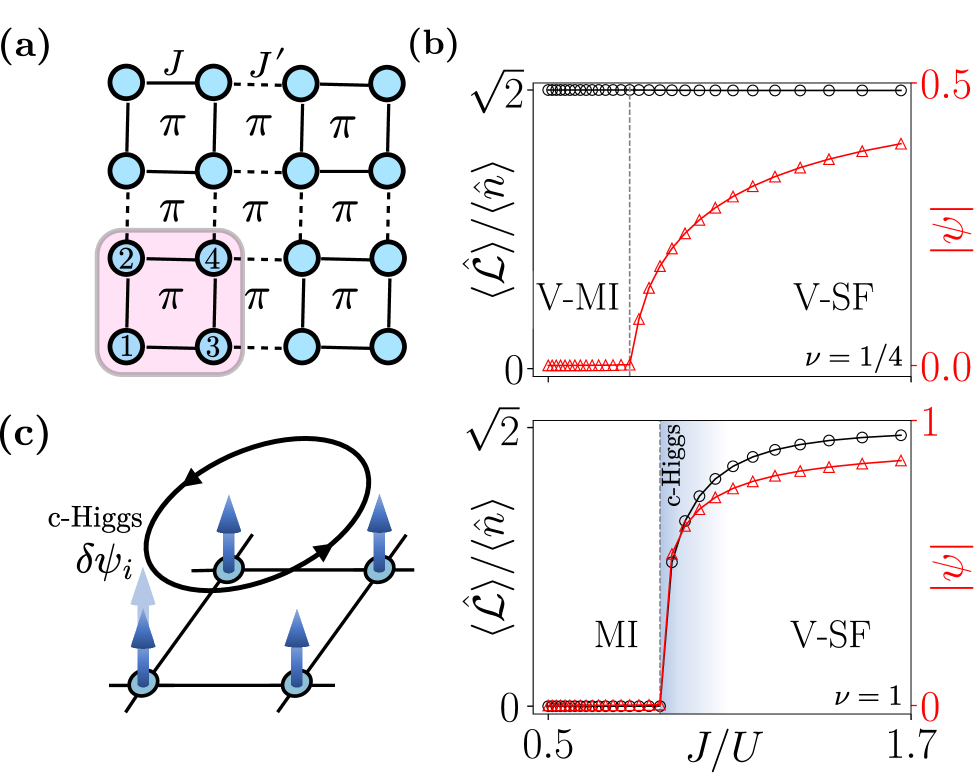
Researchers have discovered new phases of matter in simulated systems of interacting bosons, uncovering a unique excitation known as a chiral Higgs mode.
A new experiment using a highly sensitive atomic magnetometer is pushing the boundaries of dark matter detection.