Seeing Symmetry: A New Way to Analyze Materials with Light
Researchers have developed a novel Raman spectroscopy technique that unlocks hidden details about a material’s crystalline structure with unprecedented sensitivity.
Researchers have developed a novel Raman spectroscopy technique that unlocks hidden details about a material’s crystalline structure with unprecedented sensitivity.
![The study demonstrates how fitting parameters - [latex]\sigma_{t+} [/latex], [latex]\sigma_{t-} [/latex], [latex]\rho_{+} [/latex], and [latex]\rho_{-} [/latex] - using equations derived from data at varying minimum transverse momentum scales ([latex]s_{min} [/latex] of 5 GeV, 30 GeV, and 1 TeV) reveals dependencies inherent within the DB24 dataset, where fitted values incorporate a specific data subset while additional points serve for validation.](https://arxiv.org/html/2602.20005v1/x1.png)
A new analysis of proton-proton and proton-antiproton collisions suggests we may be approaching fundamental limits on how particles interact at ever-increasing energies.
![Within the ergoregion of a rotating Kerr-Newman black hole, orbital velocity Ω diverges near the central region for naked singularities, distinctly differentiating their behavior from that of a black hole where Ω remains finite, a phenomenon observable across varying [latex] Q [/latex] values and measured in units of [latex] M^{-1} [/latex] as a function of radial coordinate [latex] r [/latex] in units of [latex] M [/latex].](https://arxiv.org/html/2602.18972v1/x6.png)
A new analysis suggests that the precession of test gyroscopes could distinguish between the event horizons of black holes and the potentially observable surfaces of naked singularities.
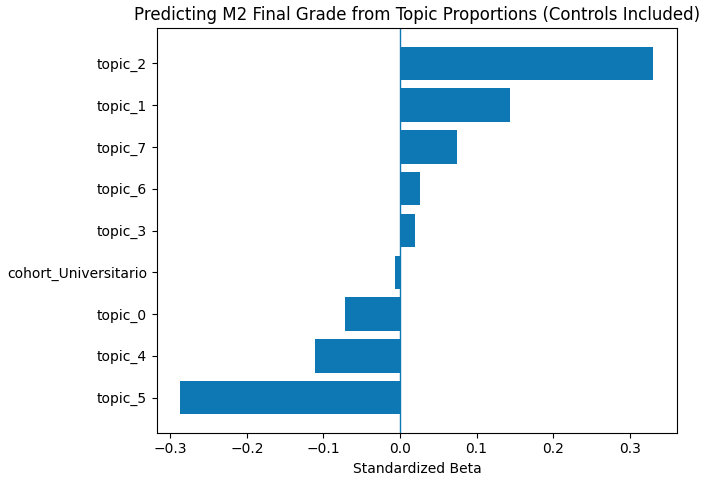
A new study reveals that the language used in short application responses can predict early success in a demanding quantum computing program.
A new analysis suggests quintessence models with exponential potentials can significantly reduce the fine-tuning problem plaguing dark energy explanations.
![The thermodynamic curvature of relativistic fermions exhibits a distinct relationship with the chemical potential within a three-dimensional system undergoing an isothermal process [latex] \beta = 1 [/latex], suggesting an inherent sensitivity of fermionic behavior to subtle changes in energetic conditions.](https://arxiv.org/html/2602.19759v1/x4.png)
New research reveals how relativistic effects fundamentally alter the geometric properties of ideal gases, impacting condensation and equilibrium behavior.
A new kinetic theory framework reveals how dynamic scalar fields in K-essence cosmology influence the propagation of photons, potentially leaving subtle imprints on the cosmic microwave background.
![For parameters E=100, [latex]r_s[/latex]=0.5, and [latex]\rho_s[/latex]=0.2-corresponding to conditions depicted in the lower panel of Figure 1 using metric (19)-gravitational-wave signals exhibit irregular amplitude modulation and a loss of quasi-periodic structure, indicative of the stochastic nature of the orbital dynamics underlying these chaotic regimes.](https://arxiv.org/html/2602.19541v1/x23.png)
New research suggests that the chaotic influence of dark matter halos can leave detectable signatures in the gravitational waves emitted by black hole mergers.
New research explores how the order of quantum state updates within hidden Markov models fundamentally alters their behavior and entanglement properties.
This review explores the emotional landscape of significant life changes, from relocation and career shifts to the pursuit of personal growth.