Solving the Strong CP Puzzle: A Deep Dive into the QCD Axion
This review unpacks the long-standing strong CP problem in particle physics and explores the QCD axion as a compelling solution, utilizing modern effective field theory techniques.
This review unpacks the long-standing strong CP problem in particle physics and explores the QCD axion as a compelling solution, utilizing modern effective field theory techniques.
![Constraints on non-standard interaction (NSI) couplings are delineated through analysis of [latex]\Delta\chi^{2}\_{NC}[/latex] variations, where forecasted bounds from the DUNE experiment-assuming zero, 0.1, and 0.02 uncertainties-are contrasted with existing limits derived from MINOS/MINOS+ NC data and SNO neutral current measurements, establishing a 90% confidence level benchmark indicated by [latex]\Delta\chi^{2}\_{NC}=2.7[/latex].](https://arxiv.org/html/2601.18888v1/x6.png)
New analyses of existing and future long-baseline neutrino experiments are tightening the constraints on exotic interactions that could reveal physics beyond the Standard Model.
New research reveals a complex interplay of bosonic phases and quantum phenomena in infinite-layer samarium nickelate films as they transition between superconducting and insulating states.

New research reveals a link between quantum geometry, entanglement, and material properties, offering a powerful way to characterize electronic behavior in both ionic and covalent insulators.
![Sensitivity projections at a [latex]3 \text{ TeV} [/latex] CLIC collider reveal the potential to constrain pairs of Standard Model Effective Field Theory (SMEFT) coefficients, with [latex]2\sigma [/latex] sensitivity varying according to [latex]e^+e^- [/latex] beam polarization in the [latex]e^+e^- \to \tau\mu [/latex] process, and offering improvements over current [latex]2\sigma [/latex] bounds established by BaBar and Belle, as well as anticipated sensitivity from Belle II, all under the assumption of a [latex]5 \text{ TeV} [/latex] ultraviolet scale.](https://arxiv.org/html/2601.18996v1/x2.png)
A new analysis explores how future electron-positron colliders can search for subtle signals of physics beyond our current understanding.

A new analysis proposes probing the fundamental nature of dark matter by examining gravitational effects within the largest structures in the universe.
![The quantum oscillations observed in CrSb reveal a Fermi surface shaped by complex spin polarization, with frequencies dependent on magnetic field orientation-specifically, extremal orbits aligned with the [latex]c[/latex] and [latex]a^{\ast}[/latex] axes for bands -1, 2, 3, and 4-demonstrating how subtle changes in field direction translate into measurable variations in electronic behavior and confirming the validity of DFT+UU calculations incorporating spin-orbit coupling.](https://arxiv.org/html/2601.19105v1/x2.png)
A new study uses quantum oscillations to map the unique spin-split Fermi surface of the altermagnetic material CrSb.
![Resonant dimer systems exhibit a shift in vibrational behavior-from oscillatory modes contained within the resonators at low damping values [latex]\gamma < \omega[/latex], to a disruption of those modes at higher damping values [latex]\gamma > \omega[/latex]-demonstrating that energy dissipation fundamentally alters the system’s natural frequencies and containment of vibrational energy.](https://arxiv.org/html/2601.19855v1/x8.png)
This review explores how non-Hermitian physics unlocks new control over resonant behavior in Fabry-Pérot systems, enabling the creation of exceptional points and subwavelength manipulation of light.
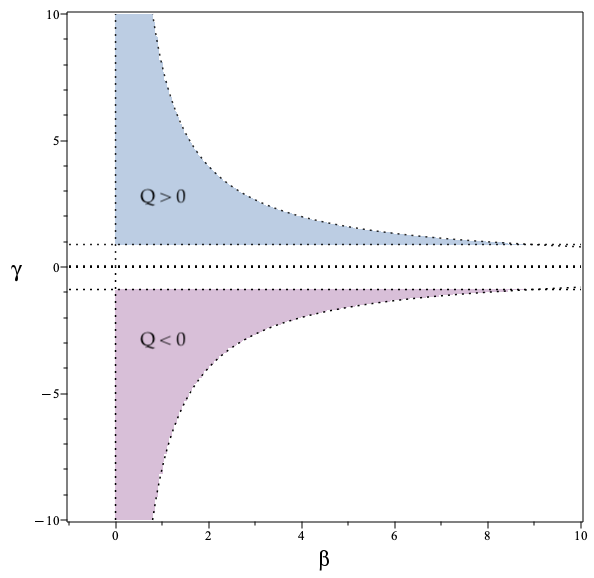
New research reveals a surprising link between quantum-corrected black hole solutions and those arising from classical gravity with a specific electromagnetic field.
![The construction maps the [latex]\mathcal{N}=2[/latex] SU(2) Seiberg-Witten moduli space using finitely many effective field theory domains-discs and punctured discs-each capturing a distinct, low-complexity description of electric-magnetic duality as one approaches the space’s infinite boundaries and regular points, thereby revealing how different variable combinations provide localized, yet interconnected, understandings of the complete system.](https://arxiv.org/html/2601.18863v1/x2.png)
New research suggests that consistent theories of quantum gravity may be surprisingly limited in their informational complexity, offering a novel path towards understanding the vast possibilities of the universe.