Author: Denis Avetisyan
A future muon collider offers a unique opportunity to indirectly probe new physics by precisely examining the internal structure of particles.

This review proposes leveraging Parton Distribution Functions at a muon collider to complement direct searches for Beyond the Standard Model phenomena.
Despite the Standard Model’s successes, fundamental questions regarding physics beyond its scope remain unanswered, motivating exploration of novel search strategies. This paper, ‘On the Run from the Dark Side of the Muon’, introduces an innovative approach to probing new physics at future muon colliders by leveraging the internal structure of the muon via Parton Distribution Functions (PDFs). We demonstrate that indirect searches through PDF modifications can outperform traditional direct searches for electroweak bosons, particularly for masses in the range of approximately 50-100 GeV. Could this PDF-based technique unlock a new era of precision measurements and discovery at a future muon collider, revealing the hidden constituents of this elusive lepton?
Unveiling the Patterns Beyond: A Search for Fundamental Consistency
Despite its remarkable predictive power, the Standard Model of particle physics remains incomplete. Phenomena like the existence of dark matter and dark energy, the observed mass of neutrinos, and the matter-antimatter asymmetry in the universe all suggest the presence of physics beyond its current framework. The model also fails to incorporate gravity, leaving a fundamental disconnect in our understanding of the universe’s forces. While experimentally verified to an impressive degree, the Standard Model doesn’t explain why certain particles have the masses they do, or account for the hierarchical nature of these masses. These unresolved questions fuel ongoing research into new theoretical frameworks and experimental searches, prompting scientists to investigate potential extensions and modifications to the Standard Model in pursuit of a more complete and unified description of reality.
The pursuit of physics beyond the Standard Model frequently centers on hypothetical particles that could explain observed anomalies and complete the picture of fundamental forces. Among these are new gauge bosons, force-carrying particles analogous to the photon or the W and Z bosons, but mediating interactions not currently accounted for. A compelling candidate is the Lμ-Lτ gauge boson, theorized to couple to leptons – specifically muons and tau particles – in a way that violates lepton flavor universality, a principle upheld by the Standard Model. Detecting this boson requires meticulous analysis of high-energy collision data, searching for subtle excesses in events where muons and tau particles appear, and carefully distinguishing these signals from background noise arising from known Standard Model processes. The existence of such a gauge boson wouldn’t just fill a gap in the current theory; it would fundamentally reshape understanding of how particles interact and open doors to exploring a more complete description of the universe.
The quest for new physics at high-energy colliders hinges on an exceptionally detailed understanding of particle interactions. Researchers meticulously analyze the aftermath of each collision, reconstructing the paths and energies of the resulting particles to verify adherence to predictions from the Standard Model. Any observed discrepancy – an unexpected particle, an unusual decay pattern, or a statistically significant excess of events – could signal the presence of new phenomena. This demands not only highly sensitive detectors but also sophisticated algorithms capable of filtering out background noise and identifying subtle deviations amidst a vast sea of Standard Model processes; it’s a process akin to searching for a faint whisper in a roaring crowd, requiring both precision instrumentation and robust analytical techniques to confirm any potential breakthrough.
Precision Environments: Colliders as Laboratories for New Phenomena
Lepton colliders, particularly those employing muons, provide a comparatively clean experimental environment for new particle production and detection due to the precise knowledge of the initial collision state. Unlike hadron colliders, where initial particle properties are statistically distributed, lepton-lepton collisions are characterized by well-defined energy, momentum, and quantum numbers. This precision allows for accurate theoretical predictions of Standard Model processes, reducing background noise and enhancing the sensitivity to subtle deviations indicative of new physics. The clean signature stems from leptons being fundamental particles, simplifying the collision dynamics and allowing for a more focused search for decay products of potential new particles, as opposed to the complex fragmentation and multiple particle production common in hadron collisions.
Particle physics employs two principal search strategies for new physics beyond the Standard Model. Direct searches involve the explicit production and detection of a new particle, requiring the observation of its decay products or direct interaction signatures. These searches are sensitive to the particle’s mass and coupling strengths but rely on specific decay modes being accessible and detectable. Conversely, indirect searches focus on precision measurements of known Standard Model processes, seeking deviations from predicted values that could indicate the influence of new, heavier particles through quantum loop effects. These searches are less reliant on specific decay channels and can reveal the presence of particles that do not directly decay into observable states, though they often require extremely high precision and theoretical understanding of background processes.
The Monophoton search strategy targets new particles that predominantly decay into undetectable final states, such as neutrinos or weakly interacting massive particles (WIMPs). This search relies on detecting a single high-energy photon – the ‘monophoton’ – resulting from the recoil of the invisible decay products. The principle is based on momentum conservation: if a particle decays into unseen constituents, the emitted photon carries away a significant portion of the initial energy and momentum. By precisely measuring the photon’s energy and direction, physicists can infer the presence of the invisible particle through the associated missing transverse energy – a key signature indicating an imbalance in momentum. The search sensitivity is directly proportional to the photon detection efficiency and the ability to accurately reconstruct its energy, making high-resolution electromagnetic calorimeters crucial for this analysis.
Decoding Interactions: The Language of Parton Distributions
Parton Distribution Functions (PDFs) are essential components in modeling high-energy particle collisions, representing the probability density of finding a specific parton – such as a quark or gluon – within a hadron at a given momentum fraction and resolution scale. These functions are not fixed but depend on the hadron’s momentum and the energy scale of the interaction, necessitating their determination through global analyses of experimental data from diverse collision processes. Because hadrons are composite particles, the collision does not occur between the entire hadron, but rather between its constituent partons; thus, accurate knowledge of the PDFs is critical for predicting cross-sections and kinematic distributions of collision products, and for interpreting results from collider experiments. The precision with which PDFs are known directly impacts the accuracy of theoretical predictions and the ability to search for new physics.
The Dokshitzer-Gribov-Lipatov-Altarelli-Parisi (DGLAP) equations are a set of evolution equations that describe how Parton Distribution Functions (PDFs) change with the energy scale, Q^2, of the interacting partons. These equations are based on perturbative quantum chromodynamics (QCD) and allow physicists to relate PDFs measured at one energy scale to those at another. Specifically, the DGLAP equations dictate how the momentum fractions carried by partons within a hadron evolve as the interaction energy increases, effectively predicting the probability of finding specific partons at higher energies relevant to collider experiments. By solving these equations, researchers can extrapolate PDF measurements obtained at lower energies-where perturbative calculations are more reliable-to the higher energy scales probed by current and future colliders, enabling accurate predictions of particle interaction rates and cross-sections.
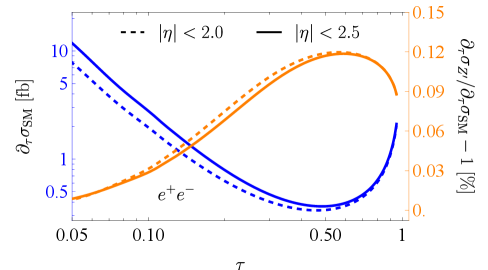
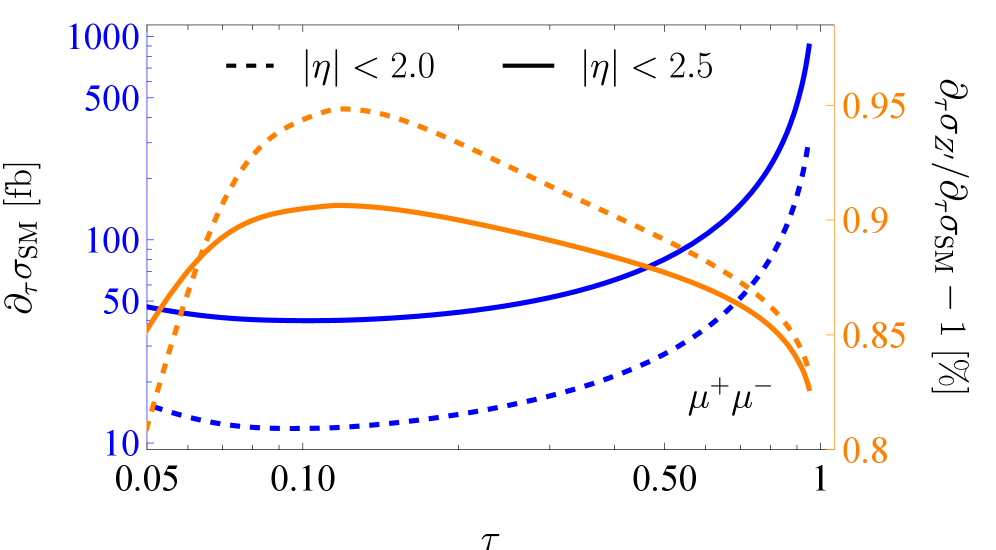
The Muon Parton Distribution Function (PDF) is a critical component in simulating muon collider physics due to the unique characteristics of muon structure and interactions. Unlike proton or electron colliders, muons are composite particles with internal substructure, necessitating a precise understanding of how momentum is distributed among their constituent partons. Accurate determination of the Muon PDF is essential for predicting collision rates, as these rates directly depend on the probability of specific parton interactions. Furthermore, the Muon PDF informs the optimization of search strategies for new physics; by precisely knowing the expected signal characteristics based on the PDF, physicists can design experiments with enhanced sensitivity and reduce background noise. Consequently, dedicated studies focusing on Muon PDF characterization are crucial for maximizing the discovery potential of future muon colliders.
Accurate identification of signal events in particle collisions necessitates detailed characterization of the kinematic distributions – specifically, the momentum and angular distributions – of the resulting collision products. These distributions differ between signal events, representing the decay or interaction of new particles, and background noise arising from Standard Model processes. Precise measurement and modeling of these distributions allows physicists to apply statistical techniques – such as likelihood ratio tests and multivariate analysis – to discriminate between signal and background. The ability to resolve these distributions is directly linked to the statistical significance of any observed signal, and therefore determines the sensitivity of the experiment to new physics. Insufficiently characterized kinematic distributions introduce systematic uncertainties that can mask or falsely indicate the presence of a signal.
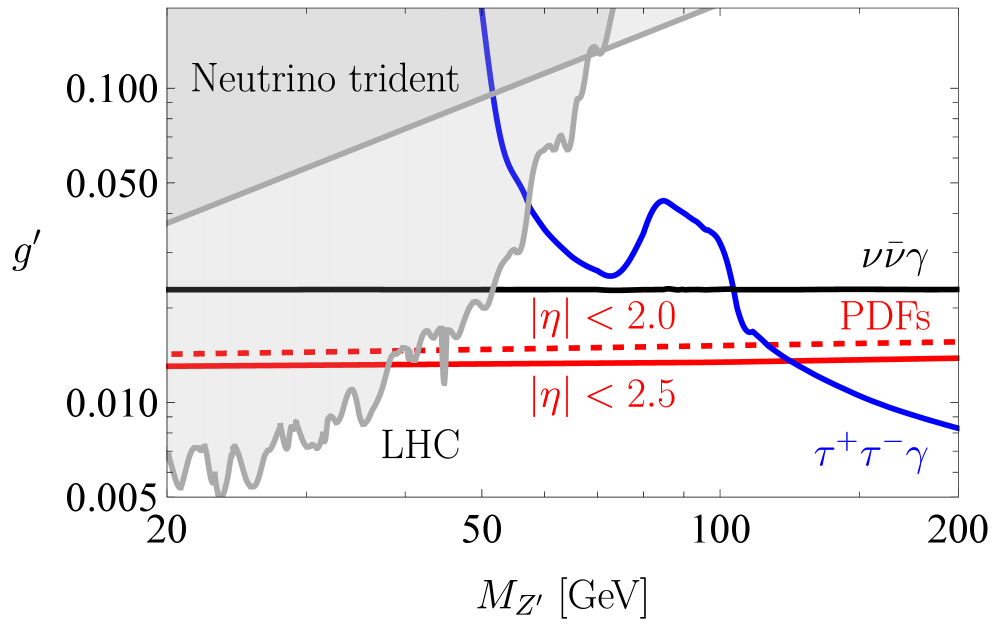
This research indicates that indirect detection of new physics via precision measurements of Parton Distribution Functions (PDFs) at a high-energy muon collider offers sensitivity comparable to direct search methods. Specifically, the analysis demonstrates the potential to constrain the coupling constant g' to approximately 50 GeV. This is achieved by leveraging the high luminosity and clean environment of a muon collider to precisely characterize PDFs and subsequently infer limits on new physics parameters, reaching a sensitivity of approximately 0.02 for g' at 50 GeV with an integrated luminosity of 10 ab-1.
Precision measurements of Parton Distribution Functions (PDFs) at a high-energy muon collider, with an integrated luminosity of 10 ab-1, are projected to constrain the coupling constant g' to approximately 0.02 at an energy scale of 50 GeV. This sensitivity arises from the ability of precise PDF characterization to indirectly probe beyond Standard Model physics, offering comparable constraints to direct search methods. The achieved limit represents a significant improvement in constraining g' and relies on the statistical power afforded by the high luminosity dataset.
Expanding the Horizon: The Impact of Precision and Innovation
The search for physics beyond the Standard Model benefits significantly from diverse investigative approaches, and the associated production of a hypothetical L\mu - L\tau gauge boson alongside known particles provides a valuable complement to direct detection strategies. While direct searches focus on observing the L\mu - L\tau boson itself, associated production – where it’s created in tandem with other particles like quarks or vector bosons – offers an indirect pathway to its discovery. This method enhances sensitivity by providing a broader range of detectable signatures and reducing background noise, as the accompanying particles can serve as ‘tags’ for the L\mu - L\tau boson’s existence. By analyzing the properties of these associated particles and their correlation with potential L\mu - L\tau decay products, researchers can effectively probe for subtle indicators of new physics that might otherwise remain hidden, ultimately broadening the scope of exploration beyond the limitations of single-particle searches.
The precise reconstruction of invariant mass distributions represents a powerful technique for uncovering evidence of new particle decays. When particles decay, the total energy and momentum are conserved, resulting in a characteristic sum – the invariant mass – that remains constant regardless of the observer’s frame of reference. By meticulously measuring the energies and momenta of the decay products, physicists can calculate this invariant mass and create a distribution revealing peaks or anomalies indicative of a parent particle’s existence. Subtle deviations from expected distributions, or the appearance of narrow resonances, can signal the presence of short-lived particles decaying into specific final states, even if these particles themselves are not directly observable. This approach is particularly effective in scenarios where the decay products are well-reconstructed and the background noise is minimized, allowing for the isolation of faint signals hinting at physics beyond the Standard Model.
The search for new physics beyond the Standard Model hinges on the ability to precisely predict and interpret the subtle alterations a novel particle, such as the L\mu-L\tau gauge boson, would impart on the distributions of kinematic variables in particle collisions. These distributions – encompassing quantities like particle energies, momenta, and scattering angles – act as fingerprints of underlying processes; deviations from Standard Model predictions could signal the presence of this new boson. Consequently, a thorough understanding of how the L\mu-L\tau modifies these distributions is not merely academic, but fundamentally crucial for crafting optimized search strategies. By accurately modeling these alterations, researchers can refine data analysis techniques, enhance signal sensitivity, and ultimately increase the likelihood of discovering this elusive particle amidst the complex background noise of high-energy collisions.
The pursuit of fundamental physics increasingly relies on both the creation of more powerful collider technologies and the refinement of data analysis methods. Future colliders, designed with higher energies and luminosities, promise to unlock previously inaccessible energy scales and produce rare particles with greater frequency. However, maximizing the potential of these machines necessitates the development of sophisticated analysis techniques-including advanced machine learning algorithms-capable of disentangling subtle signals from overwhelming backgrounds. These techniques are crucial not only for discovering new particles but also for precisely measuring their properties and testing the Standard Model with unprecedented accuracy. Progress in both hardware and software is therefore inextricably linked, representing a synergistic approach to pushing the boundaries of human knowledge and unveiling the universe’s deepest secrets.
The exploration detailed within this study mirrors a fundamental principle of understanding complex systems: discerning patterns within data. Much like mapping Parton Distribution Functions to indirectly reveal new physics, the process demands rigorous logic applied to creative hypotheses. As Confucius observed, “Study the past if you would define the future.” This sentiment aligns with the paper’s approach; by meticulously analyzing the subtle signatures within muon collider data, researchers aim to extrapolate beyond the current Standard Model, effectively learning from the ‘past’ of known physics to illuminate the ‘future’ of undiscovered phenomena. The method prioritizes a deep comprehension of the underlying structure to unlock potential insights.
Chasing Shadows of the Unseen
The proposition to utilize Parton Distribution Functions as an indirect probe within a muon collider represents a shift in strategy – akin to discerning the shape of a submerged object by mapping the ripples it creates. Direct searches for beyond-the-Standard-Model physics are, by their nature, predicated on specific theoretical expectations. This approach, however, acknowledges the possibility of the unexpected – a physics lurking just beyond the reach of current models, manifesting not as a clear signal, but as a subtle distortion of established patterns. The success of this method hinges on an exquisitely detailed understanding of the ‘background’ – a task not unlike attempting to map the dark matter distribution by charting the gravitational lensing of distant galaxies.
A key limitation remains the inherent complexity of both PDF calculations and the anticipated collision environment. Achieving the necessary precision will demand significant advances in computational techniques and detector technology. Future work must focus on quantifying the systematic uncertainties, and rigorously exploring the parameter space where new physics could masquerade as subtle PDF modifications. It’s a challenging path, requiring not only increased luminosity, but also a willingness to embrace ambiguity.
Ultimately, this research points toward a broader paradigm shift: a move from seeking definitive ‘discoveries’ to meticulously mapping the contours of the unknown. The muon collider, in this context, isn’t simply a machine for smashing particles, but an instrument for charting the boundaries of our understanding – a task as much philosophical as it is physical.
Original article: https://arxiv.org/pdf/2602.16771.pdf
Contact the author: https://www.linkedin.com/in/avetisyan/
See also:
- What Song Is In The New Supergirl Trailer (& What It Means For The DC Movie)
- Gold Rate Forecast
- One of Hulu’s Best New Shows Lands on Disney+ Ahead of Season 2
- Eurogamer Gives ARC Raiders 2/5 Over AI Voices, Dropping Metacritic Score from 94 to 84
- Digimon Is Getting a New RPG in 2026 (And You Probably Missed It)
- Czech Bank’s Crypto Comedy: $1M for a Digital Farce! 🎭💰
- Beyond Paradise confirms character exit – with potentially damaging consequences
- Unpacking the Controversy Around Amy Griffin’s Memoir The Tell
- MMOs Usually Take Up Too Much Time, But One Returning Classic Could Change That
- Pokemon Go Unveils Precious Paths Season Details With New Masterwork Research, Pokemon Debuts & More
2026-02-20 11:31