From the classic films of Hollywood’s Golden Age, like The Maltese Falcon and Chinatown, crime and mystery have always been central to serious filmmaking. The Noir movement, known for its morally gray characters and intricate stories, pushed boundaries by offering audiences a darker experience. And in 1974, a single line from a noir film became iconic – a line that many still consider the most impactful in the genre after fifty years.
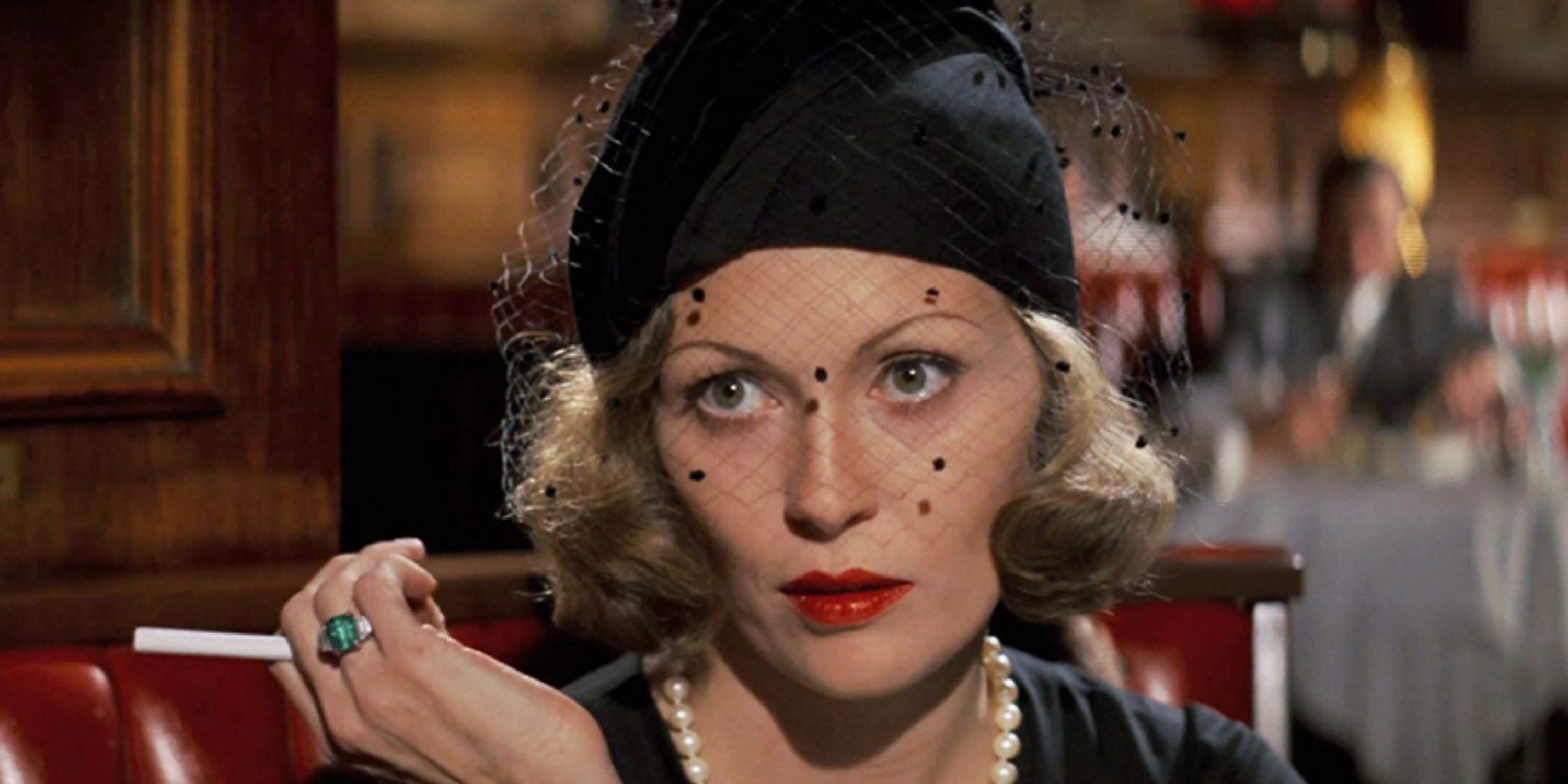
Thrillers are famous for their clever dialogue, and films like L.A. Confidential, Witness, and The Maltese Falcon are prime examples of incredibly well-written scripts. Similarly, in Film Noir, powerful and memorable lines are essential, and directors often strive to end their stories with a lasting impact. A particularly striking example is a chilling line delivered by Faye Dunaway in 1974 that remains unforgettable.
How Chinatown Resurrected Noir For a New Age of Cinema
1968 marked a turning point for Hollywood, as the strict rules of the Hays Code—which had long limited creative expression—were officially abandoned. This newfound freedom led to a surge of acclaimed films, exemplified by groundbreaking movies like A Clockwork Orange and Dirty Harry in 1971. Dirty Harry particularly influenced the rise of neo-Noir thrillers, which updated the classic mystery style of the 1940s with a more realistic and gritty ’70s edge. However, in 1974, Roman Polanski’s Chinatown took a different approach, deliberately looking back to the classic filmmaking techniques of Hollywood’s Golden Age—something most films of the time weren’t doing.
Jake Gittes is a Los Angeles private investigator who makes a living uncovering infidelity. When a woman claiming to be Evelyn Mulwray hires him to follow her husband, Hollis, he quickly confirms the affair and leaks the story to the media. But his case takes a bizarre turn when another woman insists she’s the real Evelyn and threatens a lawsuit. The situation escalates dramatically when Hollis is found murdered, and Jake realizes he’s been manipulated into something far more dangerous than a simple divorce case.
The movie mainly focuses on Gittes and Mulwray investigating Hollis’s murder and the reasons behind it. The case takes an unexpected turn when Jake spots Evelyn with someone he previously saw with her husband, right before the murder. This discovery throws everything into question and makes the detective doubt Evelyn, despite his growing feelings for her.
Everything in the movie, from the clothes and sets to Faye Dunaway’s accent, transports viewers back to the 1930s. Unlike most crime films of the 1970s, it felt familiar and accessible to audiences at the time. Polanski carefully crafted the film to feel like a rediscovered classic from Hollywood’s golden age, but filmed with a contemporary style.
Faye Dunaway Delivered the Darkest Line of the 70s
In a heated confrontation in Chinatown, detective Gittes forcefully demands the truth from Evelyn Mulwray, eventually getting her to reveal a shocking secret. Evelyn hysterically confesses that Katherine is both her daughter and her sister, revealing a deeply disturbing family history. As Evelyn breaks down, Jake discovers the horrifying truth: Noah Cross sexually assaulted his own daughter. He also realizes, with dread, that Cross intends to do the same to Katherine again.
As a movie fan, one of the most haunting scenes for me in Chinatown is when Evelyn is shot. It’s devastating watching Noah pull Katherine away, and it completely paralyzes Gittes – he’s helpless. It reminded me of a moment where a friend tries to lead a shaken Jake away, but the real gut punch comes when someone just tells Gittes, “Forget it, Jake, it’s Chinatown.” That line isn’t just about the location; it’s about the overwhelming corruption and the fact that he’ll never get to the truth. The ending is just as bleak – you know Cross will escape with Katherine, Evelyn’s memory will fade, and Gittes will be left to wallow in his office, defeated. It’s a truly unforgettable and depressing conclusion.
With its surprising plot twist, Evelyn’s death, and the unsettling victory of Noah Cross, Chinatown cemented its reputation as one of the darkest mystery films ever made. Before 1968, movies rarely allowed villains to win, especially after committing terrible crimes. Even films like The French Connection either killed off the villain or left the ending uncertain enough to avoid a clear victory. But Chinatown broke that mold, delivering a rare and disturbing thriller where the bad guy not only gets away with everything, but truly wins, leaving audiences with a sense of injustice.
Faye Dunaway’s portrayal of Evelyn Mulwray is considered one of the most memorable and emotionally powerful performances in 1970s cinema. When she reveals the truth to Gittes, you can feel the pain, fear, and regret in her voice, instantly shifting how you see her. In a time when female characters were often secondary, Dunaway’s Evelyn is central to the story and drives its heartbreaking conclusion.
Even Dark Movies Haven’t Topped Chinatown
It’s surprising that, even with many even grimmer films released since 1974, none have matched how relentlessly bleak Chinatown is. Even dark comic book adaptations usually offered some hope, with heroes achieving victory – even if it meant sacrifice. Frank Miller’s work, for example, at least let audiences believe the heroes’ actions mattered. But watching Jack Nicholson as Gittes in Chinatown, that feeling is absent, and the sequel doesn’t offer any redemption either.
Crime thrillers and neo-noir films, from classics like Jackie Brown and L.A. Confidential onward, often struggle to deepen the darkness and complexity of the genre. It seems modern writers often mask the grim reality with cynical humor. While Pulp Fiction surprised audiences in the 90s, much like Chinatown did in the 70s, it did so through dark comedy and shocking moments, rather than the serious tone of the earlier film.
The film Chinatown set such a high bar for dark, complex mysteries that any screenwriter attempting something similar is immediately measured against Robert Towne’s script. Some writers seem to prefer exploring different genres just to avoid those comparisons, prioritizing originality over depth. It’s understandable, given how difficult it is to create a twist that could top the shocking reveals in Chinatown – like the incestuous relationship of Noah Cross, the kidnapping of Katherine, and the tragic fate of Evelyn Mulwray. The film broke so much new ground with its taboo-shattering story that it’s become incredibly challenging to truly shock audiences today.
Only One Movie Comes Close to Chinatown
As a huge film buff, I still remember being completely floored by Se7en when it came out in 1994. David Fincher and Andrew Kevin Walker crafted this incredibly dark, noir-ish thriller about a serial killer who bases his murders on the Seven Deadly Sins. The story follows a seasoned detective, Somerset, as he’s forced to partner with the younger, more impulsive Mills. Surprisingly, the killer actually turns himself in, and the detectives are led out to the desert to find his final two victims. What really set Se7en apart – and made it feel like a modern Chinatown in terms of its bleakness – was the shocking delivery of a certain box. When Mills opens it and finds the head of his murdered wife, he completely loses it and kills the killer, ironically fulfilling the final sin – wrath. It’s a truly unforgettable, and disturbing, film.
As a huge movie fan, I’ve always felt that while Se7en tried, no thriller has quite matched the bleak, unsettling feeling of Chinatown. Even the resolution in Se7en, with Mills killing John Doe, felt like a desperate attempt to find some closure. But Chinatown… that film just stays with you. And honestly, Faye Dunaway delivers what I think is her best performance ever, especially when she delivers that absolutely devastating final line. It’s a truly unforgettable moment in cinema.
Found an error? Send it so it can be corrected.
Read More
- Gold Rate Forecast
- Looks Like SEGA Is Reheating PS5, PS4 Fan Favourite Sonic Frontiers in Definitive Edition
- Hazbin Hotel Secretly Suggests Vox Helped Create One of the Most Infamous Cults in History
- Arknights: Endfield – Everything You Need to Know Before You Jump In
- Dune 3 Gets the Huge Update Fans Have Been Waiting For
- Jack Osbourne Shares Heartbreaking Tribute to Late Dad Ozzy Osbourne
- 22 actors who were almost James Bond – and why they missed out on playing 007
- Disney Promotes Thomas Mazloum To Lead Parks and Experiences Division As Josh D’Amaro Prepares To Become CEO
- Antiferromagnetic Oscillators: Unlocking Stable Spin Dynamics
- 5 Weakest Akatsuki Members in Naruto, Ranked
2026-03-05 21:39