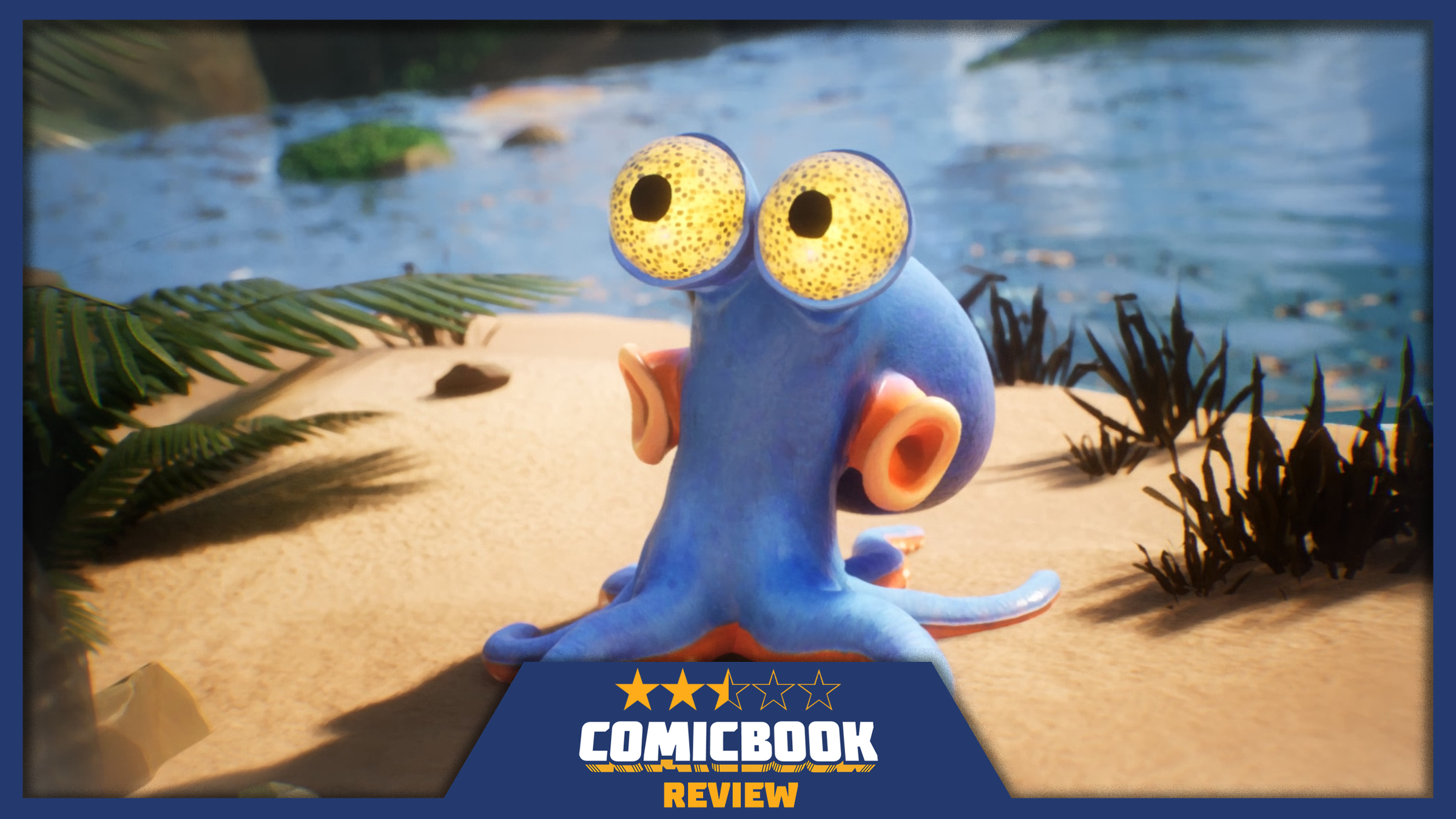
Okay, so octopuses are seriously amazing, right? They’re these graceful, almost otherworldly creatures with eight arms that can fit into the tiniest spaces. Their skin is super complex, letting them blend in perfectly, and they can even use tools! Each arm can basically taste and think on its own. They’re just incredibly intelligent and fascinating animals. That’s why I was so disappointed with Darwin’s Paradox – a puzzle platformer starring an octopus – because it just didn’t live up to how cool octopuses actually are. It felt surprisingly simple and boring, honestly.
The game’s appeal mostly comes from how it looks. The main character, an octopus, is surprisingly expressive, squashing and stretching in funny ways – even simple movements are lively and detailed. The game’s few cutscenes have a similar personality to a typical Pixar short, though they lack the emotional depth or meaningful story you’d usually find in those films. It’s always charming to watch Darwin react to danger, with his eyes widening, or to see him interact with his opponent, thanks to the well-made animations.
The game’s lack of spoken words really lets the music shine. It uses bold trumpets and subtle bass to emphasize both the exciting and calm parts of the gameplay, and even includes eerie theremin sounds that fit the alien theme. Combined with the bright and vibrant visuals, all these elements blend together seamlessly to create a truly unified experience for the senses.
Rating: 2.5/5
| Pros | Cons |
|---|---|
| Cute animation, visual style, and music | Its mediocre puzzles don’t require much thought |
| The sticky controls and small level design quirks make getting around a pain | |
| Undeserved cliffhanger ending |
Darwin’s Paradox Often Trips Over Itself
While the game has potential, no other aspect quite matches the quality of its core concept. Darwin’s Paradox combines puzzles and platforming, but unfortunately, neither element is particularly engaging or challenging. The hero’s suction cup abilities, meant for movement, can feel clunky, making platforming feel like a necessary step to reach the puzzles rather than an enjoyable experience on its own.
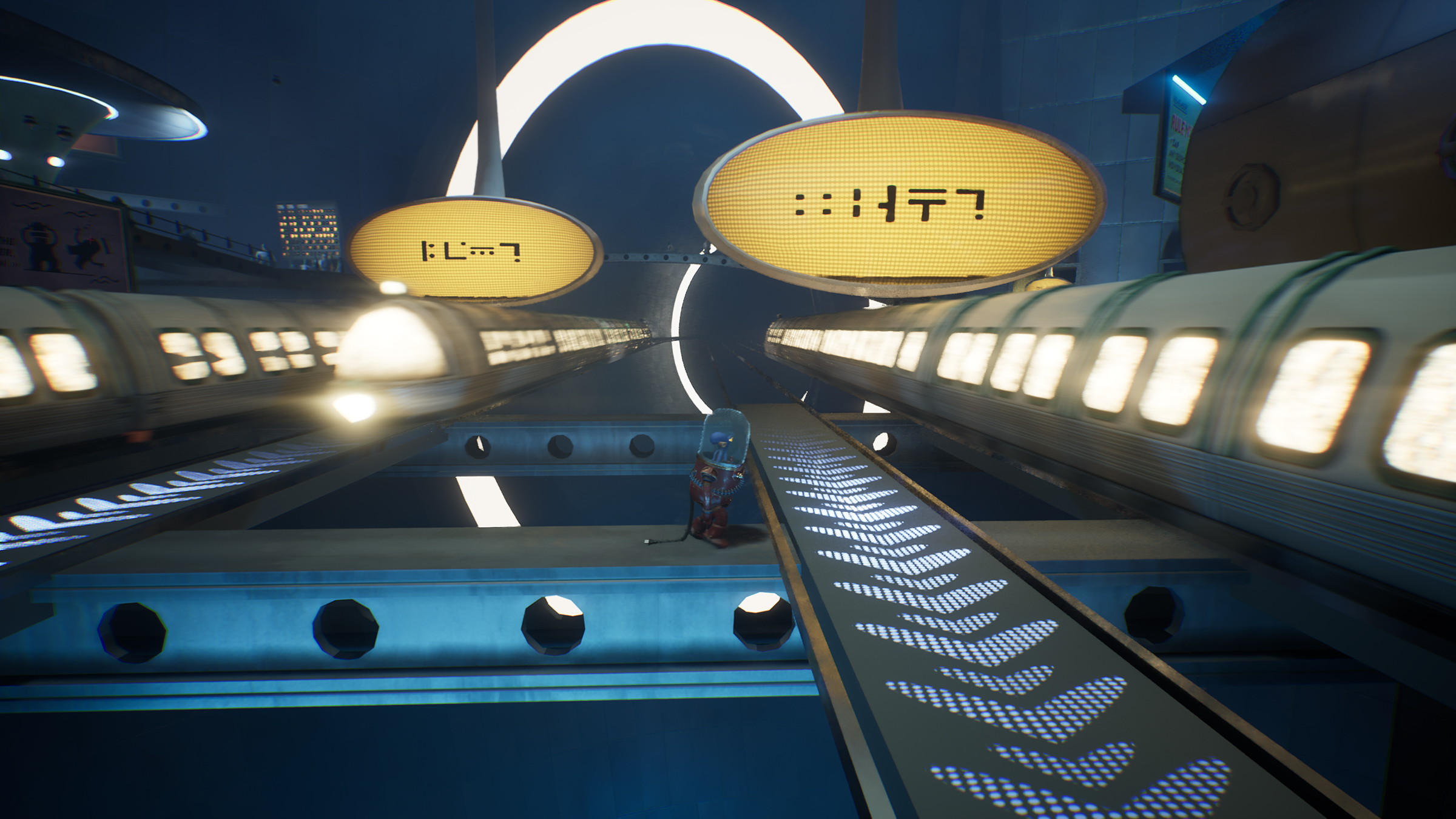
The game’s slow controls also make the puzzles frustrating. Many require precise movements, but the main character is clumsy, needlessly increasing the difficulty. Beyond just being slow, the character often gets stuck, leading to comical, and often fatal, squashing. A late-game section with a mechanical diving suit highlights these control issues – it adds so much momentum that it’s incredibly hard to steer. It’s no surprise that the biggest challenge in this section is simply navigating some subway tracks, and even that becomes a frustrating experience.
The game’s difficulty is made worse by frustrating level design. Important objects are sometimes hidden in shadows, the camera is often restrictive, and it’s unclear whether certain platforms are actually safe to use. A sneaky robotic shark can also unexpectedly attack. These problems happen throughout the entire game and consistently interrupt any progress the game manages to make, especially since it struggles to build momentum to begin with.
Darwin’s Paradox‘s Puzzles Are Usually Either Too Simple or Annoying
The puzzles themselves aren’t really worth the effort. Most are too simple and don’t challenge you much. It’s not solving the puzzles that’s difficult—you figure those out quickly—it’s keeping Darwin under control long enough to complete them without causing trouble.
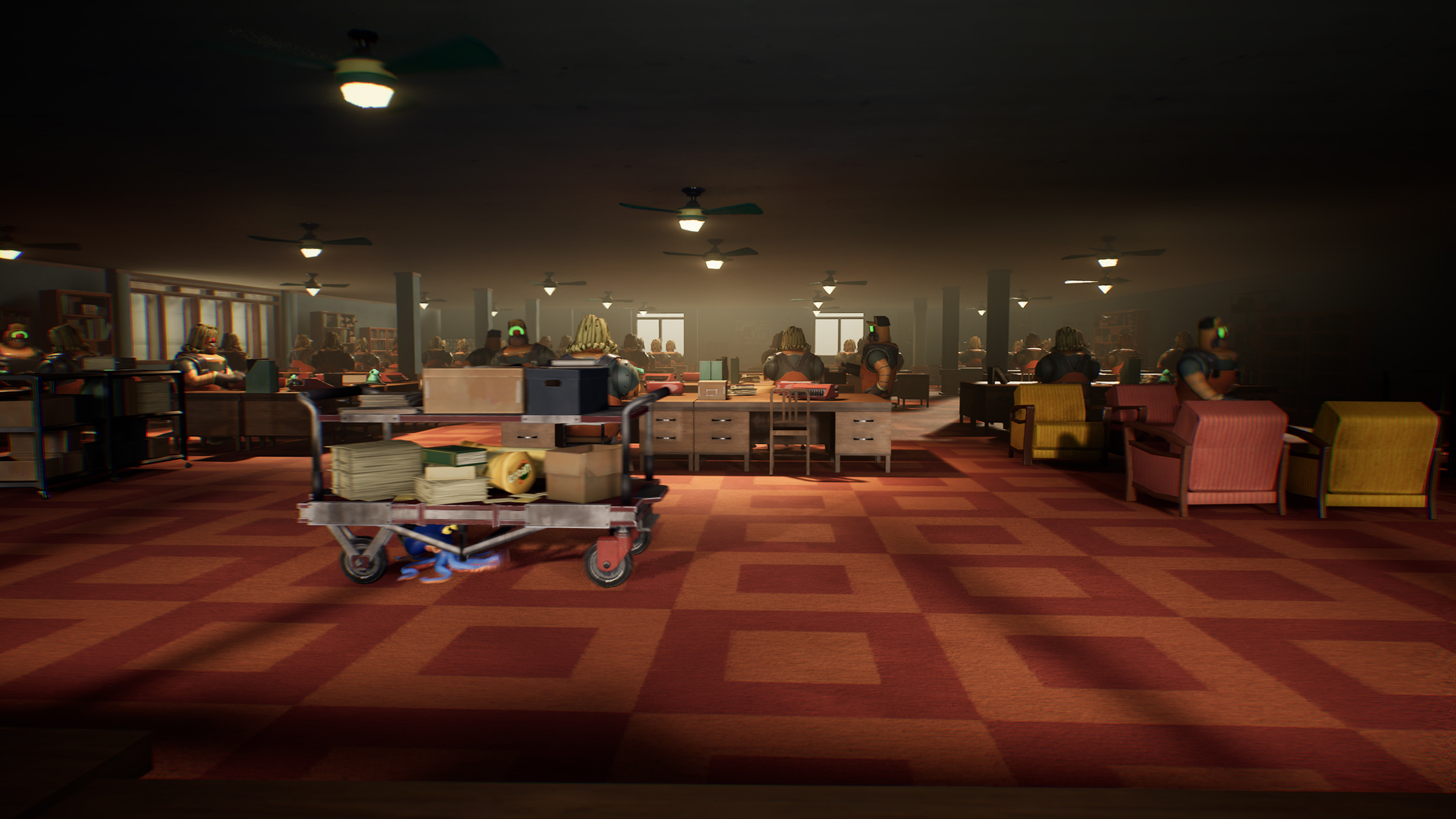
The biggest issue with Darwin’s Paradox is its reliance on passive gameplay. Progress often depends on simply waiting for the right moment, which is especially frustrating during the basic stealth sections. These sections usually involve inching forward when guards aren’t looking and hiding when they return – a tedious process made worse by unclear enemy vision. This waiting isn’t interesting or engaging; it just feels like wasted time, particularly since it happens so often without much variety. While it’s reasonable for a platformer not to have complicated sneaking mechanics, good stealth games turn downtime into strategic planning, and Darwin’s Paradox doesn’t offer that. It tries to incorporate elements of stealth without fully committing to the genre’s depth.
The game Darwin’s Paradox ends with a disappointing chase, a beautifully animated cutscene, and a cliffhanger that feels forced. This final sequence perfectly highlights the game’s biggest problems – it looks great, but the gameplay itself isn’t nearly as strong. It’s a shame the mechanics don’t live up to the game’s visual presentation.
The game presents a striking contrast, mirroring its own name. Darwin’s Paradox takes inspiration from biologist Charles Darwin’s observation of coral reefs flourishing even in nutrient-poor waters – how can life thrive in a seemingly lifeless place? Interestingly, the game poses a similar puzzle: how can something that looks so vibrant and appealing be so uninteresting and lacking in depth?
A PS5 copy of Darwin’s Paradox was provided by the publisher for the purpose of this review.
What do you think? Leave a comment below and join the conversation now in the ComicBook Forum!
https://comicbook.com/gaming/feature/metal-gear-solid-4-solid-snake-ending-op-ed/embed/#
Read More
- Looks Like SEGA Is Reheating PS5, PS4 Fan Favourite Sonic Frontiers in Definitive Edition
- Dune 3 Gets the Huge Update Fans Have Been Waiting For
- Gold Rate Forecast
- Pluribus Star Rhea Seehorn Weighs In On That First Kiss
- Kelly Osbourne Slams “Disgusting” Comments on Her Appearance
- Tomodachi Life: Living the Dream ‘Welcome Version’ demo now available
- Arknights: Endfield – Everything You Need to Know Before You Jump In
- Antiferromagnetic Oscillators: Unlocking Stable Spin Dynamics
- 10 DC Villains That Can Solo Entire Teams
- Xbox 360 and PS3 Series Not Seen Since 2013 Reportedly Returning With New Game
2026-03-30 15:14