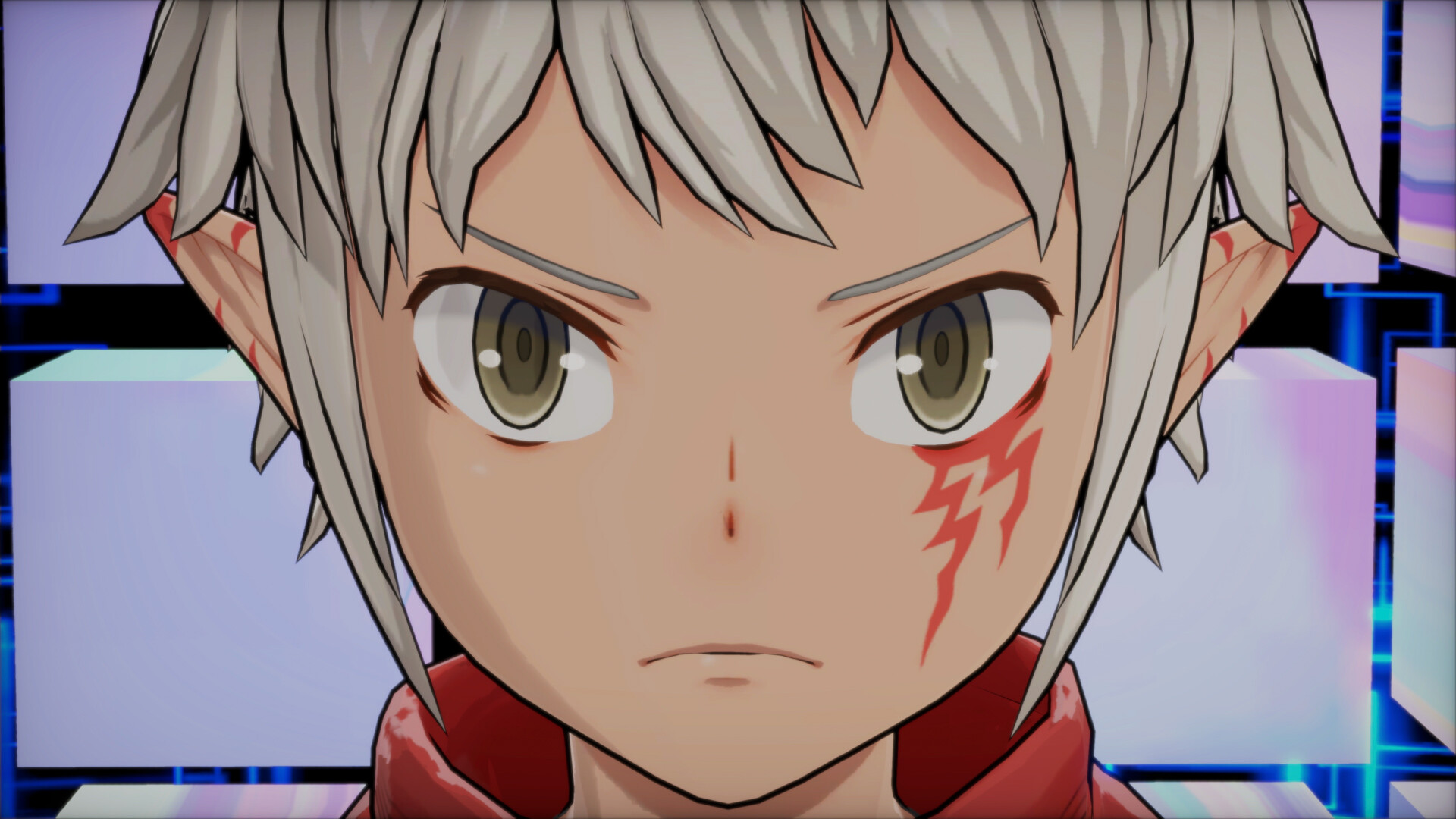
Digimon is a show that holds a special place in my childhood memories. Like a lot of people, I started with Pokémon, but eventually stopped playing it for various reasons. That’s when I began watching Digimon. It happened gradually – I started watching Digimon Adventure and was fascinated by the Digivolutions and the high stakes – but I didn’t play my first Digimon game, Cyber Sleuth – specifically the Complete Edition – until much later. I found the story really captivating, and the ability to customize my Digimon extensively made it feel like a natural step forward from other monster-taming games, and something that really set this franchise apart.
It’s safe to say fans have been eagerly awaiting a new Digimon Story game – not because Bandai Namco was secretive, but because Time Stranger was first announced in 2017 – the same year as Hacker’s Memory, which followed Cyber Sleuth. While there were updates over the years, a full trailer wasn’t shown until recently. So, after nearly eight years since the original announcement, it really shows its age.
Digimon Story: Time Stranger keeps the detailed character development and customization options fans expect, but it struggles in several confusing areas. The game doesn’t always *look* great, and it’s not just the slow frame rate that’s the problem. The story feels slow and lacks excitement, and it takes a very long time for things to happen, all while failing to make you connect with most of the characters. The quests, both the main story and side missions, are generally quite dull, and I only kept playing because of the enjoyable combat and character progression systems.
However, exploring the game world firsthand isn’t as smooth as it seems. Distant objects don’t load properly, causing noticeable pop-in, and you’ll also see jittery shadows and questionable animation quality.
The story begins with Time Stranger, following Dan or Kanan Yuki, a secret agent tasked with traveling to the past to uncover the source of a strange event. After a puzzling meeting with Inori Misono-who appears to be Yuki’s assigned protectee-and a destructive fight on a rooftop, the player finds themselves transported eight years into the past.
Sadly, the slow and quirky rhythm established at the beginning continues for quite a while as you explore Japan, making the early gameplay rather dull. Events do occur, but I often felt like I could skip conversations without missing important details. While the dialogue options don’t really matter – I recognize that – you’d expect them to at least lead to some amusing reactions now and then, but unfortunately, they don’t.
The conversations aren’t always pointless, but the characters are inconsistent. Inori often feels unremarkable (unless she’s repeating the same joke about your “funny outfit”), and the Operator’s constant reminders to investigate and “focus on the mission” quickly become irritating (the voice acting isn’t particularly good either). Aegiomon is somewhat interesting, and other compelling side characters, like Minervamon and members of Public Safety, are introduced as the story progresses.
Honestly, I didn’t find many memorable characters while wandering around Shinjuku – it felt pretty empty, and there wasn’t much to *do* with the people I did see. At least the Digital World was a bit better! There were a bunch of Digimon to chat with, and they actually felt different enough from each other that they stuck with me. It wasn’t amazing, but it was a step up, you know? Your experience might be different, of course, but that’s just how I felt.
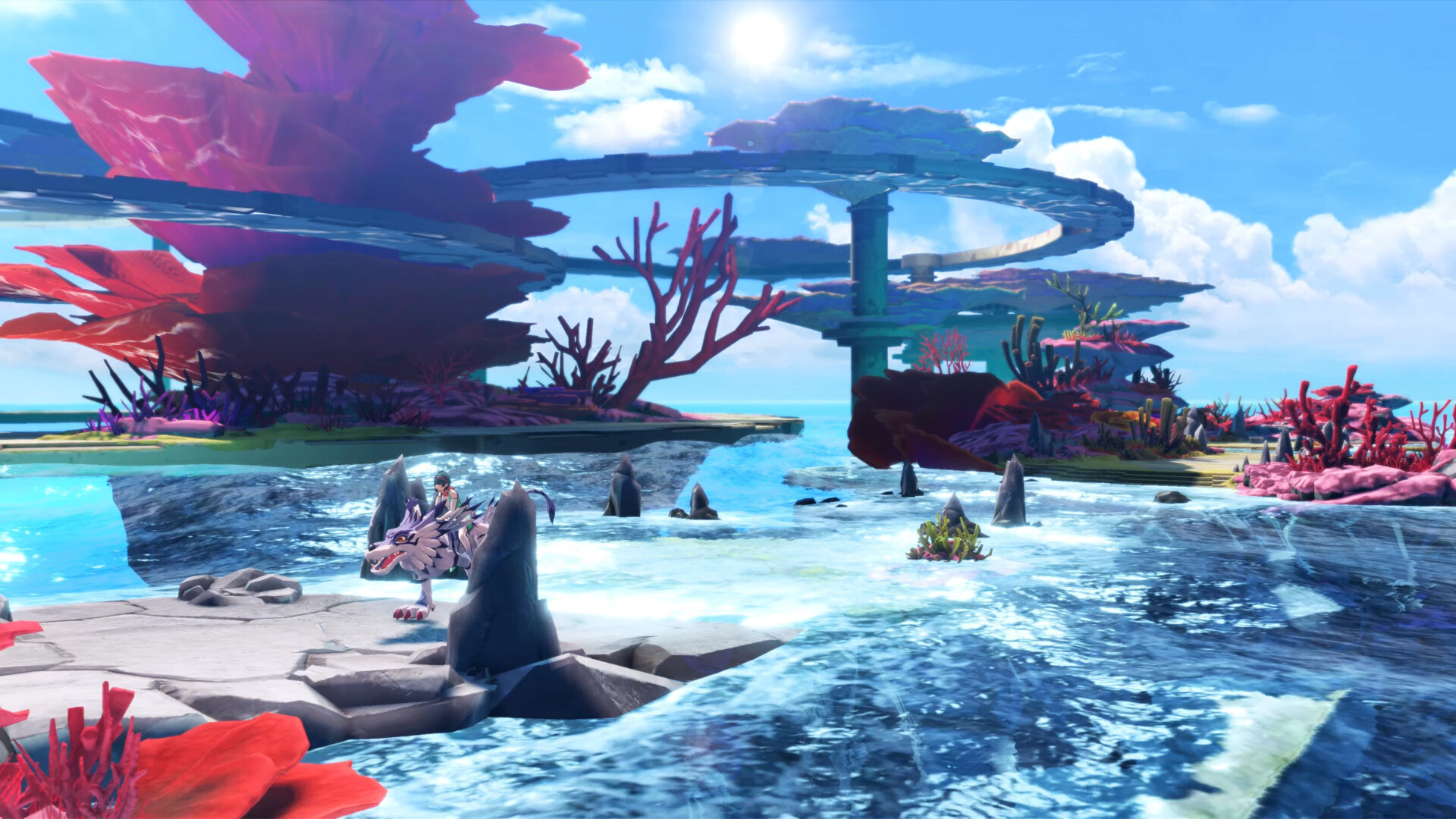
Digimon Story: Time Stranger runs at a consistent 30 frames per second, but doesn’t offer options to change the graphics settings. While this isn’t a major flaw – the game displays in 4K, and the characters are quite detailed during cutscenes (which generally feature good animation and camera work) – exploring the game world itself is less impressive. Distant objects aren’t rendered well, leading to noticeable pop-in, flickering shadows, and animations that aren’t always smooth. This is disappointing because some areas are faithfully recreated and *could* have been more immersive if they weren’t so bland to navigate. Other areas have striking, unusual visuals that are well-presented, and the Digimon World contains some intricate details. However, even these impressive aspects are let down by the poor shadow quality.
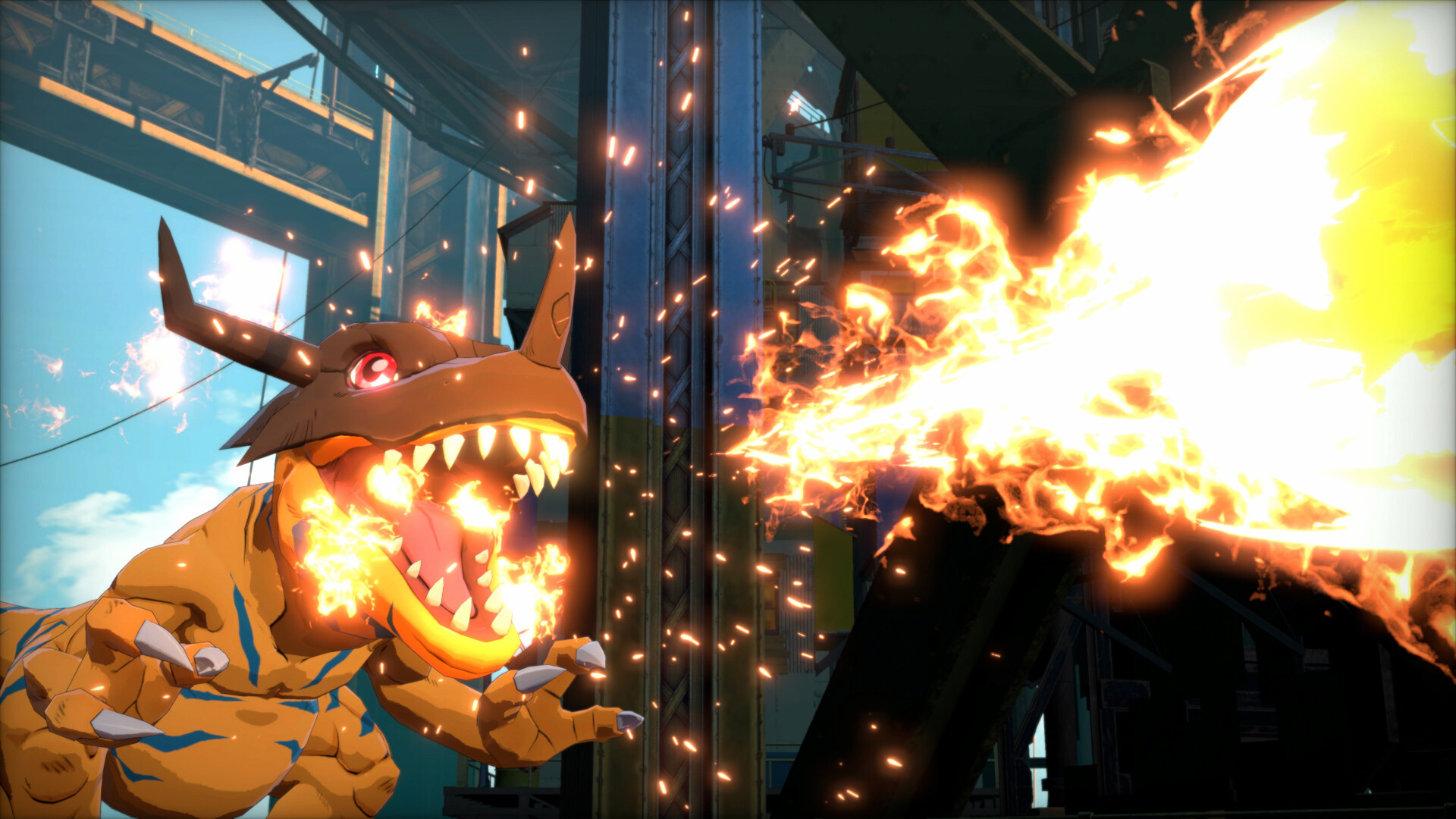
Despite these concerns, the battles and Digimon customization are generally well-done. The combat system is a typical turn-based one with a set turn order, but the ability to use multiple Digimon in battle and switch them out without sacrificing a turn adds a layer of strategy.
Sometimes, exploring feels limited because certain paths are too narrow, and many areas don’t have much to actually *discover* beyond just gathering resources. This is especially noticeable in dungeons and important mission locations, though thankfully, there are occasionally simple puzzles to make things a bit more interesting. You can play a simple game with various characters throughout the worlds, but the rock-paper-scissors style gameplay isn’t very rewarding.
Despite these issues, the battles and Digimon customization are generally well-done. The combat is a traditional turn-based system with a turn order, but having multiple Digimon in battle and being able to switch them out without penalty adds a layer of strategy. Follow-up attacks are a nice touch, even if they aren’t visually spectacular, though it would have been good to choose from more Cross Arts early on. A helpful feature is the ability to instantly defeat weaker Digimon while exploring if your level is high enough. This, along with the auto-battle function, makes it worthwhile to battle to scan and recruit new Digimon, and also to level up your team. There are more challenging fights that require more careful planning, particularly boss battles where enemies charge attacks and need to be stunned. It’s not a deeply complex system, but it works effectively and is solid.
As my Digimon get stronger – and I level up as an Agent – they can Digivolve, which is awesome because it boosts their stats and gives them new moves. I really like having different Digivolution paths to choose from, and it’s great that I can De-digivolve them if I don’t like where they’re going – thankfully, it doesn’t take too long to get them back to a good level. Sometimes the ways I interact with my Digimon to shape their personalities feel a little forced, but overall, it really helps them feel like more than just battle units. It’s a neat feature!
Plus, with the new Agent Skills – which you unlock using Anomaly Points – you can really focus on a specific Personality trait and get some great benefits. I’m currently focusing on Valor, which gives my Digimon with that personality more attack, health, defense, and speed, and also helps them grow faster. The best approach is to invest in all areas, so even new Digimon can take advantage of the boosts. Alternatively, you can use the personalities you don’t need to strengthen others or earn some extra money. It’s up to you, and honestly, it sometimes feels amazing to have so much control.
Okay, so if you can get past all the stuff I mentioned earlier, Digimon Story: Time Stranger could actually be pretty fun – especially if you’ve been playing Digimon games for years. But, honestly, if you’re looking for a really complete RPG experience, just be aware that this one might not be it.
That’s likely why I can’t completely dismiss Digimon Story: Time Stranger. While the game’s presentation is good in parts, the story, world, and characters vary from boring to somewhat interesting, depending on where you are. Instead of being invested in the fate of humans and Digimon, I found myself more focused on unlocking new Digivolutions and defeating enemies just to get their data. Side quests felt like simply a way to earn more AP to make my team of digital fighters even stronger.
Even if I try to focus solely on battles and raising Digimon, everything else feels like a frustrating distraction with its uninspired tasks. If you can get past all that, Digimon Story: Time Stranger could be fun, particularly if you’ve been a fan of the series for a while. However, if you’re looking for a more complete and balanced role-playing experience, be aware that this might not be it.
This game was reviewed on PS5.
Read More
- What Song Is In The New Supergirl Trailer (& What It Means For The DC Movie)
- Why is Tech Jacket gender-swapped in Invincible season 4 and who voices her?
- Highly Anticipated Strategy RPG Finally Sets Release Date (And It’s Soon)
- TV legend Carol Kirkwood reveals the reasons why she decided to retire after 28 years with BBC
- Starfield PS5 Won’t Play Off Physical Disc without a Download
- The Super Mario Galaxy Movie: 50 Easter Eggs, References & Major Cameos Explained
- Crimson Desert – 15 Things I Wish I Knew Before Diving In
- Welcome to Demon School! Iruma-kun season 4 release schedule: When are new episodes on Crunchyroll?
- New Pokemon Go Event Gives Players A Shot At 11 Rare Shiny Pokemon (With Boosted Odds)
- NFL Heiress Gracie Hunt Engaged to Former Chiefs QB’s Son Derek Green
2025-10-01 20:16