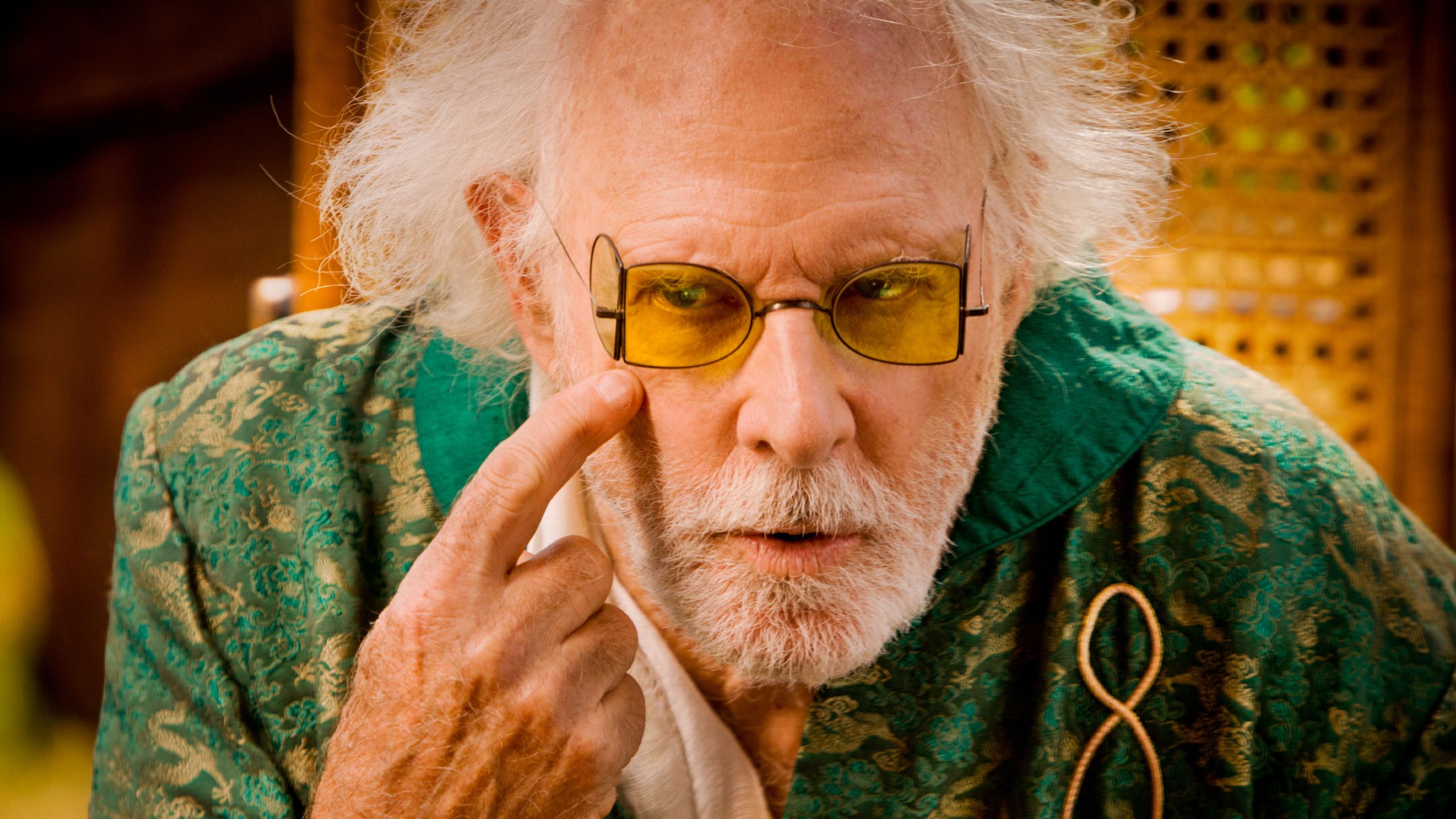
While Django Unchained is likely Quentin Tarantino’s most violent film (though Kill Bill could argue otherwise), at its heart, it’s a classic fairy tale. With his early film, Reservoir Dogs, Tarantino reintroduced a stylish, subversive take on American crime films, much like the French New Wave had done. He essentially reimagined a foreign take on an already classic American genre.
Quentin Tarantino once again demonstrated his knack for homage with Django Unchained. While his earlier films, Reservoir Dogs and Pulp Fiction, drew inspiration from classic French crime thrillers, Django Unchained looked to the style of Italian Westerns, particularly those directed by Sergio Leone and Enzo Corbucci. These films offered a stark contrast to the more idealistic and polished portrayals of the American West often seen in the work of directors like John Ford and Howard Hawks.
Tarantino noticed that Italian directors like Leone and Corbucci had twisted traditional Western tropes, adding darker themes and more intense violence to expose the harsh realities of American history. He adopted their filmmaking style and brought it back to the U.S., using it to powerfully depict the brutality of slavery – a dark chapter in American history.
I’m a big fan of Django Unchained, and like a lot of those old westerns, it’s all about a really tough bounty hunter on a mission to get revenge. But what makes this one so different – and amazing – is that this bounty hunter is a former slave who’s taking the law into his own hands across the South. It’s exactly the kind of thing Tarantino does best – rewriting history in a really powerful way. He’s already shown he can take down villains like Hitler and the Manson family, and now he’s doing it to slave owners, and it’s incredible.
While Django Unchained appears to be a sharp and funny satire of American history, similar to Blazing Saddles, it’s also a story with deeper meaning. At its core, beneath all the clever humor, the film functions as a modern fairy tale.
Django Unchained Is A Fairy Tale Disguised As A Spaghetti Western

The story of Django Unchained follows a heroic figure and his experienced guide as they embark on a mission to save someone from a villain. It’s a plot we’ve seen many times before – think Star Wars, Shrek, The Princess Bride, and countless other fairy tales. While it looks like a western, at its core, it’s structured like a classic fairy tale.
This story takes classic fairy tale elements and reimagines them as a gritty spaghetti western set during the time of slavery. The traditional roles are flipped: the hero is a slave, his guide is a bounty hunter, the woman he loves is also enslaved, their ‘castle’ is a plantation, and the villain is a cruel slave owner. It feels like a fairy tale, but it’s presented as a western.
Tarantino highlights this connection within the movie itself. During a calm scene where Django and Dr. Schultz are bonding over a campfire, Django reveals his wife’s name is Broomhilda. This surprises Schultz, as Broomhilda – originally Brunhilde – is a figure from a famous German folktale.
He explains the folk tale to Django: a princess named Broomhilda was held captive on a mountaintop, but a brave hero rescued her by overcoming fiery obstacles. The movie mirrors this when Django destroys Candyland with dynamite, creating his own ‘hellfire.’ He then walks through the resulting flames to be with Broomhilda, and they ride off together.
The film openly embraces the classic structure of a fairy tale. A key mentor character dies midway through, pushing the protagonist, Django, forward – similar to how Obi-Wan Kenobi is killed in Star Wars. While Quentin Tarantino’s films typically avoid such conventional storytelling, this traditional “hero’s journey” format actually enhances the narrative in this case.
Django Is One Of Tarantino’s Only Traditional Heroes

Quentin Tarantino doesn’t usually follow the classic hero’s journey structure found in many stories, mainly because his films rarely feature traditional heroes. Instead, his main characters are often flawed, morally ambiguous, or even outright villains. For example, the characters in Reservoir Dogs are criminals who constantly betray one another, and the leads in Pulp Fiction are hitmen who are disturbingly nonchalant about taking lives.
Unlike many characters in Tarantino films, Django is a genuinely heroic figure with a kind heart. While The Bride is a former assassin, her desire to be reunited with her daughter is a just and admirable goal. Similarly, the main characters in Jackie Brown, Jackie herself and Max Cherry, are fundamentally good people, even if they occasionally operate outside the law.
Despite spending most of the movie seriously wounded, Mr. Orange is the only genuinely heroic character in Reservoir Dogs. Everyone else is a hardened criminal who enjoys causing pain, but Mr. Orange is actually an undercover police officer working to arrest them. He and Django are probably the only traditionally heroic figures in all of Quentin Tarantino’s films.
14 Years Later, Has Django Unchained Aged Well?

I remember when Django Unchained came out in 2012 – it really stirred things up! Everyone was talking about it. Critics generally loved it, and it made a ton of money, but it also got a lot of backlash. I specifically recall Spike Lee being pretty vocal about how he felt the film didn’t treat the horrors of slavery with the seriousness it deserved, and it sparked a big conversation about how to represent such a painful part of American history.
After almost fifteen years, does Django Unchained still hold up? Revisiting the film now, the biggest issue is its length. The first two parts move quickly and keep you engaged – even the training scene in the snow doesn’t slow things down – but the final act feels a little drawn out.
The exciting shootout at Candyland is the peak of the movie, but the story doesn’t end there. Django is resold into slavery, manages to escape, and then goes back to rescue Broomhilda and get his revenge. While this feels like a fitting conclusion, it adds about 15 to 20 minutes to the film’s length, making it feel a bit drawn out.
Overall, Django Unchained remains a strong film. It handles a difficult topic with care by varying the way it portrays violence. The cruelty of the slave owners is shown as truly awful, while Django’s fight back against them is depicted as powerful and exciting cinematic action.
Read More
- Looks Like SEGA Is Reheating PS5, PS4 Fan Favourite Sonic Frontiers in Definitive Edition
- Gold Rate Forecast
- Dune 3 Gets the Huge Update Fans Have Been Waiting For
- Jack Osbourne Shares Heartbreaking Tribute to Late Dad Ozzy Osbourne
- Every Upcoming Transformers Movie: Release Dates, Details, & Everything We Know
- 5 Weakest Akatsuki Members in Naruto, Ranked
- Arknights: Endfield – Everything You Need to Know Before You Jump In
- 22 actors who were almost James Bond – and why they missed out on playing 007
- Action Comics #1096 is Fun Jumping-On Point for Superman Fans (Review)
- Antiferromagnetic Oscillators: Unlocking Stable Spin Dynamics
2026-03-26 19:00