Author: Denis Avetisyan
New research examines the earliest moments of the universe to understand the quantum origins of high-frequency gravitational waves.
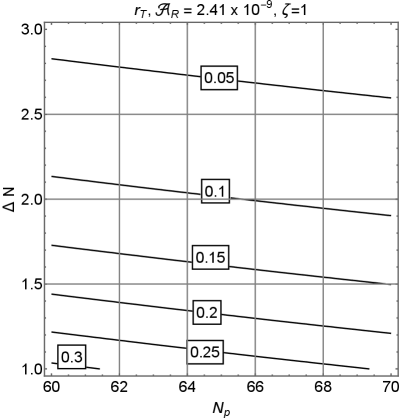
Analysis of the relic graviton power spectrum reveals strong evidence that high-frequency gravitational waves originated from the quantum vacuum state during inflation.
Establishing the primordial origins of gravitational waves remains a fundamental challenge in cosmology, particularly concerning the initial quantum state of relic gravitons. This paper, ‘The initial states of high frequency gravitons’, constrains these initial states by analyzing the spectrum of relic gravitons as wavelengths cross the comoving Hubble radius, eschewing reliance on earlier timescales. The analysis reveals a marginal allowance for a non-vacuum initial state at low frequencies, while the higher frequency spectrum is overwhelmingly consistent with vacuum production. Given these findings, what implications do these constraints have for refining models of inflation and the very early universe?
Echoes of Creation: Unraveling the Universe’s First Moments
The universe, in its earliest instants, wasn’t a smooth, uniform expanse, but a turbulent froth of quantum fluctuations. These weren’t mere ripples, but genuine distortions in the fabric of spacetime itself, arising from the inherent uncertainty of quantum mechanics. As the universe underwent a period of incredibly rapid expansion – inflation – these microscopic fluctuations were stretched to cosmological scales, becoming the seeds for all structure we observe today. Critically, these fluctuations weren’t limited to matter; they also manifested as gravitational waves – ripples in spacetime – propagating outwards from the inflationary epoch. These primordial gravitational waves, unlike those created by colliding black holes, represent a direct echo of the Big Bang, carrying information about the universe when it was less than a trillionth of a second old and offering a potential pathway to understanding the physics governing its birth and evolution.
The universe’s inflationary epoch, a period of exponential expansion fractions of a second after the Big Bang, didn’t just stretch space – it also generated a primordial sea of gravitational waves. These aren’t the ripples detected from merging black holes, but rather relic gravitons, faint echoes of quantum fluctuations magnified to cosmic scales. Because these gravitons decoupled from matter very early in the universe, they have traveled freely since then, carrying pristine information about conditions at energies far beyond the reach of any terrestrial experiment. Studying their statistical properties – their spectrum and polarization – promises a direct probe of the inflationary epoch, potentially revealing the energy scale of inflation and even testing different models of the very early universe. Unlike electromagnetic radiation, these relic gravitons are unaffected by intervening matter, providing an exceptionally clear window into the cosmos’s first moments and complementing insights gained from the cosmic microwave background.
The detection of relic gravitons – faint echoes from the universe’s inflationary beginning – presents an almost insurmountable challenge to current gravitational wave astronomy. These signals, vastly weaker than those produced by merging black holes or neutron stars, are predicted to exist across the entire electromagnetic spectrum, but their incredibly low amplitude necessitates detectors of unprecedented sensitivity. Current interferometers, like LIGO and Virgo, are simply not equipped to capture such subtle disturbances. Consequently, researchers are actively exploring alternative strategies, including space-based detectors to escape terrestrial noise, and innovative techniques that leverage the quantum entanglement of photons to amplify the signal. The pursuit of these primordial gravitational waves demands a complete rethinking of detector design and data analysis, potentially ushering in a new era of gravitational wave observation and providing unparalleled insights into the universe’s earliest moments.
Establishing Primordial Conditions: The Quantum Origins of Structure
The relic graviton spectrum is fundamentally determined by the initial quantum state of gravitons originating from the vacuum state. This state, representing the lowest energy configuration of spacetime, undergoes quantum fluctuations which, during the inflationary epoch, are amplified and stretched to cosmological scales. The amplitude and distribution of these initial fluctuations directly dictate the observed number density and frequency characteristics of relic gravitons. Specifically, the power spectrum of these gravitons is directly proportional to the power spectrum of the initial quantum fluctuations in the graviton field. Any deviation from a purely vacuum initial state introduces modifications to this spectrum, potentially leading to observable consequences in the gravitational wave background.
The inflationary epoch, a period of exponential cosmic expansion occurring shortly after the Big Bang, fundamentally determined the distribution of initial quantum fluctuations that seeded large-scale structure. During inflation, quantum fluctuations in the metric were stretched to cosmological scales, becoming the dominant source of density perturbations. The specific characteristics of inflation – notably its duration and the equation of state of the inflating field – directly influenced the amplitude and spectral index of these fluctuations. A period of “slow-roll” inflation, where the potential energy of the inflaton field dominates, is particularly important as it predicts a nearly scale-invariant spectrum of primordial fluctuations, consistent with observations of the Cosmic Microwave Background. The energy scale of inflation also determines the amplitude of the resulting gravitational waves, with higher energy scales generally producing larger amplitude perturbations.
This research demonstrates that terahertz (THz) range gravitons are fundamentally sourced from the quantum vacuum state, establishing a strict upper limit of < 10⁻¹¹⁰ on the averaged multiplicity of initial states generating these high-frequency gravitons. While this vacuum origin is definitive for the THz spectrum, minimal deviations from the vacuum state are permissible only at the lowest frequencies – those corresponding to the largest observable wavelengths – and are subject to further observational constraints. This establishes a clear relationship between graviton frequency and its primordial source, with higher frequencies requiring a purely vacuum-based origin to align with current theoretical models and observational data.
The tensor-to-scalar ratio, denoted as r_T, provides a critical constraint on primordial conditions and is directly linked to the amplitude of gravitational waves generated during inflation. Current observational bounds, primarily from Cosmic Microwave Background (CMB) polarization measurements, limit r_T to values less than 0.07, and this paper derives a more restrictive upper bound of r_T < 16ϵ_p, where ϵ_p represents the potential energy density during inflation. This constraint arises from requiring consistency between the initial quantum fluctuations, the inflationary dynamics, and the observed CMB power spectrum. Exceeding this limit would introduce spectral distortions inconsistent with current cosmological data, effectively ruling out specific inflationary models and refining the allowable parameter space for primordial conditions. The derived bound is therefore a powerful tool for validating or excluding theoretical predictions regarding the early universe.
Cosmic Evolution: Sculpting the Relic Graviton Spectrum
The relic graviton spectrum is fundamentally linked to the Hubble radius, which represents the current limit of the observable universe. Gravitons created in the early universe have been redshifted by the expansion of space; the maximum wavelength detectable is therefore determined by the comoving Hubble radius at the time of emission. This radius defines a cosmic horizon – wavelengths larger than 2\pi R_H(t) (where R_H(t) is the comoving Hubble radius at time t) have not had time to reach us, effectively truncating the high-wavelength portion of the relic graviton spectrum. Consequently, analysis of the observed graviton spectrum provides constraints on cosmological parameters and the expansion history of the universe, as the Hubble radius evolves with time and is directly related to the scale factor.
The comoving Hubble radius, denoted as r_H(t) = c \in t_0^t \frac{dt'}{a(t')}, where c is the speed of light and a(t) is the scale factor, dictates the observable universe’s size at any given time. As space expands, the comoving Hubble radius grows, stretching the wavelengths of relic gravitons. This expansion reduces the amplitude of longer-wavelength gravitons and influences their overall distribution; specifically, the number density of gravitons with wavelengths comparable to or exceeding the comoving Hubble radius decreases with time due to the dilution effect of expansion. Consequently, the observed spectrum of relic gravitons is not simply a function of their initial production mechanism but is also fundamentally shaped by the evolving geometry of spacetime and the expansion rate described by the Hubble parameter, H(t) = \dot{a}(t)/a(t).
The interpretation of relic graviton signals necessitates a detailed understanding of how scalar curvature and tensor modes contribute to their generation and propagation. Scalar curvature, representing the intrinsic curvature of spacetime, influences the amplitude of gravitons through its effect on the Riemann tensor, while tensor modes, representing gravitational waves, directly manifest as h_{\mu\nu} perturbations in the metric. Distinguishing between contributions from these modes is critical; scalar contributions can mimic other cosmological signals, while tensor modes provide direct evidence for inflationary processes. Accurate signal interpretation requires modeling the relative strengths of these modes at various frequencies, accounting for redshift effects due to cosmological expansion, and considering potential damping mechanisms that affect their amplitudes over cosmic timescales. Failure to properly account for these factors can lead to misinterpretations of the observed graviton spectrum and inaccurate constraints on cosmological parameters.
The upper limit on graviton frequency originating from non-vacuum initial states is approximately a Hz. This frequency corresponds to the largest wavelengths observable within the current cosmological model, establishing a natural cutoff for graviton production via mechanisms requiring initial non-vacuum conditions. Consequently, the prevalence of high-frequency gravitons strongly suggests they originate predominantly from vacuum-state fluctuations, as these do not have an inherent frequency limit dictated by observable wavelength constraints. This implies that any observed high-frequency signal is more likely attributable to quantum vacuum effects rather than originating from primordial non-vacuum states.
Detecting the Undetectable: A New Frontier in Astronomy
The universe’s earliest moments, a period of rapid expansion known as inflation, are thought to have generated a background of relic gravitons – ripples in spacetime itself. Unlike photons from the cosmic microwave background, these gravitons interact incredibly weakly with matter, allowing them to travel unimpeded across cosmic timescales. This unique property means the power spectrum of these relic gravitons – a measure of their amplitude at different frequencies – effectively serves as a fingerprint of the inflationary epoch. Analyzing this spectrum offers a novel window into energy scales and physical processes inaccessible through traditional electromagnetic observations or particle physics experiments. Subtle features within the power spectrum could reveal information about the precise nature of inflation, the topology of the early universe, and even the existence of exotic particles or extra dimensions, providing a profound connection between cosmology and fundamental physics.
Pulsar timing arrays (PTAs) offer a unique avenue for detecting the subtle ripples of low-frequency gravitational waves that permeate the cosmos. These arrays leverage the remarkably stable timing of millisecond pulsars – rapidly rotating neutron stars that emit radio beams with clockwork precision. Gravitational waves stretching and squeezing spacetime will cause minuscule shifts in the arrival times of these pulses, and by meticulously monitoring a network of pulsars, scientists can tease out these minute variations. The sensitivity of PTAs is particularly well-suited to detecting signals from supermassive black hole binaries and potentially even relics from the earliest moments of the universe, offering a critical testbed for validating predictions arising from cosmological models and general relativity. This approach bypasses the limitations of traditional interferometers, which are more effective at higher frequencies, and opens a new window into the gravitational universe.
The detection of relic gravitons hinges critically on understanding how their signal strength varies with wavelength. These gravitational waves, generated in the very early universe, are not uniform across all frequencies; rather, their amplitude diminishes predictably as wavelength increases. This wavelength dependence isn’t merely a theoretical detail, but a fundamental constraint shaping the design of future detectors like pulsar timing arrays. Instruments must be specifically tuned to maximize sensitivity within the expected frequency range of these faint signals – typically low-frequency waves spanning years or even decades. Furthermore, accurate modeling of this spectral behavior is essential for distinguishing true graviton signatures from the noise inherent in astronomical observations, requiring sophisticated data analysis techniques to tease out the subtle patterns indicative of their origin.
Recent research establishes a stringent upper limit on the average number of high-frequency gravitons present in the universe, quantifying this value as \bar{n}_0 < 10^{-{110}} . This finding isn’t simply a null result; it serves as a critical benchmark for the development of future gravitational wave detectors. The extremely low multiplicity dictates the required sensitivity levels for these instruments, demanding unprecedented precision in their design and operation. Furthermore, this constraint significantly refines data analysis techniques, helping to distinguish genuine gravitational wave signals from background noise and systematic errors. By defining the expected signal strength, this work effectively narrows the search space, accelerating the quest to directly observe these elusive relics of the early universe and validate theoretical models of cosmic inflation.
The study’s findings, asserting the high-frequency graviton spectrum’s strong alignment with the vacuum state, reveal a subtle but significant truth about modeling the universe. It isn’t simply about identifying the most statistically probable starting conditions; it’s about acknowledging the inherent biases and assumptions embedded within the framework itself. As Galileo Galilei observed, “You cannot teach a man anything; you can only help him discover it within himself.” This resonates deeply with the presented research; the data doesn’t prove a vacuum state, but rather constrains the possibilities, revealing the limits of alternative hypotheses through observation. Every deviation from a purely theoretical starting point-every marginal permission of a non-vacuum state at lower frequencies-is a window into the complexity of the initial conditions and the human endeavor of constructing these models.
The Road Ahead
The persistent alignment of high-frequency graviton spectra with predictions derived from the vacuum state isn’t a triumph of theory, but a subtle reminder of human preference for simplicity. It is easier to accept nothingness as the origin than to rigorously define something from which everything else arises. The marginal allowance for non-vacuum initial states at lower frequencies doesn’t resolve this, merely shifting the discomfort. It’s a statistically permissible ambiguity, and humans, predictably, will likely focus on it, building elaborate, self-justifying narratives around what ‘almost’ existed.
Future work will, of course, pursue those narratives. Expect refinements to inflationary models attempting to sculpt a primordial power spectrum that mimics this subtle deviation. The real challenge, however, isn’t technical. It’s acknowledging the inherent limitations of inferring initial conditions from late-time observations. One observes ripples; one infers the pebble. The gap between is always filled with assumption, and those assumptions are rarely, if ever, truly tested.
The persistent search for a detectable signal from beyond the vacuum isn’t about finding ‘the beginning,’ but about postponing the uncomfortable realization that, perhaps, there isn’t a discernible difference between something and nothing. The universe, it seems, rarely offers definitive answers, only increasingly sophisticated illusions of choice.
Original article: https://arxiv.org/pdf/2602.14235.pdf
Contact the author: https://www.linkedin.com/in/avetisyan/
See also:
- Looks Like SEGA Is Reheating PS5, PS4 Fan Favourite Sonic Frontiers in Definitive Edition
- Pluribus Star Rhea Seehorn Weighs In On That First Kiss
- Dune 3 Gets the Huge Update Fans Have Been Waiting For
- Kelly Osbourne Slams “Disgusting” Comments on Her Appearance
- Gold Rate Forecast
- Tomodachi Life: Living the Dream ‘Welcome Version’ demo now available
- Arknights: Endfield – Everything You Need to Know Before You Jump In
- 7 Things About Teen Wolf That Still Make No Sense
- 10 Best Anime to Watch if You Miss Dragon Ball Super
- Korean fantasy action adventure game Woochi the Wayfarer announced for PS5, Xbox Series, and PC
2026-02-17 22:54