Author: Denis Avetisyan
New research details the intricate pathways of energy flow within antiferromagnetic materials immediately following photoexcitation, providing key insights into the fundamental mechanisms of ultrafast demagnetization.
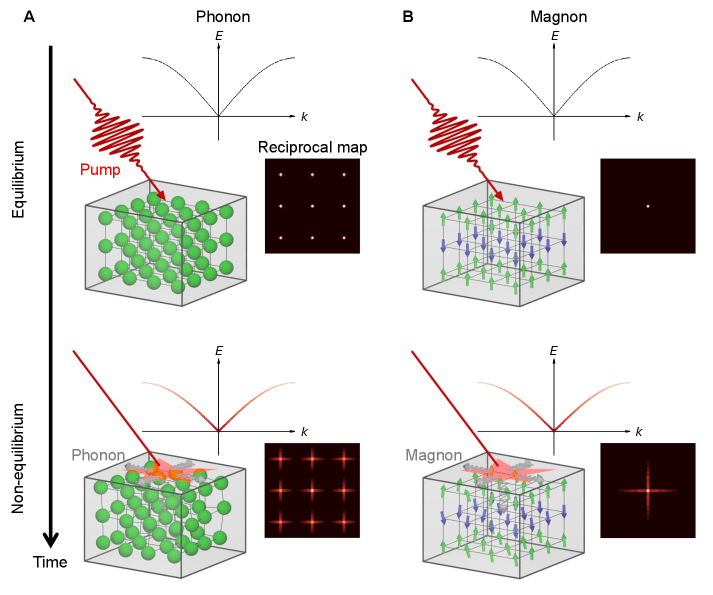
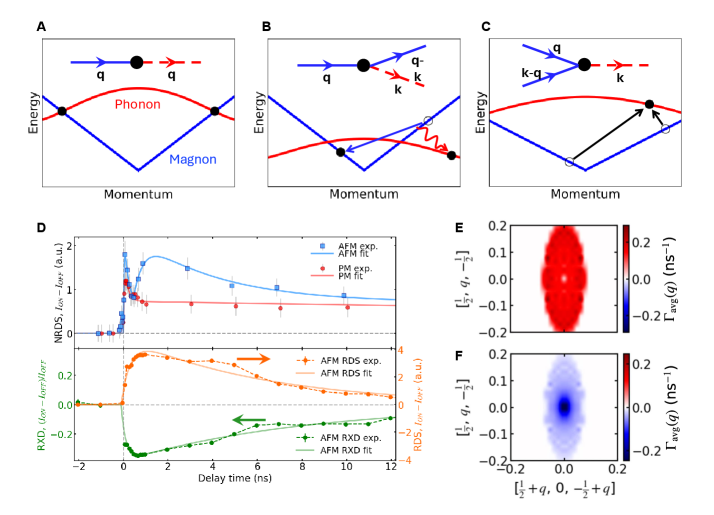
Time- and momentum-resolved X-ray scattering reveals a hierarchical energy transfer from electronic excitations to magnons and phonons in cupric oxide antiferromagnets.
Understanding energy flow at the microscopic level remains a central challenge in ultrafast magnetism, particularly in complex materials. This is addressed in ‘Hierarchical quasiparticle dynamics in antiferromagnets revealed by time- and momentum-resolved X-ray scattering’, which utilizes advanced X-ray techniques to map the intricate pathways of energy transfer in photoexcited cupric oxide. The research demonstrates that upon excitation, energy rapidly cascades from electronic states to magnons, followed by momentum-selective relaxation via magnon-phonon scattering, establishing a hierarchical quasiparticle dynamics framework. Can these insights be generalized to design materials with tailored ultrafast responses and unlock new paradigms for controlling magnetic properties?
The Allure of Ultrafast Control: Peering into the Atomic Realm
The potential to manipulate magnetic materials on the femtosecond timescale – a millionth of a billionth of a second – holds the key to transformative technologies, ranging from ultra-fast data storage to novel spintronic devices. However, conventional approaches to magnetic control struggle to keep pace with these incredibly rapid processes. Traditional magnetic fields and current-driven techniques simply lack the temporal resolution and precise control needed to initiate and steer magnetization changes at such short timescales. This limitation arises from the inherent inertia of magnetic moments and the relatively slow response of materials to external stimuli, necessitating the development of new methods – often relying on light-induced excitation – to overcome these fundamental barriers and unlock the full potential of ultrafast magnetism.
The immediate aftermath of photoexcitation – when a material absorbs light – initiates a cascade of events at the atomic level, fundamentally altering its properties. However, precisely determining which processes dominate in these initial femtoseconds is extraordinarily difficult. The challenge lies in separating the contributions from electronic rearrangements – the movement of electrons – and lattice dynamics, which involve the vibrations of the atoms themselves. Both occur on incredibly short timescales, often overlapping and influencing one another, making it hard to isolate their individual effects. Researchers are actively developing sophisticated techniques to discern these coupled phenomena, as understanding their interplay is key to controlling materials with light and unlocking potential applications in areas like data storage and quantum computing. Determining the precise choreography of these atomic motions is therefore a central pursuit in modern materials science.
Addressing the difficulties in characterizing femtosecond-scale magnetic dynamics demands a concerted push toward novel methodologies. Researchers are now developing experimental techniques – such as time-resolved magnetic circular dichroism utilizing free-electron lasers and advanced pump-probe spectroscopy – capable of directly observing these ultra-fast processes with unprecedented temporal and spatial resolution. Simultaneously, theoretical frameworks are evolving to accurately model the complex interplay between electronic structure, spin dynamics, and lattice vibrations that govern these transformations. These frameworks increasingly rely on ab initio calculations and sophisticated many-body simulations to disentangle the contributions of various factors and predict material behavior. This synergistic approach-combining cutting-edge experimentation with robust theoretical modeling-is essential to not only observe these rapid changes, but to ultimately understand and harness them for future technological advancements.
Probing the Invisible: Dissecting Dynamics with X-rays
Time-resolved X-ray techniques utilize the short pulse durations achievable with modern X-ray free-electron lasers and synchrotron radiation sources to observe ultrafast changes in material properties. These techniques can track the motion of electrons and atomic nuclei – termed electronic and lattice dynamics, respectively – with temporal resolution reaching the femtosecond (10^{-{15}} s) and even picosecond (10^{-{12}} s) timescales. This capability stems from the element-specific sensitivity of X-rays and their ability to probe core-level electronic states and interatomic distances directly. By monitoring changes in X-ray absorption, scattering, or emission, researchers can map the evolution of these dynamics following photoexcitation or other stimuli, providing insights into fundamental processes governing material behavior.
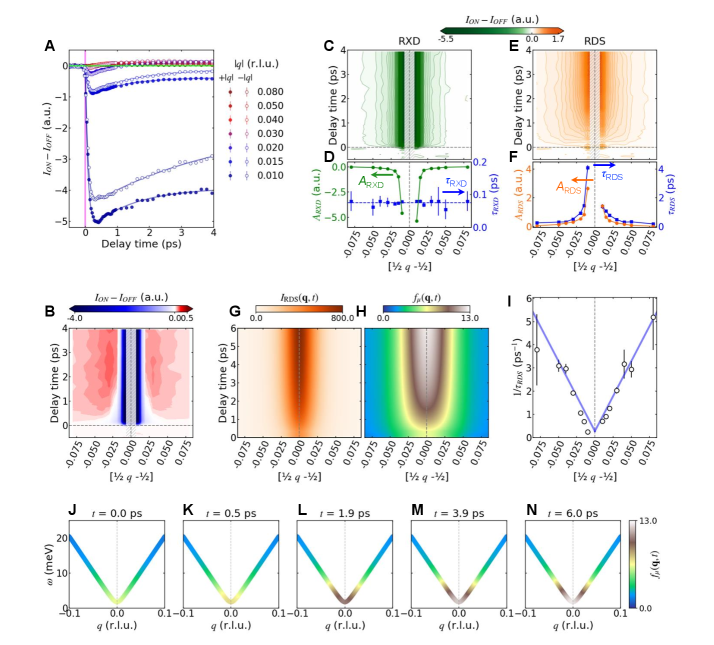
Time-Resolved Resonant Diffuse Scattering (TR-RDS) is a technique used to observe the dynamics of low-energy magnons, which function as the primary carriers of spin information in materials. TR-RDS leverages the interaction of X-rays with magnetic excitations; by tuning the X-ray energy to a resonant condition with specific magnetic transitions, the scattering signal is enhanced, allowing for direct observation of magnon behavior. The time-resolved aspect, achieved through pulsed X-ray sources and detection, enables tracking the evolution of these magnons on femtosecond to picosecond timescales, revealing information about their lifetimes, velocities, and interactions. This direct measurement capability distinguishes TR-RDS from indirect methods and offers crucial insight into the fundamental magnetic properties and dynamics of materials.
Time-Resolved Resonant X-ray Diffraction (TR-XRD) and Time-Resolved Non-Resonant Diffuse Scattering (TR-NRDS) serve as crucial validation and complementary techniques to Time-Resolved Resonant Diffuse Scattering (TR-RDS). TR-XRD monitors changes in Bragg peaks, directly reporting on structural distortions and lattice parameter evolution following excitation. TR-NRDS, sensitive to incoherent scattering, probes thermally-induced atomic motions and disorder, providing information on lattice dynamics not readily accessible through diffraction. By independently measuring these structural and dynamic responses, TR-XRD and TR-NRDS corroborate the findings from TR-RDS, especially regarding the coupling between electronic excitations and lattice distortions, and offer a more complete characterization of the system’s time-dependent behavior.
Decoding the Mechanisms: Modeling the Atomic Dance
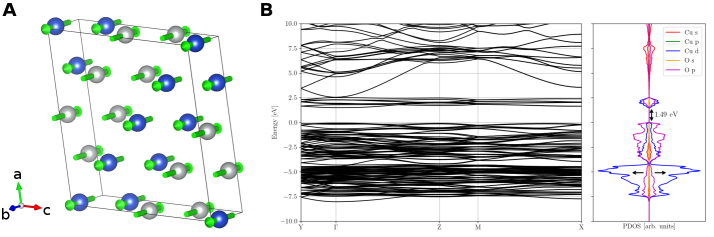
Density-Functional Theory (DFT) is a quantum mechanical modeling approach used to investigate the electronic structure of materials, and is particularly effective for systems like cupric oxide (CuO), which is classified as a charge-transfer insulator. DFT calculations determine the ground state electronic properties by mapping the many-body problem onto a single-particle system, focusing on the electron density rather than the wavefunction. This is achieved through the use of functionals that approximate the exchange-correlation energy, enabling the calculation of key properties such as band structure, charge distribution, and magnetic moments. The accuracy of DFT results is dependent on the chosen functional, with more advanced functionals offering improved descriptions of strongly correlated systems like cupric oxide, where electron-electron interactions play a significant role in determining material behavior.
A Multi-Temperature Model is utilized to accurately represent the non-equilibrium dynamics within cupric oxide by treating the electronic and lattice (phononic) subsystems with distinct thermal distributions. This approach acknowledges that electrons and phonons respond to external stimuli and internal interactions at differing rates, preventing the assumption of a single, unified temperature. Specifically, the electronic temperature, T_e, characterizes the energy distribution of electrons, while the lattice temperature, T_L, describes the energy distribution of the atomic vibrations. The model then tracks the energy exchange between these two subsystems, governed by electron-phonon coupling, enabling a more realistic simulation of transient phenomena and the material’s response to excitation.
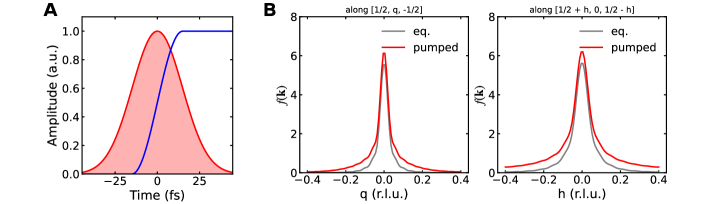
The combined application of a Multi-Temperature Model, the Hubbard Model, and the Quantum Boltzmann Equation enables the simulation of magnon distribution evolution in cupric oxide. The Hubbard Model provides a framework for understanding electron correlation effects, crucial in determining magnon interactions. Utilizing the Quantum Boltzmann Equation allows for the treatment of magnon dynamics as a semi-classical kinetic process, enabling the quantification of scattering rates. Specifically, the model accounts for \text{Magnon-Magnon Scattering} , \text{Magnon-Phonon Scattering} , and \text{Anomalous Scattering} processes, detailing how these interactions contribute to energy relaxation and the overall thermalization of the system. By analyzing the rates and probabilities of these scattering events, researchers can gain insight into the mechanisms governing energy transport and the non-equilibrium dynamics of magnons in the material.
Implications and Future Directions: Towards Dynamic Spintronics
Photoexcitation of the material induces a fleeting rearrangement of electron distribution, beginning with the creation of ‘doublons’ – instances where two electrons occupy the same energy state. This initial event fundamentally alters the delicate balance between spin and charge, known as spin-charge coupling, effectively disrupting the established magnetic order. The system doesn’t immediately revert; instead, this altered state represents a transient magnetic configuration, poised for a complex recovery process. This transient modification is not merely a disruption, but rather a crucial initial step in a hierarchical energy transfer pathway, suggesting potential for manipulating magnetic states with light and opening avenues for novel spintronic devices that harness light-induced control of magnetic order.
Investigations into the material’s response to photoexcitation revealed an exceptionally swift disruption of its magnetic order, occurring on a timescale of just 70 femtoseconds. This ultrafast demagnetization, observed through resonant X-ray diffraction (RXD) reduction, suggests an initial and immediate alteration of the spin arrangement within the material’s sublattices. Concurrent with this magnetic disturbance, the creation of doubly occupied electrons – known as doublons – was detected, exhibiting a lifetime of approximately 200 femtoseconds, a duration consistent with observations in similar copper-based oxides. The fleeting existence of these doublons indicates a transient electronic excitation preceding the longer-lived magnetic dynamics, highlighting the interconnectedness of electronic and magnetic processes within the material and providing insight into the fundamental mechanisms driving its behavior.
Restoration of the material’s magnetic order occurs on a remarkably fast timescale of 7 nanoseconds, as evidenced by the recovery of intensity in resonant X-ray diffraction (RXD) measurements. This recovery isn’t a simple return to equilibrium; detailed analysis reveals a strong coupling between magnons – quantized spin waves – and phonons, which are vibrations within the crystal lattice. The estimated strength of this magnon-phonon coupling is 59 microelectronvolts, suggesting that the energy released from the excited spin system is efficiently transferred into lattice vibrations, facilitating a rapid return to the magnetically ordered state. This efficient energy transfer pathway is critical for understanding the dynamics of the magnetic order and presents a potential avenue for controlling magnetic properties with light, potentially enabling new spintronic devices.
Analysis reveals a pronounced enhancement of the non-resonant diffuse scattering signal approximately 2 nanoseconds after initial excitation, a phenomenon directly linked to the decay of magnons – quantized spin waves – and the concurrent creation of phonons, which are vibrations within the material’s lattice. This observation elucidates a hierarchical energy transfer pathway, where energy initially imparted by photoexcitation doesn’t dissipate randomly, but rather flows in a structured manner from the magnetic excitation (magnons) to the lattice vibrations (phonons). The timescale of this transfer suggests a strong coupling between these fundamental excitations, offering insights into how energy is redistributed within the material and potentially paving the way for advanced control of magnetic properties through targeted energy manipulation.
The precise control demonstrated over photoinduced processes-specifically the creation and relaxation of doublons, and the resulting modulation of spin-charge coupling-opens compelling avenues for advanced spintronic devices. This research suggests the possibility of achieving all-optical magnetization switching, a process where magnetic orientation is altered solely through light, eliminating the need for external magnetic fields and associated bulky equipment. Furthermore, manipulating these ultrafast dynamics allows for the potential generation of spin currents-flows of spin angular momentum-without applied voltages, promising more energy-efficient data storage and processing. The ability to sculpt spin currents and control magnetization with light represents a significant step towards dynamic spintronics, where information is encoded and processed using light and spin, rather than charge, offering faster speeds and lower energy consumption compared to conventional electronics.
The study of quasiparticle dynamics in antiferromagnets, as demonstrated by this research, reveals a system far removed from idealized economic models of rational actors. Instead, energy transfer resembles the spread of narratives – excitation to magnons, dissipation via phonons – a cascade mirroring how fear and hope propagate through markets. As Ludwig Wittgenstein observed, “The limits of my language mean the limits of my world.” Similarly, the limits of current models for understanding ultrafast demagnetization lie in their inability to fully capture the complex interplay of these fundamental energy carriers; the ‘language’ of physics must evolve to describe this nuanced reality. The hierarchical pathways identified aren’t simply physical processes, but representations of how systems organize and respond to disturbance, echoing the predictable flaws inherent in human decision-making.
Where Do We Go From Here?
This work, detailing the choreography of energy transfer in antiferromagnets, provides a beautifully detailed map…of the territory immediately surrounding the actual problem. The researchers have illuminated the how of ultrafast demagnetization with impressive precision, but the why remains stubbornly vague. It’s a testament to the human tendency to mistake correlation for causation-a detailed accounting of energy flow is not, in itself, an explanation. The system responds, predictably, to perturbation, but the initial conditions-the specific anxieties of this material-remain somewhat obscured.
Future investigations will likely focus on extending this time-resolved X-ray scattering technique to more complex antiferromagnetic systems. But a more fruitful avenue may lie in acknowledging the inherent limitations of treating these materials as isolated entities. The real world isn’t a clean laboratory; it’s a messy superposition of interactions. To truly understand demagnetization, one must consider the role of interfaces, defects, and, dare one say, the subtle influence of external fields – all the things conveniently averaged out in pursuit of “fundamental” behavior.
Ultimately, this research serves as a potent reminder: human behavior is just rounding error between desire and reality, and so, too, is the behavior of these complex materials. The pursuit of perfect models is admirable, but the interesting physics always hides in the imperfections-the little glitches that remind one that even the most elegant theory is just a story, and stories are always, delightfully, incomplete.
Original article: https://arxiv.org/pdf/2602.13113.pdf
Contact the author: https://www.linkedin.com/in/avetisyan/
See also:
- Looks Like SEGA Is Reheating PS5, PS4 Fan Favourite Sonic Frontiers in Definitive Edition
- Pluribus Star Rhea Seehorn Weighs In On That First Kiss
- Kelly Osbourne Slams “Disgusting” Comments on Her Appearance
- Gold Rate Forecast
- Dune 3 Gets the Huge Update Fans Have Been Waiting For
- Arknights: Endfield – Everything You Need to Know Before You Jump In
- Tomodachi Life: Living the Dream ‘Welcome Version’ demo now available
- 28 Years Later: The Bone Temple’s Cut Scene Revealed Ahead of Digital Release
- Goat 2 Release Date Estimate, News & Updates
- Paradise producer hints that series will end with third season as season 2 premieres
2026-02-17 00:59