Author: Denis Avetisyan
New simulations reveal that initializing a cavity mode with a single photon unlocks observable light-matter entanglement and oscillating energy exchange in molecular polariton systems.
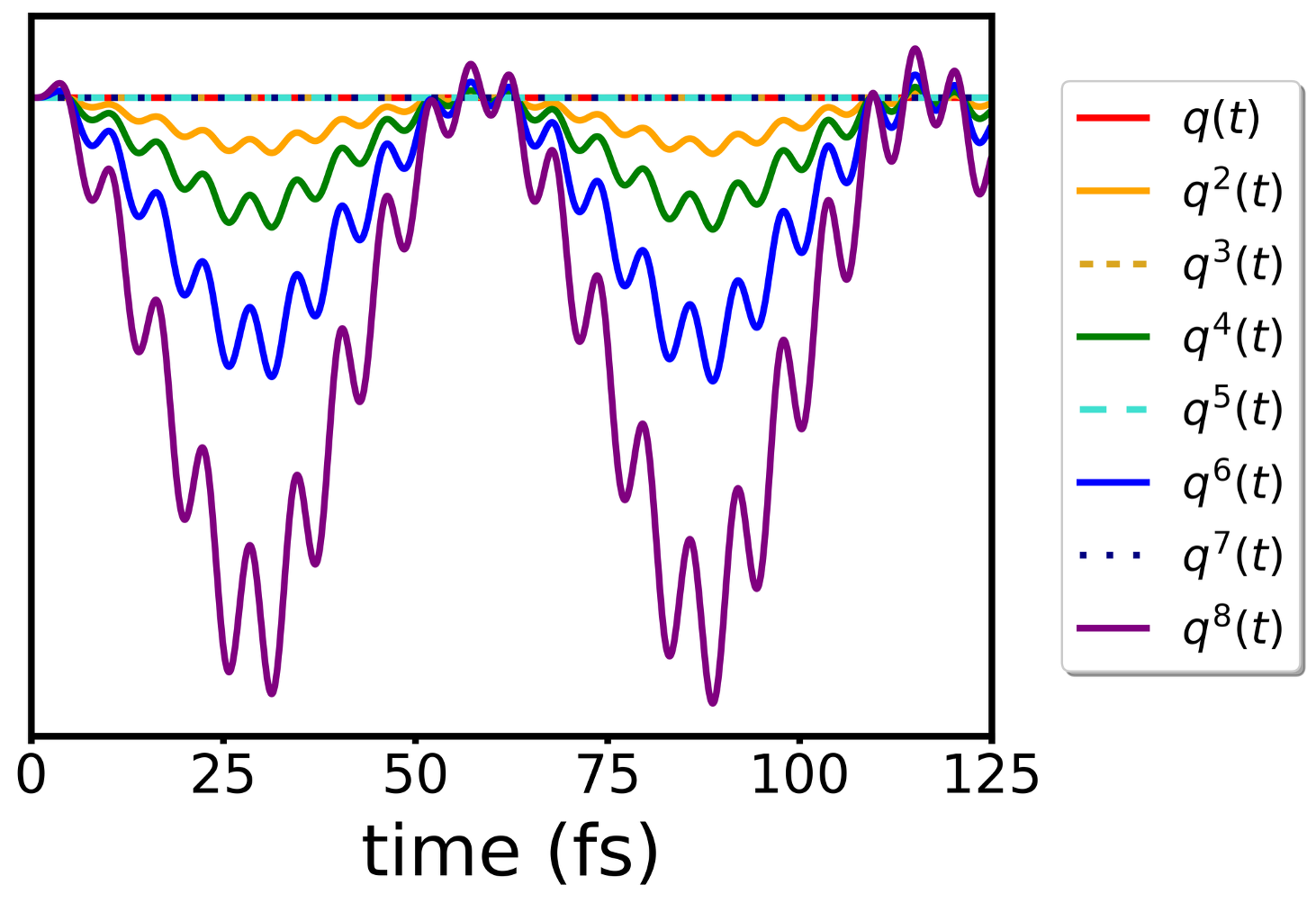
Full-quantum simulations of an HCN molecule coupled to a cavity demonstrate oscillating expectation values and light-matter entanglement, challenging mean-field predictions of no energy transfer.
While conventional approaches to simulating light-matter interactions often rely on classical descriptions of the electromagnetic field, discerning genuinely quantum effects remains a significant challenge. This is addressed in ‘Initialization with a Fock State Cavity Mode in Real-Time Nuclear–Electronic Orbital Polariton Dynamics’, which investigates the dynamics of a molecule strongly coupled to a quantized cavity mode initialized in a Fock state. Through full-quantum simulations, this work demonstrates that such an initialization-contrary to coherent state approaches-can induce light-matter entanglement and oscillating expectation values indicative of polariton formation, even in the absence of a classical analogue. Does this suggest that tailored quantum initial conditions are essential for unlocking the full potential of polaritonic chemistry and revealing phenomena inaccessible through classical treatments?
Unveiling the Dance of Light and Matter
The capacity to manipulate molecular properties through light-matter interactions represents a cornerstone of modern scientific inquiry. At its heart lies the principle that photons, when interacting with molecules, can induce changes in vibrational, rotational, and electronic states. These alterations dictate a molecule’s characteristics – its reactivity, color, and even its function. Consequently, a thorough understanding of this interplay is essential for designing novel materials with tailored properties, from highly efficient solar cells to advanced sensors and targeted drug delivery systems. By precisely controlling the frequency, intensity, and polarization of light, scientists can steer chemical reactions, probe molecular structures, and ultimately, engineer matter at the atomic level. This control extends beyond simple excitation; it allows for the creation of complex quantum states and the exploration of phenomena like cavity quantum electrodynamics, promising breakthroughs in fields ranging from quantum computing to biophysics.
Historically, investigations into how light interacts with matter have frequently employed a classical framework for the electromagnetic field, a simplification of its inherently quantum nature. This approach treats light as a continuous wave, described by Maxwell’s equations, rather than as discrete packets of energy called photons. While acknowledging the quantum reality is more accurate, the classical treatment provides a computationally tractable starting point for understanding fundamental interactions. This allows researchers to model the response of molecules to light without immediately grappling with the complexities of quantum electrodynamics, offering valuable insights into phenomena like absorption, emission, and scattering. Though limited in its ability to predict subtle quantum effects, the classical model serves as a crucial baseline for comparison with more sophisticated quantum calculations and experimental observations.
The utilization of a ‘Classical Cavity Mode’ represents a foundational step in modeling light-matter interactions, offering a readily accessible framework for initial investigations. This approach treats the electromagnetic field as a continuous, deterministic entity, circumventing the complexities of quantum electrodynamics and allowing researchers to establish a baseline understanding of molecular response. However, this simplification inherently limits predictive power; by neglecting the quantized nature of light and the probabilistic behavior of matter, the classical model fails to accurately capture phenomena dependent on these quantum effects, such as spontaneous emission or certain resonance behaviors. While valuable for establishing qualitative trends and providing a conceptual starting point, more sophisticated methods are necessary to achieve precise quantitative predictions and fully unravel the intricacies of light-matter coupling.
The computational tool MFQ-RT-NEO provides a means to simulate the fundamental interactions between light and matter, revealing key aspects of molecular behavior. This simulation environment models the electromagnetic field and its influence on molecular systems, allowing researchers to observe how molecules respond to varying light conditions. By numerically solving the relevant equations, MFQ-RT-NEO can predict phenomena such as light absorption, emission, and scattering, offering a detailed picture of molecular excitation and relaxation processes. These simulations are particularly valuable for understanding the initial stages of photochemical reactions and for validating theoretical models before applying them to more complex systems, ultimately contributing to a deeper understanding of how light governs molecular properties.
Beyond Classical Limits: Embracing the Quantum Realm
FQ-RT-NEO is a computational method designed to address the inaccuracies inherent in classical electromagnetic field simulations when modeling quantum systems. Unlike classical approaches which treat the field as a continuous wave, FQ-RT-NEO discretizes the electromagnetic field into quantized modes, specifically utilizing a Fock state representation to define the number of photons within each mode. This allows for the simulation of interactions at the single-photon level and accurately captures phenomena arising from the quantization of light, such as discrete absorption and emission spectra, which are not accessible through classical electromagnetic theory. The method employs a recursive treatment to efficiently calculate the response of the system to these quantized fields, enabling the study of strong coupling regimes and non-linear optical effects.
The HCN molecule, when placed within a cavity mode – a confined electromagnetic field – exhibits quantized energy level interactions. This means the molecule can only absorb or emit energy corresponding to the discrete frequencies supported by the cavity. These resonant frequencies are determined by the cavity’s geometry and boundary conditions. The molecule’s response is therefore not continuous, as predicted by classical electromagnetism, but rather characterized by transitions between specific energy states dictated by the cavity mode’s frequency. The strength of these interactions, and the resulting molecular excitation or de-excitation, are directly dependent on the intensity of the electromagnetic field within the cavity mode and the molecule’s transition dipole moment.
The representation of the electromagnetic field using Fock states allows for a discrete, quantized description of photon occupation numbers. Each Fock state |n\rangle defines a specific number of photons, n, within a given mode of the electromagnetic field. This formalism enables the modeling of light-matter interaction as transitions between these Fock states, where the HCN molecule absorbs or emits photons, changing the photon number by one. Consequently, the probability of these transitions, and thus the exchange of photons, can be calculated using quantum electrodynamic principles, providing a precise description of the molecule’s response to the quantized field.
Classical electromagnetic field treatments assume continuous energy levels, precluding accurate modeling of interactions at the quantum scale. A fully quantum approach, utilizing discrete energy levels and the concept of quantized photons, is therefore essential for observing phenomena such as spontaneous emission, vacuum Rabi oscillations, and the modification of molecular energy levels due to strong coupling with the quantized field. These effects, imperceptible within classical frameworks, arise from the discrete nature of light and the probabilistic exchange of photons between the electromagnetic field and the molecule, fundamentally altering the system’s behavior and enabling the observation of novel quantum effects.
Witnessing Hybrid States: The Emergence of Polaritons
Polaritons are quasiparticles formed through the strong coupling of an HCN molecule and a quantized cavity mode. This strong coupling regime occurs when the interaction energy between the molecule and the cavity exceeds the individual decay rates of each system. Consequently, the system no longer behaves as two independent entities, but as a hybrid light-matter state exhibiting properties of both. The resulting polaritonic states are a superposition of the molecular excitation and the cavity photon, leading to the creation of two new energy levels – the upper and lower polariton branches – distinct from the uncoupled molecular and cavity energies.
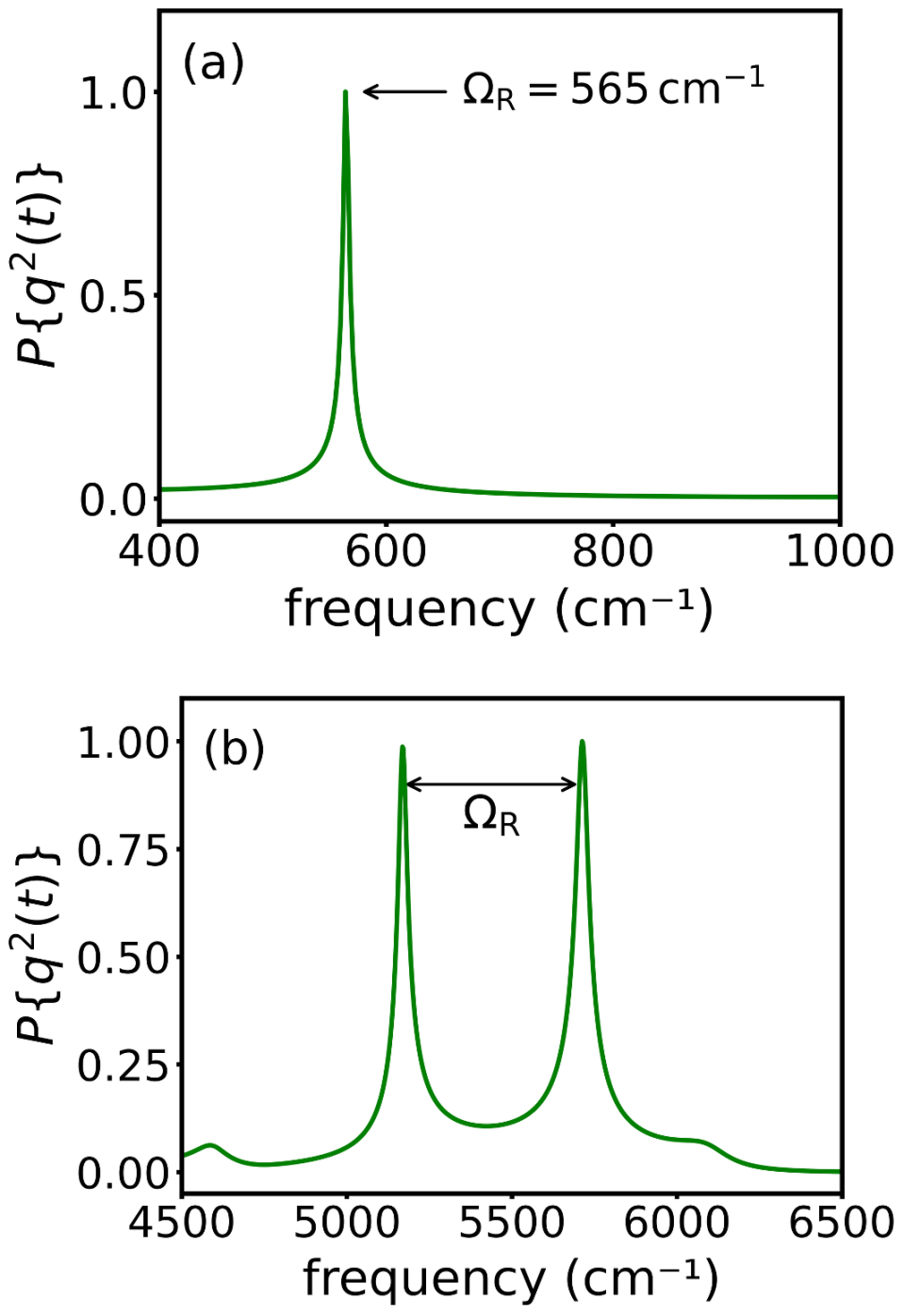
The formation of polaritons, resulting from strong coupling between the HCN molecule and the cavity mode, manifests as Rabi splitting – a characteristic spectral feature indicating the creation of upper and lower polariton branches. This splitting occurs due to the quantized nature of the cavity mode and the molecular excitation, creating two new energy levels distinct from the individual light and matter components. Specifically, our observations confirm Rabi splitting at a frequency of 283 cm⁻¹, providing direct evidence of the strong coupling regime where the energy exchange between the molecule and the cavity significantly alters the system’s energy landscape and resulting spectroscopic properties. This frequency directly corresponds to the energy difference between the upper and lower polariton states.
Simulations utilizing the FQ-RT-NEO computational framework have validated the applicability of the Quantum Rabi Model (QRM) to the interaction between the HCN molecule and the cavity mode. The QRM, typically employed to describe the strong coupling regime between two-level systems and a single mode of the electromagnetic field, accurately predicts the observed spectral features and energy exchange dynamics. Specifically, the simulations demonstrate a consistent correlation between the QRM’s predicted energy levels and the experimentally observed 283 cm^{-1} Rabi splitting frequency. Further analysis confirms the model’s ability to reproduce the light-matter hybridization characteristics leading to the formation of polariton quasiparticles, indicating its reliability for analyzing and predicting the behavior of this system.
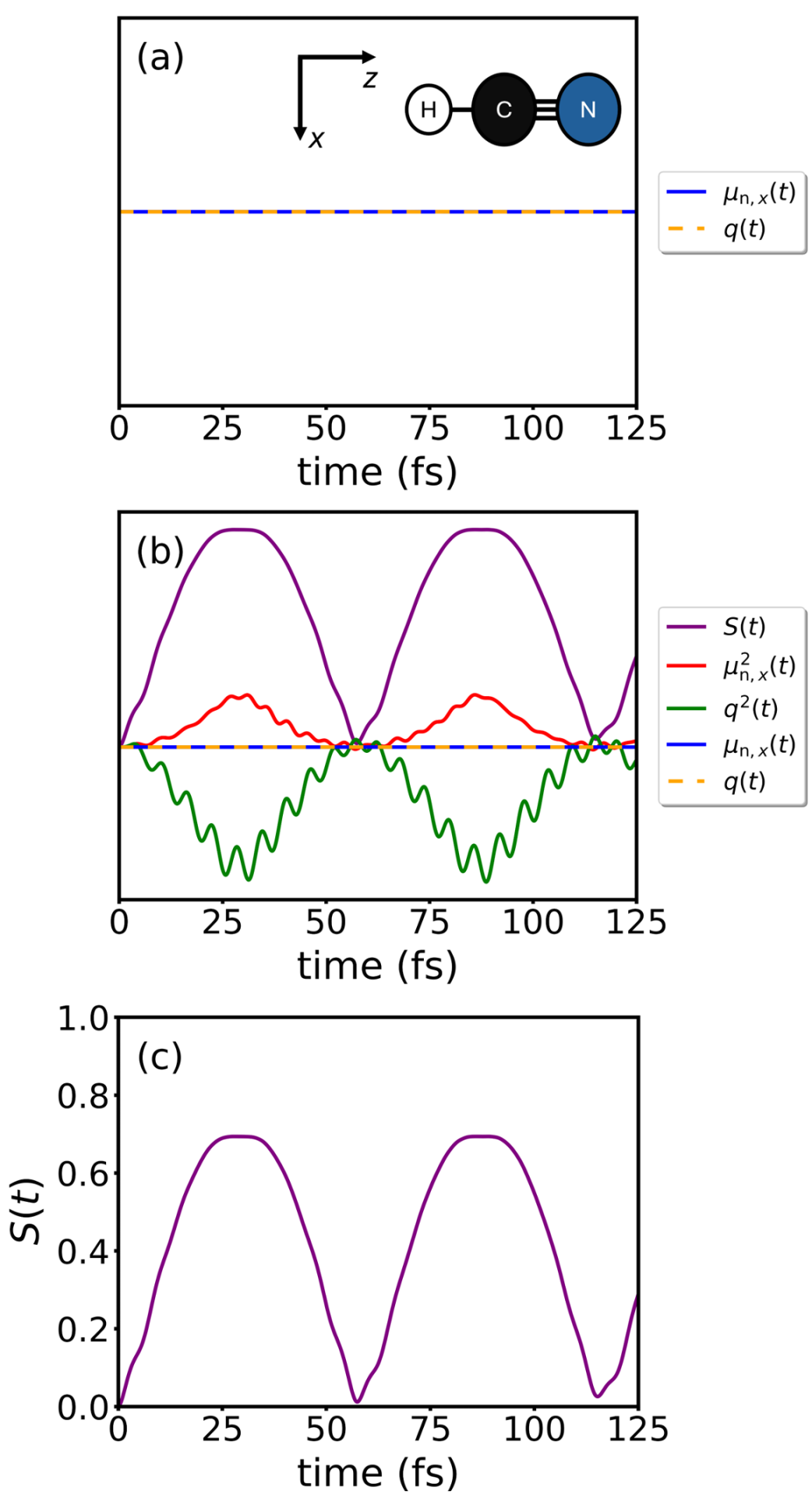
Von Neumann Entropy was utilized to quantify the degree of entanglement between the HCN molecule and the cavity mode. Simulations achieved a maximum Von Neumann Entropy value of 0.67, indicating a substantial level of entanglement. This value represents approximately 50% of the theoretical maximum achievable given the parameters employed in the FQ-RT-NEO simulations, suggesting that while significant entanglement is present, further optimization of the system could potentially increase the degree of quantum correlation between the molecule and the cavity.
Harnessing Quantum Control: Implications and Future Directions
The creation and control of polariton states represent a significant leap in the manipulation of molecular vibrations. These hybrid light-matter quasiparticles, formed from the strong coupling of molecular vibrational modes and photons, allow for the tailoring of energy flow within molecules with a precision previously unattainable. By carefully engineering the interaction between light and matter, researchers can not only enhance specific vibrational modes – crucial for chemical reactivity and energy transfer – but also control their quantum properties. This capability opens doors to designing molecules with customized vibrational spectra, potentially leading to breakthroughs in areas like enhanced spectroscopy, targeted chemical reactions, and the development of materials with novel optical and energy-related properties. The ability to ‘steer’ vibrational energy using light fundamentally alters how molecules interact with their environment and respond to external stimuli.
Precise manipulation of molecular vibrations via polariton states holds significant promise for a range of technological advancements. Quantum sensing stands to benefit from the enhanced sensitivity achievable through control of these vibrational modes, potentially leading to detectors capable of identifying single molecules or monitoring subtle changes in chemical environments. Simultaneously, the ability to direct energy flow at the quantum level opens avenues for highly efficient energy harvesting systems, capturing and converting light into usable energy with minimal loss. Perhaps most broadly, this control allows for the design of novel materials with tailored properties – influencing everything from conductivity and optical response to mechanical strength – by engineering the fundamental interactions between light and matter at the molecular scale. These capabilities represent a paradigm shift in materials science, moving beyond empirical discovery towards rational design based on quantum principles.
Computational modeling has emerged as an indispensable tool for dissecting the intricate dance between light and matter at the quantum scale. These simulations aren’t merely theoretical exercises; they function as a virtual laboratory, allowing researchers to predict and understand how molecules respond to light with unprecedented precision. By accurately modeling the creation and behavior of polariton states – hybrid light-matter excitations – scientists can design targeted experiments with a significantly higher probability of success. This predictive capability accelerates the discovery of new quantum phenomena and facilitates the development of materials with tailored optical and vibrational properties, ultimately streamlining the path toward practical applications in areas like quantum sensing and energy management.
Investigations are now shifting towards applying these quantum control techniques to increasingly intricate molecular architectures, moving beyond simplified models to address the complexities of real-world systems. This expansion isn’t merely about scaling up; it’s about understanding how collective molecular behavior impacts polariton formation and control. Simultaneously, research is actively exploring the translational potential of this work, with emphasis on developing prototype quantum sensors exhibiting enhanced sensitivity and efficiency. The ultimate aim is to harness the unique properties of these light-matter hybrid states for practical applications, ranging from designing novel energy-harvesting materials to creating fundamentally new quantum technologies that leverage the precise manipulation of molecular vibrations.
“`html
The study highlights a crucial point regarding initial conditions and their impact on observed dynamics. While simplified models often assume classical initialization, this research demonstrates the significance of quantum states, specifically Fock states, in revealing the full complexity of light-matter interaction. This aligns with the sentiment expressed by Richard Feynman: “The first principle is that you must not fool yourself – and you are the easiest person to fool.” Careful consideration of initial states, as shown through full-quantum simulations uncovering entanglement and oscillating expectation values, prevents spurious interpretations of polariton formation and ensures a more accurate understanding of the system’s true behavior. The research meticulously checks these boundaries, revealing dynamics absent in mean-field approximations.
Beyond the Rabi Model
The persistent allure of the quantum Rabi model stems from its simplicity, yet this work subtly underscores the limitations of that very elegance. Demonstrating energy exchange where mean-field theory predicts none is not merely a technical correction; it is a reminder that light-matter interaction at this scale resists easy categorization. The initial Fock state preparation, while effective, begs the question of how robust these entangled polariton dynamics are to more realistic initial conditions – the messy, thermalized states more common in experiment. A critical next step involves extending these full-quantum simulations to accommodate environmental noise and decoherence, to ascertain if the observed oscillations represent a fleeting idealization or a genuine, observable phenomenon.
Furthermore, the focus on a single vibrational mode of HCN, while a necessary starting point, feels deliberately constrained. Molecular complexity offers a vast landscape of interacting vibrational degrees of freedom. Exploring the interplay between multiple modes, and the resulting many-body polariton states, promises a richer, though computationally demanding, understanding. One wonders if, in pushing towards greater realism, the very definition of a ‘polariton’ will require re-evaluation – moving beyond a simple two-level system towards a more holistic description of collective molecular excitations.
Ultimately, the value of this research lies not in confirming existing models, but in revealing their inherent inadequacy. Every image, every oscillation, is a challenge to understanding, not just a model input. The path forward necessitates embracing that challenge, and allowing the data, however complex, to dictate the theory, rather than the other way around.
Original article: https://arxiv.org/pdf/2602.11335.pdf
Contact the author: https://www.linkedin.com/in/avetisyan/
See also:
- Gold Rate Forecast
- Looks Like SEGA Is Reheating PS5, PS4 Fan Favourite Sonic Frontiers in Definitive Edition
- Dune 3 Gets the Huge Update Fans Have Been Waiting For
- Pluribus Star Rhea Seehorn Weighs In On That First Kiss
- Arknights: Endfield – Everything You Need to Know Before You Jump In
- Jack Osbourne Shares Heartbreaking Tribute to Late Dad Ozzy Osbourne
- Antiferromagnetic Oscillators: Unlocking Stable Spin Dynamics
- 5 Weakest Akatsuki Members in Naruto, Ranked
- Kelly Osbourne Slams “Disgusting” Comments on Her Appearance
- Every Upcoming Transformers Movie: Release Dates, Details, & Everything We Know
2026-02-14 20:50