Author: Denis Avetisyan
New research explores how interactions beyond the Standard Model impact the speed of entanglement in neutrino oscillations, potentially revealing hidden signatures in long-baseline experiments.
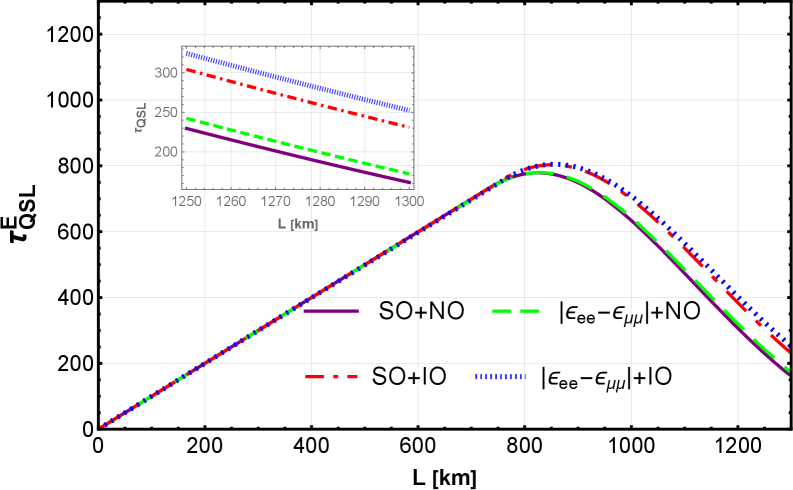
This review investigates the influence of Non-Standard Interactions on bipartite entanglement and the quantum speed limit in three-flavor neutrino oscillations.
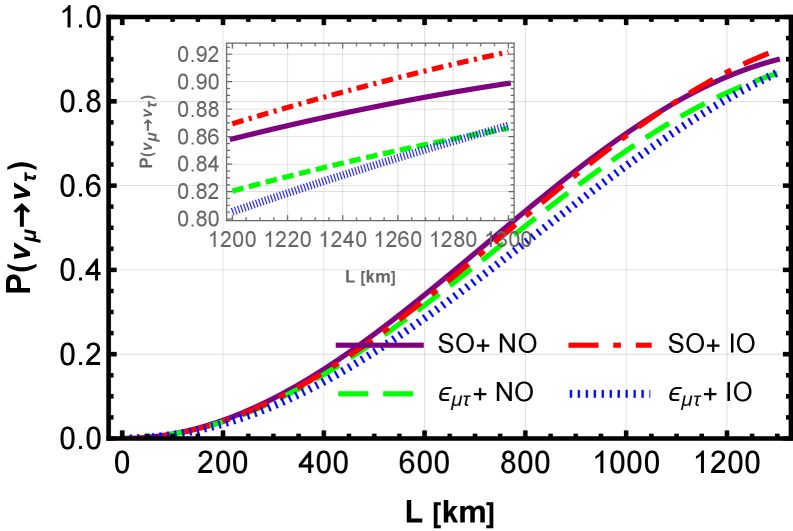
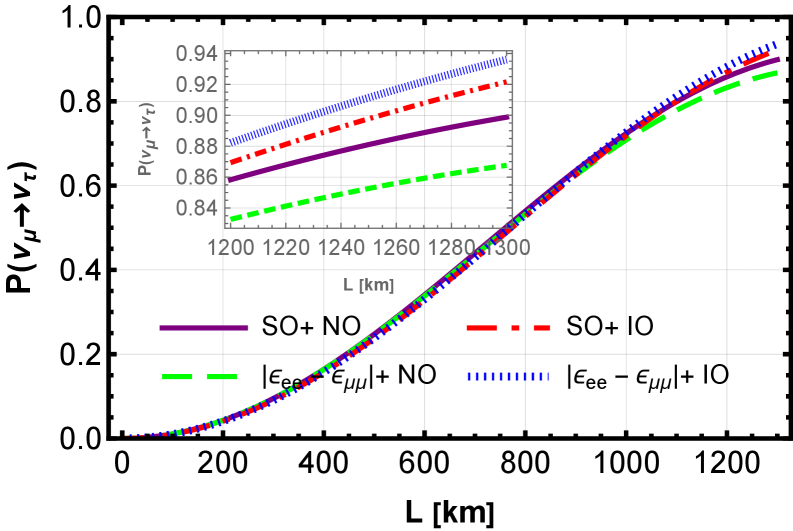
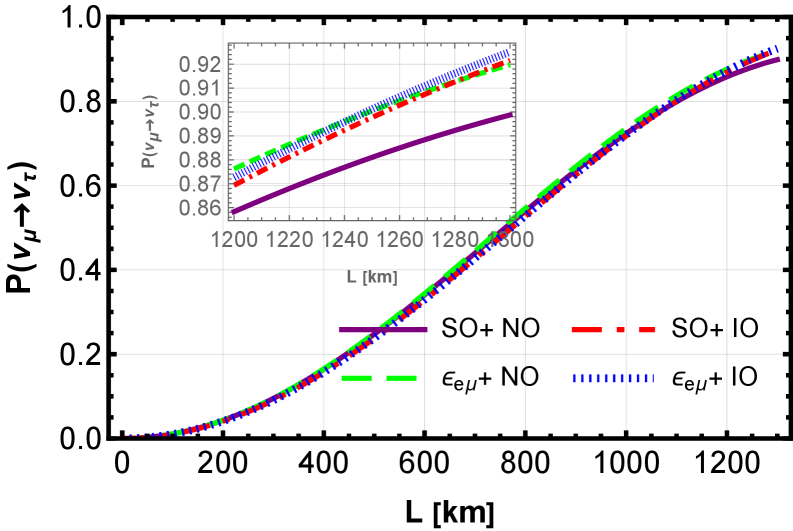
The standard three-flavor neutrino oscillation framework, while successful, leaves room for extensions beyond established physics. This research, titled ‘Quantum speed limit time for bipartite entanglement in neutrino oscillations in matter with non-standard interactions’, explores how non-standard interactions impact the evolution of bipartite entanglement-and consequently, the quantum speed limit-during neutrino propagation through matter. Our analysis reveals that specific off-diagonal interactions, particularly \varepsilon_{\mu\tau}, induce the most pronounced discrepancies in entanglement evolution across both normal and inverted mass orderings, potentially detectable in long-baseline experiments like T2K, NOνA, and DUNE. Could these subtle shifts in entanglement dynamics serve as a novel probe for new physics beyond the Standard Model of particle physics?
The Ghostly Dance of Neutrinos
Neutrinos, often called “ghost particles” due to their minimal interaction with matter, present a fascinating paradox: these fundamental particles aren’t fixed entities, but rather transform between three distinct “flavors”-electron, muon, and tau-as they propagate through space. This isn’t a simple case of switching labels; each neutrino begins its journey with a defined probability of being each flavor, and as it travels, these probabilities continuously shift, meaning a neutrino born as an electron neutrino could, moments later, register as a muon neutrino to a detector. This quantum mechanical phenomenon, known as neutrino oscillation, requires that neutrinos possess mass-a property not initially predicted by the Standard Model of particle physics, which originally posited them as massless. The observation of neutrino oscillation therefore not only reveals a surprising characteristic of these elusive particles, but also points toward physics beyond our current understanding of the universe’s fundamental building blocks and forces.
The observed oscillation of neutrinos – their ability to transform between the electron, muon, and tau varieties during flight – fundamentally altered the understanding of these elusive particles and necessitated a revision of established physics. Prior to this discovery, the Standard Model of particle physics posited neutrinos as massless entities, a simplification that elegantly explained many observed phenomena. However, oscillation is only possible if neutrinos possess mass, even if incredibly small. This realization demanded an extension to the Standard Model, introducing mechanisms to account for neutrino mass without disrupting the model’s successful predictions for other particles. The precise value of neutrino mass remains an active area of research, but the confirmation of its existence represents a significant step beyond the original Standard Model, opening new avenues for exploring the fundamental building blocks of the universe and the forces that govern them.
The persistent mystery of neutrino oscillation isn’t simply a puzzle for particle physicists; it represents a fundamental gap in the current understanding of the cosmos. Because neutrinos were originally predicted to be massless, their observed oscillations necessitate a revision of the Standard Model and point toward new physics beyond it. Determining the precise mechanisms governing neutrino mass – whether Majorana particles are involved, or if other exotic processes are at play – could unlock secrets about the matter-antimatter asymmetry in the universe and even the formation of large-scale structures. Furthermore, the subtle differences in neutrino masses and mixing angles have implications for nuclear processes within stars, influencing their evolution and ultimately the distribution of elements throughout the universe. Resolving this enigma, therefore, promises a more complete and accurate depiction of the universe’s history, composition, and ultimate fate.
Precision Measurements: Chasing the Elusive Parameters
Neutrino oscillation experiments, such as T2K and NOvA, are engineered to determine the values of parameters defining this quantum mechanical phenomenon. These parameters include the three neutrino mixing angles – \theta_{12}, \theta_{23}, and \theta_{13} – which dictate the probabilities of flavor transitions, and the two independent mass-squared differences, \Delta m^2_{21} and \Delta m^2_{31}. Precise measurement of these values requires detecting neutrinos produced by an intense source – typically a proton beam interacting with a target – over a long baseline, allowing for the observation of oscillation patterns as different neutrino flavors appear and disappear. Statistical analysis of the observed event rates, categorized by neutrino flavor and energy, then yields the best-fit values and uncertainties for the oscillation parameters.
Neutrino oscillation experiments are coupled with theoretical analysis incorporating the Matter Effect – a phenomenon where neutrinos interact with matter as they propagate, altering their oscillation probabilities – to rigorously test the Standard Model of particle physics. The Matter Effect’s influence is energy and density dependent, complicating the interpretation of oscillation data and necessitating precise calculations based on known matter profiles, such as those found within the Earth. Discrepancies between experimental results and theoretical predictions, when accounting for the Matter Effect, would indicate physics beyond the Standard Model. Current analyses focus on accurately modeling this effect to refine parameter measurements and search for deviations suggesting new interactions or properties of neutrinos.
Current neutrino oscillation experiments indicate a preference for the normal mass ordering (NO), where m_1 < m_2 < m_3, but the data are presently unable to definitively exclude the inverted mass ordering (IO), where m_3 < m_2 < m_1. This ambiguity stems from limitations in experimental precision and event statistics. Future long-baseline neutrino experiments, notably the Deep Underground Neutrino Experiment (DUNE), are designed with increased sensitivity to resolve this uncertainty. DUNE’s longer baseline – the distance between the neutrino source and the detector – enhances the oscillation probability, thereby improving the ability to distinguish between the NO and IO scenarios through precise measurements of oscillation parameters.
Beyond the Standard Model: A Hint of Something More
Non-Standard Interactions (NSI) represent a proposed extension to the Standard Model of particle physics, positing the existence of new forces that directly couple to neutrinos. Unlike Standard Model interactions mediated by the W and Z bosons, these NSIs involve interactions beyond those currently known, potentially modifying the behavior of neutrinos during propagation. This modification arises from the introduction of new effective interactions that affect neutrino flavor states, leading to deviations from the oscillation patterns predicted by the Standard Model. These interactions are parameterized by NSI coupling constants, which quantify the strength and form of these new forces, and are characterized by both their magnitude and complex phase, influencing how neutrinos interact with matter and with each other.
Non-Standard Interactions (NSI) are characterized by both diagonal and off-diagonal contributions to the neutrino flavor basis. Diagonal NSI affect the strength of standard neutrino interactions, modifying oscillation probabilities through alterations to the potential terms in the Schrödinger equation governing neutrino propagation. Off-diagonal NSI, conversely, introduce mixing between different neutrino flavors beyond the established PMNS matrix, directly influencing the survival and appearance probabilities of each flavor. The presence of these effects can potentially resolve several anomalies observed in neutrino oscillation experiments – such as the LSND and MiniBooNE anomalies – by providing alternative explanations to those offered within the Standard Model framework. Quantitatively, these alterations manifest as deviations from unitarity in the PMNS matrix and can be parameterized by effective interaction terms proportional to \epsilon_{\alpha \beta} , where α and β represent the neutrino flavors.
Systematic exploration of the Non-Standard Interaction (NSI) parameter space is essential due to the potential for even subtle effects to significantly impact interpretations of neutrino oscillation data and the broader search for Beyond the Standard Model (BSM) physics. Current research indicates that the Deep Underground Neutrino Experiment (DUNE) possesses enhanced sensitivity for differentiating between various NSI scenarios, offering improved statistical power to constrain NSI parameters and resolve ambiguities that limit the capabilities of existing experiments. This increased sensitivity stems from DUNE’s large mass, intense neutrino beam, and advanced detector technology, enabling more precise measurements of neutrino oscillation probabilities and facilitating a more detailed characterization of potential new physics contributions.
Entanglement and Measurement: The Quantum Limits
The perplexing phenomenon of neutrino oscillation, where these elusive particles shift between three “flavors”-electron, muon, and tau-isn’t merely a change of identity, but a direct consequence of quantum entanglement. Neutrinos exist in a superposition of mass states, and these mass eigenstates don’t directly correspond to the flavor neutrinos detected by experiments. As a neutrino propagates, this superposition evolves, becoming entangled between its flavor and mass components. This entanglement is crucial; it’s the mechanism allowing a neutrino created as, for example, an electron neutrino, to be detected later as a muon neutrino. The probability of this ‘oscillation’ is directly related to the degree of entanglement between these states, meaning that the change in flavor isn’t a classical transition, but a quantum mechanical effect governed by the principles of entanglement – a connection where the state of one eigenstate is inextricably linked to the other, even across vast distances.
The strength of quantum entanglement, a cornerstone of neutrino oscillation, isn’t simply a binary ‘present’ or ‘absent’ quality; it exists on a spectrum that can be precisely measured. Researchers utilize quantifiable metrics, notably Entanglement Entropy and Capacity of Entanglement, to characterize this connection between neutrino flavor and mass states. Entanglement Entropy, in essence, gauges the amount of quantum information shared between entangled particles, while Capacity of Entanglement defines the maximum rate at which quantum information can be reliably transmitted using that entanglement. By meticulously calculating these values, scientists gain deeper insights into the fundamental physics governing neutrino behavior, revealing how strongly these elusive particles are linked despite being separated in space and time, and offering a pathway to test the limits of quantum mechanics in a real-world setting.
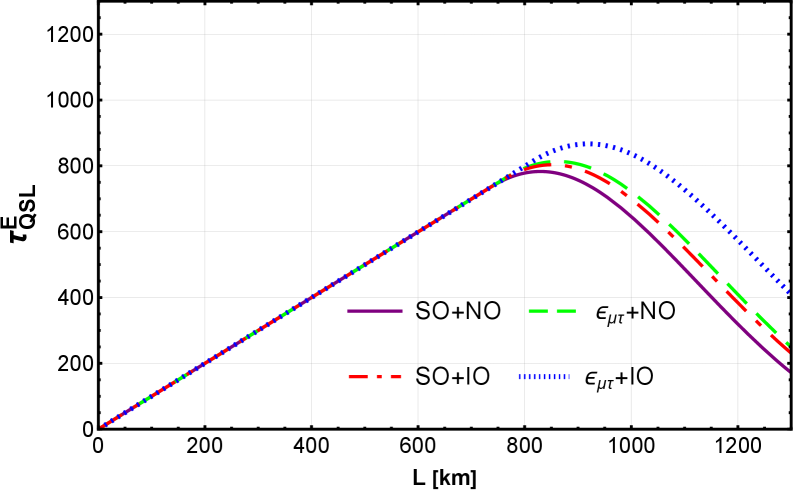
The very act of observing a quantum system, particularly one governed by entanglement, is intrinsically bound by a temporal limit – the Quantum Speed Limit time, or QSLTime. This value dictates the minimum duration required to detect a discernible change in the entangled state, effectively establishing a fundamental constraint on measurement precision. Recent research leveraging the Deep Underground Neutrino Experiment (DUNE) demonstrates that QSLTime varies considerably across different simulated scenarios. These discrepancies aren’t merely theoretical; they underscore DUNE’s exceptional sensitivity to subtle shifts in neutrino behavior and its capacity to probe the limits of quantum measurement with unprecedented accuracy. The observed variations in QSLTime suggest that DUNE will be uniquely positioned to refine our understanding of neutrino oscillation and the underlying quantum phenomena that govern it, potentially revealing new physics beyond the Standard Model.
DUNE and the Path Forward: A New Era of Neutrino Physics
The Deep Underground Neutrino Experiment, or DUNE, represents a significant leap forward in the quest to understand the universe’s most elusive particles. This internationally collaborative undertaking isn’t simply about confirming existing knowledge of neutrino oscillation – the process by which these particles change ‘flavors’ – but about pushing the boundaries of physics itself. DUNE’s innovative design, featuring a highly intense neutrino beam originating from Fermilab and a massive detector housed deep underground at the Sanford Underground Research Facility in South Dakota, will allow scientists to measure neutrino oscillation parameters with unprecedented precision. This enhanced sensitivity opens the door to searching for subtle deviations from the Standard Model of particle physics, potentially revealing new particles, interactions, and ultimately, a more complete picture of the fundamental laws governing reality. The experiment promises to address some of the most pressing questions in modern physics, including the matter-antimatter asymmetry in the universe and the potential role of neutrinos in astrophysical phenomena.
The Deep Underground Neutrino Experiment (DUNE) is poised to resolve a longstanding mystery in particle physics: the neutrino mass hierarchy. Neutrinos, elusive subatomic particles, come in three “flavors” – electron, muon, and tau – and oscillate between these forms as they travel. Determining whether the heaviest neutrino is the third or the first flavor requires observing these oscillations over long distances. DUNE achieves this through a unique design: a highly intense neutrino beam generated at Fermilab will travel 1,300 kilometers to the massive detector located at the Sanford Underground Research Facility in South Dakota. The sheer scale of the detector, containing tens of thousands of tons of liquid argon, coupled with the beam’s intensity, will allow scientists to precisely measure the rates at which neutrinos change flavors, ultimately revealing the ordering of their masses with unprecedented accuracy and opening a window into physics beyond the Standard Model.
The Deep Underground Neutrino Experiment (DUNE) promises to revolutionize the understanding of neutrinos by investigating both standard neutrino oscillation parameters and the possibility of Non-Standard Interactions (NSI). Recent research indicates that various NSI scenarios leave unique imprints on quantum entanglement and Quantum Spin Liquid (QSL) states, creating distinguishable patterns that DUNE is uniquely positioned to detect. These patterns arise from subtle modifications to neutrino interactions, potentially revealing new forces or particles beyond the Standard Model. By meticulously analyzing neutrino events, DUNE can effectively map these quantum signatures, offering a powerful probe into the fundamental symmetries of the universe and shedding light on the nature of dark matter and the matter-antimatter asymmetry.

The pursuit of precision in flavor physics always runs headlong into the realities of production environments. This research, detailing the impact of Non-Standard Interactions on bipartite entanglement and the quantum speed limit in neutrino oscillations, feels…familiar. It’s a beautifully constructed model, seeking to refine understanding beyond the Standard Model. Yet, one anticipates the inevitable: some unforeseen effect in a long-baseline neutrino experiment will introduce a wrinkle, a deviation, a ‘proof of life’ for the model’s limitations. As Richard Feynman once said, ‘The first principle is that you must not fool yourself – and you are the easiest person to fool.’ The elegance of theory is seductive, but the universe, predictably, will find a way to complicate things.
So, What Breaks First?
This exploration of entanglement in neutrino oscillations, and the application of a quantum speed limit, feels…predictable. The universe, it seems, will always find a way to complicate even the most elegant theoretical structures. The introduction of Non-Standard Interactions-a necessary evil, really-reveals, not surprisingly, that the tidy picture of three-flavor mixing is a fiction. The real question isn’t whether these NSI terms exist, but rather, which ones are going to cause the most trouble for our detectors, and how long before production finds a loophole.
Future iterations will inevitably involve more parameters, more free variables, and increasingly complex simulations. The pursuit of CP violation, naturally, will continue to drive this expansion, demanding ever-greater precision. One anticipates that the current focus on long-baseline experiments will broaden, perhaps towards more exotic scenarios-supernovae, relic neutrinos-anything to avoid the rather mundane problem of statistical uncertainty. Everything new is old again, just renamed and still broken.
Ultimately, the true test isn’t mathematical consistency, but observational resilience. Production is the best QA, after all. The models may be beautiful, the calculations impeccable, but if the data doesn’t cooperate-and it rarely does-the entire edifice will come crashing down. One suspects the next ‘discovery’ will be a systematic error, cleverly disguised as new physics. It always is.
Original article: https://arxiv.org/pdf/2602.03748.pdf
Contact the author: https://www.linkedin.com/in/avetisyan/
See also:
- The Super Mario Galaxy Movie: 50 Easter Eggs, References & Major Cameos Explained
- All 13 Smash Bros. Characters in the Super Mario Galaxy Movie
- 10 Best Free Games on Steam in 2026, Ranked
- Highly Anticipated Strategy RPG Finally Sets Release Date (And It’s Soon)
- Dune 3 Gets the Huge Update Fans Have Been Waiting For
- Sydney Sweeney’s The Housemaid 2 Sets Streaming Release Date
- Why is Tech Jacket gender-swapped in Invincible season 4 and who voices her?
- Welcome to Demon School! Iruma-kun season 4 release schedule: When are new episodes on Crunchyroll?
- WTH?! Twitter Drops Fake Daredevil: Born Again Season 2 Spoilers as Character Return Confirmed
- Supergirl Director Breaks Down Kara Zor-El & Superman’s ‘Older-Sibling Dynamic’
2026-02-04 11:40