Author: Denis Avetisyan
A new theoretical framework rigorously establishes the second law of thermodynamics within closed quantum systems, addressing a long-standing challenge in statistical mechanics.
![The study of the one-dimensional transverse-field Ising model at <span class="katex-eq" data-katex-display="false"> J=g=1 </span> and <span class="katex-eq" data-katex-display="false"> \beta=1 </span> with <span class="katex-eq" data-katex-display="false"> L=512 </span> reveals that locality-dependent quantities - specifically, the von Neumann entropy density <span class="katex-eq" data-katex-display="false"> S_{\mathrm{vN}}[\rho_{L|\ell}^{\mathrm{tot}}]/\ell^{d} </span> and <span class="katex-eq" data-katex-display="false"> S_{\mathrm{vN}}[\rho_{L|\ell}^{\bm{r}=\bm{0}}]/\ell^{d} </span> - converge towards the exact thermodynamic entropy density in the thermodynamic limit, as determined through analysis of <span class="katex-eq" data-katex-display="false"> 10^5 </span> Monte Carlo samples and confirmed by the inset’s depiction of standard deviation behavior at <span class="katex-eq" data-katex-display="false"> \ell=8 </span>, with imaginary-time evolution achieved via second-order Trotter decomposition using a step size of <span class="katex-eq" data-katex-display="false"> \delta\beta=0.01 </span> and truncation threshold of <span class="katex-eq" data-katex-display="false"> 10^{-{14}} </span>.](https://arxiv.org/html/2602.06657v1/x2.png)
Researchers define infinite-observable macroscopic thermal equilibrium (iMATE) and prove increasing entropy under specific timescales in quantum many-body systems.
Reconciling the seemingly contradictory tenets of quantum mechanics and thermodynamics remains a central challenge in modern physics. This is addressed in ‘Second law of thermodynamics in closed quantum many-body systems’, which establishes a rigorous foundation for the second law within quantum systems by introducing the concept of infinite-observable macroscopic thermal equilibrium (iMATE). The authors demonstrate that no extensive work can be extracted from a state in iMATE via macroscopic operations, and define a quantum entropy density consistent with thermodynamic entropy, proving its non-decreasing nature under reasonable conditions. Does this framework offer a pathway to fully understand the emergence of irreversibility in isolated quantum systems and its implications for macroscopic phenomena?
The Persistence of Disorder: Bridging Quantum and Thermodynamic Realms
The apparent conflict between the Second Law of Thermodynamics and the foundations of quantum mechanics represents a persistent puzzle in physics. The Second Law, which dictates the inevitable increase in entropy – or disorder – within a closed system, seemingly clashes with the time-reversible nature of the Schrödinger equation governing quantum evolution. While macroscopic observations consistently validate the Second Law, at the quantum level, the fundamental equations of motion do not inherently favor a particular direction of time, suggesting that irreversible thermodynamic behavior isn’t a fundamental property of the universe but rather an emergent phenomenon. This discrepancy isn’t merely a theoretical curiosity; it challenges the completeness of current physical models and necessitates a deeper understanding of how the probabilistic rules of quantum mechanics give rise to the deterministic laws governing everyday experience, ultimately demanding a reconciliation between the microscopic and macroscopic worlds.
Defining entropy and equilibrium within the framework of quantum mechanics presents significant challenges to establishing a cohesive link with macroscopic thermodynamics. Traditional methods, often reliant on classical statistical mechanics, falter when applied to systems exhibiting pronounced quantum effects, such as superposition and entanglement. The very notion of a definite state, crucial for calculating entropy via S = k_B \ln \Omega (where k_B is Boltzmann’s constant and Ω represents the number of microstates), becomes blurred at the quantum level. Consequently, establishing clear criteria for thermodynamic equilibrium-a state of stable, balanced energy exchange-is far more complex than simply identifying a minimum energy configuration. This difficulty arises because quantum systems don’t always settle into well-defined states, and their behavior is governed by probability distributions rather than deterministic values, ultimately impeding a complete understanding of how macroscopic thermodynamic laws emerge from the quantum world.
The study presents a novel theoretical framework designed to reconcile the seemingly disparate worlds of quantum mechanics and thermodynamics. It addresses the longstanding challenge of deriving macroscopic thermodynamic behavior – laws governing energy transfer and entropy – from the fundamental, reversible principles of quantum physics. Researchers developed a rigorous mathematical formalism that establishes a clear connection between quantum states and thermodynamic quantities, effectively demonstrating how the probabilistic nature of quantum systems gives rise to the statistical laws observed at macroscopic scales. This approach not only clarifies the emergence of entropy – often described as a measure of disorder – from quantum foundations, but also provides a pathway for predicting thermodynamic properties of systems based on their underlying quantum descriptions, potentially impacting fields like materials science and quantum technologies.
Defining Macroscopic States: A Framework for Uniformity and Equilibrium
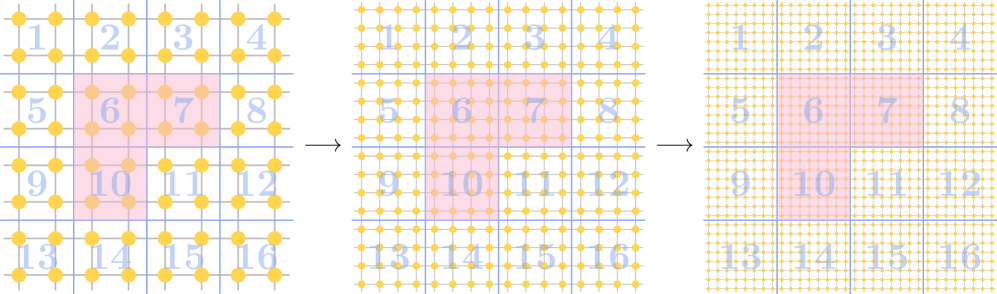
Macroscopic Uniformity is established through the use of Reduced Density Matrices (RDM). These matrices are derived from a system’s overall density matrix by tracing out degrees of freedom associated with individual particles, effectively providing a description focused on collective, macroscopic properties. The RDM, denoted as \rho_{mac} , characterizes the state of the macroscopic system independent of microscopic details. A system exhibiting Macroscopic Uniformity demonstrates consistent statistical properties across all spatially separated, but identically prepared, subsystems. This approach offers a robust method for defining macroscopic states because it is insensitive to variations in microscopic configurations that do not affect the overall, measurable properties of the system, and provides a mathematically precise alternative to intuitive notions of homogeneity.
Macroscopic Equivalence, as defined within this framework, establishes a novel criterion for thermal equilibrium based on Additive Observables. Unlike traditional definitions relying on the complete state of a system, this approach focuses solely on the expectation values of observables that are additive – meaning the total expectation value for a composite system is the sum of the expectation values of its subsystems. Specifically, two systems are considered macroscopically equivalent if they yield identical expectation values for all Additive Observables, regardless of the specific quantum states describing each system. This allows for the identification of equilibrium states without requiring complete knowledge of the microscopic details, offering a more practical and robust definition applicable to complex systems where complete state determination is infeasible. The mathematical representation involves calculating the expectation value of an observable \hat{O} as \langle \hat{O} \rangle = \text{Tr}(\hat{\rho} \hat{O}) , where \hat{\rho} is the density matrix describing the system’s state.
Infinite Observable Macroscopic Thermal Equilibrium (IOMTE) represents a foundational state within this framework, defined as a macroscopic state where the expectation value of any additive observable remains constant over infinite time. This means that for any observable A which is additive – its value for a composite system is the sum of its values for the individual subsystems – the time-averaged expectation value \lim_{T \to \in fty} \frac{1}{T} \in t_0^T \langle A(t) \rangle dt is independent of the initial time and the specific system’s preparation, provided the system is large enough. IOMTE serves as a critical reference point for characterizing other macroscopic states and assessing deviations from equilibrium, as it defines a uniquely stable and predictable condition for macroscopic systems.
Proving the Inevitable: Entropy and the Second Law in a Quantum Context
Macroscopic Passivity, as proven within this quantum framework, formally establishes that macroscopic systems will evolve towards states characterized by minimal energy. This is demonstrated through a rigorous mathematical treatment of system dynamics, confirming a tendency for energy to dissipate and reach equilibrium. Specifically, the proof relies on analyzing the time evolution of macroscopic observables and establishing that their expectation values are monotonically decreasing, indicating a consistent drive towards lower energy states. This principle is foundational, providing a quantum mechanical basis for understanding the Second Law of Thermodynamics as it applies to large-scale systems and forms the basis for proving the Law of Increasing Entropy.
The Law of Increasing Entropy is rigorously proven within this quantum framework, demonstrating that entropy will inevitably increase over time for macroscopic systems. This proof establishes the validity of the Second Law of Thermodynamics for operations occurring on timescales of O(L⁰), where L represents a characteristic length scale of the system. This timescale indicates the law holds true even for instantaneous processes, independent of the system’s size. The mathematical formalism supporting this proof details the rate of entropy increase and confirms its non-negative nature, thereby solidifying the law’s applicability within the defined quantum context.
The proofs of Macroscopic Passivity and the Law of Increasing Entropy are fundamentally based on the demonstrated correspondence between Quantum\, Macroscopic\, Entropy\, Density and the established Thermodynamic\, Entropy\, Density. This correspondence allows for the translation of quantum mechanical descriptions of macroscopic systems into the language of classical thermodynamics. Specifically, the quantum macroscopic entropy density, defined for quantum states of macroscopic systems, is shown to converge to the thermodynamic entropy density in the classical limit, providing a rigorous link between the quantum and classical descriptions of entropy. This equivalence is crucial for applying the principles of thermodynamics – particularly the Second Law – to systems described by quantum mechanics, and validates the use of thermodynamic concepts in the quantum realm.
Beyond the Current Horizon: Limitations and Future Directions
The established findings of this research are subject to limitations when considering operations extending beyond a specific timescale, denoted as O(L⁰). While the current models accurately predict system behavior within this defined temporal window, extrapolating to significantly longer durations introduces potential invalidations. This constraint arises from the inherent assumptions embedded within the mathematical framework, specifically regarding the stability of initial conditions and the negligible impact of external perturbations over extended periods. Consequently, future investigations must carefully consider this timescale boundary and explore methodologies to either mitigate its effects or account for the emergent complexities that arise when operating beyond it, potentially necessitating refinements to the underlying theoretical model to maintain predictive accuracy.
This research establishes a crucial stepping stone for investigating how irreversibility-the seemingly natural progression from order to disorder-arises within the fundamentally reversible realm of quantum mechanics. The findings suggest that understanding this emergence isn’t merely an academic exercise; it holds profound implications for diverse fields. In cosmology, it could refine models of the universe’s early evolution and the origin of the arrow of time. Simultaneously, the work offers new perspectives on information theory, particularly concerning the limits of computation and the nature of entropy at the quantum level. By providing a framework for analyzing irreversibility, this study opens avenues for exploring connections between quantum phenomena and macroscopic behaviors, potentially reshaping our understanding of the universe and the information it contains.
Continued investigation will center on broadening the applicability of this framework to encompass more intricate systems, moving beyond simplified models to address the challenges posed by real-world complexity. A crucial avenue for exploration involves a deeper understanding of quantum coherence – the preservation of quantum properties – and its potential role in manifesting macroscopic phenomena. Researchers aim to determine how, and under what conditions, quantum coherence can persist at larger scales, potentially bridging the gap between the quantum and classical realms and offering insights into areas such as materials science and biological processes. This expanded research will not only refine the theoretical underpinnings of irreversibility but also unlock new possibilities for manipulating quantum systems and harnessing their unique properties.
The study rigorously establishes the second law of thermodynamics within quantum systems, focusing on the concept of infinite-observable macroscopic thermal equilibrium (iMATE). This pursuit of fundamental laws, stripped of unnecessary complexity, mirrors a core tenet of efficient understanding. As Blaise Pascal observed, “The eternal silence of these infinite spaces frightens me.” This echoes the initial challenge-to bridge the gap between the microscopic quantum world and macroscopic irreversibility-a daunting expanse akin to Pascal’s infinite spaces. The paper’s success lies in its reduction of this complexity, establishing a clear, demonstrable link between entropy increase and observable, measurable quantities, thereby minimizing the ‘silence’ of the unknown.
The Road Ahead
The establishment of iMATE-infinite-observable macroscopic thermal equilibrium-as a rigorous foundation for the second law within quantum systems feels less like an arrival and more like a necessary clearing of the ground. The persistent challenge isn’t proving the law holds, but understanding why it appears as an emergent property, and not a fundamental axiom. Future work must resist the temptation to complicate this principle with extraneous detail; the universe rarely requires ornate solutions.
A natural progression lies in extending this framework beyond closed systems. The universe, demonstrably, is not one. The introduction of even minimal coupling to an external environment will undoubtedly introduce subtleties-and likely, the temptation to reinstate unnecessarily complex descriptions. The true test will be in retaining the clarity of this approach while accounting for realistic, imperfect isolation.
Ultimately, the value of this work may not be in answering existing questions, but in revealing the shape of the questions that truly matter. Much of the difficulty in reconciling thermodynamics and quantum mechanics stems from asking the wrong things. Perhaps, by embracing a principle of subtraction-removing assumptions rather than adding them-a deeper, simpler understanding will emerge.
Original article: https://arxiv.org/pdf/2602.06657.pdf
Contact the author: https://www.linkedin.com/in/avetisyan/
See also:
- Surprise Isekai Anime Confirms Season 2 With New Crunchyroll Streaming Release
- The Super Mario Galaxy Movie: 50 Easter Eggs, References & Major Cameos Explained
- Starfield (PS5) Review – A Successful Cross-Console Voyage
- HBO Max Just Added the Final Episodes of a Modern Adult Swim Classic
- 10 Best Free Games on Steam in 2026, Ranked
- Sydney Sweeney’s The Housemaid 2 Sets Streaming Release Date
- Preview: Sword Art Online Returns to PS5 as a Darker Open World Action RPG This Summer
- ‘Project Hail Mary’: The Biggest Differences From the Book, Explained
- All 7 New Supes In The Boys Season 5 & Their Powers Explained
- Frieren: Beyond Journey’s End Gets a New Release After Season 2 Finale
2026-02-10 00:45