Author: Denis Avetisyan
New research leverages the principles of quantum optics to create models that explain how information can escape black holes over time.
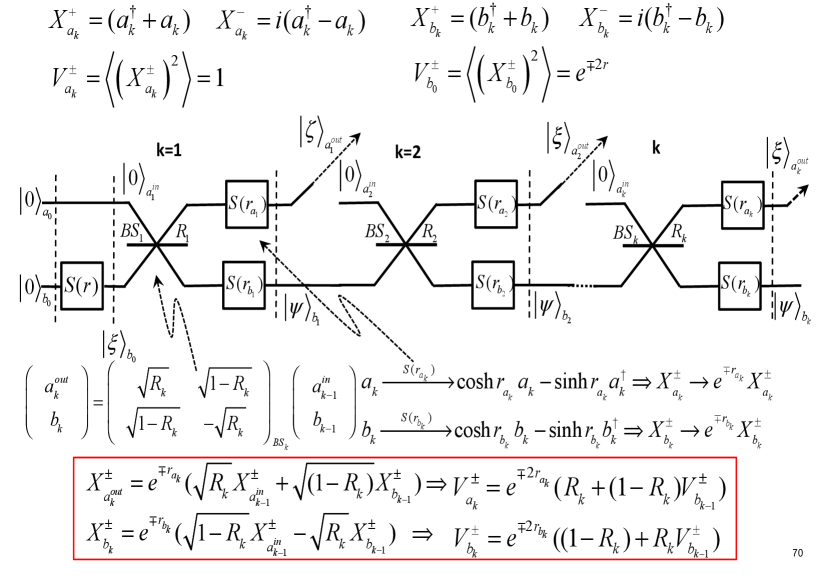
This review explores quantum optical models designed to reproduce the Page curve and demonstrate unitary evolution during black hole evaporation.
The information paradox-the apparent loss of quantum information within black holes-challenges fundamental tenets of physics. This is addressed in ‘Quantum Optical Inspired Models for Unitary Black Hole Evaporation’, which explores novel approaches to modeling black hole evaporation using the language of quantum optics. By representing the black hole as a squeezed state interacting with vacuum fluctuations, the authors demonstrate a potential pathway toward reproducing the Page curve-a key signature of information recovery-through the evolution of entanglement. Can these optically inspired models provide a tractable framework for understanding the ultimate fate of information falling into a black hole and resolving the paradox?
The Emergent Abyss: When Gravity Meets the Quantum
The theoretical framework of black holes encounters a significant challenge with the prediction of Hawking radiation, a process by which black holes are not entirely black, but slowly emit particles. This emission, while seemingly innocuous, suggests that information about the matter that falls into a black hole is not preserved, but rather lost as the black hole evaporates. This presents a fundamental conflict with the principles of quantum mechanics, specifically the concept of unitarity, which dictates that quantum evolution should be reversible and information-preserving. If information truly vanishes within a black hole, it implies a breakdown of the very laws governing the quantum world, as it suggests that the future state of a system is not uniquely determined by its past-a cornerstone of physics. The apparent destruction of information isn’t simply a matter of practical difficulty in retrieval; it challenges the self-consistency of combining general relativity with quantum field theory, prompting decades of research into potential resolutions, such as information being encoded in the Hawking radiation itself or remaining at the event horizon.
The black hole information paradox isn’t simply a conflict between general relativity and quantum mechanics, but a specific consequence of attempting to reconcile Quantum Field Theory – the framework describing fundamental particles and forces – with the extreme gravitational environment around black holes. Calculations performed within the Schwarzschild spacetime, which describes a non-rotating, uncharged black hole, predict Hawking radiation – a thermal emission seemingly devoid of the information about the matter that formed the black hole. This arises because the intense curvature of spacetime near the event horizon fundamentally alters the vacuum state of quantum fields, leading to particle creation and, crucially, a loss of correlations necessary to reconstruct the original information. The standard derivation suggests that while the total energy and charge are conserved, the precise quantum state of infalling matter is irretrievably scrambled, challenging the foundational principle of quantum mechanics that information cannot be destroyed.
The conventional understanding of black holes presents a profound challenge to a cornerstone of quantum mechanics: unitarity. Unitarity dictates that quantum evolution should be reversible – that, in principle, one should be able to reconstruct the past state of a system from its present state. However, Hawking radiation suggests black holes aren’t merely cosmic vacuum cleaners; they evaporate over time, emitting particles. If information about matter falling into a black hole is truly destroyed during this process, as the standard picture implies, it violates unitarity, creating a logical inconsistency within the framework of quantum theory. This isn’t simply a matter of losing data; it suggests the fundamental laws governing the universe may not be consistently applied when gravity and quantum mechanics intersect, prompting physicists to explore radical ideas like information being somehow encoded in the Hawking radiation itself or potentially residing on the black hole’s event horizon as a holographic projection.
Entanglement’s Echo: The Recovery of Hidden Information
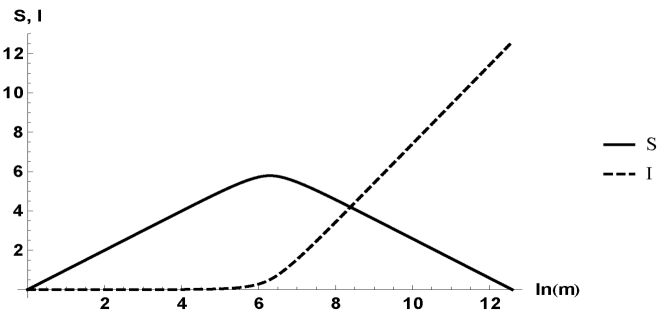
The Page Curve details the time evolution of entanglement entropy during black hole evaporation. Initially, as Hawking radiation is emitted, the entanglement between the black hole and the radiation increases, reflecting the expected loss of information into the black hole. However, at approximately half the black hole’s evaporation lifetime – known as the Page Time – the entanglement entropy reaches a maximum and then begins to decrease. This decrease is not consistent with a system that permanently loses information; instead, it suggests that the Hawking radiation at later times contains information about the black hole’s initial state, effectively leaking information out of the black hole and resolving the information paradox. The curve’s shape provides evidence that the emitted radiation transitions from being primarily thermal to becoming increasingly correlated with the black hole’s interior.
The apparent loss of information during black hole evaporation is potentially resolved by the concept of the Page Time, which occurs approximately at half the black hole’s total evaporation lifetime. Prior to the Page Time, the entanglement entropy between the black hole and the emitted Hawking radiation increases, suggesting information is still contained within the black hole. However, at the Page Time, this entropy reaches a maximum and then begins to decrease, indicating a transition where the emitted Hawking radiation starts to encode the original information that fell into the black hole. This implies that information is not destroyed, but rather gradually released through the Hawking radiation at later stages of evaporation, effectively preserving unitarity.
Von Neumann Entropy, denoted as S(ρ) = -Tr(ρlog_2ρ), serves as the primary quantitative measure for entanglement between the black hole and the emitted Hawking radiation. Here, ρ represents the reduced density matrix of the subsystem under consideration, effectively describing the state of either the black hole or the radiation. Calculating this entropy requires tracing out the degrees of freedom not belonging to the subsystem, thereby isolating the entanglement present within that portion of the combined system. A higher Von Neumann Entropy indicates greater entanglement, while a value of zero signifies a separable, non-entangled state. Tracking the evolution of this entropy during black hole evaporation is essential to understanding the Page Curve and the potential recovery of information initially contained within the black hole.
Simulating the Abyss: A Laboratory for Evaporation
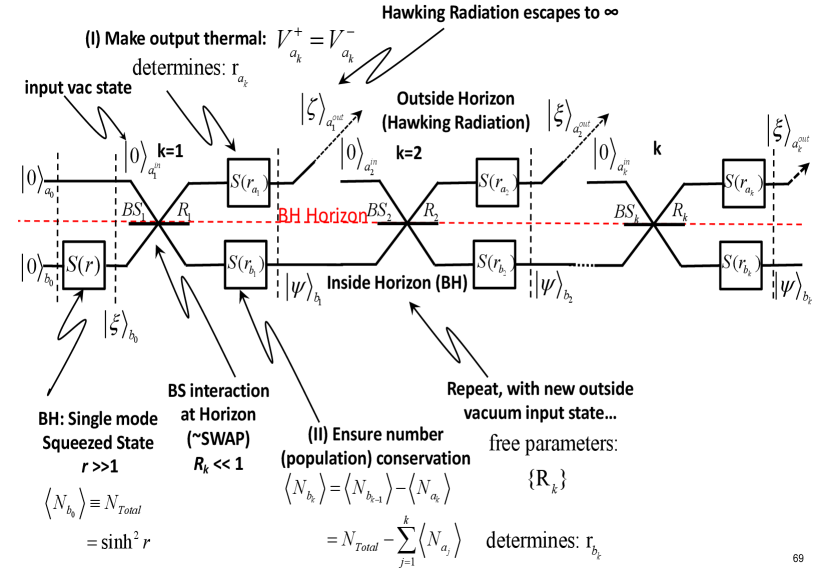
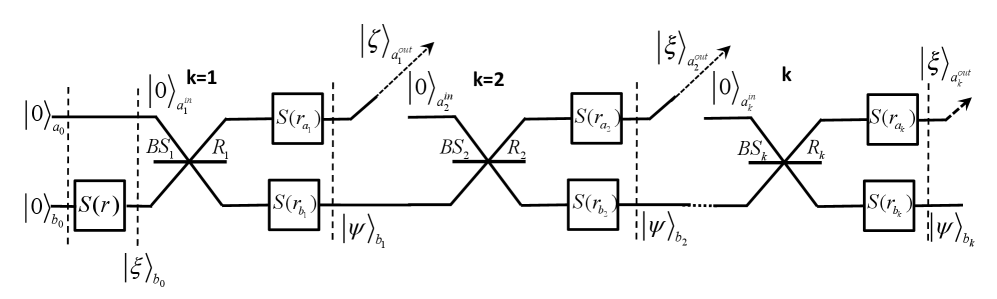
The Beam Splitter and Squeezing (BSQ) model represents a method for simulating black hole evaporation by mapping the quantum fields falling into and emerging from the black hole onto a network of optical elements. Specifically, beam splitters are used to represent the entanglement created between ingoing and outgoing modes, while squeezing operations modify the quantum fluctuations of these modes to mimic the Hawking radiation process. This allows researchers to model the evolution of quantum states as the black hole radiates, effectively translating the complex physics of curved spacetime and quantum field theory into a controllable laboratory setup using quantum optics. The model’s parameters, such as beam splitter reflectivity and squeezing strength, are tuned to represent the black hole’s properties and the characteristics of the emitted radiation, enabling the study of quantum information processing during evaporation.
The BSQ model simulates entanglement evolution by leveraging squeezed states of light and precise control over beam splitter reflectivity. Squeezed states, possessing reduced quantum noise in one quadrature at the expense of increased noise in the other, allow for the amplification of subtle quantum correlations. Varying the reflectivity of the beam splitters within the model directly influences the degree of entanglement between the outgoing modes, effectively mimicking the particle creation process during black hole evaporation. This manipulation enables researchers to observe and analyze how entanglement changes over time, providing insights into the dynamics of Hawking radiation and potential information loss paradoxes. The model’s ability to finely tune these parameters is critical for accurately representing the complex interplay between quantum fields and spacetime curvature.
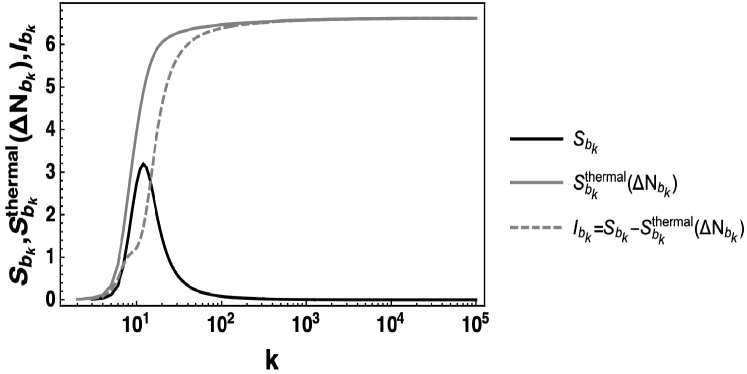
The BSQ model’s simulation of black hole evaporation provides a platform for testing predictions regarding information recovery, specifically addressing the information paradox. Through controlled manipulation of quantum states, researchers can observe the evolution of entanglement, a key resource for potentially extracting information from the Hawking radiation. Analysis of the model demonstrates a decrease in entropy during the evaporation process, challenging the traditional expectation of complete information loss and suggesting a possible mechanism for information preservation, potentially linked to the geometric structure of spacetime as represented by the squeezed states and reflectivity parameters within the model. This allows for quantitative analysis of the relationship between entanglement dynamics and the black hole’s geometry during evaporation.
Entanglement and Geometry: The Fabric of Spacetime
The ER=EPR conjecture posits a surprising relationship between two seemingly disparate phenomena: quantum entanglement and wormholes. This proposal suggests that entangled particles – those linked in such a way that they share the same fate no matter how far apart – aren’t merely correlated, but are actually connected by tiny, microscopic wormholes. These aren’t traversable shortcuts for macroscopic objects, but rather geometric connections at the quantum level, offering a potential explanation for how entanglement can persist across vast distances. Essentially, the conjecture reframes entanglement not as a mysterious action-at-a-distance, but as a local connection through a hidden dimension – a miniature wormhole linking the entangled particles. This radical idea challenges conventional understandings of spacetime and proposes that the fabric of reality itself may be woven from the quantum connections between particles, potentially resolving long-standing puzzles in both quantum mechanics and general relativity.
The concept of the Entanglement Wedge reimagines the spatial connection between entangled particles not as a distant correlation, but as a genuine region of spacetime. This wedge, extending outwards from the entangled particles, proposes that the maximal extent of spacetime accessible to an observer is dictated by the amount of entanglement they share with another region. Effectively, entanglement isn’t merely within spacetime, but actively creates it; the larger the entanglement between two regions, the more directly connected they are geometrically. This framework suggests a holographic principle at play, where information about a volume of spacetime can be encoded on its boundary, and the entanglement wedge provides the geometric realization of this correspondence. The boundaries of the wedge define a hypersurface that encapsulates all the information potentially accessible through the entanglement, offering a novel way to visualize how quantum correlations give rise to the classical geometry experienced by observers.
The BSQ model presents a compelling framework for understanding how spacetime itself might arise from the intricate web of quantum entanglement. This theoretical construct doesn’t merely posit a connection, but actively simulates the dynamics of entanglement, revealing that early and late-time Hawking radiation – the thermal radiation emitted by black holes – exhibits measurable, non-zero correlations. These correlations aren’t random; they suggest that entangled particles aren’t simply linked, but actively contribute to the structure of spacetime, implying that the geometry surrounding a black hole is fundamentally woven from the quantum connections between its constituent particles. The model demonstrates that these entanglement dynamics can effectively ‘build’ spacetime, offering a potential pathway to reconcile quantum mechanics and general relativity by demonstrating how entanglement \rightarrow spacetime , and providing a novel approach to studying black hole information paradoxes.

Beyond the Horizon: Towards a Unified Theory
The extreme conditions present during black hole evaporation, coupled with the fundamental role of quantum entanglement, offer a unique laboratory for probing the elusive theory of Quantum Gravity. Current physics operates on two pillars – General Relativity, which describes gravity as the curvature of spacetime, and Quantum Mechanics, governing the behavior of matter at the subatomic level – yet these frameworks clash when applied to black holes. Investigations into the subtle correlations between particles emitted during evaporation-specifically, how entanglement might encode and preserve information seemingly lost to the black hole-provide tangible predictions that can be tested against theoretical models. By examining the interplay between gravity, quantum mechanics, and information, researchers hope to refine existing theories or uncover new principles that reconcile these foundational pillars of physics, ultimately leading to a more complete understanding of the universe at its most fundamental level.
The persistent puzzle of black hole evaporation directly challenges the foundational principles of both Quantum Mechanics and General Relativity. General Relativity predicts complete information loss as matter falls into a black hole and subsequently evaporates as Hawking radiation, a scenario violating the unitary evolution central to Quantum Mechanics – the principle that information cannot be truly destroyed. Resolving this conflict necessitates a deeper understanding of how information might be encoded and retrieved from Hawking radiation, or alternatively, how the black hole’s event horizon behaves at the quantum level. Current theoretical efforts, such as those exploring the role of entanglement and wormholes, posit mechanisms for preserving information, suggesting that the evaporation process isn’t a simple loss, but a complex scrambling and potential re-emission of information in a subtle form. Ultimately, deciphering this process is not merely about black holes; it’s about formulating a consistent theory of Quantum Gravity that reconciles the seemingly incompatible frameworks governing the very large and the very small.
Continued investigations are poised to move beyond simplified black hole models toward scenarios reflecting the complexities of rotating or charged black holes, and even the chaotic environments predicted to have existed in the early universe. Such expansions are not merely about increasing computational power; they fundamentally probe the nature of spacetime itself. By examining how entanglement and information preservation manifest under extreme gravitational conditions-akin to those immediately following the Big Bang-researchers hope to uncover whether spacetime is fundamentally smooth or emerges from more discrete, quantum constituents. These studies may ultimately reveal connections between black hole evaporation, the origins of cosmic structure, and the elusive goal of unifying quantum mechanics and general relativity, potentially reshaping our understanding of gravity at its most fundamental level.
The pursuit of modeling black hole evaporation through quantum optics highlights a fundamental principle: order arises not from imposed structure, but from the interplay of local rules. This research, focused on reproducing the Page curve and demonstrating unitary evolution, implicitly acknowledges this. As Ralph Waldo Emerson stated, “Do not go into the wilderness to find solitude, but to become more aware of the world around you.” The complexity of black hole evaporation – tracing information escape through entangled states and thermal radiation – isn’t solved by grand, overarching designs, but by meticulously understanding the behavior of constituent parts and their interactions. Every constraint within the mathematical framework stimulates inventiveness, pushing researchers towards elegant solutions that emerge from the system itself, rather than being forced upon it.
Where Do We Go From Here?
The pursuit of a convincingly unitary description of black hole evaporation, as mirrored in these quantum optical models, reveals less a path to control, and more the inherent limitations of seeking it. The emphasis on entanglement entropy and the Page curve isn’t about saving information, but acknowledging its pervasive distribution – a constant reshuffling rather than preservation. Every connection carries influence, and the models demonstrate that even apparent thermalization isn’t truly featureless, but a complex dance of correlations.
Future work will likely not center on forcing a neat, preordained outcome, but on better characterizing the emergent behavior from minimal, locally defined rules. The challenge isn’t to build a mechanism for information retrieval, but to understand how information, as a fundamental property of the system, manifests in the radiation. Self-organization is real governance without interference; the models suggest that the evaporation process, given sufficient complexity, will naturally tend towards a unitary outcome, not because it’s required to, but because it’s the most probable state given the constraints.
Perhaps the most fruitful avenue for exploration lies in relaxing the assumptions about perfect black holes and ideal quantum channels. Real black holes, and the universe itself, are messy, imperfect systems. Investigating the effects of decoherence, backreaction, and non-ideal interactions may not yield a mathematically pristine solution, but will provide a more realistic – and therefore, arguably more meaningful – understanding of how information behaves at the event horizon.
Original article: https://arxiv.org/pdf/2601.09820.pdf
Contact the author: https://www.linkedin.com/in/avetisyan/
See also:
- The Super Mario Galaxy Movie: 50 Easter Eggs, References & Major Cameos Explained
- 10 Best Free Games on Steam in 2026, Ranked
- Sydney Sweeney’s The Housemaid 2 Sets Streaming Release Date
- Welcome to Demon School! Iruma-kun season 4 release schedule: When are new episodes on Crunchyroll?
- Why is Tech Jacket gender-swapped in Invincible season 4 and who voices her?
- Skate 4 – Manny Go Round Goals Guide | All of the Above Sequence
- Overwatch 2 G.I. Joe Crossover Launches July 1: Join the Battle Between Heroes and Villains
- Shonen Jump Officially Cancels Yet Another Major Series in 2026 (& Fans Saw It Coming)
- All 13 Smash Bros. Characters in the Super Mario Galaxy Movie
- Preview: Sword Art Online Returns to PS5 as a Darker Open World Action RPG This Summer
2026-01-17 02:39