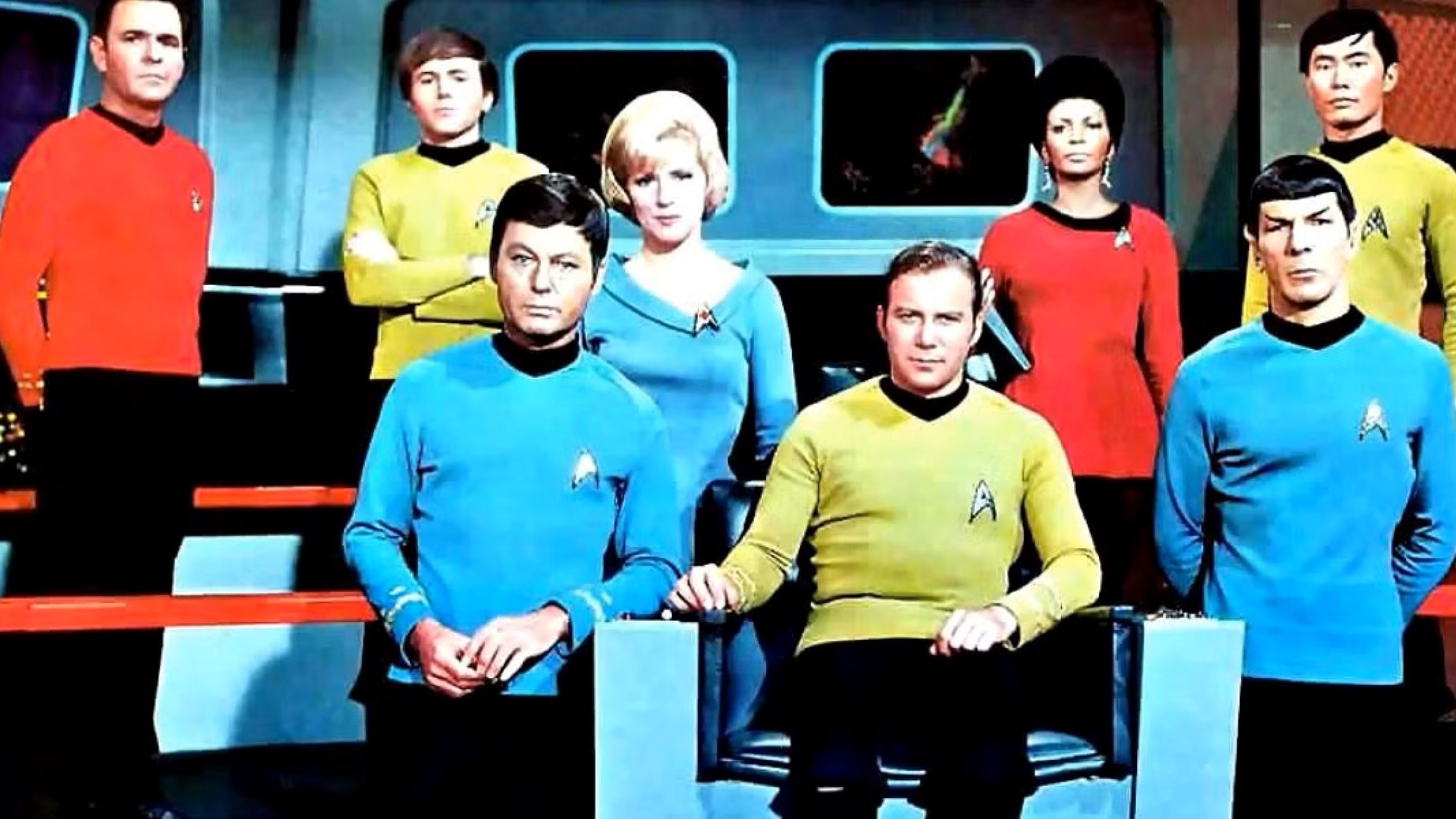
From charming time-travelers to skilled astronauts whipping up delicious jambalaya, let us evaluate each captain who has occupied the command chair.
Discussing who the best captain in Star Trek is undoubtedly a topic that can spark intense debates among fans. Gather a group of Trekkies, and you’ll witness heartfelt discussions about leadership qualities, charm, and even hairstyles! Although there isn’t one definitive answer to this question, as it ultimately comes down to personal preference, the debate adds an entertaining aspect to fandom and has led to numerous engaging conversations over the years.
Although some might think it’s impossible to match Captain James T. Kirk’s leadership and charm from the original Star Trek series, over the past six decades, Star Trek has introduced a variety of captains, each tackling unique challenges in their own inspiring ways. Keeping in mind that the shows often feature ensemble casts, we’re specifically focusing on main captains within the Star Trek universe for this list-those who appear in the opening credits and lead their ships consistently. This means we’re excluding temporary commanders, first officers who later became captains, alternate reality leaders like Lorca, and animated characters like Dal (apologies to Prodigy fans).
With those ground rules in place… Engage!
7) Michael Burnham (Star Trek Discovery)

Michael Burnham’s rise to Captaincy in Discovery, unlike many other journeys in Star Trek history, is unconventional – she initially appears as a fallen first officer, mutineer, and captive, eventually ascending to captain of the vessel she helped rescue numerous times. Despite her well-deserved promotion, she doesn’t assume command until season three, leading some viewers to believe that the series might have felt more cohesive if Burnham had been Captain from the beginning. Placing Burnham as the central character of the show felt a bit peculiar given that she hadn’t yet achieved the rank and power necessary to drive her adventures (which is why Captains are typically the main focus). Sonequa Martin-Green brought an unmistakable charm to the series, but the early seasons often intertwined Burnham’s narrative too closely with Spock’s and her lineage.
Starting in Season 3, Burnham found her true leadership role as captain, demonstrating her innate ability to lead effectively. Her journey truly flourished when Discovery ventured into the 32nd Century. At times, her narratives leaned excessively toward her being the “chosen one of the galaxy,” which felt slightly overdone. Nonetheless, her compassion, intuitive understanding, and resilience positioned her as a deserving member among Starfleet’s top brass-despite her captaincy style appearing somewhat non-traditional at times.
6) Jonathan Archer (Star Trek: Enterprise)

As the inaugural commander of the pioneering Warp 5 starship, the Enterprise, Jonathan Archer found himself in uncharted territory, literally and figuratively. With no rulebook for guidance and no precedents to follow, he was compelled to write the rules as they went, which, at times, led to some questionable decisions or actions that didn’t align with his personal principles (it wasn’t always easy). It’s worth noting that Archer embarked on these journeys long before the Federation, so there were no Prime Directive, First Contact protocols, or centuries of Starfleet diplomacy to draw upon for advice (still, he managed to negotiate first contact with a variety of species like the Klingons and Andorians). Despite these challenges, Archer’s leadership was far from perfect, as he made hasty choices on occasion that deviated from his own moral compass.
Scott Bakula convincingly embodied the character of Archer on Star Trek: Enterprise, particularly when interacting with his dog Porthos. However, his portrayal sometimes seemed reactive rather than visionary, leaning towards stubbornness and sticking to old ways instead of showing diplomacy and a keen interest in exploration – traits many believe are crucial for a Starship Captain. While the Xindi and Temporal Cold War storylines provided more opportunities for him in later seasons, he didn’t quite achieve the inspirational levels of his successors, despite appearing more relatable to everyday people.
5) Christopher Pike (Star Trek Strange New Worlds)

Prior to the shows “Discovery” and most recently “Strange New Worlds”, Captain Christopher Pike was relatively unknown in the vast expanse of Star Trek lore – a secondary captain who made his debut in the pilot episode of “The Original Series,” “The Cage.” However, Anson Mount’s portrayal of Pike in Discovery’s second season has significantly altered this status. His compelling performance led to Mount landing his own show with the creation of “Strange New Worlds” and established Pike as a permanent fixture in Star Trek history.
In contrast to the traditional, stoic captain, Mount’s Pike is a charismatic leader who cultivates a warm, collaborative environment among his crew. He encourages their growth, prepares meals for them, and even after being privy to his future (as depicted in “The Original Series” episodes “The Menagerie” Parts 1 and 2), he transforms his tragic fate into an impetus to live more vibrantly rather than a dreaded sentence.
Pike, unlike certain captains, doesn’t seek the limelight for himself; instead, he graciously allows Spock, La’An, or any other skilled crew member to shine during a mission, recognizing their expertise. This selflessness adds to his appeal. Additionally, Pike displays a sense of humor, as depicted in Strange New World’s, making him an endearing “space dad” figure while still maintaining the adventurous spirit reminiscent of Kirk. Yet, he distinguishes himself by exhibiting maturity and wisdom that comes with age.
4) Kathryn Janeway (Star Trek: Voyager)

Kate Mulgrew’s character, Janeway, was the pioneering female captain in the “Star Trek” series, navigating through challenges 70,000 light-years deep in the Delta Quadrant, isolated from Starfleet, and managing a depleted crew consisting of volatile Starfleet officers and Maquis rebels who were always at odds. Her resilience alone solidifies her as one of the most ingenious captains in “Star Trek” lore. Yet, she also carries a romantic spirit within, which made her vulnerable moments of loneliness and self-doubt make her appear remarkably human among all the captains.
She wasn’t fond of bullies or threats, and she certainly didn’t hide her feelings about it! Captain Janeway was often determined, yet primarily, she was fiercely loyal to her crew. While there were occasional inconsistencies in the writing, Kate Mulgrew’s portrayal of Janeway brought a sense of reliability that both her crew and audience could trust. Be it negotiating with the Borg or determining Tuvix’s fate (a pity for Tuvix…), Captain Janeway consistently made decisions she stood behind-even when they were challenging. Fans rejoiced at Kate Mulgrew returning to her role in Prodigy, where she has earned the rank of Admiral. She’s the type of captain you’d follow into unexplored space without hesitation.
3) Benjamin Sisko (Star Trek: Deep Space Nine)

Benjamin Sisko, from the series Deep Space Nine, held a unique position compared to other starship captains, as he was responsible for managing a space station rather than a ship. However, his dedication and commitment were unwavering, skillfully juggling Starfleet’s commands with the diverse requirements of the various species residing on the station. He deftly handled intricate political circumstances, and demonstrated courage by leading from the front lines during the Dominion War, playing a pivotal role in the war effort.
Beyond handling his duties, he skillfully juggled two roles, serving as the Bajoran Representative of the Prophets as well. Avery Brooks imbued Sisko with an authoritative and grave demeanor, fitting for one of Star Trek’s more somber series, but he also breathed warmth and emotional understanding into his character, making him captivating at every turn. He was a spiritual guide, a baseball coach, and, most importantly, a devoted father to his son Jake. In essence: Sisko made things happen, whether Starfleet approved or not!
2) James T. Kirk (The Original Series)

It’s astonishing! I didn’t expect to find Captain Kirk anywhere other than at the top of the list! After all, he is undeniably Star Trek’s initial action hero-brave, charismatic, sometimes impulsive, but always determined. William Shatner’s portrayal lent Kirk a confidence that is seldom duplicated. Kirk demonstrated his ability to outsmart opponents as frequently as he could outgun them. The original ‘Golden Trio’, or ‘The Triumvirate’ consisting of Kirk, Spock, and McCoy, represented a friendship for the ages, one that has yet to be surpassed in Trek. Clearly, Kirk held the counsel of his friends in high regard, valuing their insights as much as his own instincts.
While some of Captain Kirk’s traits, such as his habit of flirting with any alien woman nearby, are clearly remnants of the 1960s, his qualities like adaptability, curiosity, and selflessness for his crew remain evergreen. It’s safe to say that without him, the concept of a “Starfleet captain” as we recognize it would be non-existent. In many aspects, Kirk was synonymous with the show in “The Original Series.” Notably, the enduring character has resurfaced in contemporary times. Chris Pine’s portrayal of Kirk in JJ Abrams’ reboot films attracted a fresh wave of fans, and more recently, Paul Wesley took on the role in “Strange New Worlds,” offering a younger, less polished interpretation of Kirk.
1) Jean-Luc Picard (Star Trek: The Next Generation)

If Kirk served as the foundation, Picard stands as the exemplary model. As the composed Captain of the Enterprise-D, Patrick Stewart reimagined the Starfleet commander: not just a fighter or an adventurer, but a thinker and negotiator with a steadfast moral compass. Choosing Earl Grey tea over fleeting encounters, Picard governed through reason, empathy, and unwavering faith in the principles of the Federation, thereby epitomizing Star Trek’s vision for the future. Despite Gene Roddenberry initially not wanting Patrick Stewart for the part, facing tough competition after Shatner’s Kirk, the distinguished actor quickly demonstrated he was more than capable of filling those large shoes.
In simpler terms, Captain Picard’s approach to leadership was more traditional compared to Captain Kirk’s, but it proved effective when lives were on the line. Whether it was a powerful speech, outsmarting the Borg, or advocating for Data’s autonomy, Picard consistently put principles before personal gain. The return of Patrick Stewart as Picard in the new series brought joy to fans. While he wasn’t without flaws and mistakes, he was the kind of leader who inspired others to strive for improvement. Other captains that followed have been judged against him, and rightly so.
All seasons of Star Trek are streaming now on Paramount+.
Read More
- Gold Rate Forecast
- Dune 3 Gets the Huge Update Fans Have Been Waiting For
- Jack Osbourne Shares Heartbreaking Tribute to Late Dad Ozzy Osbourne
- Antiferromagnetic Oscillators: Unlocking Stable Spin Dynamics
- Hazbin Hotel Secretly Suggests Vox Helped Create One of the Most Infamous Cults in History
- Action Comics #1096 is Fun Jumping-On Point for Superman Fans (Review)
- Dungeon Stalkers to end service on June 9
- 5 Weakest Akatsuki Members in Naruto, Ranked
- Arknights: Endfield – Everything You Need to Know Before You Jump In
- Disney Promotes Thomas Mazloum To Lead Parks and Experiences Division As Josh D’Amaro Prepares To Become CEO
2025-08-17 21:20