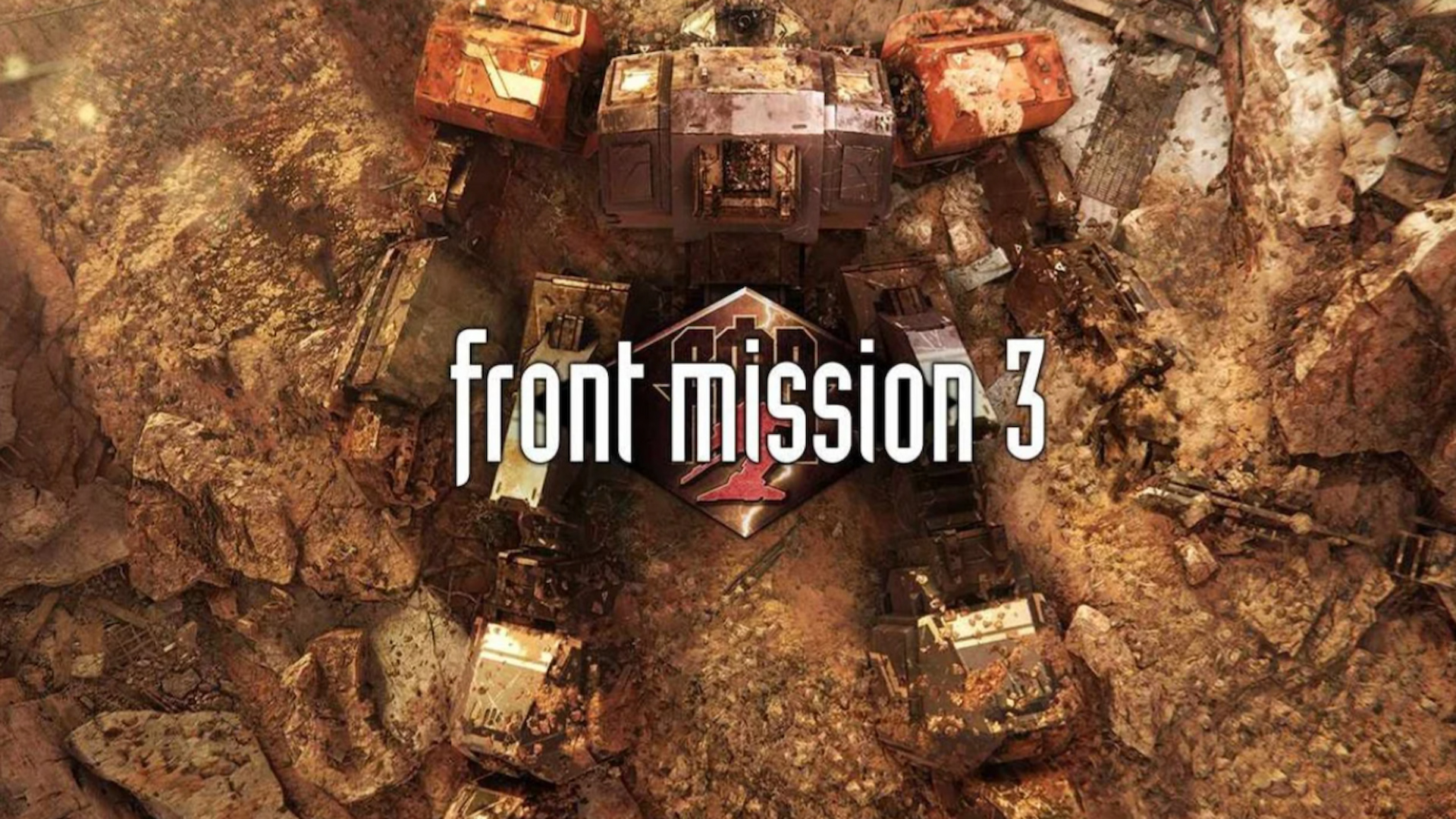
Front Mission 3 Remake revives a highly-regarded tactical RPG from the late 1990s – and this is the second attempt to do so. The remake aims to update the game’s visuals while keeping the realistic feel of its mecha battles. Longtime fans have always appreciated the game’s gritty industrial setting, extensive customization options, and unique in-game “internet” features, and now a new audience can experience what made it so special. This version improves upon the Switch release, but still has some issues that hold it back from being the perfect remake fans were hoping for.
This classic game from the 90s used a grid-based system and had a distinctive pixelated, steampunk style that still feels appealing now.
Even from the cover art—showing a defeated mech amidst wreckage—it’s obvious that Front Mission 3 has a distinct industrial look reminiscent of 1990s (or even late 1980s) anime. The game’s visuals are surprisingly realistic, creating a military thriller atmosphere focused on political tensions rather than over-the-top robot battles. Though mechs are central to the game, they’re designed to feel believable and practical, avoiding excessive or unrealistic features.
I loved the original game back in the 90s – it had this cool, pixelated steampunk style that still holds up really well! This remake really expands on that, and visually, it’s a big step up from the Switch version. The biggest change, and honestly a huge relief, is that they’ve ditched those strange AI-generated portraits they used for the Network. They’ve replaced them with artwork that feels much more authentic to the original PlayStation 1 look, and even reworked other images in the Network to make everything feel more consistent and natural. It just looks so much better now!
While the new character portraits are clean, they appear a bit too smooth and lack the detail of the original artwork. As someone who enjoys classic pixel art, I’d have loved the option to switch back to the original style, or even have a full graphics setting to choose from. The 3D backgrounds work well enough, but when compared to the original, you can see some of the smaller details have been removed. Things like streetlights and traffic cones, which were present in the pixel art, are sometimes missing in the updated 3D versions.
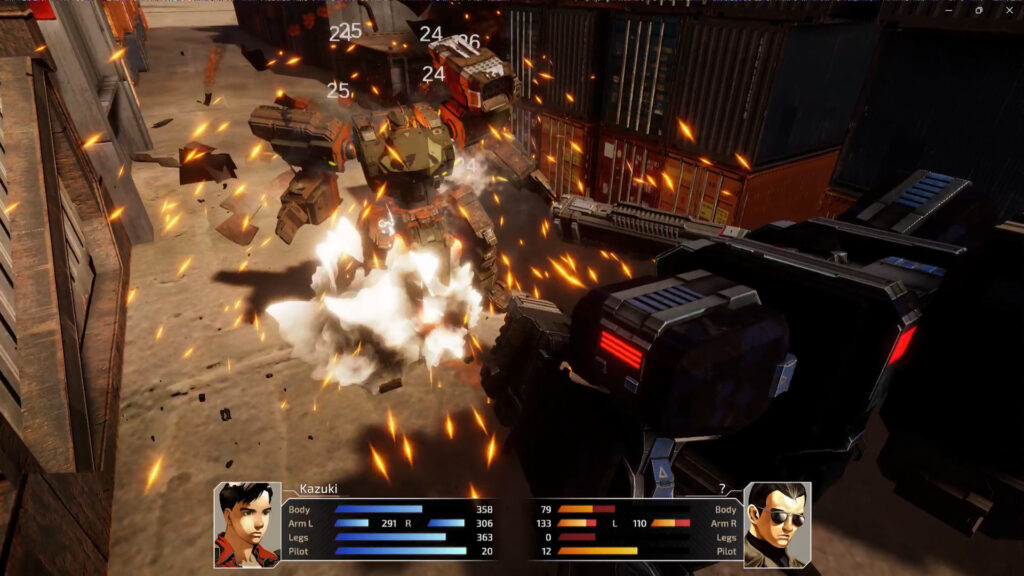
Although mechs are the main attraction, the designs stay grounded and realistic, prioritizing plausibility over over-the-top visuals.
One of the benefits is better lighting and color, making environments look more vibrant and mechs appear more powerful with realistic light reflecting off their armor. However, this improvement comes at a cost: some of the mech designs have become less unique. Many of the game’s mechs, originally inspired by cool steampunk designs, have been simplified into common industrial shapes. These new designs feel familiar and lack the distinctive pixel art style of the original game. Given the inconsistent quality of the 3D models, it would have been ideal to have an option to switch between the classic and updated graphics, just like there is for the music.
The music in this release has been completely re-recorded with a full orchestra, staying true to the original compositions. However, some fans might still enjoy the simpler, more energetic sound of the original PlayStation version. Luckily, the game includes both soundtracks and lets you switch between them easily – a nice feature! I wish the same option existed for the graphics, but we’ll appreciate what we have.
Honestly, the music is really good! It definitely has that classic PlayStation 1 sound, and it’s super atmospheric – I found myself really getting into it. My only complaint is that some of the battle tracks get a little repetitive. The loops are pretty short, and since battles can be long, you start to notice it after a while. They just don’t have enough different tracks to keep things fresh throughout the whole game.
We’re sorry, but you can’t switch back to the original sound effects. The new ones sound thin and harsh, and they’re too loud in the mix, often drowning out the music. While you can adjust the volume levels, it’s frustrating because so much effort went into creating the music in the first place.
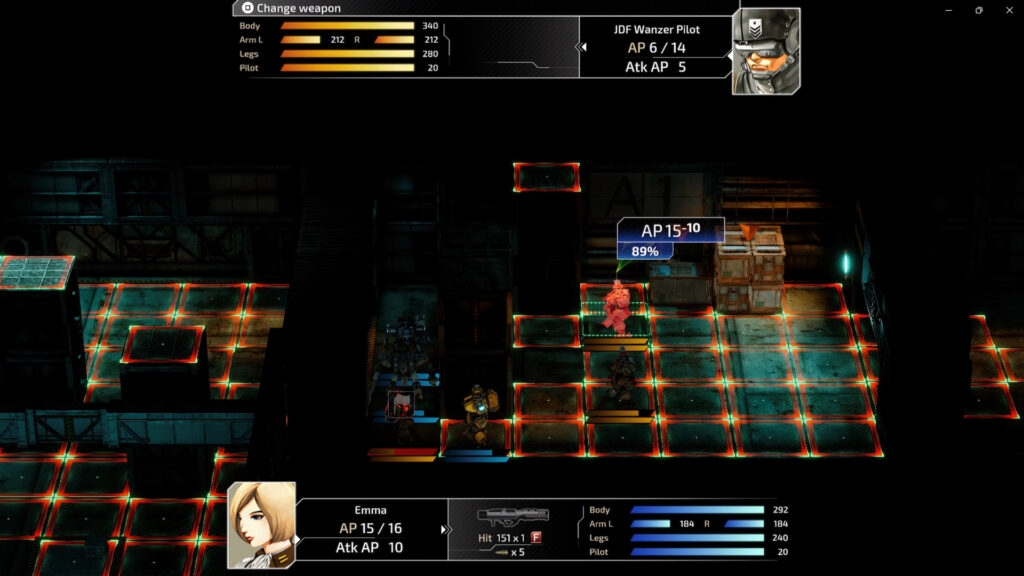
“Smaller map sizes compound visibility issues, especially in tight indoor environments.”
Even with impressive graphics and sound, a game lives or dies by its gameplay, and Front Mission 3 delivers for the most part. It’s a tactical RPG similar to Final Fantasy Tactics, but easier to pick up. Battles take place on a grid, with players taking turns to make moves, but it doesn’t have complicated character classes or terrain that significantly impacts strategy, so the tactical options aren’t as deep.
Compared to earlier Front Mission games, the battle areas in this installment are smaller, leading to fewer units in each fight and more concentrated action. The game features familiar mechanics like weapon damage types, action points, status effects, and special skills, but its real strength is the extensive mech customization. You can build each pilot’s Wanzer by combining different parts – bodies, arms, legs, and weapons – which you’ll unlock as you progress through the game.
The game starts a bit slowly. For the first few hours, you’ll be working with a limited set of options before the game teaches you how to use its more complex customization features. But once those features unlock, customizing your Wanzers becomes a really rewarding part of the experience.
In the game, your characters improve by earning Medals – you get these by destroying specific parts of enemies or defeating them completely. This rewards players for carefully aiming their attacks, a key feature of the Front Mission series. However, the game doesn’t give you much control over where you aim, and success often depends on luck rather than your own strategy.
The battles are enjoyable for players who like strategy, but they can feel very slow. Watching the mechs move and attack at a normal pace is often tedious. The game offers options to speed things up – “Fast Battle” and “Fast Movement” – but neither feels quite right. “Fast Battle” skips everything, even important information like damage reports. “Fast Movement” is good because it skips travel sequences, but a simple button to skip individual animations, or a fast-forward feature, would have been much better.
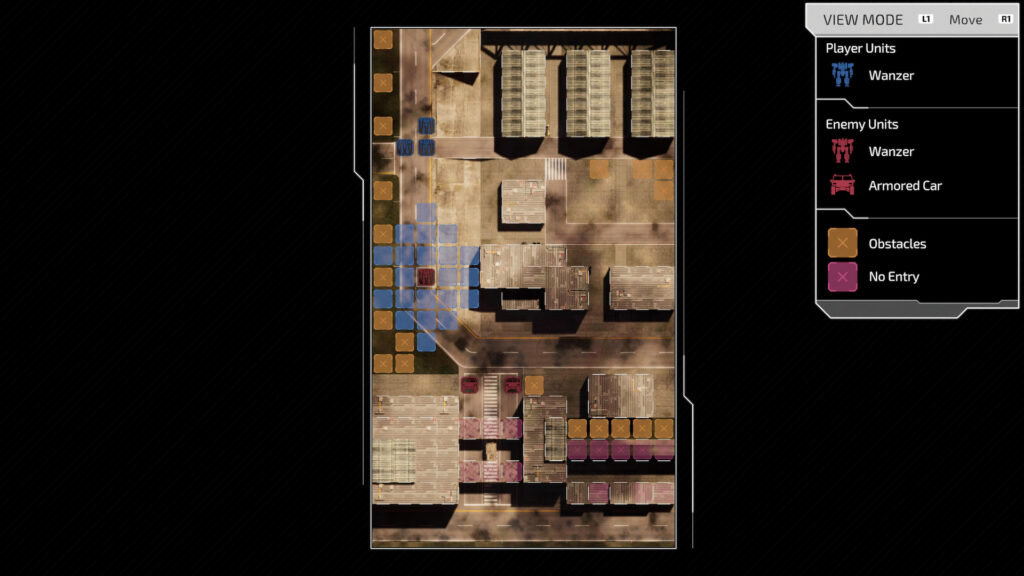
“You need to enter a separate top-down view mode to check enemy attack squares.”
It’s also hard to keep track of what’s happening on the battlefield. The game doesn’t easily show enemy positions or how far they can attack, forcing you to switch to a separate overhead view. This constant switching is clunky and makes it difficult to remember safe spots. It would have been better if the game constantly displayed information about enemy movements on the map, something easily achievable with the extra buttons on today’s controllers. Strangely, you even have to go to a separate menu to see what you’re supposed to be doing on each map.
Small maps make it hard to see everything, particularly inside buildings. Players often struggle with bad camera angles, getting stuck on walls, and blocked pathways. You can adjust how visible your units are, but there’s no way to make walls or other objects in the environment see-through.
The game offers decent replay value with its two different story paths. At the beginning, you can choose to follow the story of either Alisa, the protagonist’s sister, or Emma, a secret agent. Each path features unique conversations, levels, and enemies, but the game doesn’t clearly indicate how significant this choice is. I didn’t even realize I had made a branching decision during my first time playing. Although the two paths aren’t hugely different, it’s still appealing to play through the game again to experience both sides.
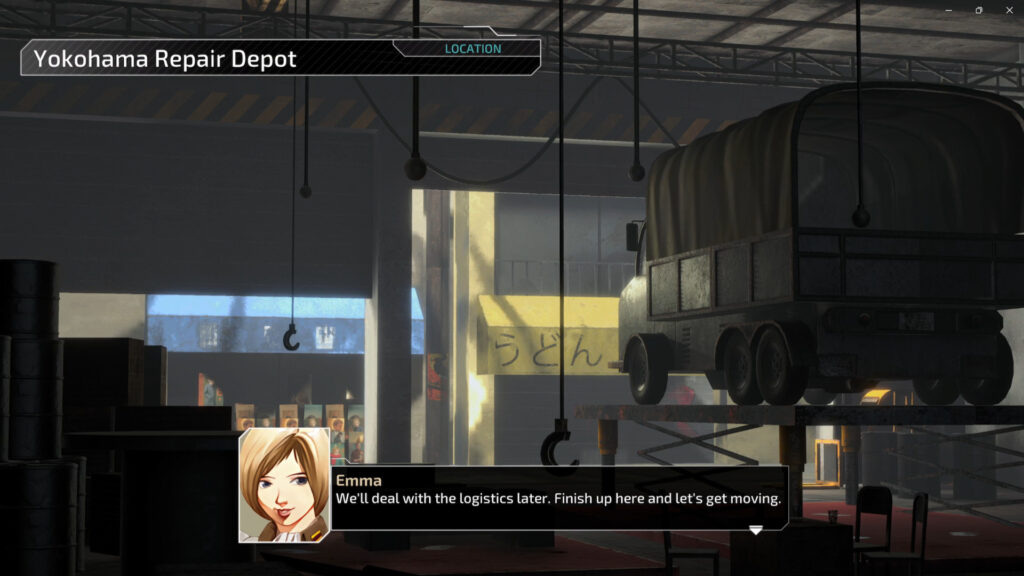
“The plot won’t blow anyone away, but it’s a solid slice of late-’90s mecha storytelling.”
Okay, so is Front Mission 3‘s story actually good? It’s complicated. I’m totally hooked on the world and backstory they’ve built, but honestly, the main plot itself is just… okay. It’s saved a lot by how awesome the mechs look, though. Plus, the story is pretty straightforward – you don’t have much choice in how it plays out. And most of it is told through short cutscenes and just reading a lot of text boxes, which isn’t always the most engaging way to experience a story, except for the really interesting dynamic between Emma and Alisa.
Front Mission 3 keeps the series’ focus on realistic war stories and industrial settings. Taking cues from classic mecha anime like Evangelion, it steers clear of fantastical elements, instead building a story around political schemes and military secrets. While the plot isn’t groundbreaking, it’s a well-done example of late-90s mecha storytelling that fans of the genre should enjoy. What really makes the story special is the ‘Network’ – an in-game internet simulation that acts as a huge source of background information. As you play, new web pages become available, offering news reports, character details, military analyses, and hidden content that connects to how you interact with characters.
Even though I’m new to the game series, the Network really stood out to me. It’s incredibly detailed and feels like a real web browser, with lots of links and hidden things to find.

As you continue through the story, you’ll discover more webpages with extra information, like news stories, character backgrounds, military updates, and secret content.
Getting around the interface feels a bit awkward. It can be annoying to scroll to close tabs and pages load slowly. Thankfully, you can personalize things with features like unlockable desktop backgrounds, which is a nice addition.
The remake of Front Mission 3 is a bit better than the Switch version, mainly because of improved visuals. It also offers more options and a more modern control scheme compared to the original game. While the updated graphics, lighting, and soundtrack options feel like a true remake, much of the gameplay still resembles the original PlayStation 1 version. However, the game still has issues with a slow pace, difficult visibility, limited strategy options, and a lack of options to switch between classic and modern features.
Even though it has some flaws, the game is still easy to recommend to those who enjoy strategy RPGs and realistic mech stories, thanks to its deep mech customization options and unique atmosphere. It might not be exactly what longtime fans hoped for, but it’s a good way to revisit a beloved and unusual classic.
This game was reviewed on the PlayStation 5.
Read More
- Looks Like SEGA Is Reheating PS5, PS4 Fan Favourite Sonic Frontiers in Definitive Edition
- Pluribus Star Rhea Seehorn Weighs In On That First Kiss
- Dune 3 Gets the Huge Update Fans Have Been Waiting For
- Gold Rate Forecast
- Kelly Osbourne Slams “Disgusting” Comments on Her Appearance
- Tomodachi Life: Living the Dream ‘Welcome Version’ demo now available
- Arknights: Endfield – Everything You Need to Know Before You Jump In
- ’90s Cartoon Reboot & TMNT Connection!
- The Smiling Friends’ Creators Have Bad News For Fans
- Dungeon Stalkers to end service on June 9
2026-01-26 21:14