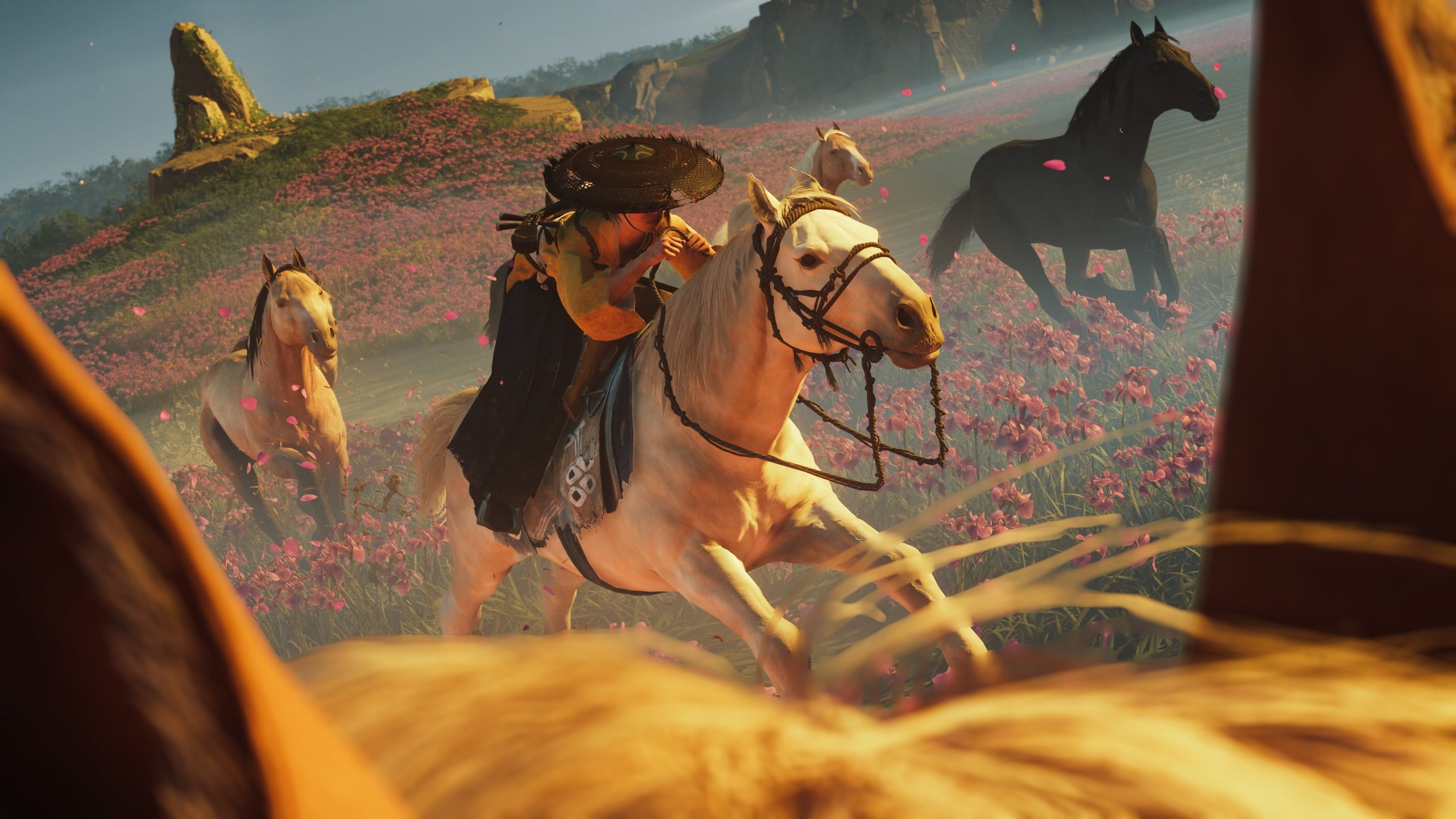
If you’ve been playing Ghost of Yotei as much as I have, you’ve probably noticed the combat feels familiar, yet different. As Atsu travels across Ezo, she faces incredibly dangerous enemies, and each fight is a fast-paced struggle where you’ll be constantly slashing, blocking, dodging, and switching weapons just to survive.
Even on the normal difficulty, the game is challenging. Crank it up to Hard or Lethal, and you’ll likely find yourself getting frustrated and wanting to stop playing. Saito’s enemies are tough and relentless, forcing Atsu to quickly recover after making a mistake, like a poorly timed block or a missed dodge.
Is Sucker Punch’s new samurai game truly different from the battles in *Ghost of Tsushima*? It’s a bit of both. It shares the same excellent combat system that made *Ghost of Tsushima* so enjoyable, but it’s also been refined and improved. Rather than a complete change, the new game feels like a natural progression of what players already loved.
So, how did they improve the game? It really comes down to three key areas: the way the combat is presented within the story, changes to how battles actually work, and a completely revamped enemy artificial intelligence. Let’s dive into what’s new in this latest installment.
Giving Context to Combat
One of the best parts of the *Ghost* games is how the story explains the things you can do in the game, making the action feel natural. *Ghost of Tsushima* did this particularly well. Jin Sakai was a highly skilled samurai who primarily used his katana and tanto, reflecting years of training. Though he later learned to use bows and stealth tools, his family’s swords were always his main weapons against the Mongols.
For the samurai, it was understandable that he would try to both protect his family’s honor and serve as a powerful warrior against the Mongols and their leader, Khotun Khan. This difficult challenge was central to Jin’s development as a character, and his sword represented the precarious path he walked to balance those two responsibilities.
Part of achieving balance as a samurai involved adapting fighting styles to different enemies, mirroring the code’s emphasis on harmony with the world. It also meant upholding a tradition of respect for life, even while defending oneself and being forced to take a life.
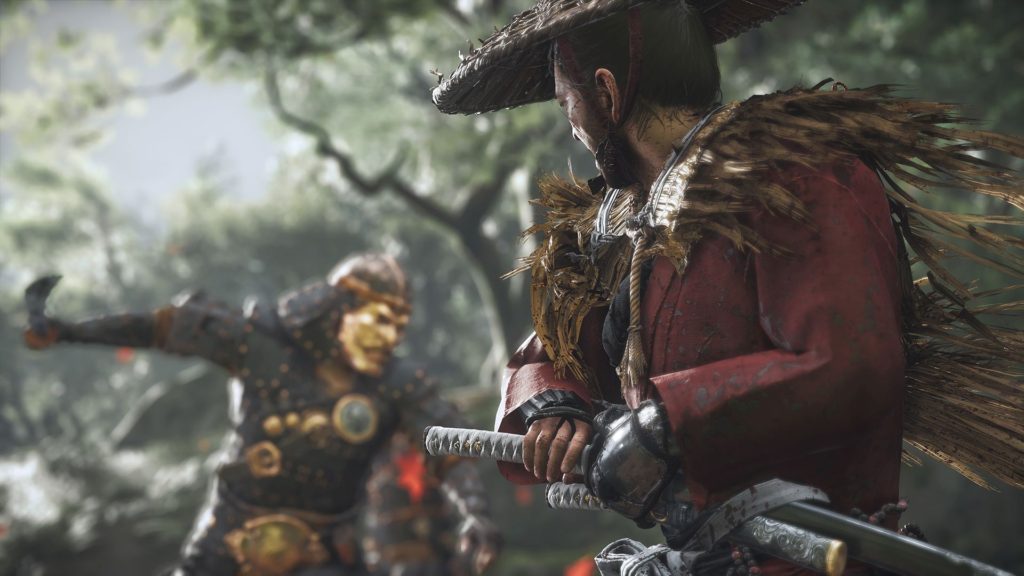
I loved how *Ghost of Tsushima* was all about honor and how easily it could be lost, and the way the fighting really showed that. But sometimes, playing as Jin, I felt a little stuck because he mostly used his swords, meaning I had to get right in the thick of things. *Ghost of Yotei* takes a slightly different approach, which I’m really excited about!
Atsu didn’t receive the traditional training of a samurai, and that’s actually helped her become a more effective fighter. She’s honed her skills through years of experience as a mercenary, learning as she goes and becoming particularly skilled in large battles. A key part of her development is her natural talent for quickly mastering new weapons – she can learn and become proficient with four different weapon types, replacing the stances Jin uses.
Atsu is a kind person, but when she’s on the battlefield, she’s incredibly fierce – and she needs to be. This is partly because her lord, Saito, is equally unforgiving and a highly skilled killer. It’s also because Atsu intentionally builds a reputation as a vengeful spirit, unlike Jin, who only reluctantly accepted his role as the Ghost.
I’m really loving the combat in *Yotei*! It’s so cool how the story lets you break away from traditional samurai rules, which makes fighting way more flexible. You get to use a ton of different weapons – katanas, dual blades, chained sickles, massive swords, and spears – and each one feels unique. They all have strengths and weaknesses, but that’s what makes the combat feel so free and exciting. It really shows how angry Atsu is about what the Yotei Six did!
Both games successfully blend storytelling with combat, but *Ghost of Yotei*’s story, where you play as a mercenary, lets it naturally evolve its fighting system in meaningful ways, significantly changing how battles unfold.
A Mechanical Marvel
One of the first things I noticed in *Ghost of Yotei* was that the stance system had been replaced with a variety of weapons. Each weapon is useful in different situations thanks to its unique range. For example, the kusarigama is great for dealing with groups of enemies, and the odachi can even be effective against regular enemies once you learn how to use it. My advice? Don’t just switch weapons based on how much stagger damage they do. Instead, react to the situation and choose the weapon that best fits what you’re trying to accomplish.
One of the key differences in combat between *Yotei* and *Tsushima* is how quickly you need to adapt your attacks when switching weapons. While Jin Sakai’s katana had a consistent rhythm with only small changes based on stance, each of Atsu’s weapons feels distinct. Every swing requires focus, as even a small mistake can shift the advantage to your opponent.
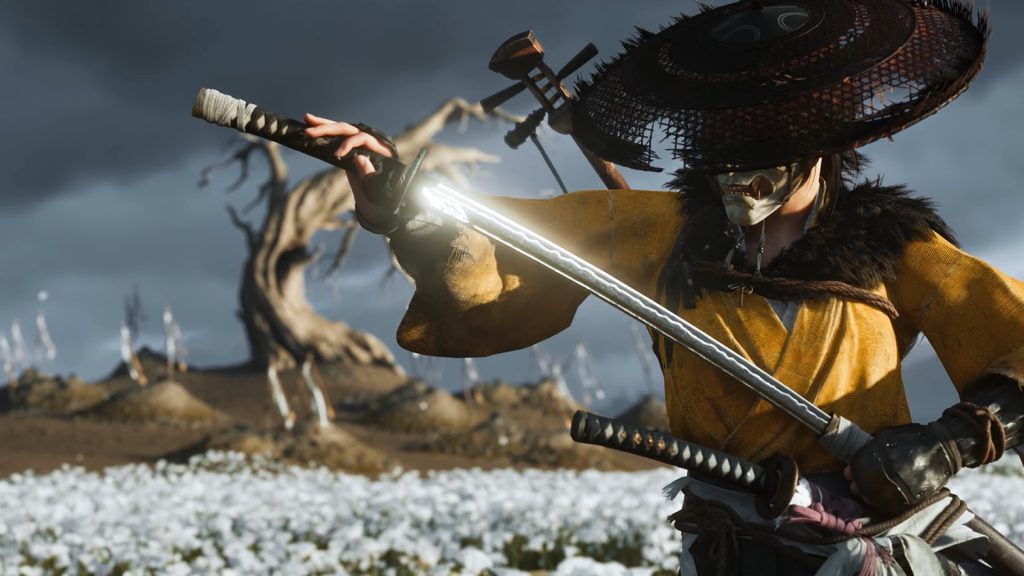
Ghost of Tsushima’s enemies are clever and can disarm you, which is a key challenge. While I can’t picture Jin ever losing his sword, I often found myself struggling to react to disarming attacks in Ghost of Tsushima: Legends, fumbling to pick up my dropped weapon. I loved being able to disarm enemies and throw their own weapons back at them – it quickly became a go-to tactic. It’s a great feature that I wish had been in the main Ghost of Tsushima game, but that’s just my opinion.
One of the things that makes fighting in *Yotei* stand out is that Lord Saito’s soldiers are clearly better trained than Khotun Khan’s were. In *Tsushima*, multiple attacks from regular enemies were usually reserved for boss fights (like with Kojiro). So, I was surprised – though not necessarily in a bad way – to see even common soldiers using a variety of attacks that I had to block individually. They also frequently switched weapons during fights, which made the already great combat system even more complex and interesting.
By giving each weapon unique special attacks and occasionally letting your wolf companion assist in battle, the game creates a dynamic combat system. Success depends on your ability to adapt and anticipate your enemies’ moves. Mastering the Onryo Howl is key, as it can be a powerful move when timed right.

These changes make combat in *Ghost of Yotei* feel dynamic and engaging, a big improvement over the more rigid, though still difficult, fights in *Ghost of Tsushima*. Sucker Punch didn’t revolutionize the gameplay, but their gradual enhancements combine to create a noticeably better experience, essentially making the original game feel outdated.
Which brings us to the final facet of this evolution: the enemies themselves.
A Stronger and Smarter Rogues Gallery
Compared to fighting the Mongols, the enemy AI in *Ghost of Yotei* presents a real challenge. Saito’s soldiers don’t just mindlessly attack; they change weapons, link attacks together, and adapt to how I play. They’re incredibly aggressive and constantly look for clever ways to ambush Atsu, like setting traps or attacking while I’m riding across Ezo. I had to stay constantly alert, watching out for enemies trying to trip my horse or launch a surprise attack that would put me at a disadvantage.
The enemies surrounding Atsu are surprisingly skilled, attacking from multiple angles with a variety of weapons. This constantly forces me to change my tactics, something even the challenging Mongol opponents in the 2020 battles didn’t require. Compared to Saito’s bandits, these enemies feel less reactive, even on harder settings, and their fighting style is noticeably clumsy. Their limited weapons and predictable attacks are especially apparent now that Atsu is facing more adaptable and challenging foes. Her battles have raised the bar, making these opponents seem simplistic and repetitive.
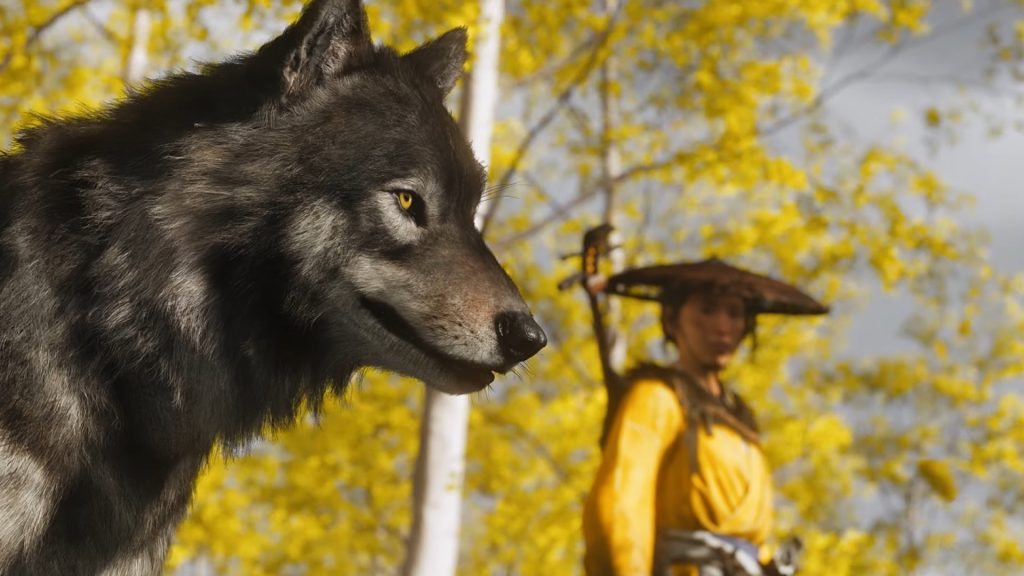
Depending on which Yotei Six member you’re fighting, you’ll likely find the Loadout system very helpful. For example, I often used the yari when battling The Kitsune’s shinobi, who favored the kusarigama. The enemy AI in *Yotei* is the last piece of what makes its combat feel both familiar and new, building on the foundation of the previous game with significant improvements.
If Jin and Atsu had the chance to meet, Atsu could have taught Jin a lot. While Jin would quickly grasp Atsu’s energetic and direct fighting style, it would be difficult for him to adopt it due to his strict samurai upbringing.
In terms of fighting, the Onryo has replaced the Ghost as the main focus, becoming a key part of what makes this game series special.
Please be aware that the opinions shared in this article belong solely to the author and don’t reflect the official stance of GamingBolt.
Read More
- 10 Best Buffy the Vampire Slayer Characters Ranked
- Gold Rate Forecast
- PlayStation Plus Game Catalog and Classics Catalog lineup for July 2025 announced
- Every Creepy Clown in American Horror Story Ranked
- Chill with You: Lo-Fi Story launches November 17
- 4 TV Shows To Watch While You Wait for Wednesday Season 3
- 40 Inspiring Optimus Prime Quotes
- Arknights: Endfield – Everything You Need to Know Before You Jump In
- Best X-Men Movies (September 2025)
- All 6 Takopi’s Original Sin Episodes, Ranked
2025-10-10 19:16