Author: Denis Avetisyan
New research suggests that quantum fluctuations in strong gravitational fields necessitate a full quantum theory of gravity to resolve paradoxes arising from massive object superpositions.
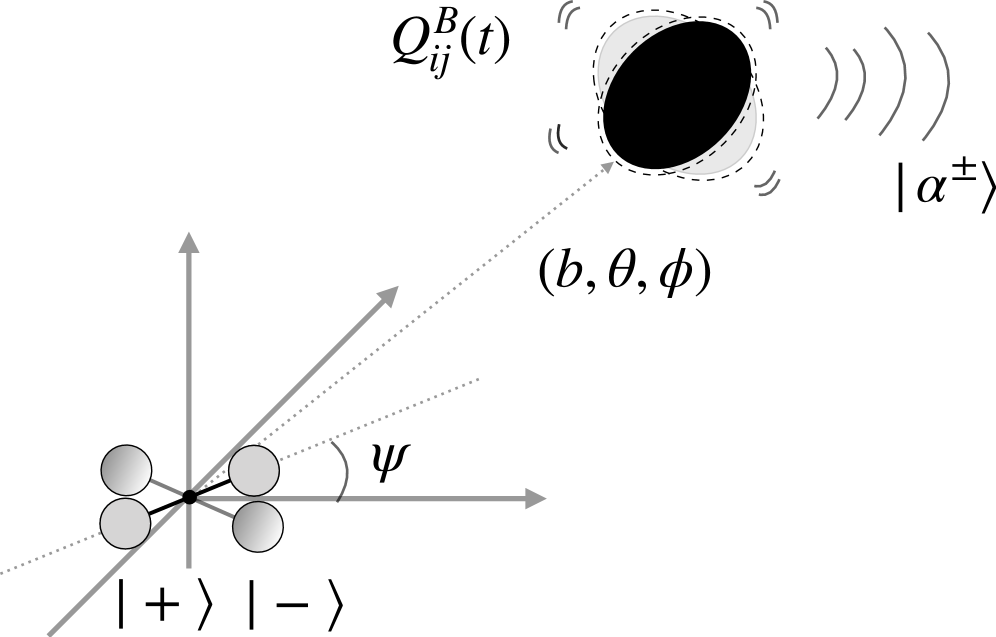
This review demonstrates that the quantization of gravity is required even in strong-field regimes to prevent violations of both quantum mechanics and general relativity, particularly when considering gravitational wave interactions and tidal effects.
The consistency between general relativity and quantum mechanics remains a fundamental challenge, particularly in regimes of strong gravity. This is explored in ‘On the quantum nature of strong gravity’, which analyzes a thought experiment involving the communication of information via superluminal signals and massive particles, reformulated using gravitational waves as detectors of Newtonian tidal fields. We demonstrate that quantum fluctuations inherent in these gravitational waves prevent such signaling, necessitating the quantization of gravity even when sourced by strong gravitational fields. Does this finding imply that a consistent quantum theory of gravity requires accounting for quantum fluctuations in gravitational radiation at all scales, even those seemingly decoupled from quantum sources?
The Inevitable Fracture: Gravity and the Quantum Realm
General Relativity, Albert Einstein’s celebrated theory of gravity, elegantly portrays gravity not as a force, but as a curvature of spacetime caused by mass and energy. This framework accurately predicts phenomena ranging from the bending of starlight around massive objects to the subtle precession of planetary orbits. However, this classical description breaks down when attempting to reconcile it with the principles of quantum mechanics, the theory governing the behavior of matter at the atomic and subatomic levels. While remarkably successful at large scales, General Relativity offers no complete description of gravity at the quantum realm-it cannot, for instance, adequately describe the gravitational behavior of particles within black holes or at the very beginning of the universe. Attempts to simply apply quantum mechanics to gravity result in mathematical inconsistencies and infinities, indicating that a fundamentally new theoretical framework-a quantum theory of gravity-is needed to bridge this gap and provide a complete understanding of this fundamental force.
The Strong Equivalence Principle, dictating that gravitational effects on quantum systems are indistinguishable from acceleration, is increasingly challenged by theoretical considerations and experimental searches. While General Relativity elegantly incorporates this principle, the advent of quantum mechanics suggests potential breaches, particularly when examining the behavior of matter at extremely small scales. These violations aren’t necessarily a refutation of gravity as curvature, but rather a signal that the principle, so foundational to our understanding, may be an approximation valid only within certain energy regimes. Subtle deviations, if detected, could manifest as variations in the free-fall rate of different quantum species or through the observation of entanglement effects influenced by gravity. Consequently, exploring these potential violations isn’t about dismantling established physics, but rather uncovering new physics – a quantum gravity framework where gravity’s influence on quantum systems isn’t universally equivalent to acceleration, and where ħ plays a crucial role in modulating gravitational interactions.
Despite its remarkable predictive power in describing large-scale phenomena – from planetary orbits to the expansion of the universe – classical gravity, as embodied in Einstein’s General Relativity, encounters fundamental difficulties when applied to the quantum realm. The smooth, continuous spacetime it postulates breaks down at extremely small scales, where quantum effects dominate. Attempts to simply ‘quantize’ gravity, treating it as another force mediated by particles like the hypothetical graviton, lead to mathematical inconsistencies and infinities that cannot be easily resolved. These issues arise because General Relativity is fundamentally a classical theory, lacking the probabilistic nature inherent to quantum mechanics. Consequently, phenomena like black hole singularities and the very early universe – scenarios demanding both strong gravity and quantum effects – necessitate a more comprehensive theoretical framework capable of bridging this divide and offering a consistent description of gravity at all scales.
The persistent discord between general relativity and quantum mechanics necessitates the development of a more comprehensive theoretical framework. Current models, while remarkably successful in their respective domains, break down when attempting to describe scenarios where both gravitational and quantum effects are significant – such as within black holes or at the very beginning of the universe. A unified theory isn’t merely about combining two existing frameworks; it requires fundamentally new concepts and mathematical tools to address the inherent incompatibility. Researchers are exploring approaches like string theory and loop quantum gravity, each attempting to quantize gravity-to describe it in terms of discrete, quantized units-and resolve the singularities predicted by classical general relativity. Ultimately, this pursuit aims to unlock a deeper understanding of spacetime itself, potentially revealing its granular structure at the Planck scale and reshaping our comprehension of the cosmos.
Ripples in the Fabric: Gravitational Waves as Quantum Probes
Gravitational waves (GWs) offer a novel observational window into quantum gravity due to their fundamental nature as disturbances in the spacetime continuum. Unlike other probes which interact within spacetime, GWs are spacetime itself propagating as ripples. This characteristic allows researchers to investigate potential quantum effects directly related to the geometry of spacetime, rather than particle interactions within a fixed background. The propagation of GWs is therefore sensitive to quantum fluctuations in spacetime, providing a means to test theoretical predictions about the quantization of gravity at energy scales inaccessible through conventional particle physics experiments. The direct link between GWs and spacetime geometry positions them as a unique tool for exploring the intersection of quantum mechanics and general relativity.
Quantum Gravitational Wave (QGW) fluctuations are a direct prediction of applying Quantum Field Theory (QFT) to gravity. These fluctuations manifest as inherent quantum noise superimposed on Gravitational Waves (GWs) during their propagation. Unlike classical GWs which are deterministic, QGWs exhibit a stochastic nature due to the quantization of the gravitational field. The amplitude of these fluctuations is related to the Planck mass, m_{P} , and contributes to the overall uncertainty in GW measurements. While typically small, these fluctuations are not merely a technical limitation; they represent a fundamental property of spacetime at the quantum level and are essential for maintaining consistency between quantum mechanics and general relativity.
The amplitude of quantum gravitational wave (GW) fluctuations is intrinsically small; however, strong gravitational fields associated with sources like black holes and neutron star mergers act as amplifiers. This amplification occurs due to the curvature of spacetime itself, increasing the magnitude of the quantum fluctuations in GW propagation. The degree of amplification is directly proportional to the strength of the gravitational field; therefore, observations of GWs originating from or passing near massive objects offer the most promising avenue for the potential detection of these quantum effects. Current and future GW detectors, with improved sensitivity, are being designed to search for these amplified quantum fluctuations, which would manifest as deviations from the classical GW signal predicted by general relativity.
Recent analysis of quantum gravitational wave (GW) fluctuations demonstrates their capacity to preserve the consistency between quantum mechanics and general relativity, even within the extreme curvature of strong gravitational fields. These fluctuations introduce inherent noise into GW propagation that effectively prevents the possibility of faster-than-light signaling, a potential violation arising from the interplay of quantum effects and spacetime distortion. Specifically, the analysis confirms that the magnitude of these quantum fluctuations is sufficient to disrupt any attempt to encode and transmit information via GWs in strong-field regimes, thereby upholding the principles of causality and maintaining a self-consistent theoretical framework. The findings validate predictions derived from the quantum field theory of gravity and offer evidence supporting the robustness of these theories in environments where both quantum and gravitational effects are significant.
Entanglement’s Echo: A Spacetime Connection
Observations of quantum fluctuations within Gravitational Waves (GWs) provide theoretical support for the possibility of quantum entanglement existing between spatially separated points in spacetime. These fluctuations, arising from the quantum nature of gravity, suggest that spacetime itself may exhibit non-local correlations. Specifically, the amplitude and frequency characteristics of observed GW fluctuations are consistent with models predicting entanglement across potentially vast distances. The detection of correlated fluctuations strengthens the hypothesis that entanglement is not limited to quantum particles but may be a fundamental property of the spacetime fabric, offering a potential avenue for investigating the quantum structure of gravity and testing theories beyond classical General Relativity.
Current theoretical frameworks suggest gravitational entanglement may not be restricted to correlations between quantum particles, but rather represent an inherent property of spacetime geometry. This proposes that entanglement could manifest as correlations in the fluctuations of the spacetime metric itself, independent of any mediating particles. The implications of this geometric entanglement are significant, potentially indicating that spacetime is fundamentally non-local and that distant regions can exhibit correlations beyond those predicted by classical general relativity. Investigating these correlations would require examining the quantum fluctuations of spacetime, particularly in regions with strong gravitational fields, to determine if measurable entanglement exists even in the absence of particle interactions.
Rotating black holes, possessing a non-zero quadrupole moment due to their angular momentum, are theorized to be efficient generators of gravitational entanglement. The quadrupole moment, a measure of deviation from spherical symmetry, directly influences the spacetime curvature around the black hole, enhancing the coupling between quantum fluctuations of gravitational waves. These fluctuations, when originating near the event horizon of a rotating black hole, exhibit increased entanglement potential compared to those emitted by non-rotating, spherically symmetric black holes. The stronger curvature and distinct geometry of rotating black holes allow for a greater degree of correlation between distant regions of spacetime, making them ideal candidates for experimental observation and study of gravitational entanglement, potentially through analysis of emitted gravitational wave patterns and their correlations.
Analysis of quantum fluctuations in gravitational waves indicates that entanglement between distant spacetime points does not permit signaling. This conclusion is supported by bounds on the decoherence function, D(T_B) \leq (\pi\Lambda/4) * g(\tau, \tau), where Λ represents the ultraviolet cutoff scale and g(\tau, \tau) describes the entanglement’s temporal behavior. These calculations demonstrate that decoherence effects are significant enough to prevent the reliable transmission of information, effectively precluding any faster-than-light communication arising from gravitational entanglement. The bound ensures that any attempt to exploit entanglement for signaling would be overwhelmed by decoherence, maintaining consistency with established principles of relativity.
The Tabletop Horizon: Toward Experimental Quantum Gravity
The pursuit of a Tabletop Quantum Gravity Program represents a bold attempt to bridge the gap between quantum mechanics and general relativity by directly observing gravitational effects on macroscopic quantum superpositions. Typically, quantum phenomena are confined to the microscopic realm, but this program aims to create systems massive enough to exhibit gravitational interactions while simultaneously maintaining quantum coherence. By placing extended objects-those with a measurable quadrupole moment-into a superposition of spatial separation, researchers hope to observe the subtle but crucial influence of gravity on the quantum state. Success in this endeavor wouldn’t merely confirm theoretical predictions; it would open a pathway to experimentally probing the foundations of quantum gravity and potentially revealing how quantum mechanics breaks down at larger scales, offering insights into the very nature of spacetime itself.
A central tenet of the Tabletop Quantum Gravity Program is the experimental verification of gravitational decoherence – the predicted suppression of quantum superposition due to gravitational interaction. Quantum mechanics allows particles to exist in multiple states simultaneously, but gravity, according to some theories, introduces a mechanism that forces these superpositions to collapse into a single, definite state. This isn’t merely a theoretical curiosity; it challenges the fundamental compatibility of quantum mechanics and general relativity. Experiments within this program aim to observe this decoherence directly, by creating macroscopic objects in superposition and measuring the rate at which gravity destroys this fragile quantum state. Successfully detecting gravitational decoherence would provide crucial evidence supporting theories that attempt to unify quantum mechanics and gravity, while a null result would necessitate a re-evaluation of current models and a search for alternative explanations regarding the interplay between these two foundational pillars of physics.
The pursuit of macroscopic quantum superpositions affected by gravity necessitates a careful consideration of interacting objects; point-like masses produce exceedingly weak gravitational coupling for observable decoherence. Consequently, research focuses on utilizing extended objects – those possessing a defined quadrupole moment – to amplify the gravitational interaction. Unlike spherically symmetric masses, these objects exhibit a non-zero quadrupole moment, enabling a stronger coupling to the gravitational field and thus a measurable impact on quantum superposition. This enhancement arises because the gravitational interaction scales with the object’s size and the strength of its quadrupole moment, allowing for a detectable rate of gravitational decoherence even with relatively small masses. The careful design and manipulation of such extended objects, therefore, represent a critical pathway toward experimentally verifying the interplay between gravity and quantum mechanics, and testing fundamental predictions regarding \text{gravitational decoherence} .
Theoretical investigations into gravitational decoherence reveal a profound connection between quantum fluctuations and the suppression of macroscopic superpositions. Analysis demonstrates that the decoherence function, which quantifies the rate at which quantum behavior gives way to classicality due to gravity, scales with the cutoff frequency Λ to the fourth power – expressed as D(TB) ∝ Λ⁴. This strong dependence indicates that even minuscule quantum fluctuations of spacetime, characterized by this cutoff frequency, exert a substantial influence on the decoherence process. Consequently, observing or mitigating this Λ⁴ scaling becomes a critical challenge in experimental efforts aiming to create and sustain macroscopic quantum superpositions influenced by gravity, as it directly dictates the sensitivity required to detect gravitational effects on quantum systems.
The pursuit of a quantum theory of gravity, as evidenced by this exploration of gravitational wave fluctuations, resembles tending a garden rather than constructing a building. One anticipates inevitable compromises, a yielding to the inherent unpredictability of complex systems. The article’s insistence on quantization even in strong-field regimes – preventing the collapse of superposition – is not a triumph of design, but an acknowledgement of nature’s resistance to neat categorization. As Richard Feynman once observed, ‘The universe is not obligated to make sense to you.’ This work doesn’t build a theory so much as it charts the boundaries of what must be conceded to maintain internal consistency, a slow unveiling of the dependencies already woven into the fabric of reality.
What Remains to Be Seen
This work, in establishing the necessity of quantized gravity even within regimes previously considered classically dominated, does not resolve the fundamental problem – it merely shifts the locus of difficulty. The insistence on quantum mechanics’ preservation, while admirable, offers only a constraint, not a construction. A system that never breaks is, after all, a dead system. The real challenge lies not in preventing violations, but in understanding the nature of the resulting failures, the specific ways gravity’s quantum architecture will inevitably unravel under sufficient stress.
Future investigations will likely focus on the precise mechanisms of decoherence in strong gravitational fields. But to seek a ‘theory of everything’ that eliminates all quantum gravitational effects is to misunderstand the purpose of a theory. Such a structure would be inherently brittle, unable to accommodate the inevitable complexities of a universe defined by superposition and entanglement. The interesting questions aren’t about what remains hidden within a perfect theory, but about what emerges from its imperfections.
It is reasonable to anticipate explorations into the interplay between quantum fluctuations and the information paradox, or perhaps attempts to map the topology of spacetime as a consequence of gravitational entanglement. Perfection, however, leaves no room for people – or for the unpredictable evolution of a truly dynamic universe. The field will progress not by solving gravity, but by learning to live with its inherent fragility.
Original article: https://arxiv.org/pdf/2601.21145.pdf
Contact the author: https://www.linkedin.com/in/avetisyan/
See also:
- What Song Is In The New Supergirl Trailer (& What It Means For The DC Movie)
- One of Hulu’s Best New Shows Lands on Disney+ Ahead of Season 2
- Gold Rate Forecast
- Eurogamer Gives ARC Raiders 2/5 Over AI Voices, Dropping Metacritic Score from 94 to 84
- Why Gideon Emerges as Resident Evil Requiem’s Most Compelling Character
- One of the Best PS3 Games Released Today 17 Years Ago, but Sony Pulled the Plug
- Spaceballs 2 Finally Gets the Major Update Fans Have Been Waiting For
- Ariana Grande and More Celebs React to Golden Globes 2026 Nominations
- Dust Bunny: Bryan Fuller Reveals Influences Behind New Mads Mikkelsen Horror Movie
- Christian Siriano Teases Iconic Looks for Emmys 2025
2026-01-30 07:07