Author: Denis Avetisyan
A new theoretical framework suggests information seemingly destroyed by black hole evaporation is actually encoded in the temporal correlations within Hawking radiation.
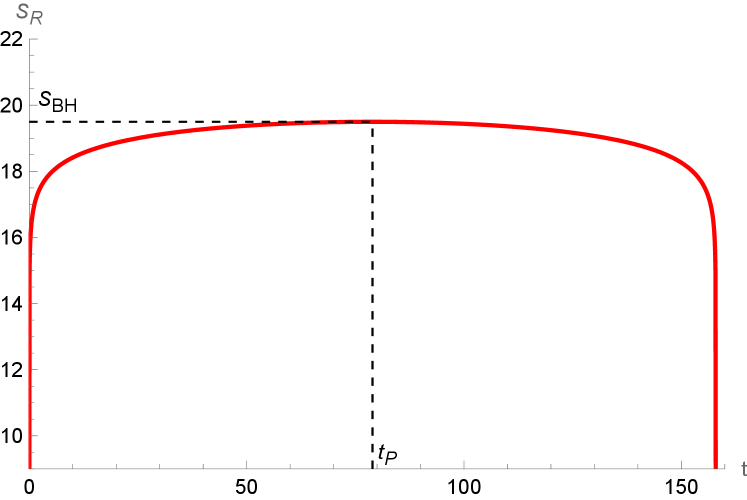
This paper proposes a ‘timelike entanglement entropy’ to resolve the black hole information paradox within the established AdS/CFT correspondence, without invoking firewalls or wormholes.
The black hole information paradox-the apparent loss of quantum information during Hawking evaporation-continues to challenge our understanding of quantum gravity. In the paper ‘Timelike Entanglement Entropy of Hawking Radiation’, we introduce a novel framework for examining this paradox by defining timelike entanglement entropy, a measure of correlations within the emitted radiation itself. Our analysis, applied to a range of black hole solutions, reveals periodic behavior in this entanglement, demonstrating that information is not lost but rather encoded in the temporal structure of Hawking radiation, preserving unitarity without invoking firewalls or wormholes. Does this framework offer a pathway towards a complete resolution of the information paradox and a deeper understanding of quantum gravity’s dynamics?
The Enigma of Vanishing Information
General Relativity elegantly predicts the formation of black holes – regions of spacetime where gravity is so intense that nothing, not even light, can escape. However, this very property introduces a profound puzzle concerning information. According to the principles of physics, information – describing the state of all matter and energy – cannot truly be destroyed. Yet, anything crossing a black hole’s event horizon appears to vanish from the observable universe. This isn’t simply a matter of losing access to data; it suggests a fundamental breakdown in the laws of physics, as the complete description of a physical system requires knowing its past. If information is genuinely lost within a black hole, it would violate a cornerstone of quantum mechanics, creating a deep conflict between two of the most successful theories in physics and challenging our understanding of the universe’s fundamental rules.
A cornerstone of quantum mechanics is the principle of unitarity, which dictates that information cannot be truly destroyed; a system’s past and future states are always theoretically connected. However, this clashes with the predicted behavior of black holes. Stephen Hawking demonstrated that black holes aren’t entirely ‘black’ but emit Hawking radiation – a thermal glow seemingly devoid of information about what fell inside. This poses a paradox: if a black hole evaporates completely via Hawking radiation, the information about its contents appears to vanish, violating unitarity. The emitted radiation only carries energy and momentum, not the complex quantum state of the infalling matter. This isn’t simply a loss of knowledge; quantum mechanics insists on a fundamental preservation of information at the level of quantum states, making the apparent destruction a serious challenge to established physical laws and prompting decades of research into resolving this conflict.
The black hole information paradox isn’t merely a technical difficulty within theoretical physics; it represents a deep and fundamental crisis at the intersection of general relativity and quantum mechanics. General relativity elegantly describes gravity as the curvature of spacetime, while quantum mechanics governs the behavior of matter at the smallest scales, demanding the conservation of information – essentially, that nothing is truly lost. Black holes, however, appear to violate this principle, as matter falling into them seems to vanish from the universe, potentially destroying the information it carries. This creates a profound tension: either general relativity breaks down at the event horizon, or quantum mechanics must be revised, or both. Resolving this paradox necessitates a more complete theory of quantum gravity, one capable of reconciling these seemingly incompatible frameworks and fundamentally reshaping our understanding of spacetime, gravity, and the very nature of reality.
Early resolutions to the black hole information paradox, seeking to reconcile quantum mechanics with general relativity, unexpectedly proposed the existence of “firewalls” at the event horizon. These firewalls represent a region of extraordinarily high energy, instantly incinerating anything that crosses the boundary – a stark departure from the smooth spacetime predicted by Einstein. However, this solution introduces a profound conflict with the principle of locality, a cornerstone of both general relativity and quantum field theory, which dictates that objects can only be directly influenced by their immediate surroundings. The firewall proposal suggests an instantaneous, non-local interaction across vast distances, violating this fundamental tenet and creating a new, equally perplexing problem for physicists attempting to understand the fate of information lost within a black hole.
Unraveling Information Through Entanglement
Entanglement entropy quantifies the quantum correlation between degrees of freedom and serves as a critical metric for understanding information loss in black hole evaporation. Hawking radiation, while appearing thermal, cannot fully account for the initial quantum state of infalling matter; therefore, tracking entanglement between the emitted radiation and the black hole’s interior is essential. A rising entanglement entropy indicates increasing correlation and potentially, the gradual release of information initially contained within the black hole. Conversely, a plateau would suggest information loss, violating fundamental principles of quantum mechanics. Specifically, calculating the entanglement entropy of Hawking radiation allows physicists to monitor the flow of information and assess whether it is being preserved, hidden, or destroyed during the black hole evaporation process, providing a pathway to resolve the information paradox.
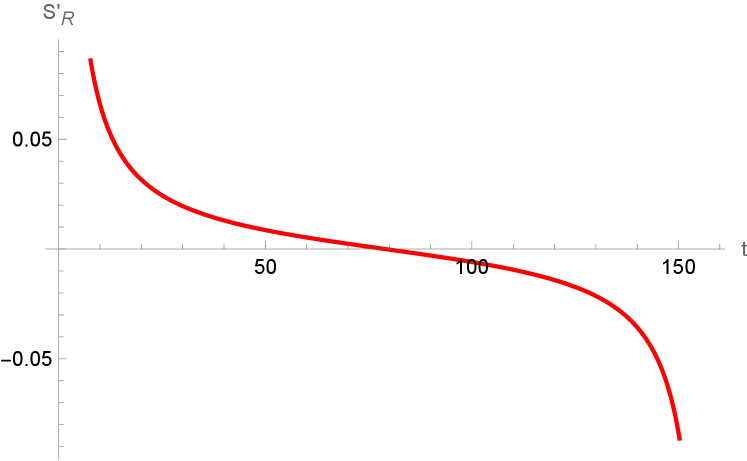
The Page Curve characterizes the time evolution of entanglement entropy between the Hawking radiation emitted by a black hole and the black hole’s interior. Initial calculations indicated that entanglement entropy would monotonically increase with emitted radiation, implying complete information loss-a violation of quantum mechanics. However, the Page Curve demonstrates that after a characteristic “Page Time”, the entanglement entropy reaches a maximum and then decreases, signifying that information initially hidden within the black hole is being recovered and encoded in the Hawking radiation. This reversal is not a feature of standard semi-classical calculations, but emerges from considering quantum corrections and the full evolution of the system, offering a potential mechanism for resolving the black hole information paradox by suggesting information isn’t lost, but rather scrambled and eventually released.
Timelike Entanglement Entropy (TEE) offers a more precise examination of information preservation in Hawking radiation by quantifying correlations not between spatial regions, but between quantum states at different points in time. Unlike spatial entanglement entropy, TEE calculations reveal a periodic structure within the emitted radiation, suggesting information is not lost entirely but rather encoded in a time-dependent pattern. This periodicity arises from the quantum correlations established during the black hole’s evaporation process. Analysis of TEE demonstrates that as Hawking radiation evolves, the entanglement entropy exhibits repeating peaks and troughs, implying a potential mechanism for information retrieval as the black hole approaches its final stages of evaporation. This method provides a stronger indication of information retention compared to traditional spatial entanglement entropy measurements.
The AdS/CFT correspondence provides a valuable framework for investigating information loss in black holes by mapping gravitational problems in Anti-de Sitter (AdS) space to equivalent field theories on the conformal boundary. Analysis within this duality reveals a quantifiable “Timelike Page Time,” representing the timescale for information to begin escaping the black hole via Hawking radiation. Specifically, calculations demonstrate that the Timelike Page Time scales inversely with surface gravity κ as \pi/\kappa. This indicates that black holes with higher surface gravity, or those existing in higher dimensions, exhibit faster information recovery, suggesting a more efficient resolution to the information paradox within this model.
The Island Formula: A New Landscape for Information
The Island Formula posits that entanglement entropy, traditionally calculated using the area of a black hole’s event horizon, is instead determined by the area of quantum extremal surfaces located within the black hole interior. These surfaces, which are not necessarily coincident with the event horizon, define regions – termed ‘islands’ – that contribute to the total entropy. This implies that information seemingly lost during black hole formation is not destroyed but is encoded on these internal surfaces. The calculation of entanglement entropy, therefore, requires identifying these extremal surfaces, which are solutions to equations of motion in a specific spacetime geometry, and their corresponding areas are directly proportional to the amount of information they contain. This framework shifts the locus of information storage from the horizon to these interior regions, providing a mechanism for information retrieval via Hawking radiation.
The Island Formula postulates that information seemingly lost during Hawking radiation is not actually destroyed, but rather encoded on quantum extremal surfaces – termed ‘islands’ – located within the black hole interior. These surfaces, calculated using Euclidean time techniques, contribute to the entanglement entropy and provide a mechanism for information retrieval. Specifically, the framework proposes that the entanglement between the Hawking radiation and degrees of freedom behind the event horizon, mediated by these islands, allows for the reconstruction of the initial quantum state. This contrasts with the traditional view of information loss and suggests a potentially unitary evolution of quantum information even in the presence of black holes; the information isn’t simply re-emitted, but its encoding on these surfaces allows for its eventual recovery via correlations within the emitted radiation.
The calculation of quantum extremal surfaces, central to the Island Formula, relies heavily on the use of Euclidean time. By analytically continuing to Euclidean time t \rightarrow i \tau , the problem of finding these surfaces-which contribute to entanglement entropy-becomes mathematically tractable. This transformation allows for the application of techniques from classical differential geometry to analyze the black hole’s geometry and identify the relevant surfaces. Furthermore, the use of Euclidean time is critical in deriving the black hole’s thermodynamic properties, such as entropy and temperature, which are directly linked to the area of the event horizon and the properties of these quantum extremal surfaces. The resulting calculations demonstrate a consistency between the black hole’s thermodynamic behavior and the quantum information encoded within the spacetime geometry.
Calculations within the Island Formula framework reveal a direct correspondence between Timelike Entanglement Entropy (TEE) and the Bekenstein-Hawking entropy S_{BH} = \frac{A}{4G} at specific instances known as Timelike Page times. These Page times, denoted as t_P, represent the point at which the entanglement entropy of the Hawking radiation surpasses the black hole’s initial entropy. This equality signifies that information initially contained within the black hole is demonstrably recoverable via the emitted Hawking radiation at these intervals. Furthermore, the recurrence of this matching between TEE and S_{BH} at periodic Timelike Page times indicates a cyclical pattern of information loss and subsequent recovery, challenging the traditional notion of information loss in black holes and supporting the principle of unitarity.
Implications for a Unified Theory
The longstanding Information Paradox, which questions what happens to information that falls into a black hole, is yielding crucial clues about the fundamental nature of Quantum Gravity. Recent advancements, notably the development of the Island Formula, propose that information isn’t entirely lost but is instead encoded in subtle correlations accessible via “islands” in the black hole’s event horizon. This isn’t merely a resolution of a theoretical puzzle; it suggests a deep connection between spacetime geometry, quantum entanglement, and the holographic principle – the idea that gravity in a volume can be described by quantum mechanics on its boundary. The Island Formula effectively provides a prescription for calculating the entropy of black holes in a way consistent with quantum mechanics, implying that spacetime itself may be an emergent property arising from underlying quantum degrees of freedom and offering a pathway toward unifying General Relativity with Quantum Field Theory.
Investigations into classic black hole solutions – Schwarzschild, Reissner-Nordström, and Kerr – provide crucial tests for theoretical frameworks attempting to reconcile quantum mechanics and general relativity. The Schwarzschild solution, representing a non-rotating, uncharged black hole, establishes a foundational understanding of the event horizon and singularity. Introducing electric charge, as in the Reissner-Nordström solution, complicates the spacetime geometry and reveals how electromagnetic fields interact with strong gravitational fields. Most realistically, the Kerr solution describes rotating black holes, exhibiting frame-dragging effects and an ergosphere where energy extraction is theoretically possible. By meticulously analyzing these solutions within the evolving context of the Information Paradox and quantum gravity, researchers gain deeper insight into the fundamental nature of spacetime – not as a smooth, continuous fabric, but potentially as an emergent property of underlying quantum phenomena, and reveal the complex interplay between gravity, charge, and angular momentum in shaping the cosmos.
Investigations into black hole physics are no longer confined to the traditionally studied three-dimensional spacetime; research now extends to higher-dimensional analogues like Myers-Perry black holes. These solutions, which describe rotating black holes in dimensions greater than four, offer a crucial testing ground for theories attempting to unify gravity with quantum mechanics. By analyzing the behavior of information and entropy in these more complex geometries, physicists can probe the limits of existing models and potentially reveal new physics. The increased complexity of higher-dimensional spacetimes introduces novel effects, such as the presence of multiple horizons and more intricate event structures, which challenge conventional understandings of black hole thermodynamics and information processing. This expansion of the investigative scope is vital, as it may uncover subtle clues about the true nature of gravity and the structure of the universe that would remain hidden within simpler, lower-dimensional scenarios.
Recent investigations into black hole thermodynamics reveal a surprising level of complexity in their quantum behavior, particularly concerning the recurrence of information as described by Timelike Page Times. The frequency at which these times repeat isn’t constant; it’s demonstrably influenced by the black hole’s rotational speed \Omega_H and its surface gravity κ. This modulation leads to a fascinating quasi-periodic behavior in higher-dimensional, rotating black holes-like the Myers-Perry solution-suggesting a dynamic interplay between classical gravity and quantum effects. The observed connection between these seemingly disparate fields-thermodynamics, quantum mechanics, and gravity-hints at a deeper, underlying principle governing the universe, and provides valuable clues for constructing a more complete theory that reconciles these fundamental forces.
The exploration of Hawking radiation’s subtle correlations, as detailed in the article, echoes a fundamental principle of understanding complex systems. One might observe that, as Aristotle noted, “The ultimate value of life depends upon awareness and the power of contemplation rather than upon mere survival.” This sentiment aligns with the research’s attempt to move beyond a purely descriptive understanding of black hole evaporation. By investigating the timelike entanglement entropy, the study doesn’t merely accept information loss, but actively seeks to discern the underlying structure preserving unitarity – a contemplation of the system’s inherent logic, rather than a resignation to apparent paradox. The article proposes a nuanced picture of information preservation, akin to revealing hidden patterns within seemingly random data.
What Lies Beyond the Horizon?
The proposition of timelike entanglement entropy as a vehicle for preserving information within Hawking radiation offers a compelling, if provisional, resolution to a paradox that has long haunted theoretical physics. The model functions as a microscope, revealing potential patterns in the seemingly random emissions of a black hole. However, the devil, as always, resides in the details-specifically, in fully characterizing the temporal correlations required to maintain unitarity. Establishing the precise mechanisms that generate and preserve this ‘pseudoentropy’ remains a significant challenge.
Future research must extend beyond simplified theoretical models. Rigorous investigations into the robustness of this timelike entanglement entropy against quantum fluctuations and backreaction effects are essential. Can these correlations survive the violent conditions near the event horizon, or are they fragile, easily disrupted by the very processes they seek to explain? The AdS/CFT correspondence, while a powerful tool, provides an analogy, not a proof; demonstrating a direct link between gravitational and quantum mechanical descriptions is crucial.
Ultimately, this work suggests a shift in perspective: information isn’t lost to the black hole, but rather subtly re-encoded within the temporal structure of its demise. The data, viewed through this lens, might not be random noise at all, but a complex, albeit obscured, message. Whether deciphering that message is possible-or even meaningful-remains an open, and deeply fascinating, question.
Original article: https://arxiv.org/pdf/2602.06833.pdf
Contact the author: https://www.linkedin.com/in/avetisyan/
See also:
- Surprise Isekai Anime Confirms Season 2 With New Crunchyroll Streaming Release
- The Super Mario Galaxy Movie: 50 Easter Eggs, References & Major Cameos Explained
- 10 Best Free Games on Steam in 2026, Ranked
- Starfield (PS5) Review – A Successful Cross-Console Voyage
- Preview: Sword Art Online Returns to PS5 as a Darker Open World Action RPG This Summer
- All 7 New Supes In The Boys Season 5 & Their Powers Explained
- ‘Project Hail Mary’: The Biggest Differences From the Book, Explained
- Frieren: Beyond Journey’s End Gets a New Release After Season 2 Finale
- Welcome to Demon School! Iruma-kun season 4 release schedule: When are new episodes on Crunchyroll?
- Skate 4 – Manny Go Round Goals Guide | All of the Above Sequence
2026-02-09 09:34