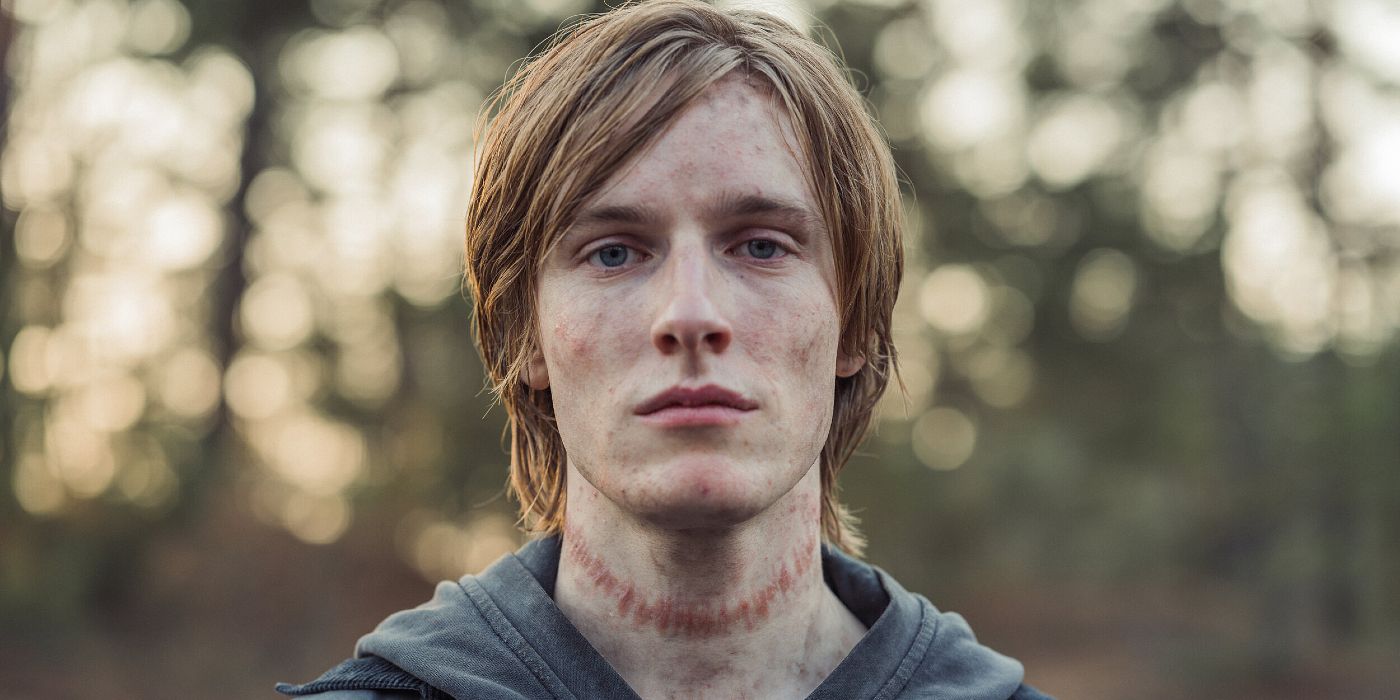
Over the years, Netflix has produced many original science fiction series, but few have achieved the level of quality seen in its thought-provoking exploration of time travel. The series is incredibly complex, offering one of the most intricate depictions of time travel in fiction and moving beyond common genre tropes. Everything in the show is built around a strict set of cause-and-effect rules.
Ultimately, time travel in Dark was a way to delve into complex questions about existence. The show focused on its characters – their connections with themselves, with each other, and even with past and future versions of those same people. Although the science behind the time travel gets complicated and sometimes stretches believability, Dark always remained consistent with its own internal logic.
Dark Obeys the Rules of Determinism and Rejects Free Will
The debate over whether we have free will or if our lives are predetermined is a long-standing philosophical discussion with strong arguments on both sides. Historically, most people leaned towards determinism – the idea that a higher power controls our fate, rooted in religious beliefs. However, over the past few centuries, as religion has become less influential, this has shifted. Today, many nations, including the United States, have legally recognized human freedom and the power to make our own choices.
We generally act as if we have free will – the power to choose our own paths and shape our lives. However, that’s not completely accurate, as powerful systems like capitalism and patriarchy significantly influence us. Some philosophies even go further, arguing that free will is entirely impossible, caught within a complex web of cause and effect.
In the German town of Winden, time governs everything and everyone, even after the complex connections become clear. The show Dark illustrates that trying to change the past is futile – much like trying to retrieve an arrow already fired. This is especially true because the past and future are interwoven in a never-ending loop. When the past and future are essentially the same, can anyone truly escape their destiny?
For decades, time travel has been a popular subject in movies and TV shows, explored in countless ways and often leading to mind-bending paradoxes and unique scenarios. Some shows take drastically different approaches: Primer is famously difficult to understand, while Russian Doll delves into the philosophical aspects of time travel. Dark shares a similar serious tone with the 1962 French film La Jetée, which actually inspired its core ideas.
The idea of a single starting point is a trick of how we think about time, as beautifully shown in the film Arrival. When Adam and Eva gain knowledge of the future, it doesn’t help them. Instead, they pursue different paths. Adam knowingly chooses to act even though he knows what will happen, while Eva uses her foresight to try and maintain the connection between their two realities.
The idea of free will feels pointless in a world governed by time – a force even more indifferent than any god humans have imagined. Philosopher Baruch Spinoza viewed time with the same awe typically reserved for a divine power, and this all-powerful, ever-present nature of time is central to the series Dark. Showrunners Baran bo Odar and Jantje Friese portray time not just as a measure of moments, but as an inescapable and absolute force.
Trying to cheat fate in Dark ultimately leads to accepting it – the characters can’t escape their destinies, no matter how much they understand what’s happening. The show’s characters and their relationships are incredibly layered and complicated, exceeding anything typically seen in television or film. While self-reliance is often rewarded, the series emphasizes that time marches on for everyone, regardless of their efforts.
Dark’s Characters Cannot Make Choices That Change Their Destinies
The film Dark heavily features bootstrap paradoxes – contradictions in time travel where events cause themselves, breaking the normal flow of cause and effect. The movie is full of these loops, where information or objects seem to have no original source. A prime example is H.G. Tannhaus, who builds his time machine and writes a book by studying the finished versions of those very creations, ensuring they come into being. Even if he hadn’t, the film suggests time would have found a way to make it happen anyway.
The core issue in Dark is that trying to change the past actually causes the very problems it’s meant to solve. The show’s tragedies all stem from characters attempting to improve their own lives, help others, or fix the world. This leads to a cycle of pain justified by the idea of achieving a better future – children are abandoned, and murders are committed, all in the name of preventing even worse outcomes. Dark brilliantly demonstrates that if everything is predetermined, it erodes our sense of right and wrong. The show fully embraces this idea of a fixed timeline and explores the difficult ethical and philosophical implications without relying on easy solutions or plot holes.
Time works like a closed loop, not a branching path. This means the past can’t be changed, and everything is predetermined. A good example of this is when Jonas Kahnwald attempts suicide. Even if the gun doesn’t fire, it’s not random chance – his future selves already exist, and time itself forces the gun to malfunction. This effect disappears if the gun is aimed at something else, because the predetermined outcome only applies to the initial attempt on his life.
It’s heartbreaking to watch characters like Jonas, Martha, and Claudia struggle, knowing their efforts are ultimately pointless. It’s like trying to punch a moonbeam or stop an ocean wave – you just can’t win against something so much bigger than yourself. We’ve seen heroes overcome impossible odds in stories countless times, but here, it feels different. These characters are trapped, unable to alter the path they’re on. Time is supposed to heal everything, but that only happens when it keeps moving forward. When time loops, that healing power just doesn’t work.
Jonas’s initial goal is to save his father from taking his own life. He manages to reach him and talk him out of it, but then discovers that his father would have lived if Jonas hadn’t interfered. As the Stranger and Adam, Jonas tries to break the time loop and end the endless cycle of suffering. When he kills Martha to prevent the loop from continuing, he unknowingly creates the reason for Eva, another version of Martha from a different universe, to emerge – and she’s the only one who can stop Adam from achieving his aims.
In contrast to Adam, Eva’s reasons for keeping the knot alive don’t seem driven by a desire to cause harm. While Adam wants to end his own suffering, no matter the cost, Eva is motivated by a desire to save her son, the Unknown – a child born from the knot who would cease to exist if it were undone. However, Eva’s determination to preserve the knot also causes significant pain for others, ultimately making her actions as thoughtless as Adam’s.
The series Dark suggests that selfishness is inherent to the human condition, appearing in various forms. For some characters, it’s simply the will to survive, while others prioritize family and friends. A few, like Adam and Eva, manipulate people as if they were pieces in a game. However, despite these motivations, everyone is ultimately bound by the unchangeable laws of time and destined to follow a predetermined course. It wasn’t until Claudia made a shocking discovery that…
Jonas and Martha’s Final Sacrifice Didn’t Break the Rules but Subverted Them
A show as intricately constructed as Dark shouldn’t have a definitive ending. The series constantly emphasizes that “the beginning is the end, and the end is the beginning,” a phrase that works both ways, reflecting the show’s dual universes. Without Claudia Tiedemann, these universes would be trapped in a never-ending cycle of suffering, bound by an inescapable destiny.
As a huge fan of Dark, the reveal of a third universe really blew my mind! It turns out that Adam and Eva’s worlds weren’t the beginning – they were created when H.G. Tannhaus messed with time. His time machine basically split his original universe into these two others that shouldn’t even be. The weight fell on Jonas and Martha to somehow fix things, but they had to do it in this first, original world – a place where the usual time loops and rules of Dark didn’t apply, which made everything even more complicated and fascinating.
Jonas and Martha didn’t gain true freedom until they reached the real world. Even then, it’s debatable if they were really free, because they only had one meaningful choice: a final decision that would destroy their flawed universes and disconnect them from everything else.
Martha and Jonas were tragically unable to be together, but their decision to end their own lives was ultimately their own. Even the hopeful resolution of the series couldn’t lessen the impact of this – the destruction of two universes because Dark wouldn’t allow them a different outcome.
Read More
- Looks Like SEGA Is Reheating PS5, PS4 Fan Favourite Sonic Frontiers in Definitive Edition
- Pluribus Star Rhea Seehorn Weighs In On That First Kiss
- Gold Rate Forecast
- Kelly Osbourne Slams “Disgusting” Comments on Her Appearance
- Dune 3 Gets the Huge Update Fans Have Been Waiting For
- Tomodachi Life: Living the Dream ‘Welcome Version’ demo now available
- Arknights: Endfield – Everything You Need to Know Before You Jump In
- The Smiling Friends’ Creators Have Bad News For Fans
- ‘Marty Supreme’ Ending, Explained
- Why Eriksholm: The Stolen Dream Could Be 2025’s Standout Stealth Experience
2026-01-04 05:41