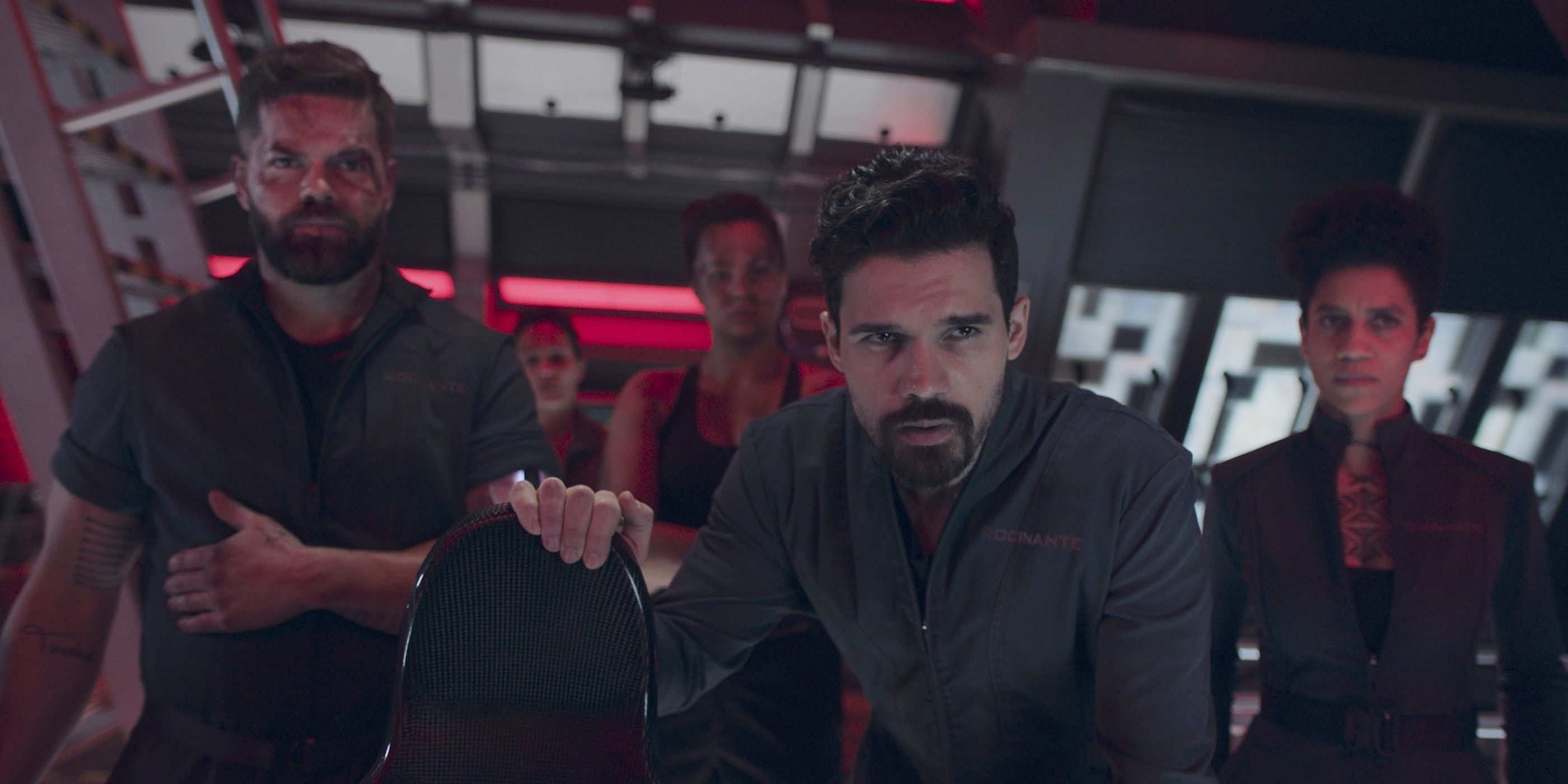
Most science fiction TV shows today focus more on flashy visuals than realistic science or politics. But this Prime Video series stands out – it feels believable in both areas. Based on the books by James S.A. Corey, it’s received high praise, with a 95% rating on Rotten Tomatoes, proving how successful a well-done sci-fi adaptation can be.
The show immediately grounds itself in realism, demonstrating that spaceships operate according to the laws of physics, have plenty of supplies, and that space itself is a hazardous place. The central conflicts arise from Earth’s lack of breathable air, economic difficulties, and clashes in beliefs. By being both scientifically accurate and addressing real-world issues, the show proves that science fiction can be both thought-provoking and widely appealing.
The Expanse Builds Its Story Around Science
Space doesn’t follow the rules of adventure stories. It’s a harsh environment governed by strict scientific laws. Gravity needs to be created artificially, and characters experience the difficult realities of zero gravity, acceleration, and the lack of breathable air – often resulting in sickness like vomiting and fainting.
The show strives for realism, accurately portraying things like gravity, the effects of spinning, and how objects move in space. This means every scene is grounded in actual physics. When ships speed up quickly, the crew suffers believable health consequences. And if a mistake is deadly, characters die instantly – there are no miraculous saves.
This show builds tension in a unique way by focusing on what’s scientifically possible. Unlike many science fiction stories where heroes rely on sudden inventions or clever tricks, this show creates suspense by highlighting the characters’ limitations.
Dealing with medical emergencies in space is incredibly challenging and presents major logistical hurdles. Even routine issues are complicated by the inherent risks of space travel. The story relies on the audience understanding these limitations from the beginning, building suspense as the situation unfolds.
This careful and thorough method isn’t just for physics – it also applies to the study of living things, like biology and medicine. In space, the human body changes its bones and muscles due to the weaker gravity. These changes created a lasting difference between people born in space (Belters) and those born on planets.
I found this story really starts to hit you as it slowly reveals its core themes – discrimination, the search for identity, and ultimately, tragedy. It presents a future where people born in the asteroid belt, the ‘Belters,’ are actually biologically different – and weaker – than those from Earth. And that biological difference isn’t just a quirk; it becomes the foundation for a new kind of social hierarchy, where Earthlings dominate simply because of their bodies. It’s a chilling thought, and the movie brilliantly shows how science itself can become a tool for reinforcing inequality, almost invisibly shaping the power dynamics at play.
The Expanse Redefined Hard Sci-Fi Television
It was initially considered a gamble because many thought it would be too complicated and challenging for a broad audience. However, this series breaks that mold. By combining accurate science with a compelling, ongoing story and high-quality filmmaking, it proves that content can be both intelligent and easy to enjoy.
The fact that it continues to thrive despite being dropped by other platforms proves there’s a strong appetite for science fiction that’s smart and thought-provoking. More and more, viewers want sci-fi stories grounded in realism, believable physics, and complex political themes. Audiences now expect stories to make sense internally and for characters to face real consequences for their actions.
The success of The Expanse demonstrates that audiences appreciate complex stories with genuine emotional depth. Importantly, the show respects its viewers by trusting them to follow along without excessive explanation. Instead of spelling everything out, the show allows ideas to unfold naturally through what happens on screen, letting viewers piece things together over time.
CBR Report
CBR Report
This act of trust allows the story to develop, transforming viewers from simply watching into actively engaging with it. By setting this standard, The Expanse demonstrates that compelling science fiction doesn’t have to be limited or cold; instead, it can be immediate, meaningful, and profoundly relatable.
By the end of its run, The Expanse accomplished something truly special: it made realism thrilling. The show’s focus on believable characters, complex political maneuvering, and scientifically accurate details created a future that feels less like fantasy and more like a possible reality.
With every choice and hidden truth revealed, The Expanse showed us the full spectrum of human strengths and weaknesses. Even after the series finale, it remains a prime example of how great science fiction can hold a mirror up to our own world and the issues we face today.
Read More
- What Song Is In The New Supergirl Trailer (& What It Means For The DC Movie)
- Dune 3 Gets the Huge Update Fans Have Been Waiting For
- TV legend Carol Kirkwood reveals the reasons why she decided to retire after 28 years with BBC
- The OG Resident Evil 1, 2 and 3 Are Now Available on Steam With a Heavy Discount (and DRM)
- The Monsterverse’s Shocking New Time Travel Story – Monarch: Legacy Of Monsters Season 2, Episode 6 Explained
- Tainted Grail: The Fall of Avalon – Merlin’s Tomb DLC Adds a New End-Game Dungeon for Free
- Designing Magnetism with Molecular Architecture
- Crypto Chaos: 6 Events This Week That Could Send Bitcoin and XRP into a Tailspin!
- Marathon is Taking Aim at Bubble Shields, Knives, Snipers and More in Upcoming Balance Patches
- OpenAI says GPT‑5 cuts political bias — but is 30% enough?
2025-12-23 03:07