Author: Denis Avetisyan
The ATLAS experiment at the Large Hadron Collider continues to probe the boundaries of the Standard Model with new searches for exotic particles.
This review summarizes recent ATLAS results on searches for vector-like quarks, leptoquarks, and vector-like leptons, presenting updated exclusion limits based on Run 2 data.
Despite the remarkable success of the Standard Model, fundamental questions regarding the hierarchy problem and flavour anomalies remain unanswered, motivating searches for physics beyond its established framework. This paper, ‘Searches for VLQs and LQs from the ATLAS Experiment’, presents recent results from the ATLAS detector at the Large Hadron Collider focused on identifying vector-like quarks, leptoquarks, and vector-like leptons. Updated exclusion limits on the mass and couplings of these potential new particles are reported, based on Run 2 data. Will these searches reveal the first direct evidence of new particles and provide insights into the incomplete picture of fundamental interactions?
The Standard Model’s Elegance and Its Limits
Despite its remarkable predictive power and consistent validation through decades of experimentation, the Standard Model of particle physics is demonstrably incomplete. Phenomena such as the existence of dark matter and dark energy, the observed mass of neutrinos, and the matter-antimatter asymmetry in the universe all lie outside its explanatory reach. Furthermore, the model offers no explanation for the origin of fundamental particle masses or the hierarchical nature of fermion generations. These unresolved puzzles strongly suggest that the Standard Model represents only an effective theory, a limited approximation of a more fundamental, yet undiscovered, physical reality. Consequently, physicists are actively pursuing extensions and modifications to the Standard Model, seeking new particles and interactions that could account for these lingering mysteries and provide a more complete description of the universe.
The persistent inadequacies of the Standard Model of particle physics necessitate exploration beyond its established framework, prompting a dedicated search for novel particles like vector-like quarks, leptons, and leptoquarks. These hypothetical particles aren’t simply additions to the existing catalog; they represent potential solutions to several unresolved puzzles, including the origin of mass and the observed imbalance between matter and antimatter. Vector-like quarks, unlike their Standard Model counterparts, would possess unique properties and decay patterns, while new leptons could provide insights into neutrino masses. Perhaps most intriguing are leptoquarks, which, as their name suggests, could directly link leptons and quarks, potentially explaining anomalies observed in certain particle decays and opening pathways to a more unified understanding of fundamental forces. The discovery of any of these particles would not only validate the need for physics beyond the Standard Model but also revolutionize the field, offering a glimpse into the deeper structure of the universe.
The ATLAS experiment, one of the largest and most complex instruments ever built, leverages the unprecedented high-energy collisions at the Large Hadron Collider to meticulously investigate physics beyond the Standard Model. By smashing protons together at nearly the speed of light, ATLAS creates conditions mirroring those shortly after the Big Bang, allowing physicists to search for the fleeting signatures of new, heavier particles – such as vector-like quarks, leptons, and leptoquarks – that could resolve inconsistencies within the current theoretical framework. The experiment’s layered detector system, composed of sophisticated tracking chambers, calorimeters, and muon spectrometers, precisely measures the energy, momentum, and trajectory of the resulting particles, effectively reconstructing the events and identifying potential deviations from established physics. This detailed analysis, combined with advanced data processing techniques, enables ATLAS to push the boundaries of knowledge and explore the fundamental constituents of the universe with unparalleled precision.
![The analysis establishes lower mass limits for scalar leptoquarks decaying into a muon and a b-quark, as determined by [undefm].](https://arxiv.org/html/2601.22425v1/EXOT-2024-12_LQ_fig_17.png)
Targeted Searches: Precision and Methodology
Vector-Like Quark searches at the ATLAS experiment utilize multiple production and decay channels to maximize search sensitivity. These searches include investigations of single production, where a single Vector-Like Quark is produced, and pair production, involving the simultaneous creation of a Vector-Like Quark and its anti-particle. Analysis focuses on final states categorized by the presence of leptons – specifically, searches for events containing one isolated lepton – or, alternatively, all-hadronic signatures where all decay products are hadrons. This multi-faceted approach is crucial, as the decay modes of Vector-Like Quarks are currently unconstrained, necessitating broad coverage of potential signatures to effectively probe the parameter space and establish exclusion limits.
The ATLAS experiment at the Large Hadron Collider utilizes data collected during Run 2 (2015-2018), comprising approximately 139 fb-1 of proton-proton collisions at center-of-mass energies of 13 TeV, as a primary dataset for searches beyond the Standard Model. Currently, data collection is ongoing with Run 3, which began in 2022 and will deliver an integrated luminosity significantly exceeding that of Run 2. This continued data acquisition, coupled with detector improvements and refined analysis techniques, is intended to maximize the sensitivity of ATLAS to rare processes and new physics phenomena, including but not limited to searches for vector-like quarks, supersymmetry, and extra dimensions. The increased luminosity and energy of Run 3 offer the potential to either discover new particles or further constrain existing theoretical models.
The Mono-Top final state, characterized by a single top quark and significant missing transverse energy, presents a challenging signal separation problem due to its high background contamination. To address this, the ATLAS experiment utilizes machine learning techniques, notably the XGBoost Classifier, for improved discrimination between signal and background events. XGBoost, a gradient boosting algorithm, is trained on a large sample of simulated and observed events, leveraging multiple kinematic variables to optimize classification performance. This allows for enhanced sensitivity in searches for new physics, such as Vector-Like Quarks, where the Mono-Top signature constitutes a key search channel. The classifier’s output is then used to define a discriminating variable, enabling a more precise statistical analysis and the setting of stringent exclusion limits.
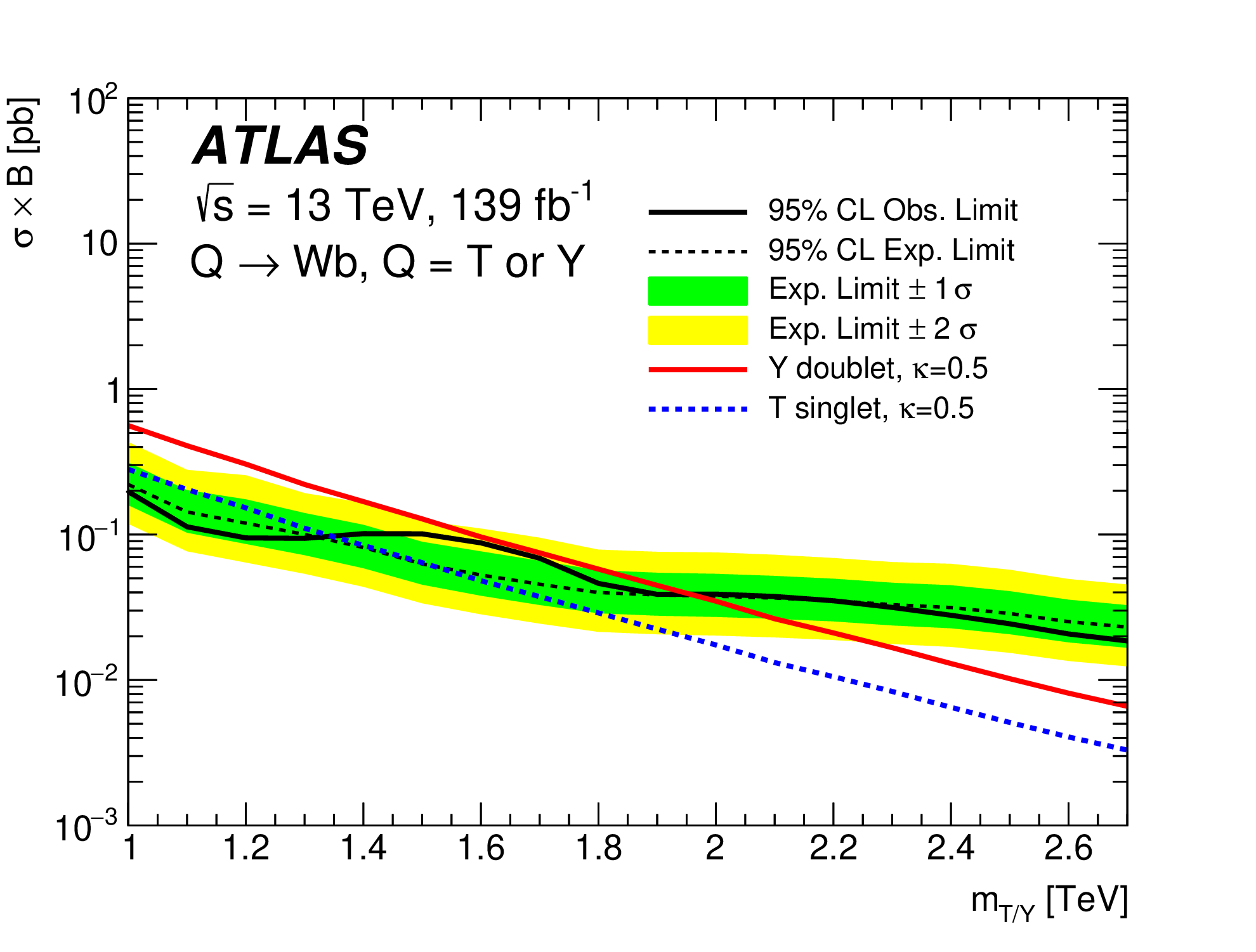
Recent analyses from the ATLAS experiment utilizing the Run 2 dataset have established new exclusion limits on the mass of Vector-Like Quarks (VLQs) in single production channels. Specifically, VLQs with a coupling strength of κ_T = 0.5 and a branching ratio of BR(T → Zt) = 25% have been excluded up to a mass of 1.8 TeV. These limits represent a significant expansion of previous searches and are derived from analyses of various final states, including those with leptons and fully hadronic signatures. The ongoing Run 3 data collection is expected to further refine these exclusion limits and potentially reveal evidence of VLQ production.
Theoretical Frameworks and Predictive Power
The 4321 Model, a specific framework predicting the existence of Vector-Like Leptons (VLLs), postulates a fourth generation of leptons with charge -1/3 (L4), +2/3 (E4), and neutral leptons (N4). This model predicts that VLLs will have specific decay modes dependent on their mass and coupling strengths, primarily decaying into Standard Model leptons and gauge bosons – specifically, Z and W bosons, as well as photons. The branching ratios for these decays are calculable within the model and are sensitive to the VLL mass hierarchy and mixing parameters. Consequently, searches for VLLs based on these decay channels provide a direct test of the 4321 Model’s predictions, allowing for precise constraints on its parameter space and potentially revealing deviations indicative of alternative models.
SU(2) symmetry, a fundamental component of the Standard Model’s gauge group, dictates how Vector-Like Quarks (VLQs) interact with the W and Z bosons. This symmetry constrains the possible couplings of VLQs to these bosons, directly impacting their production mechanisms at the Large Hadron Collider. Specifically, the strength of the VLQ’s coupling to the W boson determines the dominant production mode – either through single production, where a VLQ is created in association with a W boson, or through strong interactions resulting in pair production. The preservation of SU(2) symmetry also necessitates specific decay patterns for VLQs, influencing the signatures observed in detector experiments. Consequently, understanding SU(2) symmetry is crucial for both predicting VLQ production cross-sections and interpreting experimental searches.
Composite Higgs Models and Little Higgs Models propose that the Higgs boson is not a fundamental particle, but rather a composite state arising from new strong dynamics or a light pseudo-Goldstone boson, respectively. These models typically predict the existence of new particles – including Vector-Like Quarks and Leptons – as mediators or components of the composite structure. The presence of these new particles influences the Higgs sector through radiative corrections to Higgs couplings and mass, and can also contribute to Higgs production and decay channels. Consequently, searches for these new particles are intrinsically linked to tests of the Higgs mechanism and precision measurements of Higgs properties, providing a complementary approach to directly probing the nature of the Higgs boson.
Searches for leptoquarks are directly linked to tests of Lepton Flavor Universality (LFU), a fundamental principle of the Standard Model stating that leptons of different flavors (electron, muon, tau) should interact with gauge bosons with equal strength. Deviations from LFU would signal the presence of new physics influencing lepton interactions. Leptoquarks, if they exist, could mediate flavor-changing neutral currents, leading to different coupling strengths for various lepton flavors and thus violating LFU. Experimental analyses therefore focus on precisely measuring the ratios of decay rates involving different lepton flavors; any statistically significant discrepancy would indicate LFU violation and provide evidence for leptoquark interactions. These searches effectively use leptoquarks as a potential explanation for observed or future LFU violations, making them crucial probes beyond the Standard Model.
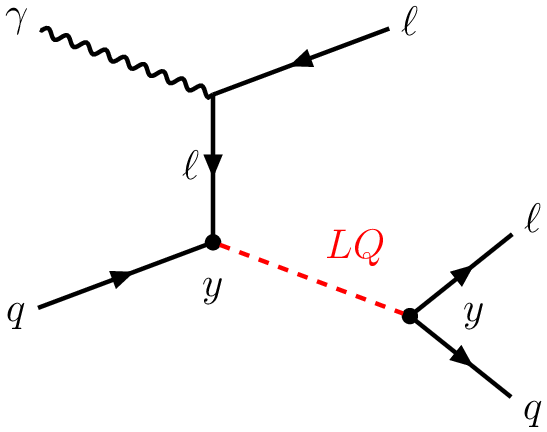
Recent analyses of data collected by the ATLAS experiment at the Large Hadron Collider have established mass exclusion limits for leptoquarks. These limits are dependent on the leptoquark coupling strengths, specifically the Yukawa couplings to standard model fermions. Current results exclude leptoquarks with masses up to 3.4 TeV for a Yukawa coupling of y_{de} = 1.0 , 4.3 TeV for y_{s\mu} = 3.5 , and 2.8 TeV for y_{b\mu} = 3.5 . These exclusions are based on searches for leptoquark pair production and subsequent decay into quarks and leptons, and represent the current strongest constraints on leptoquark masses for these specific coupling scenarios.
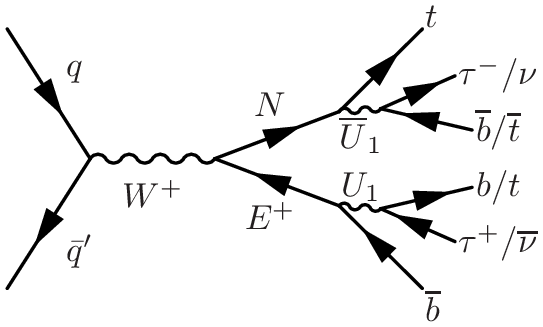
ATLAS experiments at the Large Hadron Collider have established mass exclusion limits for Vector-Like Leptons within the specific framework of the 4321 model. These results, derived from analyses of proton-proton collision data, indicate that Vector-Like Leptons with masses ranging from 200 GeV to 910 GeV have been excluded at 95% confidence level. This exclusion is based on the observed absence of their production and subsequent decay signatures in the collected data, effectively constraining the parameter space of the 4321 model and informing future searches for these particles at higher energies and luminosities.
The Future of Discovery: Expanding the Horizon
The ATLAS experiment is currently collecting data from Run 3 of the Large Hadron Collider, a period expected to yield more than double the dataset accumulated during Runs 1 and 2. This substantial increase in data volume is poised to dramatically improve the sensitivity of searches for new physics beyond the Standard Model. With each collision, the experiment gathers more information about potential rare processes or deviations from established theory. This enhanced statistical power allows physicists to probe higher energy scales and more subtle signals, effectively expanding the reach of the search and increasing the likelihood of discovering, or placing stringent limits on, hypothetical particles and interactions. The ongoing Run 3 data collection represents a crucial step forward in the quest to unravel the mysteries of the universe and refine our understanding of fundamental particles and forces.
The extraction of meaningful signals from the immense data collected at the Large Hadron Collider increasingly relies on sophisticated analytical tools. As experiments probe deeper into the energy frontier, the anticipated signatures of new physics are often obscured by the overwhelming prevalence of Standard Model processes – creating a substantial needle-in-a-haystack problem. Consequently, continued development of advanced analysis techniques, including innovative statistical methods and, crucially, machine learning algorithms, is paramount. These algorithms are designed to identify subtle patterns and correlations within the data that might otherwise be missed, effectively enhancing the signal-to-background ratio and improving the sensitivity of searches for new particles and phenomena. This ongoing refinement of analytical capabilities promises to unlock the full potential of current and future LHC datasets, offering the best prospect for discovering physics beyond the established theoretical framework.
The pursuit of physics beyond the Standard Model necessitates a dual approach: meticulously precise measurements of known phenomena alongside dedicated searches for new particles or interactions. Existing theories offer a vast landscape of possibilities, but many parameters remain unconstrained, requiring focused experimental investigation. Precise measurements refine the understanding of background processes, improving the sensitivity to subtle deviations indicative of new physics, while targeted searches directly probe specific theoretical predictions. This synergistic strategy allows researchers to either pinpoint the existence of previously unknown particles – confirming theoretical frameworks – or, failing that, to progressively narrow the range of plausible parameters for these theories, guiding future theoretical development and experimental designs. Ultimately, the continued refinement of both measurement precision and search strategies is critical for expanding the frontiers of particle physics and unraveling the mysteries of the universe.
The Large Hadron Collider’s ongoing investigations represent more than just a hunt for new particles; they are a fundamental challenge to the limits of established physics. Each collision provides an opportunity to test the Standard Model with unprecedented precision, and any deviation, however slight, could unlock entirely new realms of understanding. This pursuit extends beyond simply finding what is there; it defines what is possible within the universe, refining theoretical frameworks and prompting the development of innovative detection techniques. The continued exploration at these energy scales isn’t merely about adding to a catalog of particles, but about reshaping humanity’s comprehension of the cosmos’s most basic constituents and forces, potentially revealing dimensions or interactions previously relegated to the realm of speculation.
Recent analyses from the ATLAS experiment at the Large Hadron Collider place increasingly stringent limits on the strength of interactions between potential new particles – specifically, Vector-Like Top and Y-quarks – and the known particles of the Standard Model. These searches reveal that, should these heavier cousins of the top and bottom quarks exist within a mass range of 1150 to 2300 GeV for the Top-quark and 1150 to 2600 GeV for the Y-quark, their coupling strength to other particles must be less than 0.52 and 0.46, respectively. These constraints are derived from careful examinations of proton-proton collision data, seeking evidence of their production and subsequent decay, and represent significant progress in mapping the parameter space for beyond-the-Standard-Model physics. By continually refining these limits, scientists are narrowing the possibilities for the properties of new particles and guiding future searches with greater precision.
The pursuit of physics beyond the Standard Model, as exemplified by the ATLAS experiment’s search for vector-like quarks and leptoquarks, demands a rigorous clarity of purpose. It echoes John Stuart Mill’s sentiment: “It is better to be a dissatisfied Socrates than a satisfied fool.” This relentless questioning, this refusal to accept established boundaries, fuels the painstaking analysis of experimental data. The search for these new particles isn’t simply about discovering what is, but about refining the very foundations of understanding, pushing the boundaries of knowledge with each meticulously examined collision event and updated exclusion limit. The elegance of the experiment lies in its ability to whisper insights from the noise.
Beyond the Horizon
The continued absence of direct evidence for vector-like quarks, leptoquarks, or vector-like leptons, as documented in this work, doesn’t diminish the compelling motivation for the search. Rather, it sharpens the question: where does the elegance lie? The Standard Model, for all its successes, feels… unfinished. These searches aren’t simply about finding new particles; they are about refining the landscape, discarding increasingly baroque additions, and finding the simplest explanation that accommodates the observed phenomena. The tightening of exclusion limits is, in a sense, an exercise in subtraction-editing, not rebuilding.
Future progress demands more than just increased luminosity. A shift in focus-perhaps towards indirect searches or exploring unconventional decay modes-could prove fruitful. The interplay between theory and experiment must also intensify. Precise predictions, tailored to specific models, will be crucial to guide the search and interpret any potential signals. The path forward isn’t necessarily about building larger colliders, but about building more insightful ones-instruments capable of discerning subtlety, not just brute force.
Beauty scales-clutter doesn’t. The continued quest for physics beyond the Standard Model isn’t merely a technical exercise; it’s an aesthetic one. The universe, at its core, should reveal a fundamental harmony. These searches, though yielding null results thus far, bring that revelation, however distant, incrementally closer.
Original article: https://arxiv.org/pdf/2601.22425.pdf
Contact the author: https://www.linkedin.com/in/avetisyan/
See also:
- What Song Is In The New Supergirl Trailer (& What It Means For The DC Movie)
- Highly Anticipated Strategy RPG Finally Sets Release Date (And It’s Soon)
- TV legend Carol Kirkwood reveals the reasons why she decided to retire after 28 years with BBC
- Dune 3 Gets the Huge Update Fans Have Been Waiting For
- Why is Tech Jacket gender-swapped in Invincible season 4 and who voices her?
- Palworld! More Than Just Pals ‘Special Video’, characters detailed
- How Blake Lively & Ryan Reynolds’ Kids Pranked Her on April Fool’s Day
- The OG Resident Evil 1, 2 and 3 Are Now Available on Steam With a Heavy Discount (and DRM)
- The Monsterverse’s Shocking New Time Travel Story – Monarch: Legacy Of Monsters Season 2, Episode 6 Explained
- Tainted Grail: The Fall of Avalon – Merlin’s Tomb DLC Adds a New End-Game Dungeon for Free
2026-02-02 09:13