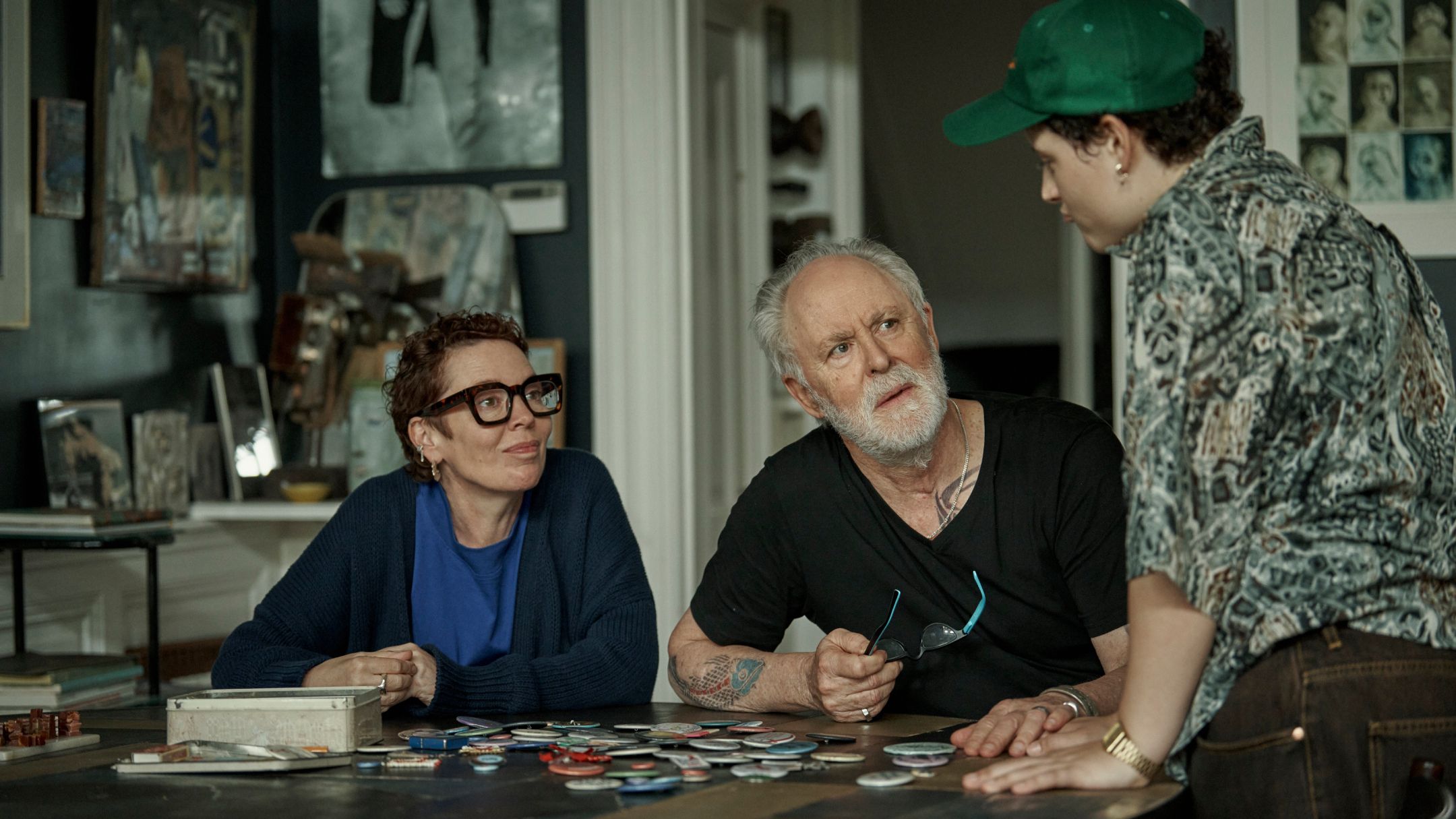
I recently saw Sophie Hyde’s Jimpa, and it’s a really special film. Hyde, who brought us Good Luck to You, Leo Grande, has crafted something truly intimate here. It’s not so much a story being told as it is a family gently working through the legacy of someone they’ve lost, and the complexities of their history. It’s a beautifully layered and deeply personal look at LGBTQ+ relationships and the families surrounding them. Honestly, while it’s incredibly sweet and touching, that sweetness occasionally holds the film back from being truly impactful.
Hannah is a quiet filmmaker currently working on a deeply personal movie about her upbringing. The film explores her father’s journey of coming out as gay and the subsequent divorce of her parents. Her father, Jim, moved to Amsterdam after coming out, seeking a fresh start, which left Hannah and her sister, Emily, feeling abandoned and with many unanswered questions.
After learning her father, Jim, is seriously ill, Hannah decides it’s time to reconnect with him and introduce him to her 16-year-old non-binary child, Frances. Everyone is shocked when Frances suddenly announces they want to move to Amsterdam to live with Jim, who prefers to be called “Jimpa.” The meeting between Frances, Hannah, and her husband, Harry, and Jimpa is chaotic, forcing the family to face their flaws and reconnect with a newfound understanding and tenderness.
The film Jimpa feels deeply personal, drawing heavily from the director’s own life and family. The characters are based on members of her family, including a non-binary teen, Frances, played by the director’s child, Aud Mason-Hyde. The story explores a difficult family history, though presented as fiction. This isn’t the first time the director has addressed this theme; her 2013 film 52 Sundays depicted a teenager coping with a parent’s transition. However, Jimpa is noticeably more gentle and hopeful than the often-challenging 52 Sundays, aiming for a more compassionate approach.
Jimpa is the director’s fourth film to premiere at Sundance, but this one is different. While she’s known for heartwarming stories, this film is strengthened by the performances of Olivia Colman and John Lithgow – both incredibly talented actors. Considering the delicate and challenging themes and the complex characters, Colman and Lithgow deserve praise for their nuanced and sensitive work.
Colman beautifully portrays Hannah as a thoughtful and hesitant character, bringing a crucial emotional depth to the story. excels as Jim, a larger-than-life figure who is both charming and frustrating, sympathetic and aloof, and ultimately tragic. Kate Box shines as Hannah’s sister Emily, providing a welcome dose of realism to a world that is otherwise very open-minded and accepting. It’s difficult to compare newcomer Aud Mason-Hyde to such established actors, but they hold their own, particularly in some important and unsettling scenes, proving they can perform alongside this impressive cast.
Olivia Colman and John Lithgow Bring Their A-Game to a Staid Story
Clocking in at just under two hours, Jimpa thoughtfully explores the complexities of family relationships, particularly the tensions between generations. The film examines how these dynamics are shaped by differing viewpoints and experiences, and how they intersect with LGBTQ+ themes across different eras. Both Jim and Frances identify as queer, but their backgrounds and values are quite different, reflecting the social contexts of their upbringing.
This is a sensitive topic that demands careful attention, empathy, and a subtle understanding. The filmmakers, led by Hyde, clearly possess these qualities, working hard to portray their characters as both relatable and deeply troubled. However, this strong emphasis on compassion sometimes becomes excessive, potentially overshadowing the story itself and leaving the audience feeling overwhelmed.
The final scenes are particularly weighed down by excessive sentimentality, turning what could have been a genuinely moving story about family, finding oneself, and forgiveness into something overly simplistic and predictable. Even earlier in the film, Jimpa occasionally loses its nuance, opting for dramatic, over-the-top emotions that feel clumsy and heavy-handed.
As much as I appreciate films tackling tough subjects, Jimpa feels very much stuck in a specific moment. Look, when you’re dealing with eras of intense prejudice against LGBTQ+ people, sometimes you need to be direct and address things head-on. But honestly, the characters – especially Frances, this teen who’s always online and identifies as non-binary – often use really obvious, trendy language and internet slang. It just felt a little…forced, and it took away from what could have been really genuine and heartfelt conversations about sexuality and figuring out who you are.
Jimpa Says a Lot About LGBTQ History And The Generational Divide – At the Cost of Storytelling
The differences in culture and age between Frances and Jim are particularly noticeable. Jim experienced the changing attitudes towards sex in the 60s and 70s and also lost people he cared about during the AIDS epidemic. Their generational gap is further highlighted by how they use and understand current terms like “queer,” which means different things to them. They also disagree on issues like how people are portrayed, how genders interact, and specifically regarding Frances’ identity as a transgender person and her preferred pronouns.
The film avoids portraying anyone as a villain, instead framing trauma as the central conflict – a familiar approach. However, certain scenes hint at a deeper tension that could have been explored in a more original way, moving beyond typical coming-of-age stories. The movie does a good job of showing the individual weaknesses and imperfections of two people at different points in their lives, and what they’re able – or unable – to resolve with each other.
Hyde’s film, Jimpa, is a deeply personal exploration of inner struggles and past trauma. The film is powerfully cathartic, demonstrating a high level of emotional intelligence and honesty. It delves into the complexities of family conflict across generations, and the often difficult history of a community whose values are constantly evolving.
It’s challenging to paint a complete picture of a group so large and varied, with clear differences in race, nationality, and culture. To be fair to Hyde and her family’s unique Australian viewpoint and experiences, the book Jimpa truly shines when it focuses on the personal, individual joys and struggles of Hannah and her family.
The film taps into the painful realities of family tension and unresolved hurt. While it hints at deep emotional issues, Jimpa avoids fully exploring the difficult, but important, parts of family conflict. The main character, Hannah, is driven by her fear of confrontation, which explains why she’s stayed away from her father and avoided revisiting past pain. Both Jim and Frances make questionable choices that could have led to significant character growth and dramatic moments, but the film doesn’t pursue these opportunities.
Jimpa Is a Story of Family Conflict – With Less Emphasis On Conflict
As someone who loves a compelling story, I always say conflict is everything. Without it, you just have events happening one after another, and it feels…empty. That’s what really disappointed me about Jimpa. It’s a fascinatingly self-aware film, though. The main character, Hannah, is essentially making a movie within the movie – a film about a woman dealing with her parents’ divorce after her father comes out. What makes it even more impactful is that Hannah is drawing so heavily from her own life and her relationship with her father. It’s incredibly personal and adds a layer of depth, even if the overall story felt a little flat.
As a movie fan, I get what the director was going for – wanting us to be understanding of these flawed characters, especially since the story feels so personal. But honestly, it’s tough! For those of us just watching the film, it’s hard to be that forgiving, and they end up feeling more annoying than relatable. I wish it had been easier to connect with them, but their frustrating choices really got under my skin.
Despite some weaknesses in its story, Jimpa is visually stunning, with beautiful cinematography and editing. Combined with Nick Ward’s moving soundtrack, the film feels like a rich, evocative experience. Every shot is filled with a gentle sweetness that effectively conveys the tenderness the director aimed for with her characters and their difficult journeys. Even during the film’s sad, yet predictable ending, the cinematography by Matthew Chuang remains consistently beautiful, showcasing the bittersweet beauty of locations like Adelaide, Helsinki, and Amsterdam, and concluding with a gentle farewell accompanied by the song “I Know a Place.”
At almost two hours long and with very little breathing room, the film Jimpa feels overly long, cumbersome, and cloyingly sentimental. If the director had been willing to shorten it, lessen the intensity of the difficult moments, and find a better balance between emotional scenes, quiet moments, and peacefulness, Jimpa could have been a much more effective film.
Honestly, watching this felt draining. It was just so over-the-top and explained everything to you, leaving no room to just feel anything. And while I appreciate the positive message about sexuality and queer representation, it felt like it smoothed over any real tension or complexity. I think the story would have been so much more powerful if it had embraced a little darkness and left some things open to interpretation – a bit of a bite, you know?
Jimpa will be in theaters February 6, 2026.
Read More
- Why is Tech Jacket gender-swapped in Invincible season 4 and who voices her?
- Welcome to Demon School! Iruma-kun season 4 release schedule: When are new episodes on Crunchyroll?
- Sydney Sweeney’s The Housemaid 2 Sets Streaming Release Date
- Highly Anticipated Strategy RPG Finally Sets Release Date (And It’s Soon)
- The Super Mario Galaxy Movie: 50 Easter Eggs, References & Major Cameos Explained
- Dune 3 Gets the Huge Update Fans Have Been Waiting For
- TV legend Carol Kirkwood reveals the reasons why she decided to retire after 28 years with BBC
- Who Wants to Be a Millionaire? confirms contestant wins full £1 million prize pot on Jeremy Clarkson quiz
- How Blake Lively & Ryan Reynolds’ Kids Pranked Her on April Fool’s Day
- Sesame Street Slams “Disgusting” Posts on Elmo’s Account After Hack
2026-02-04 06:38