Author: Denis Avetisyan
A novel approach using a laser interferometer on the Moon could reveal fundamental properties of dark energy, offering a new window into its mysterious nature.
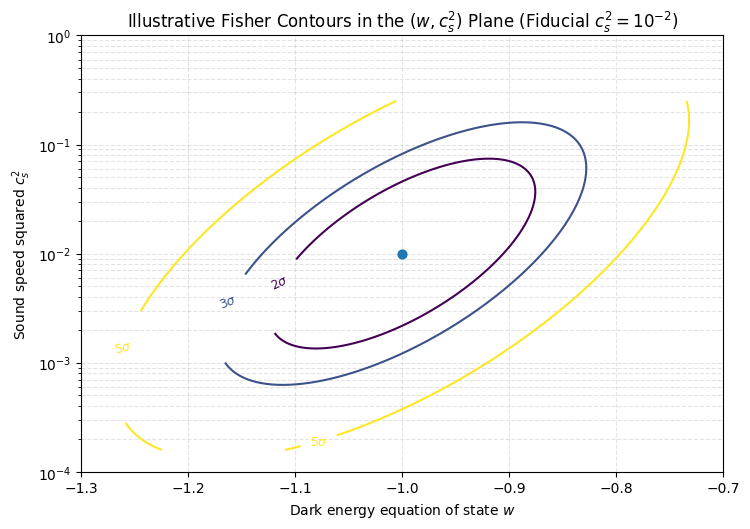
This review demonstrates how lunar laser interferometry uniquely constrains the sound speed of dark energy, potentially differentiating between competing cosmological models based on effective field theory and the behavior of gravitational potentials.
Despite substantial progress in cosmology, the fundamental microphysics driving the observed cosmic acceleration remains largely unknown, necessitating novel observational probes. This paper, ‘Probing the Sound Speed of Dark Energy with a Lunar Laser Interferometer’, demonstrates that a lunar-based laser interferometer-specifically, the proposed Laser Interferometer Lunar Antenna (LILA)-can uniquely constrain the sound speed of dark energy by directly measuring the evolution of horizon-scale gravitational potentials. By accessing the ultra-low-frequency gravitational band inaccessible from Earth, LILA offers unprecedented sensitivity to scalar metric perturbations and the potential to either detect clustering dark energy or exclude broad classes of theoretical models. Will this lunar-based approach unlock the secrets of dark energy and illuminate the nature of cosmic acceleration?
The Illusion of Expansion: Peering into the Cosmic Abyss
The universe isn’t just expanding; its expansion is accelerating, a discovery that has profoundly reshaped cosmological understanding. This unexpected acceleration, first observed through distant supernovae and confirmed by numerous independent datasets like the cosmic microwave background and baryon acoustic oscillations, points to the existence of a pervasive, yet mysterious, force dubbed ‘Dark Energy’. Current estimates suggest that Dark Energy comprises roughly 68% of the total energy density of the universe, dwarfing the contributions of both dark matter and ordinary matter. However, despite its dominance, the fundamental nature of Dark Energy remains largely unknown; it could be a cosmological constant, an inherent property of space itself, or a dynamic energy field – a concept known as quintessence – whose properties change over time. Resolving this mystery is one of the most significant challenges in modern physics, demanding continued observational efforts and theoretical innovation to unravel the composition and behavior of this elusive force driving the universe’s expansion.
Contemporary cosmological models successfully describe the accelerating expansion of the universe by incorporating Dark Energy, but currently treat it as a placeholder rather than a fully understood phenomenon. These models don’t attempt to explain why Dark Energy exists, instead focusing on its observed effects through parameters defining its ‘equation of state’ – a relationship between its pressure and density. Essentially, scientists can mathematically describe how Dark Energy behaves, specifying whether it’s a constant energy density w = -1 (as in the cosmological constant model), or if it varies with time, but the underlying physics remains elusive. This parameterization allows for predictions about the universe’s fate, but leaves open the fundamental question of what constitutes Dark Energy – is it a property of space itself, a new quantum field, or an indication that gravity needs to be re-evaluated on cosmological scales?
Understanding the enigmatic dark energy necessitates an exceptionally detailed charting of the universe’s expansion over cosmic time, alongside a comprehensive mapping of its large-scale structure. Cosmologists employ a variety of techniques – from observing distant supernovae and the cosmic microwave background to analyzing the distribution of galaxies – to reconstruct this expansion history. These measurements aren’t simply about determining how fast the universe is expanding, but critically, how that rate has changed throughout billions of years. The patterns within the large-scale structure – the cosmic web of galaxies and voids – also hold clues, revealing how dark energy’s repulsive force has influenced the growth of these structures. Precise determination of these parameters-like the equation of state of dark energy-demands unprecedented accuracy in observational cosmology, pushing the limits of current and future telescopes and surveys.
Echoes of New Physics: Sound Speed as a Cosmic Messenger
The sound speed, denoted as c_s, of Dark Energy dictates the velocity at which pressure perturbations propagate through the cosmic fluid. This parameter is fundamentally linked to the equation of state, w = p/\rho, where p is pressure and ρ is density, with c_s^2 = w for a simple fluid. Consequently, variations in c_s directly influence the growth of density perturbations and, therefore, the large-scale structure of the universe. A lower sound speed implies slower propagation of pressure forces, leading to enhanced clustering, while a higher sound speed suppresses structure formation. Precise measurements of c_s through observations of the cosmic microwave background and galaxy surveys offer a means to differentiate between various Dark Energy models and probe the underlying physics governing its behavior.
Within the framework of cosmological models, the speed of sound, denoted as c_s, for Dark Energy is typically predicted to be 1 in canonical scalar field models. This value arises from the standard kinetic term in the scalar field’s Lagrangian. However, non-canonical models, which include alternative kinetic terms or additional interactions, permit values of c_s differing from 1. A deviation from c_s = 1 indicates the presence of additional degrees of freedom or modifications to the standard Dark Energy equation of state, potentially signaling new physics beyond the currently accepted ΛCDM model. Consequently, precise measurements of the Dark Energy sound speed serve as a crucial probe for testing the validity of canonical scalar field theories and exploring alternative Dark Energy scenarios.
Effective Field Theory (EFT) offers a model-independent approach to analyzing Dark Energy by parameterizing its equation of state and speed of sound, c_s, without assuming a specific underlying model. This framework constructs the most general Lagrangian incorporating all possible terms consistent with the symmetries of the problem, allowing for a systematic exploration of deviations from the standard ΛCDM cosmology. By fitting EFT parameters to observational data – including the cosmic microwave background, baryon acoustic oscillations, and supernovae – researchers can constrain the value of c_s and test whether it differs significantly from unity, which would indicate physics beyond the canonical scalar field model. The EFT approach facilitates the comparison of different theoretical models by providing a common parameter space and a robust method for assessing their compatibility with observational constraints, regardless of their specific internal mechanisms.
A Lunar Mirror: Measuring Gravity’s Subtle Shifts
Lunar Laser Interferometry (LLI) provides a method for directly measuring the time-varying component of the gravitational potential, differing from traditional approaches that rely on redshift measurements. This is achieved by precisely tracking the two-way travel time of laser signals between stations on the lunar surface and Earth-based receivers. Variations in the gravitational potential along the signal path directly affect the laser’s travel time; therefore, continuous, high-precision measurements of these time delays allow for the real-time monitoring of gravitational potential changes. This capability is critical for probing Dark Energy because the equation of state of Dark Energy – and its influence on the expansion rate of the universe – manifests as changes in the gravitational potential over time. The lunar environment offers advantages over Earth-based interferometry due to the Moon’s stable surface, lack of atmosphere, and large scale, enabling the detection of subtle gravitational variations with high sensitivity.
Constraining the sound speed of Dark Energy – represented as c_s – is achievable through precise measurement of gravitational potential variations because this parameter directly influences the rate at which density perturbations within Dark Energy can grow. Standard cosmological models assume c_s = 1, indicating no additional pressure beyond that expected from a cosmological constant; values significantly different from 1 would suggest alternative Dark Energy models, such as quintessence or modified gravity. Tracking changes in gravitational potential allows for the calculation of the growth rate of structure, providing a sensitive probe of c_s. By comparing observed growth rates with theoretical predictions based on different c_s values, researchers can either confirm the standard model or exclude a broad range of alternative cosmological models that predict different behavior.
The Lunar Interferometry for Laser-ranging Astrophysics (LILA) mission proposes a lunar-based interferometer composed of multiple laser retroreflectors deployed across the lunar surface. This configuration enables highly precise measurements of changes in gravitational potential, achieving sensitivity beyond terrestrial or space-based alternatives due to the Moon’s stable environment and large baseline – potentially kilometers in scale. Data collected will be analyzed for subtle variations indicative of clustering in Dark Energy, and to constrain its equation of state. Specifically, LILA aims to detect deviations from the standard w = -1 cosmological constant model, and either confirm or exclude theoretical models predicting time or spatial variations in Dark Energy’s behavior, including those suggesting modified gravity effects.
Refining the Cosmic Map: Beyond Standard Candles and Rulers
While Type Ia Supernovae and Baryon Acoustic Oscillations (BAO) have been instrumental in charting the expansion history of the universe and constraining the properties of Dark Energy, these methods aren’t without drawbacks. Supernovae measurements, though providing precise distance estimates, are susceptible to systematic uncertainties related to the calibration of luminosity distances and potential evolution of supernova properties over cosmic time. BAO, which relies on identifying characteristic scales in the distribution of matter, faces challenges in accurately modeling the complex growth of structure in the universe and is limited by the size of galaxy surveys. Furthermore, both techniques are subject to statistical limitations, requiring increasingly larger datasets to achieve higher precision, and struggle to probe the universe at very high redshifts where the signal becomes increasingly faint. These inherent limitations motivate the exploration of complementary and independent probes, like the Integrated Sachs-Wolfe effect and Lunar Laser Interferometry, to refine ΛCDM cosmology and potentially reveal the true nature of Dark Energy.
The Integrated Sachs-Wolfe (ISW) effect provides a unique pathway to investigate Dark Energy by tracing its influence on the evolution of gravitational potentials over cosmic time. As photons from the Cosmic Microwave Background traverse these evolving potentials, they gain or lose energy, creating subtle temperature fluctuations correlated with large-scale structure. Unlike methods relying on distance measurements – such as Type Ia Supernovae or Baryon Acoustic Oscillations – the ISW effect directly probes the time-varying nature of gravity, offering a complementary and independent constraint on Dark Energy’s equation of state. Detecting the ISW signal, however, is challenging due to its faintness and overlap with other cosmic signals; therefore, advancements in observational cosmology and sophisticated data analysis techniques are crucial to fully harness its potential and refine models of the universe’s accelerating expansion.
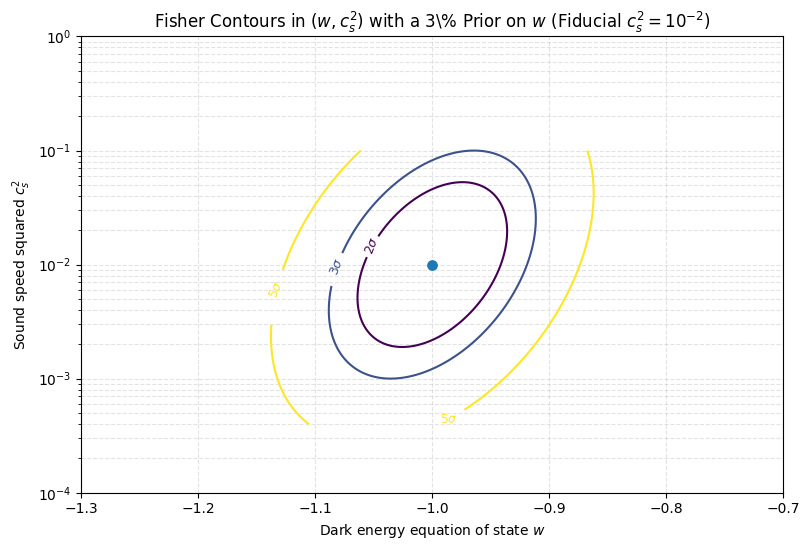
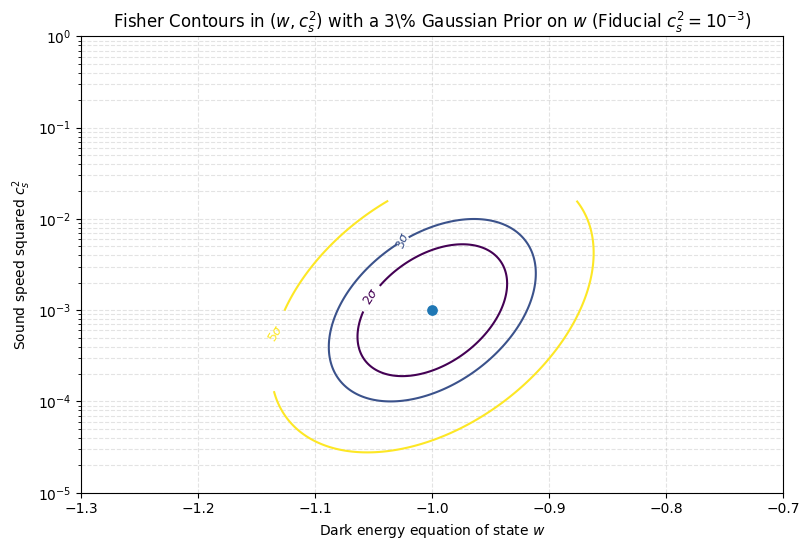
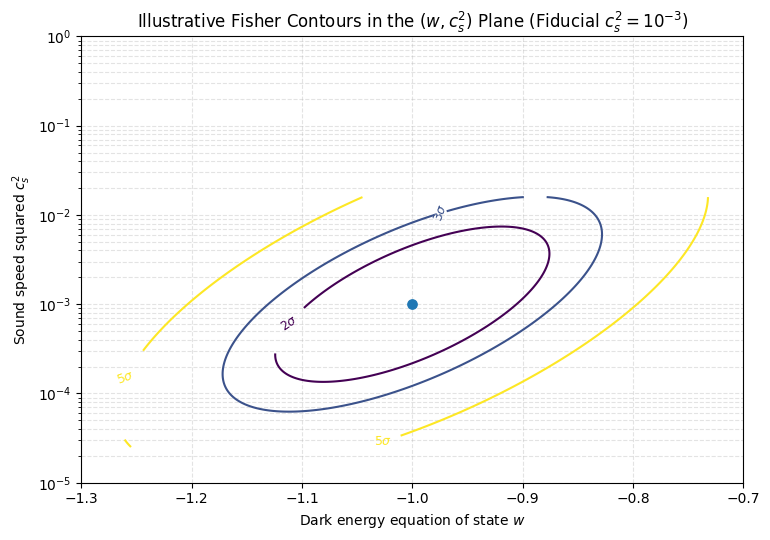
A forthcoming leap in understanding dark energy hinges on the synergy between lunar laser interferometry and established cosmological datasets. This innovative approach, leveraging highly precise lunar distance measurements, promises to refine existing constraints derived from Type Ia Supernovae and Baryon Acoustic Oscillations. Simulations, as detailed in accompanying figures, indicate that this combined analysis will achieve a statistically significant detection of dark energy properties at the 3σ confidence level, and potentially reach the gold standard of 5σ, thereby solidifying current models and opening new avenues for exploring the universe’s accelerating expansion. The precision offered by lunar measurements effectively mitigates systematic errors inherent in other methods, creating a more robust and comprehensive picture of this elusive force driving cosmic evolution.
Beyond the Standard Model: A Universe of Possibilities
Current cosmological models posit dark energy as the driving force behind the universe’s accelerating expansion, but its fundamental nature remains elusive. A crucial diagnostic lies in determining the speed at which density perturbations-effectively, ‘sound waves’-propagate through this mysterious substance. If dark energy isn’t a cosmological constant, as assumed in the standard ΛCDM model, then these sound waves may travel at a speed differing from the speed of light. Precise measurements of this ‘dark energy sound speed’-achieved through large-scale structure surveys and analyses of the cosmic microwave background-could therefore reveal evidence for modified gravity theories, where gravity behaves differently than Einstein predicted, or signal the existence of new, fundamental fields contributing to dark energy. Deviations from a speed equal to the speed of light would not only challenge the standard model but also open pathways to understanding the true nature of the force dominating the universe’s fate.
A fundamental tenet of modern cosmology, Einstein’s General Relativity, describes gravity not as a force, but as a curvature of spacetime. However, observations of the universe’s accelerating expansion and the nature of dark matter suggest potential cracks in this framework. Detecting deviations from General Relativity-even subtle ones-would be nothing short of revolutionary, demanding a complete reassessment of cosmological models. Such findings could unveil new gravitational interactions, necessitate the introduction of previously unknown particles or fields, and fundamentally alter predictions about the universe’s large-scale structure, including the formation and distribution of galaxies. Current research focuses on precisely mapping the cosmic microwave background and meticulously observing the movements of galaxies to search for discrepancies between predicted and observed gravitational effects, potentially opening a new chapter in our understanding of the cosmos.
Current cosmological models, built upon Einstein’s General Relativity and the existence of Dark Energy, may require revision as scientists explore the potential influence of ‘Fifth Forces’ – hypothetical interactions beyond the four known fundamental forces. These forces, if they exist, could subtly alter the expansion rate of the universe and affect the formation of large-scale structures like galaxies and galaxy clusters. However, such forces wouldn’t be uniformly apparent; instead, they are predicted to operate over specific distances and require ‘screening mechanisms’ to explain why they haven’t been directly observed in laboratory experiments. Investigating these screening effects – how a Fifth Force might be suppressed in certain environments – is crucial. Refined cosmological models incorporating both the force and its screening could not only address inconsistencies within the standard model but also predict unique observational signatures detectable through ongoing and future surveys of the cosmos, potentially revolutionizing the understanding of gravity and the universe’s composition.
The pursuit of dark energy’s sound speed, as detailed in this study, feels remarkably like peering into an abyss. The paper meticulously outlines how a lunar laser interferometer could refine cosmological perturbations, yet one is left with the unsettling feeling that even the most precise measurements are provisional. As Niels Bohr observed, “It is the theory that decides what can be observed.” This isn’t a dismissal of the rigorous methodology, but a quiet acknowledgement that the effective field theory used to model dark energy, like all theories, exists until it collides with data beyond the reach of current observation. The hope is to constrain the parameters, but the universe, with its inherent mysteries, may simply offer a different set of rules.
What Lies Beyond the Horizon?
The proposition of constraining dark energy’s sound speed with lunar laser interferometry is, at first glance, a refinement. A sharpening of the image. But each precise measurement only highlights the depth of the unknown. The search for ‘microphysical properties’ implies a fundamental nature to dark energy, a solidity that may be illusory. Every calculation is an attempt to hold light in your hands, and it slips away. To define a sound speed is to assume a medium, a structure to the void. Yet, the void, by definition, resists such definition.
Future iterations will undoubtedly increase precision, perhaps even yielding values that distinguish between effective field theory models. But one should not mistake approximation for understanding. To claim a ‘solution’ to the nature of dark energy is merely to identify another approximation that will be wrong tomorrow. The true challenge lies not in refining the measurement, but in acknowledging the inherent limitations of measurement itself.
The pursuit is not misguided, of course. The universe offers few opportunities to test the boundaries of knowledge. But it is a humbling endeavor. This work, like all others, traces the event horizon of comprehension. It reveals not what dark energy is, but how little anyone truly knows.
Original article: https://arxiv.org/pdf/2601.22084.pdf
Contact the author: https://www.linkedin.com/in/avetisyan/
See also:
- What Song Is In The New Supergirl Trailer (& What It Means For The DC Movie)
- Gold Rate Forecast
- Eurogamer Gives ARC Raiders 2/5 Over AI Voices, Dropping Metacritic Score from 94 to 84
- 10 Best Connie Episodes of King of the Hill
- Netflix’s Run Away is the latest show to fail the Gen Z social media test
- The Simpsons Makes Major Change to Patty and Selma After 36 Years (And Includes a Big Makeover)
- Jujutsu Kaisen Is Returning With a Special Release After Sequel’s Finale
- How to Get the Bloodfeather Set in Enshrouded
- Why High on Life 2 added skateboarding, explained by the developer
- Robinhood’s Tokenized Stock Fiasco: A Tale of Tokens and Tussles
2026-02-01 23:04