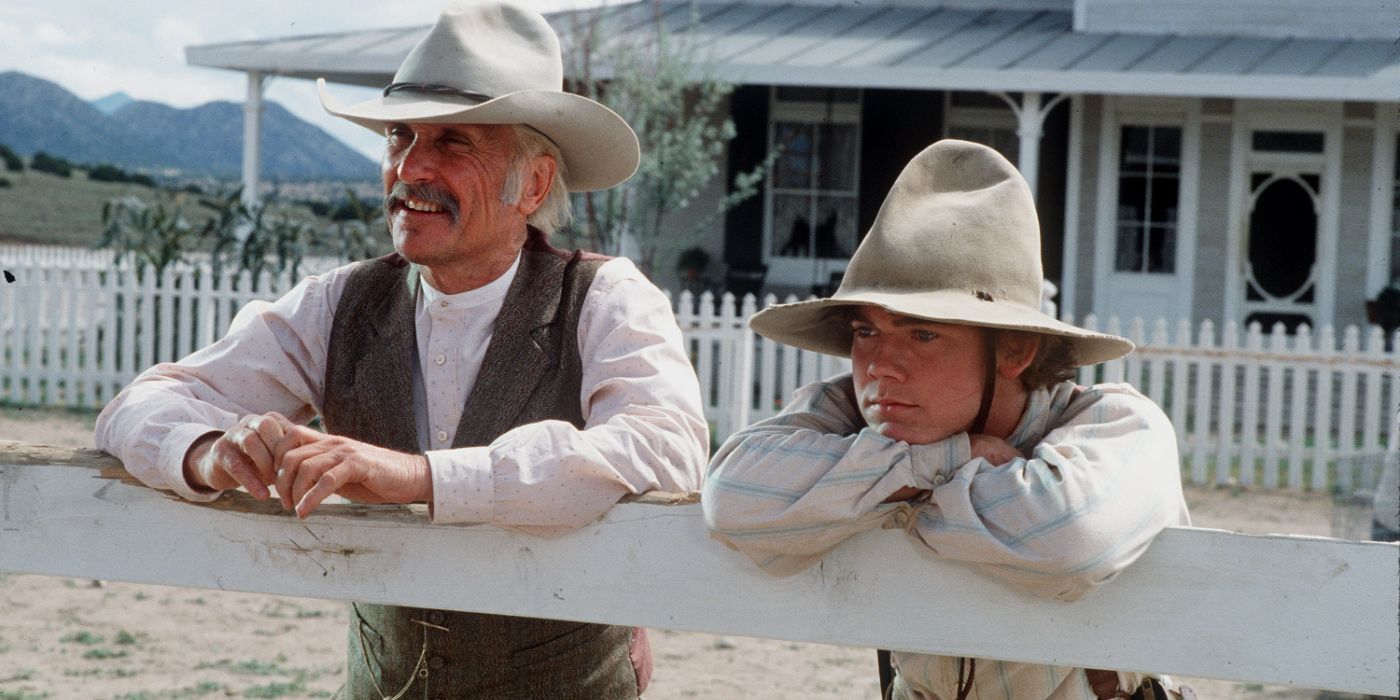
Following the recent death of Robert Duvall, many people are revisiting his most iconic performances in movies, television, and on stage. The Oscar-winning actor appeared in countless classic films, including Apocalypse Now and Open Range, but he’s perhaps most famous for playing Tom Hagen in The Godfather. While fans have many great roles to choose from, they seem to be especially remembering Duvall’s performance in the miniseries Lonesome Dove as a tribute to his life and work.
Starring Robert Duvall and Tommy Lee Jones, Lonesome Dove is based on Larry McMurtry’s novel of the same name. Beyond the outstanding acting, it’s considered a landmark Western series that greatly influenced many of the popular Westerns we enjoy today.
Lonesome Dove Was One of Robert Duvall’s Favorite Projects
The four-part series, directed by Simon Wincer, follows Call and Gus as they leave their home in Lonesome Dove, Texas, embarking on a journey north to Montana. They aim to drive cattle and establish a ranch, and during the trip, they reflect on their past, confront their current errors, and contemplate what the future holds in the vast landscapes of the American West.
I’ve always been amazed by Robert Duvall’s performance as Gus McCrae in Lonesome Dove. It clearly meant so much to him – he’s even said it was his favorite role, ever! He talked about the character years after the show ended, sharing his thoughts with Lee Habeeb on Our American Stories, and you could really feel how much of a lasting impact Gus had on him.
He believes a story as impactful as Lonesome Dove won’t come along again for a very long time – perhaps not for a century. He feels comfortable sticking with characters like Augustus McCrae, comparing himself to an actor specializing in roles similar to Hamlet or King Lear. McCrae, he explains, is a kind of modern knight – a rugged, 19th-century hero on horseback who embodies classic virtues like courage, romance, and a zest for life. He sees McCrae as a deeply relatable figure, especially within American and Texan culture.
In 2021, the actual Texas Rangers honored actor Robert Duvall by making him an honorary board member of the Texas Ranger Hall of Fame and Museum, celebrating his iconic performance over three decades prior. Today, Lonesome Dove continues to captivate audiences and is frequently among the most-watched shows on TV.
According to FlixPatrol, viewership of the 1989 miniseries Lonesome Dove significantly increased on February 15th. It recently reached number one on Apple TV’s Top 10 list in the US and Canada on February 17th, before moving to second place by February 20th. It is currently ranked at number 3.
Lonesome Dove Influenced Modern Western TV
When Lonesome Dove first aired in 1989, it arrived at a time when Westerns were losing their grip on audiences. The genre had once been incredibly popular, with shows like Gunsmoke and Maverick drawing large crowds, but it was being replaced by newer types of shows like modern dramas and crime investigations. Westerns were considered a thing of the past, and most television producers were hesitant to try and revive them.
The show’s success wasn’t just due to its large scope, but also how it handled the Western genre. Many Westerns at the time were structured as individual episodes with self-contained stories—a ‘case-of-the-week’ format. However, Lonesome Dove stood out with its six-hour length, allowing for deeper character development and a more complex storyline than was typical for the genre at that time.
The characters stood out from typical Western heroes. Gus and Call weren’t the flawless, larger-than-life figures often seen in the genre; they were ordinary men, each searching for meaning in their lives. While they were fundamentally good people, their capacity for violence didn’t automatically make them virtuous.
The show stood out for its time – in 1989, it was rare to see villains as truly nasty, like the abusive soldiers, or to portray Native American characters with depth and complexity. These elements weren’t common on television back then, and are more frequently seen today.
Lonesome Dove is a grand, character-focused story that felt revolutionary when it first aired. It proved incredibly popular and paved the way for many similar shows that came after. Now, with shows like the Taylorverse gaining traction, Lonesome Dove remains a well-known and influential story.
I’ve been watching Yellowstone, and it really reminds me of Lonesome Dove. The Duttons are constantly making tough choices just to survive, and even when they do things I don’t agree with, I find myself understanding why. It’s a lot like the characters in Lonesome Dove – especially Call, who always put duty and loyalty first, even when it was hard. What’s interesting is that in both shows, the ‘good guys’ aren’t always nice, and even the ‘bad guys’ usually have reasons for what they do. It makes everything feel much more real and complex.
Many viewers see 1883 as a tribute to the classic Western Lonesome Dove, and the show’s creator, Taylor Sheridan, has acknowledged its influence. Both stories follow characters traveling through dangerous territory towards Montana, hoping to build new lives. They realistically portray the hardships of the American West – including hunger, fatigue, and threats from both people and the environment – and emphasize the sacrifices and consequences of such journeys over simple adventure.
Westerns, including earlier shows like Deadwood, often tackle similar ideas. The Abandons highlights the difficult and violent lives of settlers trying to build a new life and claim land. Deadwood portrays a comparable struggle, showing how people in a mining town faced murder and corruption simply to survive.
While these shows aren’t straight imitations of Lonesome Dove, they each tell a complete, lengthy story. They all focus on characters and realistically portray the challenges and triumphs of life in the West, both in the past and present. Wincer’s series deserves recognition for evolving from episodic adventures into more complex narratives without losing the core elements that make Westerns so appealing.
Found an error? Send it so it can be corrected.
Read More
- What Song Is In The New Supergirl Trailer (& What It Means For The DC Movie)
- Eurogamer Gives ARC Raiders 2/5 Over AI Voices, Dropping Metacritic Score from 94 to 84
- Gold Rate Forecast
- Global Easing Boils Over – So Why Is Bitcoin Still Playing Hard to Get?
- 10 Best Connie Episodes of King of the Hill
- Bitcoin Plummets: Will It Ever Recover? 🚀💥
- Lost Soul Aside Gets New Update With Gameplay Optimisations, Performance Improvements
- Demon Slayer Star Reacts to Infinity Castle Movie Return for Surprising Role
- Crypto Chaos: 6 Events This Week That Could Send Bitcoin and XRP into a Tailspin!
- Spider-Man 4 Rumor Roundup Reveals Sadie Sink’s Role With Power Change & More
2026-02-21 21:37