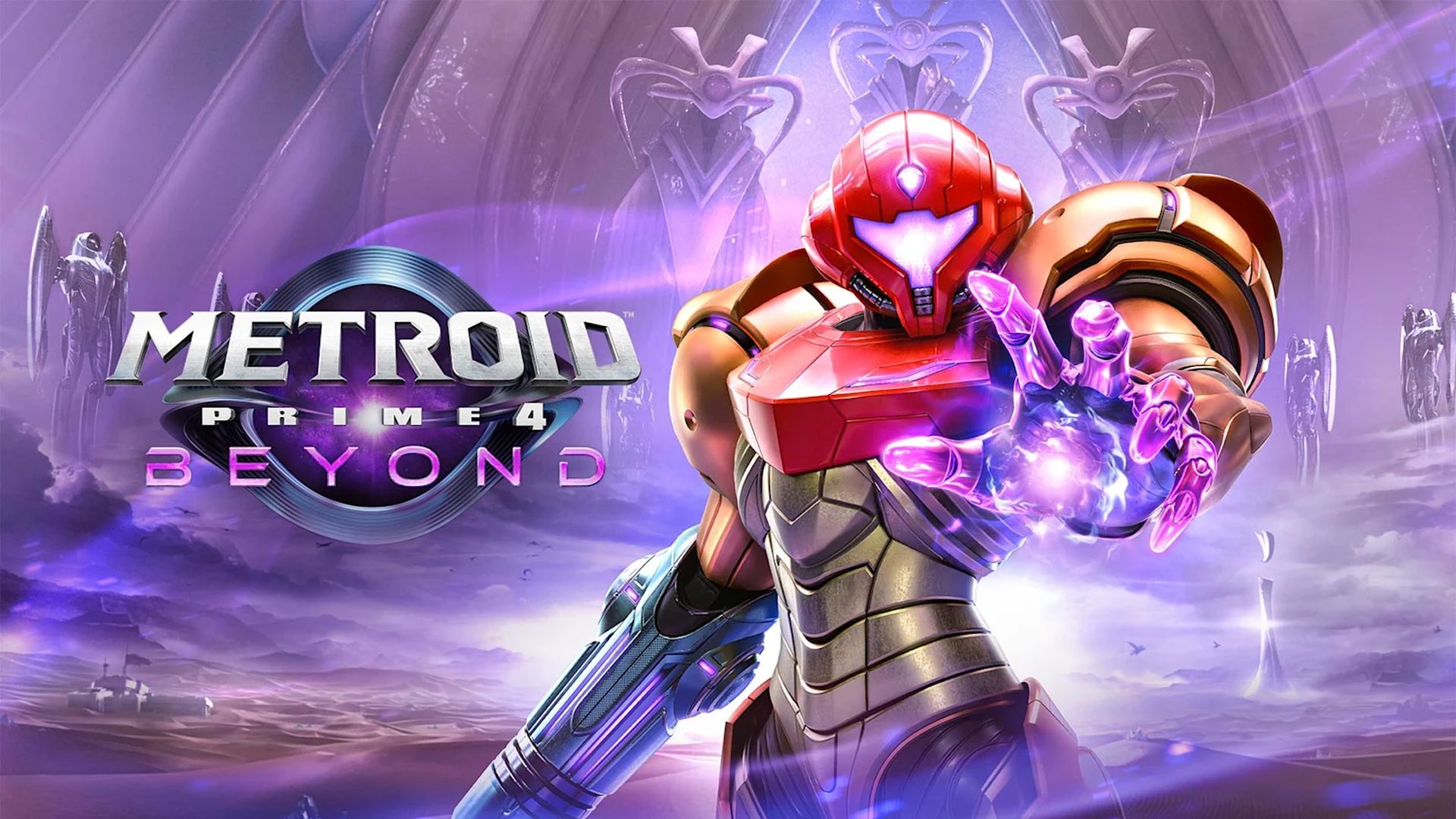
Having always considered the original Metroid Prime a near-perfect masterpiece, it’s disappointing to say that Metroid Prime 4: Beyond doesn’t quite live up to expectations.
It’s not surprising the game took so long to finish. Originally announced in 2017, development was completely restarted in 2019 with a new team – the creators of the original series. After that, it spent another six years in production, which included navigating a pandemic and the release of new gaming consoles. Such a lengthy and complex development process was bound to have an impact on the final game.
This really shows up in the finished game. Metroid Prime 4 is surprisingly confusing because it both sticks too closely to the original game’s formula, ignoring over two decades of improvements in game design, and doesn’t quite feel enough like a true Metroid Prime experience. It feels both overly familiar and strangely distant from the original, and ultimately, this holds the game back, leading to frustration.
Retro Studios made a smart choice by making sure the game ran smoothly at 60 frames per second, even on the Switch. This foundation will allow them to enhance the game even more on the newer Switch 2 console.
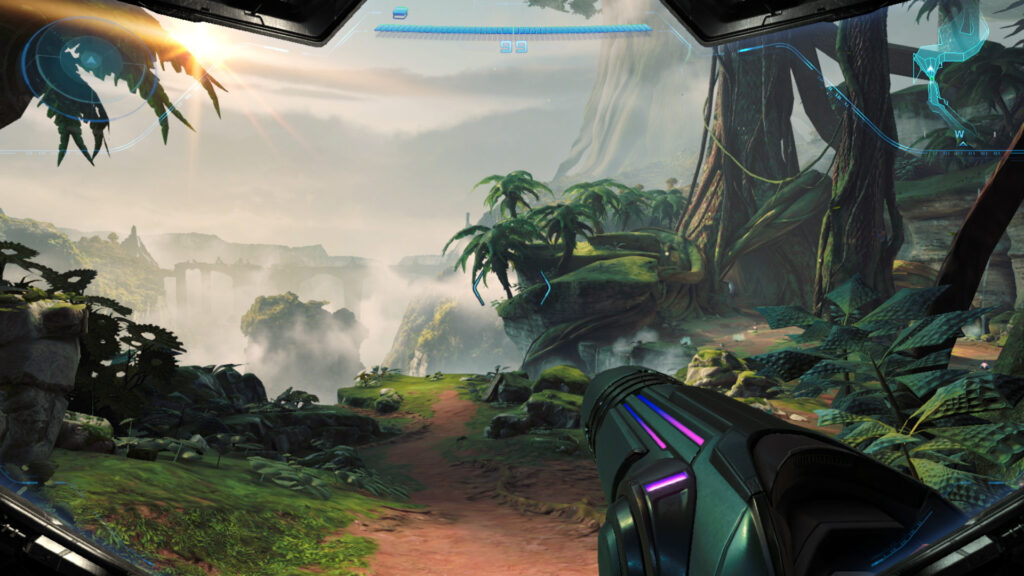
It’s frustrating because, truthfully, this game excels in many areas. It’s essentially the impressive technical demonstration that Nintendo fans have been hoping for. The game is visually stunning, a result of Retro Studios skillfully combining available technology with strong art design and style. I played it on the Switch 2, where it ran at a remarkably smooth 4K resolution at 60 frames per second, or at 1080p with an incredibly fast 120 fps.
The game’s success is largely due to being initially designed for the original Switch. Retro Studios wisely focused on achieving a smooth 60 frames per second on that console, which gave them extra room to improve the graphics and performance on the Switch 2. However, the game’s origins are sometimes noticeable – particularly in the simple geometry and occasionally sparse environments, like the desert area, which can look less polished compared to other parts of the game.
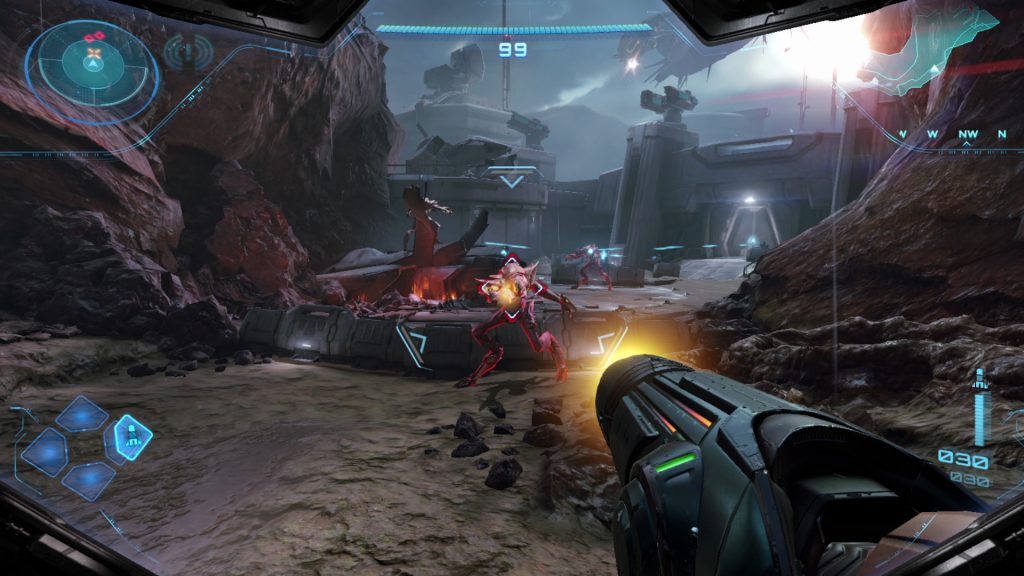
Overall, the game’s beautiful art style effectively hides any technical flaws it might have. This is expected – the Metroid Prime series has always been visually impressive, and Prime 4 Beyond continues that tradition. The game also enhances the immersive experience with stunning details; for example, firing your arm cannon in a dark area causes light to reflect off Samus’ visor, creating a realistic effect.
Raindrops slide down the visor of Samus’s suit, and steam clouds her vision. Metroid Prime 4 does an incredible job of making you feel like you’re inside the suit with her, experiencing the game from her perspective and completely immersing you in her world.
As I mentioned earlier, the main issue lies in the overall experience when you’re not focused on key moments. Let’s start by discussing the first major problem: the level design.
The game also shines with its variety of control options. You can choose between traditional dual analog sticks, motion controls with gyro assist, or a unique new system using the Joy-Con as a mouse. The dual analog and gyro controls feel fantastic, just like in last year’s Metroid Prime Remastered. But the real standout is the Joy-Con mouse control – it’s incredibly smooth and easy to use. You can instantly switch to this mode by simply turning a Joy-Con sideways, making it a seamless experience.
The mouse controls are excellent and really highlight a Switch 2 feature that hasn’t gotten much attention since the console launched earlier this year. They make the gameplay feel much quicker and more responsive, letting you move, dodge, and aim with greater freedom and immediacy.
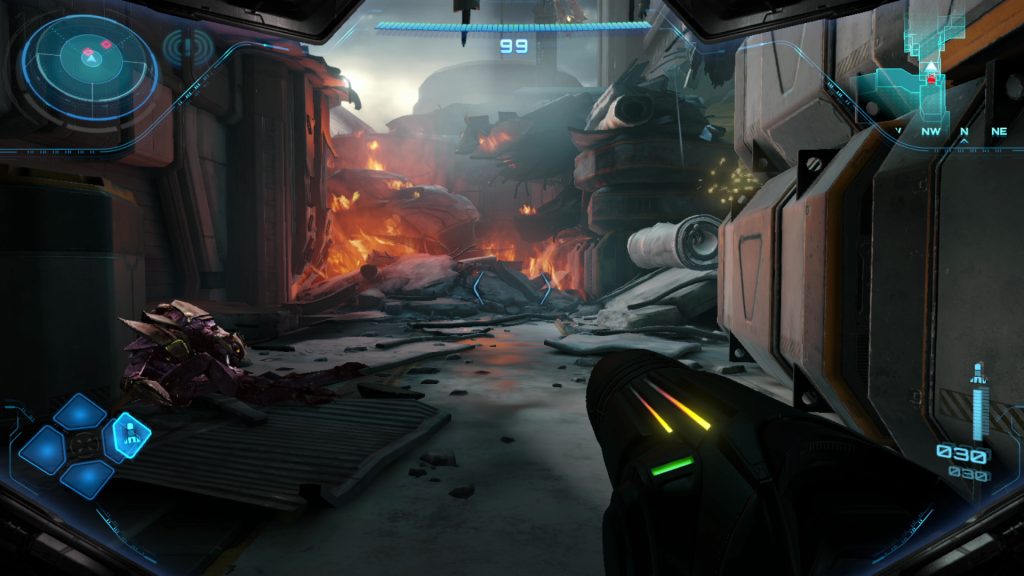
As I mentioned earlier, the main issue lies in the overall gameplay experience outside of specific moments. Let’s start with the level design, which is a significant problem. Compared to the original Metroid Prime, the levels here are much more straightforward and linear. They guide you directly through the environments without the sprawling, maze-like exploration that made the original so memorable.
One of the problems with the game is its structure. It’s designed like classic Zelda games, with a central area connecting to different environments, each with a main “dungeon” to complete and unlock progress. This approach limits the expansive world and detailed design seen in Metroid Prime. However, even within this structure, the game could have been much improved. Metroid Prime 2: Echoes also divided its world into three separate areas, but each of those areas was far better designed than most of the regions in this game.
I understand why Retro designed the game this way – it makes it easier for new or intimidated players – but I wish they’d executed it more effectively. While I don’t fault their intention, the implementation could have been much better.
The level design here is not bad. It’s fine. It’s good a lot of the times. But it rarely, if ever, becomes more than that. You can even be playing through the game and enjoying a lot of it, but no part of it sticks with you like the Phendrana Drifts in the original Metroid Prime.
I often find the constant presence of companions and their chatter annoying in the game. While it’s not as bad as I expected – you usually only have a talkative companion for a short while after rescuing them, and they only offer occasional hints – even a little bit of it bothers me. Especially in Prime, where the focus is on feeling alone and immersed in the environment, having a character constantly pointing out puzzles or things to examine really breaks the atmosphere.
“Prime 4 is not that bad, but the presence of this at all is a problem.”
A common criticism of recent Sony games is that characters immediately tell you what to do when you enter a new area, preventing you from exploring and discovering things on your own. Metroid Prime 4 isn’t as guilty of this, but it still happens occasionally, and that’s a concern.
I get why developers want to help players who are stuck, and I’m not against the idea of assistance features. However, like with other games that have implemented similar things, I wish there was a way to disable it. At the very least, it would be great to have the option to avoid unnecessary NPC dialogue, allowing me to solve puzzles on my own and only seek hints when I truly need them. Naughty Dog figured this out a long time ago with games like Uncharted and The Last of Us, so it’s frustrating to see other developers keep making the same mistake.
Honestly, one of the best parts of this game is definitely the sound. It’s not really a shock though, because the Prime games always have amazing music, especially those cool ambient tracks that really set the mood. This one lives up to that standard for sure!
The game’s sound design is excellent and really enhances the immersive experience. The overall presentation – both visually and aurally – does a fantastic job of capturing the feel of a modern Metroid Prime. It’s disappointing, then, that the game’s core design doesn’t quite live up to these high standards.
It’s been almost 20 years since the last Prime game, and game design has changed a lot since then. However, Prime 4 doesn’t seem to reflect those changes much at all.
Despite its flaws, the game actually does a lot of things well, which prevents it from being a complete failure. There are many great aspects to Prime 4, but it’s incredibly frustrating that it also misses the mark in so many other areas.
It’s been almost 20 years since the last Metroid Prime game, and game design has changed a lot since then. However, Prime 4 doesn’t seem to reflect those changes. Honestly, even just more Metroid Prime would have been welcome – I’m a big fan! But it needed to be good, and unfortunately, Prime 4 often falls short, especially in key areas like level design and how you move around.
I believe this game’s issues stem from its difficult development process. I’m hoping the developers, Retro, will have a chance to make a sequel, one that’s clearer, more focused, and better aligned with its original ideas. For now, though, Prime 4 is all we have, and unfortunately, it’s the weakest of the four main Prime games.
This game was reviewed on the Nintendo Switch 2.
Read More
- The Super Mario Galaxy Movie: 50 Easter Eggs, References & Major Cameos Explained
- 10 Best Free Games on Steam in 2026, Ranked
- Sydney Sweeney’s The Housemaid 2 Sets Streaming Release Date
- Why is Tech Jacket gender-swapped in Invincible season 4 and who voices her?
- All 13 Smash Bros. Characters in the Super Mario Galaxy Movie
- Welcome to Demon School! Iruma-kun season 4 release schedule: When are new episodes on Crunchyroll?
- WTH?! Twitter Drops Fake Daredevil: Born Again Season 2 Spoilers as Character Return Confirmed
- Dune 3 Gets the Huge Update Fans Have Been Waiting For
- Highly Anticipated Strategy RPG Finally Sets Release Date (And It’s Soon)
- Forza Horizon 6 ‘Prologue’ gameplay
2025-12-12 20:45