Author: Denis Avetisyan
Recent experiments are refining our understanding of CP violation in both meson and baryon decays, revealing subtle differences in the behavior of matter and antimatter.
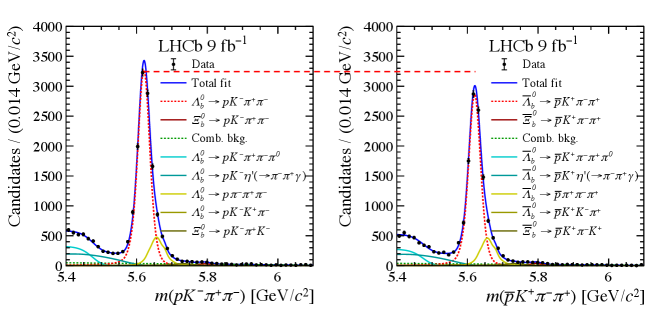
This review details recent progress in measuring time-integrated CP asymmetries in hadronic systems, including the first observations of CP violation in baryon decays and implications for the CKM matrix.
Despite the Standard Model’s remarkable successes, subtle asymmetries between matter and antimatter remain unexplained, necessitating precise investigations into charge-parity (CP) violation. This review, centered on ‘Time-integrated CP asymmetries in meson and baryon decays’, summarizes recent progress from the LHCb and Belle II experiments in quantifying these asymmetries across a range of hadronic systems. Notably, the first observation of CP violation in baryon decays and refined measurements of the CKM angle γ represent significant steps forward in understanding flavor physics. With ongoing data collection, what further insights into the origins of matter-antimatter asymmetry will these experiments reveal?
The Asymmetry of Existence: Unveiling Matter’s Prevalence
The fundamental asymmetry between matter and antimatter in the observable universe necessitates a violation of Charge-Parity (CP) symmetry – if CP symmetry were perfect, matter and antimatter would have been created equally in the Big Bang, leading to mutual annihilation. The first experimental evidence of this crucial violation emerged from studies of the decay of neutral K mesons, specifically the long-lived K^0_L meson. These particles, possessing an intrinsic strangeness quantum number, exhibit a slight preference in how they decay into combinations of pions and leptons, differing from their antiparticles. This subtle discrepancy, observed in the 1960s, demonstrated that nature does not treat matter and antimatter identically under the combined operations of charge conjugation (switching particles with their antiparticles) and parity transformation (mirroring spatial coordinates). The discovery, for which James Cronin and Val Fitch were awarded the Nobel Prize in 1980, provided the initial cornerstone for understanding why matter prevails over antimatter, opening the door to further investigations into the origins of our universe.
The BaBar Experiment, conducted at the SLAC National Accelerator Laboratory, and the Belle Experiment, performed at the High Energy Accelerator Research Organization (KEK) in Japan, represented landmark achievements in particle physics by independently confirming CP violation within the decay of B mesons. These experiments meticulously tracked the decay patterns of copious amounts of B mesons, revealing a subtle asymmetry in the rates of decay into matter and antimatter states. This observation provided crucial validation for predictions made by the Standard Model of particle physics, specifically regarding the Cabibbo-Kobayashi-Maskawa (CKM) matrix which describes quark mixing. The confirmation wasn’t simply a ‘yes’ or ‘no’ answer; the degree of CP violation measured aligned with Standard Model predictions, strengthening confidence in its overall framework while simultaneously motivating searches for even subtler discrepancies that could point towards new physics beyond current understanding.
Despite the confirmation of CP violation in both kaon and B meson decays, the degree of asymmetry observed presents a compelling puzzle for physicists. The Standard Model of particle physics, while remarkably successful, predicts an insufficient level of CP violation to account for the significant prevalence of matter over antimatter in the observable universe. This discrepancy suggests that additional sources of CP violation, beyond those currently incorporated into the Standard Model, must exist. Consequently, researchers are actively pursuing investigations into new particles and interactions-such as those predicted by supersymmetry or extra dimensions-that could potentially amplify CP violating effects and resolve this fundamental cosmological imbalance. The ongoing search represents a crucial frontier in particle physics, aiming to unveil the mechanisms responsible for the very existence of matter as we know it.
![Analysis of <span class="katex-eq" data-katex-display="false">\Lambda_{b}^{0}\to\Lambda K^{+}K^{-}</span> events reveals significant asymmetries in phase space and distinct invariant mass distributions, as shown in the provided data from Ref. [3].](https://arxiv.org/html/2601.16787v1/x9.png)
Precision and Scrutiny: Mapping the Landscape of CP Violation
The LHCb and Belle II experiments are dedicated to high-precision measurements of CP violation, a phenomenon where matter and antimatter decay at different rates, and the exploration of rare B meson decays. As of recent data collection runs, LHCb has accumulated 23 inverse femtobarns (fb-1) of data during Run 3 at the Large Hadron Collider, while Belle II has collected 0.43 inverse attobarns (ab-1) in Run 1 and 0.15 ab-1 in Run 2 at the SuperKEKB collider. These substantial datasets allow for statistical scrutiny of decay rates and branching fractions, enabling searches for deviations from Standard Model predictions and potential evidence of new physics.
The LHCb experiment at CERN utilizes proton-proton collisions generated by the Large Hadron Collider (LHC) to produce B mesons. The high collision energy and luminosity of the LHC, reaching instantaneous luminosities of 2 \times 10^{32} \text{cm}^{-2}\text{s}^{-1}, maximize the production rate of B mesons through the creation of heavy flavor quarks. Similarly, the Belle II experiment employs the SuperKEKB electron-positron collider. The SuperKEKB achieves high luminosity through the use of the “crab waist” scheme, resulting in an integrated luminosity of 0.43 ab-1 collected in Run 1 and 0.15 ab-1 in Run 2, enabling the copious production of B meson pairs via the \Upsilon(5S) resonance.
The identification and analysis of CP asymmetries in particle decays relies on techniques such as Flavor Tagging, which identifies the flavor of the decaying particle, and Time-Integrated Measurement, which integrates decay rates over time to enhance statistical significance. These methods are crucial for precisely determining parameters like the CKM angle γ, a fundamental component of the Standard Model. Current experimental efforts, utilizing these techniques, have achieved a precision of 2.5 degrees in the measurement of γ, allowing for stringent tests of the Standard Model and searches for deviations indicative of new physics. Precise determination of this angle is achieved by measuring the interference between the decay pathways of B^0 and \overline{B}^0 mesons.
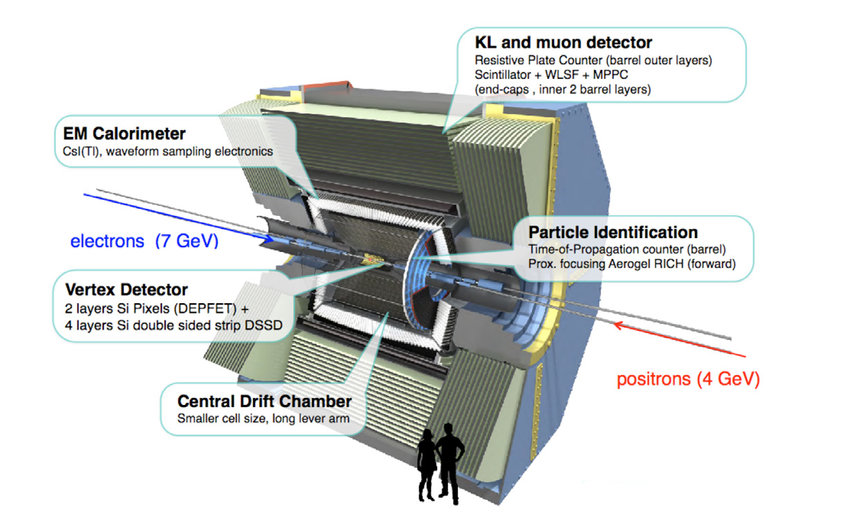
Beyond Mesons: Baryonic CP Violation and the Search for Extensions
Recent measurements from the LHCb and Belle II collaborations have confirmed Charge-Parity (CP) violation in Baryon decay, specifically within the Λ_b^0 baryon. Analysis of Λ_b^0 decays into p K^- π^+ π^- has yielded a CP asymmetry of 2.45 ± 0.46 (statistical) ± 0.10 (systematic) percent. This observation extends the study of CP violation beyond meson systems, providing further stringent tests of the Standard Model and potentially indicating the presence of new physics contributing to differences in the behavior of matter and antimatter.
The decay of baryons, such as the Lambdab0, frequently involves intermediate resonant states. These resonant structures, representing short-lived particles formed during the decay process, significantly impact the observed CP violation measurements. The presence and characteristics of these resonances alter the decay amplitudes and phases, influencing the magnitude and sign of CP asymmetries. Accurate modeling of these resonant contributions is therefore crucial for precise determination of CP violating effects, as interference patterns between different resonant states can either enhance or suppress the observed asymmetry. Failure to account for resonant structures can lead to misinterpretations of the underlying physics and inaccurate constraints on parameters beyond the Standard Model.
CP asymmetry measurements in the resonant Λb0→ΛK+K− decay channel have yielded a value of 16.5 ± 4.8 ± 1.7%. This significant asymmetry, observed through experiments like LHCb and Belle II, provides crucial data for investigating the behavior of quarks and leptons. The magnitude of this CP violation effect deviates from predictions within the Standard Model, suggesting the potential influence of new physics, such as contributions from undiscovered particles or interactions, that could explain the matter-antimatter asymmetry in the universe. Further analysis of these decay dynamics is essential to refine theoretical models and constrain potential extensions to the Standard Model.

The CKM Matrix: A Cornerstone, and a Probe for the Unknown
The Standard Model of particle physics describes six flavors of quarks – up, down, charm, strange, top, and bottom – but these aren’t independent entities; they readily mix and transform into one another. This phenomenon is elegantly encapsulated within the Cabibbo-Kobayashi-Maskawa (CKM) matrix, a fundamental parameterization that governs the probabilities of these quark flavor changes during weak interactions. Essentially, the CKM matrix dictates how likely a weak interaction is to transform one type of quark into another, influencing both quark decays and the rates at which they occur. Crucially, the structure of the CKM matrix doesn’t allow for arbitrary mixing; it constrains the degree of CP violation – a subtle asymmetry between matter and antimatter – that can exist within the Standard Model. By precisely measuring the elements of this matrix through experiments involving decays of particles containing quarks, physicists can rigorously test the internal consistency of the Standard Model and search for hints of new physics beyond it.
Investigations into the subtle decays of charm and D0 mesons represent a frontier in precision flavor physics, directly impacting the refinement of the Cabibbo-Kobayashi-Maskawa (CKM) matrix. Current experiments meticulously measure CP asymmetry – the slight difference in decay rates between matter and antimatter – in specific decay channels. Analyses of D^0 mesons decaying into K_S^0 K_S^0 reveal a CP asymmetry of -0.6 ± 1.1 ± 0.1%, while the decay to \pi^0 \pi^0 yields a value of 0.30 ± 0.72 ± 0.20%. Though these measurements carry inherent uncertainties, they provide crucial tests of the Standard Model and search for hints of new physics that might manifest as deviations from predicted values, driving the development of even more sensitive experiments and analysis techniques.
The quest to understand the fundamental forces of nature relies heavily on meticulously mapping the behavior of quarks, and a key parameter in this endeavor is the angle γ of the Cabibbo-Kobayashi-Maskawa (CKM) matrix. This angle governs the mixing and decay of b quarks into d quarks, observed in processes like the B \rightarrow D decay. Current experimental efforts have achieved a remarkable precision of 2.5 degrees in determining the value of γ, a feat crucial for rigorously testing the Standard Model of particle physics. Deviations from the Standard Model’s predictions regarding γ would signal the presence of new physics beyond our current understanding, potentially revealing undiscovered particles or forces. Consequently, refining the measurement of this angle remains a central goal in flavor physics, driving ongoing and future experiments designed to push the boundaries of precision and unveil the universe’s deepest secrets.
![Invariant mass distributions and flight distances of <span class="katex-eq" data-katex-display="false">K_{S}^{0}K_{S}^{0}</span> decays, flavor-tagged via <span class="katex-eq" data-katex-display="false">D^{*+}</span> decays, demonstrate the quality of Belle II data as reported in Ref. [18].](https://arxiv.org/html/2601.16787v1/x12.png)
The Horizon of Discovery: Future Directions in Flavor Physics
The pursuit of charge-parity (CP) violation in the decay of both mesons and baryons remains a central focus in the quest to understand physics beyond the Standard Model. Subtle asymmetries in these decays, governed by the parameters of the Cabibbo-Kobayashi-Maskawa (CKM) matrix, could reveal the influence of new particles or forces. Precision measurements of the CKM matrix elements, alongside searches for unexpected CP-violating effects in diverse decay channels, provide a sensitive probe for indirect signatures of new physics. Any deviations from the Standard Model predictions in these areas would signal the existence of additional sources of CP violation, potentially explaining the matter-antimatter asymmetry observed in the universe and opening a window onto a more complete understanding of fundamental interactions.
Investigations extending the search for Charge-Parity (CP) violation beyond the well-studied meson sector and into channels featuring tau leptons represent a promising frontier in flavor physics. While CP violation has been observed in quarks, its manifestation in leptons remains an open question, and any discovery would strongly suggest physics beyond the Standard Model. Tau leptons, being significantly heavier than electrons or muons, offer unique decay pathways sensitive to contributions from potential new particles and interactions. Precise measurements of CP-violating asymmetries in tau decays – examining how the decay rates of a particle and its antimatter counterpart differ – could reveal subtle deviations from Standard Model predictions, hinting at the existence of new sources of CP violation and providing crucial insights into the matter-antimatter asymmetry in the universe. These studies demand high-luminosity experiments and sophisticated analysis techniques to isolate the rare decay signatures and overcome background noise.
Progress in flavor physics is fundamentally constrained by the capabilities of experimental infrastructure and analytical methodologies. Unraveling the subtle discrepancies hinting at physics beyond the Standard Model demands increasingly precise measurements, achievable only through upgrades to existing facilities like high-luminosity colliders and the development of novel detectors. Simultaneously, innovative data analysis techniques – incorporating machine learning algorithms and advanced statistical modeling – are essential to extract meaningful signals from the vast datasets these experiments generate. These analytical tools must not only refine the precision of existing measurements but also enable the exploration of previously inaccessible decay channels and the identification of rare processes. Continued and strategic investment in both hardware and software is, therefore, not merely a logistical necessity but a critical pathway to resolving the enduring mysteries of flavor and pushing the frontiers of particle physics.
![Invariant mass distributions from Belle II data reveal <span class="katex-eq" data-katex-display="false">D^{+} \to \pi^{+} \pi^{0}</span> decays for both tagged and untagged (null-tag) events, as detailed in Ref. [20].](https://arxiv.org/html/2601.16787v1/x15.png)
The pursuit of understanding CP violation, as detailed in this review of meson and baryon decays, reveals a persistent tension between theoretical prediction and experimental observation. It echoes a sentiment articulated by Paul Feyerabend: “Anything goes.” This isn’t a dismissal of rigor, but a recognition that any single methodological approach may prove insufficient when confronting the intricacies of the strong interaction and the subtle asymmetries within hadronic systems. The paper highlights the need to explore various decay channels and theoretical frameworks, accepting that progress often arises from challenging established assumptions and embracing diverse perspectives. A system striving for complete description, burdened by excessive complexity, has already begun to fail; clarity in identifying and minimizing these complexities is paramount.
What Remains?
The pursuit of CP violation, once focused on clarifying the CKM matrix, now reveals a landscape of hadronic intricacies. Precision in charm and baryon decays has yielded observation-a necessary condition. Yet, observation alone does not resolve the underlying question: is this the Standard Model, or merely a Standard Model? The data demand a continued sharpening of theoretical predictions, particularly concerning resonant structures. Simplification is not an option; the complexity is the signal.
Future progress necessitates a holistic approach. Baryon and meson systems, often treated as separate entities, are fundamentally linked through shared underlying dynamics. A unified framework-one that consistently describes both-remains elusive. Current analyses, while impressive, often rely on approximations. Minimizing these-reducing the debt-is not merely a technical exercise, but an intellectual imperative.
Ultimately, the search extends beyond confirmation. The true test lies in identifying deviations-the subtle asymmetries that betray new physics. Such signals will not announce themselves. They require relentless scrutiny, a willingness to abandon preconceptions, and an acceptance of the fact that clarity is the minimum viable kindness.
Original article: https://arxiv.org/pdf/2601.16787.pdf
Contact the author: https://www.linkedin.com/in/avetisyan/
See also:
- Dune 3 Gets the Huge Update Fans Have Been Waiting For
- Gold Rate Forecast
- Looks Like SEGA Is Reheating PS5, PS4 Fan Favourite Sonic Frontiers in Definitive Edition
- Pluribus Star Rhea Seehorn Weighs In On That First Kiss
- Kelly Osbourne Slams “Disgusting” Comments on Her Appearance
- Arknights: Endfield – Everything You Need to Know Before You Jump In
- Antiferromagnetic Oscillators: Unlocking Stable Spin Dynamics
- Tomodachi Life: Living the Dream ‘Welcome Version’ demo now available
- LeAnn Rimes Details “Craziness” of Affair With Eddie Cibrian
- ’90s Cartoon Reboot & TMNT Connection!
2026-01-26 20:41