Unlike most sports games, MLB The Show isn’t just about reflexes. Baseball is a game of strategy and statistics – improving your players’ skills and understanding season-long data are key. Hit the ball more often, and you’ll score more runs. Throw pitches that are both smart and deceptive, and you’ll get more strikeouts.
Baseball is as much a mental game as it is physical, and the duel between pitcher and batter is at its heart. That’s why MLB The Show differs from other sports simulations: it needs to accurately recreate the fast-paced action of a baseball game while also constantly providing you with a wealth of information – statistics, percentages, player details – to keep you hooked and informed throughout the experience.
MLB The Show continues to be the best baseball simulation game, and the latest version expertly recreates the feel, strategy, and detail of the sport. Hitters can now use real-world pitching data to improve their performance, and fielding is more realistic thanks to new player attributes. The game also features improved presentation with more in-game coverage and over 500 new animations. While the changes aren’t drastically different from previous versions, it remains one of the most genuine sports gaming experiences you can find.
One of the new ways to hit is called Fixed Zone Hitting. It keeps your hitting reticle – the PCI – steady even after you let go of the movement stick, making it easier to follow through on swings.
What truly sets MLB The Show apart is how well it recreates the mental aspect of baseball. Each time a player faces a pitch, it’s a strategic contest of guessing, timing, and staying focused – and MLB The Show 26 continues to highlight the importance of every pitch and the changing situation during each at-bat.
Okay, so the pitching in this game is seriously good. When I’m up to bat, the CPU pitchers don’t just throw random stuff; they actually seem to think. They usually start with fastballs to get me into a rhythm, then start mixing in sliders, sinkers, and those tricky off-speed pitches to mess with my timing. What’s really impressive is that they learn as the at-bat goes on. I noticed they’ll sometimes set up a pattern, like hitting the outside corner a couple of times, and then completely switch it up on me. I was bracing for a pitch outside, and thought I had it figured out after a couple of pitches landed there, but then one came right for the opposite side! I swung anyway, and totally whiffed. It broke into a nasty slider way outside. If I’d just held back a little, I could have gotten a hit and changed the whole situation, but I didn’t, and that was that – strikeout.
This situation perfectly shows how MLB The Show 26 captures the pressure of being at bat. The game’s pitcher confidence level is key: pitchers who feel confident throw strikes more often, while those who are struggling have less control. I saw this firsthand – even when I thought I’d thrown a great pitch, a low confidence level caused it to veer off course. If the batter doesn’t swing at these off-target pitches, the pitcher’s confidence drops, and good hitters can take advantage of the resulting mistakes.
Hitting is arguably the hardest skill in baseball. Making good contact requires precise timing, the ability to read a pitch, and skillful placement – along with a player’s natural talent. While a perfectly timed hit sounds fantastic, it doesn’t happen often, which makes those successful moments feel truly rewarding.
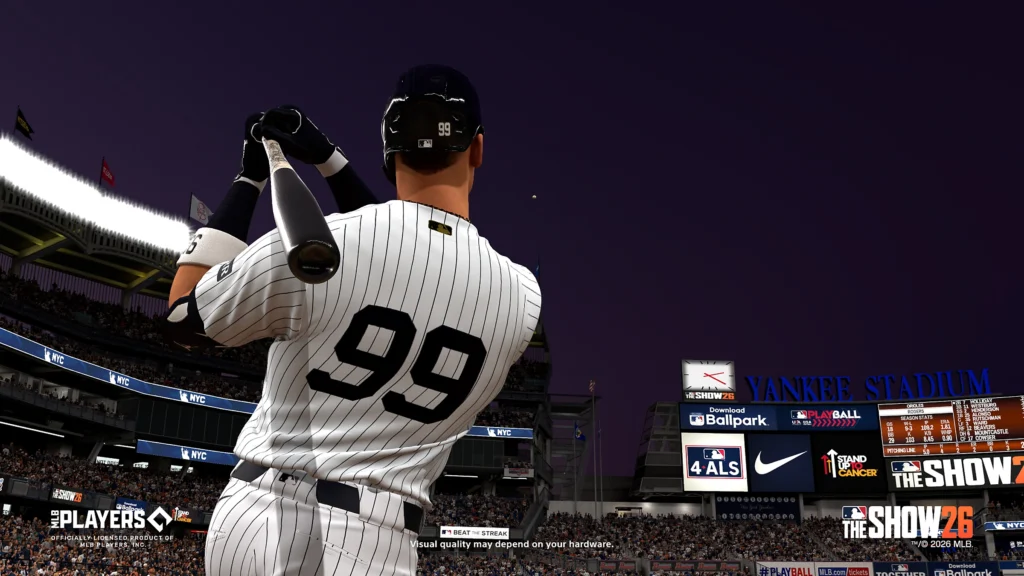
One of the new ways to swing the bat is called Fixed Zone Hitting. It keeps your aiming reticle – called the PCI – steady even after you move the stick, making it a little easier to understand than other methods. Both Fixed Zone and regular Zone Hitting give you precise control over your swings, making them the most effective options overall, though they might be a bit challenging for players who are new to the game.
The new Big Zone Hitting system is easier to use, falling somewhere between precise timing and directional hitting. It doesn’t require perfect accuracy with the hitting cursor; instead, it breaks the strike zone into sections, letting me focus on getting my swing to the right area and timing my swing correctly. This made it simpler to read pitches, allowing me to concentrate on deciding when to swing. As a result, I was hitting the ball more often and avoiding tough pitches more effectively.
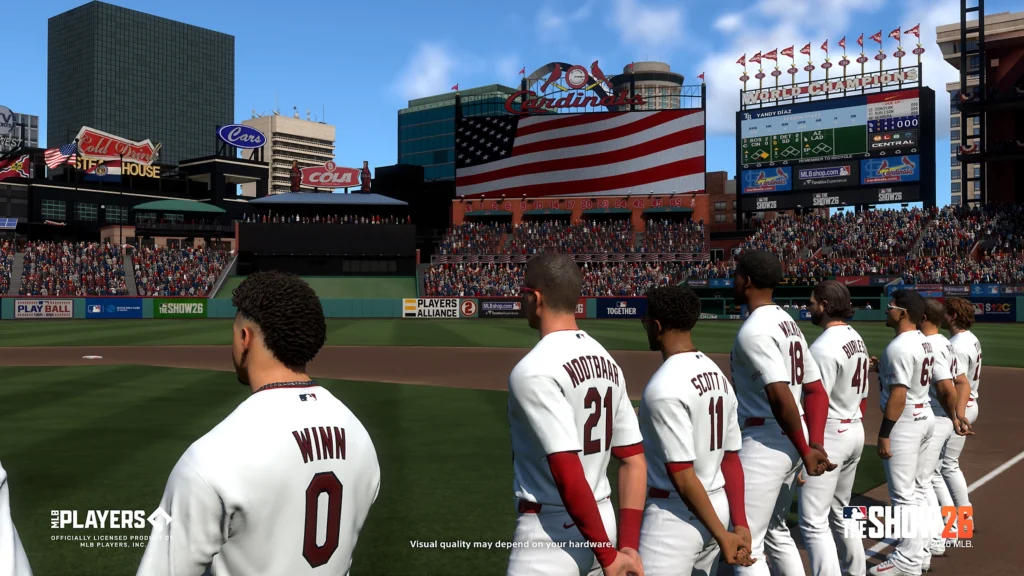
Bare Down Pitching helps your pitcher focus and perform their best when it matters most, increasing their control and throwing speed during crucial moments.
The “Ambush Hitting” feature, which debuted last year, is back. It lets you predict which side of the strike zone the pitch will come in, potentially giving you an edge at the plate. While it’s meant to add strategic depth and disrupt the pitcher, I found it often felt like a lucky guess. Eventually, I just consistently chose the outside half of the strike zone, as that’s where I had the most success hitting to open areas of the field.
The game provides detailed pitching data through the menus, offering valuable insights into your opponents. You can quickly see their preferred pitches in certain situations, what they’re likely to throw against a right-handed batter, and a breakdown of their entire pitching arsenal. While not foolproof – even a pitcher who rarely throws a curveball might throw one occasionally – this information can be helpful. However, I found checking it during a game interrupted my concentration. I’d prefer to review this data between innings or while at the plate, especially in critical moments.
When the game is on the line, you now have a new tool for your pitcher. “Bare Down Pitching” temporarily boosts their focus, giving them better control and a faster pitch speed during crucial moments. How effective it is depends on your pitcher’s ‘clutch’ stat – higher ratings let you use multiple Bare Down Pitches in a row. While it adds tension with visual cues like a pitcher taking a deep breath, I didn’t find this feature to be overly powerful. Often, even when using Bare Down Pitching, batters were still able to manage, at least by fouling off pitches and extending the at-bat.
The popular Road to the Show career mode is back, now called Road to Cooperstown. It’s been updated to let you start your career earlier – you’ll now play through the end of your high school season, with college scouts watching to see how you perform.
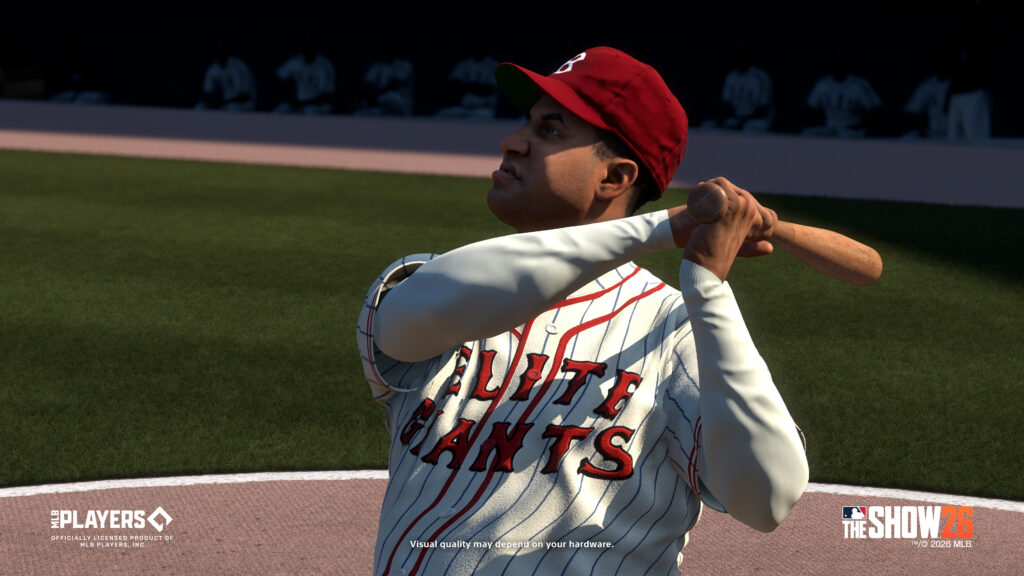
If you’re like me and really get into the strategy of baseball – things like building a team over years, managing the money, and making smart trades – then you’ll absolutely love Franchise Mode. It’s all about the big picture and running a team, alongside actually playing the games, of course!
As a fan, I was really impressed with how much you can still customize your player. It felt great because it tied directly into working towards getting into the Hall of Fame – it didn’t feel like extra work, but part of the whole experience. You improve by getting good performance grades, tackling challenges that pop up during games, earning tokens to make your player better, and unlocking cool perks. The way it all works is pretty straightforward, though I did feel like things moved a little too quickly at the start. I was getting tons of college offers and even a contract from the Blue Jays, even though my player wasn’t exactly amazing at the time! But overall, working your way up through the ranks feels more exciting than ever before.
Okay, so Diamond Dynasty is still the main thing in this game, and it’s all about building your ultimate baseball team. You collect player cards, do challenges, and events to make your squad stronger. This year they added a new, even rarer type of card – Red Diamonds – and a better way to customize your players’ stats with Parallel XP. Honestly, the fun is still the same: hunting for cards, getting that rush from opening packs, and building your dream team. One thing to know is that the gameplay settings you can adjust in regular games aren’t available here – they want to keep things competitive. That can be tough, especially if you’re new, because it might take a while to get better cards and really progress. It can feel like a bit of a grind at first.
If you enjoy the strategic aspects of baseball – things like building a team through trades, managing finances, and controlling the roster over many seasons – you’ll likely prefer Franchise Mode. It’s been updated with a new Trade Hub, which makes managing trades easier than ever. The game’s AI is also smarter, and a rumor system gives you clues about what other teams are looking for. Like other parts of MLB The Show 26, Franchise Mode presents a lot of information in a clear and organized way. The Trade Hub felt particularly well-designed; I found it easy to navigate and follow my train of thought while making deals.
I quickly realized my team was weak at first and third base, and I could see a list of available free agents. Instead of immediately signing someone, I decided to start the season. Vladimir Guerrero Jr. is my first baseman – as usual – for the Toronto Blue Jays, and I knew losing him to injury would be a major problem no matter where he played. Before the season began, I used the Trade Hub to tell the game I was especially interested in finding players for those two positions. This way, I hoped the game would suggest potential trades to me, rather than me having to manually search through lots of player information.
Whether you’re new to the series and up for a challenge, or a long-time fan wanting a polished baseball game, MLB The Show 26 continues to be the gold standard.
Honestly, even though managing a team can be a bit tricky, I quickly got the hang of it. In Franchise Mode, you don’t need to be a baseball genius to build a good team – just a little time and willingness to work the trade market. I only played for a couple of hours, but I could immediately tell this mode has so much depth and replayability that I could easily lose myself in it for a whole season. It’s a fantastic sandbox for building your dream team!
Overall, MLB The Show 26 doesn’t drastically change the formula, but it continues to polish an already incredibly realistic baseball simulation. It still takes time and effort to learn, but once you get the hang of it, the game beautifully captures the feeling of baseball. You’ll find top-notch presentation, lifelike player animations – including everything from exciting throws and slides to realistic errors – and hitting controls that work for both beginners and experienced players. It offers a deep and engaging experience, and accurately portrays the mental side of baseball, like the strategic battle between pitcher and batter. Everything you need for a great baseball game is here.
Even though I often dislike the way many modern sports games constantly ask for ongoing engagement, MLB The Show 26 is surprisingly streamlined. This is true even with all the detailed stats and player information the game presents. Whether you’re new to the series and up for a challenge, or a long-time fan looking for a polished baseball game, MLB The Show 26 continues to be the best in the genre.
This game was reviewed on the PlayStation 5.
Read More
- The Super Mario Galaxy Movie: 50 Easter Eggs, References & Major Cameos Explained
- 10 Best Free Games on Steam in 2026, Ranked
- Sydney Sweeney’s The Housemaid 2 Sets Streaming Release Date
- Why is Tech Jacket gender-swapped in Invincible season 4 and who voices her?
- Welcome to Demon School! Iruma-kun season 4 release schedule: When are new episodes on Crunchyroll?
- PS5’s Ace Combat 8 Will Be the Most Ambitious Game in the Series Yet, and We Can’t Wait
- Shonen Jump Officially Cancels Yet Another Major Series in 2026 (& Fans Saw It Coming)
- Dune 3 Gets the Huge Update Fans Have Been Waiting For
- All 13 Smash Bros. Characters in the Super Mario Galaxy Movie
- The Punisher: One Last Kill Trailer Review: MCU Special Could Be a Game Changer
2026-03-19 22:14