Author: Denis Avetisyan
Researchers have achieved remarkably long coherence times in complex molecular states, opening new possibilities for quantum simulations and precision measurements of fundamental physics.
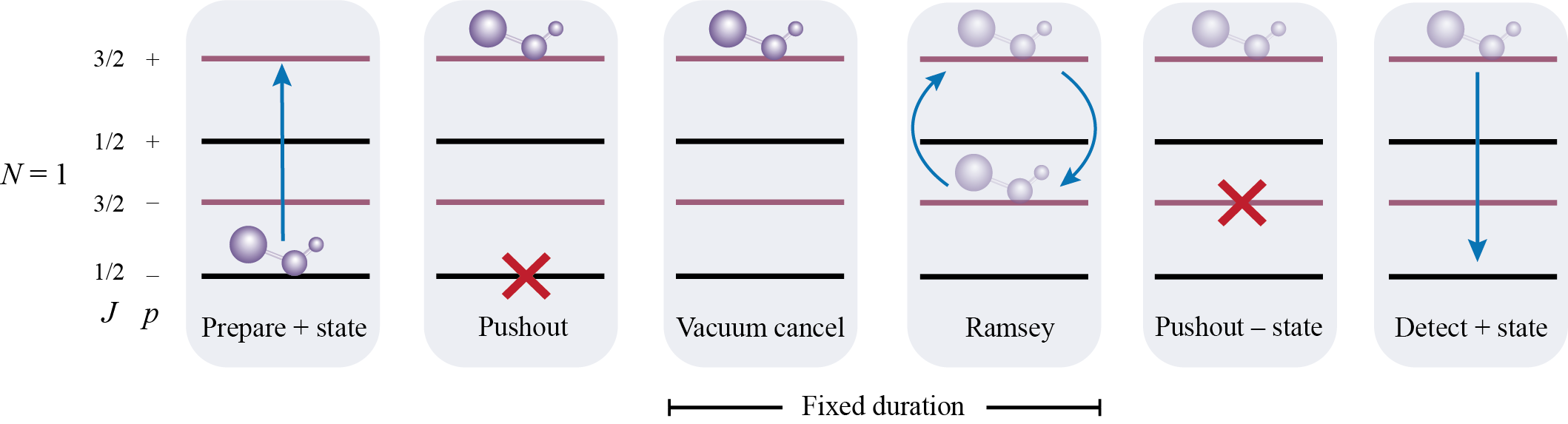
Long coherence times have been demonstrated in parity-doublet states of optically trapped ultracold CaOH molecules, offering a promising platform for exploring new quantum phenomena.
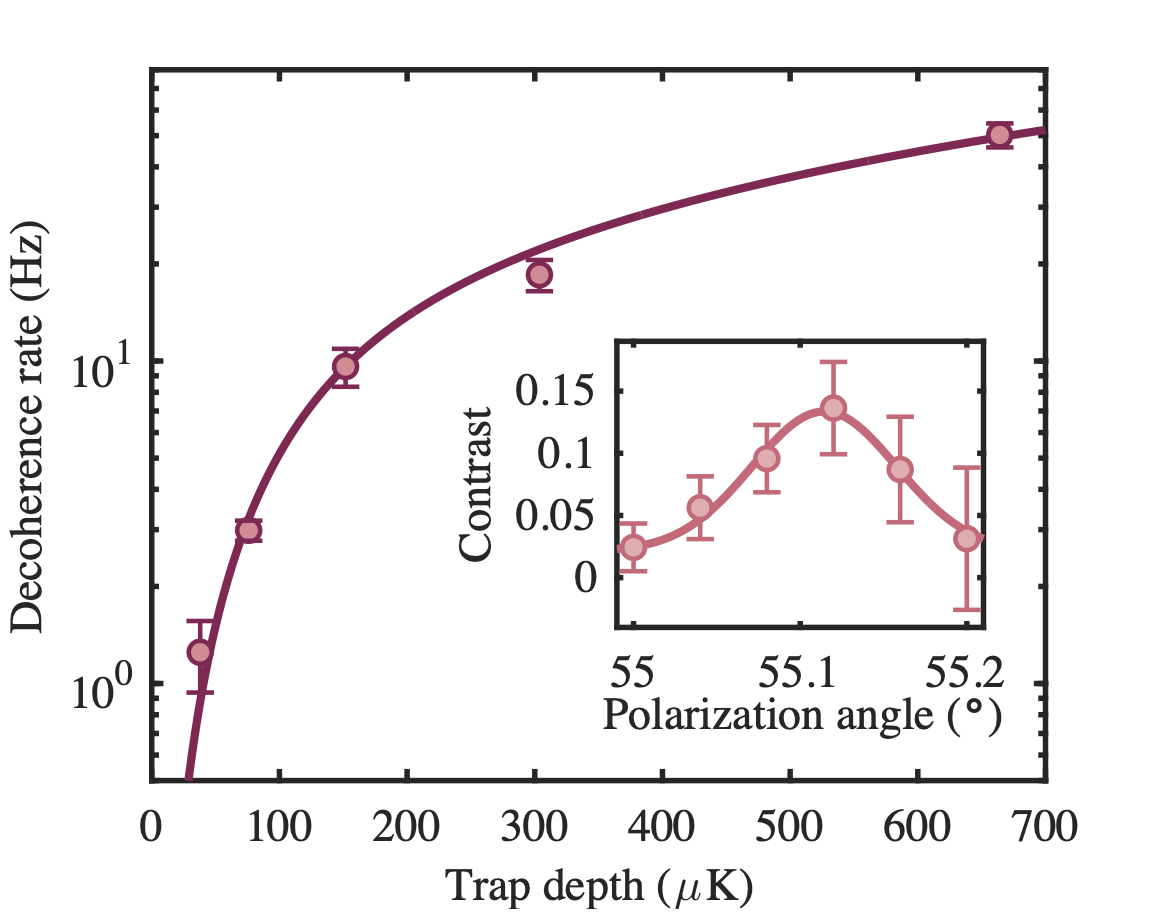
Maintaining quantum coherence in complex systems remains a significant challenge for realizing advanced quantum technologies. This is addressed in ‘Parity-Doublet Coherence Times in Optically Trapped Polyatomic Molecules’, which investigates the use of robust parity-doublet states in ultracold CaOH molecules as promising qubits for quantum information processing. The authors demonstrate a bare qubit coherence time of 0.8(2) s, achieved through optical trapping and suppression of environmental noise via meticulous electric field control. Could these results unlock new avenues for high-fidelity quantum simulations and precision searches for physics beyond the Standard Model?
The Fragile Dance of Quantum Control
The realization of robust quantum technologies hinges on the ability to precisely manipulate the quantum states of matter. Unlike classical bits representing 0 or 1, quantum bits, or qubits, leverage superposition and entanglement to perform computations far beyond the reach of conventional computers. However, maintaining the delicate quantum coherence necessary for these computations requires exquisite control over the qubit’s environment and internal state. Molecular qubits offer a compelling alternative to traditional atomic or solid-state qubits due to their inherent complexity, which allows for a richer range of quantum states and interactions. This increased complexity, if harnessed through precise control, promises to enable simulations of complex systems – from novel materials to fundamental chemical reactions – and unlock the potential for quantum information processing with unprecedented capabilities. The ability to engineer these molecular states is therefore paramount to advancing the field of quantum technology.
The pursuit of precise control over molecular quantum states has long been hampered by the very nature of molecules themselves. Unlike simpler systems like individual atoms, molecules possess a multitude of vibrational and rotational modes, creating a complex landscape for quantum manipulation. This inherent complexity makes it exceptionally difficult to isolate and control specific quantum states. Furthermore, molecules are highly susceptible to environmental noise, leading to a phenomenon called decoherence – the rapid loss of quantum information. Traditional spectroscopic and laser cooling techniques, while effective for atoms, often struggle to overcome these challenges in molecules, as the intricate energy levels and frequent collisions with surrounding particles quickly disrupt delicate quantum coherence. Consequently, maintaining the necessary quantum control for applications like quantum simulation and information processing has remained a significant hurdle with conventional methods.
The pursuit of quantum technologies has led researchers to explore ultracold molecules as a promising platform for realizing complex quantum systems. Unlike simpler atoms, molecules possess a rich internal structure – vibrational and rotational modes – which allows for encoding and manipulating quantum information in more nuanced ways. However, this complexity typically leads to rapid decoherence, destroying fragile quantum states before they can be utilized. Recent advances in cooling and trapping techniques have overcome this hurdle, enabling the creation of ultracold molecular samples that retain coherence for unprecedented durations. Notably, a study has demonstrated a coherence time of 0.8 seconds for parity-doublet states – quantum states arising from the molecule’s symmetry – representing a significant leap toward practical quantum simulation and information processing, and opening avenues for exploring novel quantum phenomena inaccessible with simpler systems.
Harnessing the Cold: A Multi-Stage Cooling Process
Direct laser cooling and gray molasses cooling are employed as initial stages in preparing a molecular sample for trapping. Direct laser cooling utilizes lasers tuned slightly below a resonant frequency of the molecule, causing the molecule to absorb photons when moving towards the laser source and scatter them in the opposite direction, resulting in a net momentum reduction. Gray molasses cooling extends this principle by employing multiple laser beams in all six spatial dimensions; the varying polarization and frequency of these beams create a viscous force, further slowing and cooling the molecules. This technique effectively reduces the molecular velocity from hundreds of meters per second to tens of centimeters per second, or even lower, providing a sufficiently slow sample for subsequent confinement in a trap.
Magneto-Optical Traps (MOTs) and Optical Dipole Traps are employed to spatially confine neutral molecules, increasing sample density for extended observation times. MOTs utilize magnetic field gradients and circularly polarized laser beams to decelerate and trap molecules based on their magnetic moment. Optical Dipole Traps, conversely, rely on the gradient force exerted by a tightly focused laser beam-typically at wavelengths where the dielectric constant is not zero-to draw molecules towards the region of highest intensity. Both trap types achieve confinement by exploiting forces dependent on the molecules’ internal states and position, with typical trap depths ranging from tens to hundreds of microkelvin, enabling the accumulation of 10^5 to 10^8 molecules within the trapping volume.
Electric field gradients, even at the level of a few volts per meter, can significantly dephase the internal quantum states of trapped molecules, limiting coherence times and the precision of experiments. To mitigate this, ultraviolet LEDs are strategically positioned around the trapping region to generate a uniform electric field that precisely cancels residual stray fields. These stray fields originate from surface potentials on the vacuum chamber components, and from external electromagnetic interference. The use of ultraviolet light, specifically at wavelengths around 397nm, minimizes the impact of the cancellation light on the molecules’ motional states, as this wavelength is weakly coupled to the dominant vibrational modes. Achieving electric field cancellation to the level of 10^{-4} V/m or lower is crucial for maintaining the quantum coherence necessary for high-fidelity control and long observation times.
Precision Measurement: Unveiling Coherence
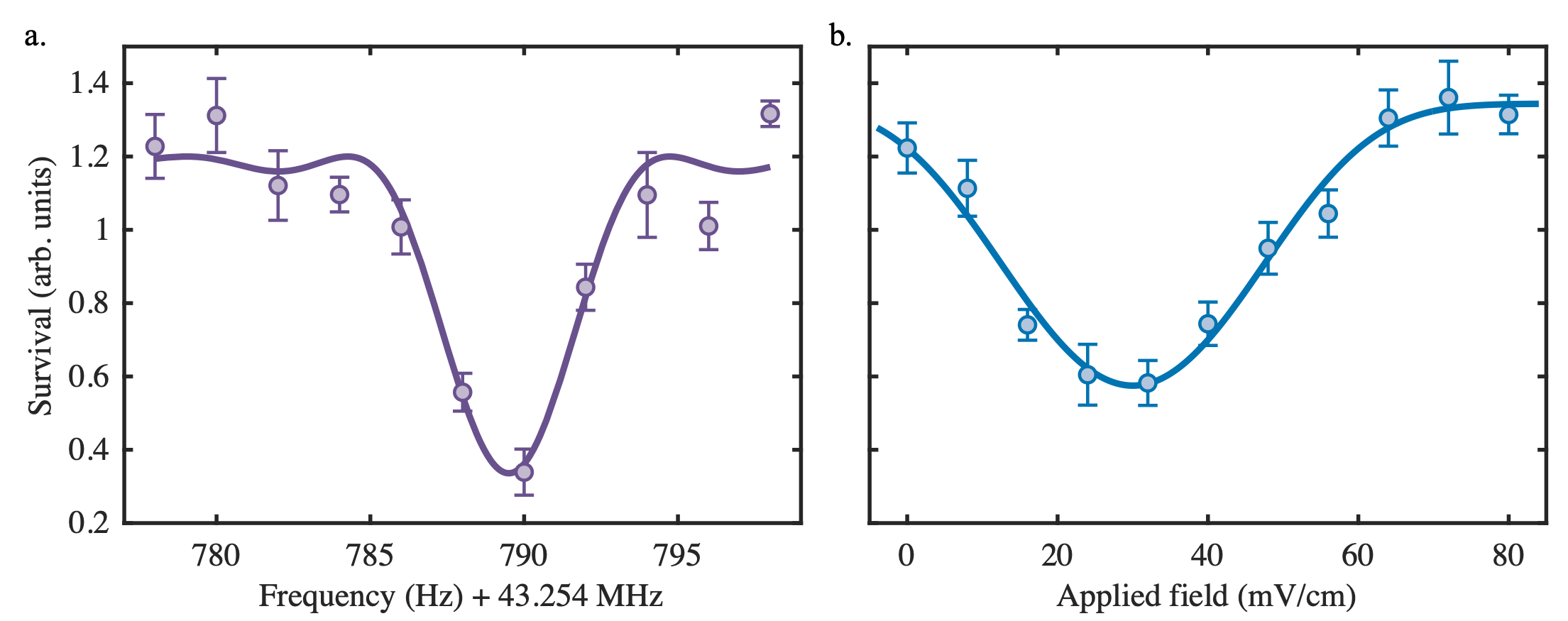
Ramsey sequences, utilizing microwave and radio-frequency (RF) pulses, are a standard method for determining the coherence time, denoted as T_2^<i>, of molecular systems. These sequences involve applying an initial excitation pulse, allowing the system to evolve for a time t, applying a second pulse, and then measuring the resulting signal as a function of t. The resulting interference pattern, known as a Ramsey fringe, decays due to various dephasing mechanisms. The rate of this decay is directly related to T_2^</i>, providing a quantitative measure of how long quantum coherence is maintained within the molecule. Precise control of the pulse durations, frequencies, and timing is crucial for accurate T_2^* measurements, as any deviations can introduce errors and distort the Ramsey fringe.
The accuracy of Ramsey sequence measurements of molecular coherence time (T2) is susceptible to the AC Stark shift and Stark sensitivity. The AC Stark shift arises from the interaction of the molecule with time-varying electric fields, causing an energy level shift proportional to the square of the electric field amplitude. Stark sensitivity refers to the rate at which the energy levels change with respect to electric field variations. Consequently, precise control – typically to the level of mV/cm – of the electric field environment is crucial for minimizing these effects and obtaining reliable measurements of molecular coherence. Any fluctuations or inaccuracies in the electric field directly translate into errors in the determined T2 value.
Rotational qubits are created and controlled through the manipulation of molecular rotational and vibrational states, utilizing dipole-dipole interactions to establish qubit connectivity. These qubits are not based on electron spin, but rather on the quantum mechanical properties of molecular rotation. Recent experimentation has demonstrated a coherence time exceeding 2.9 seconds, measured with a spin-echo pulse sequence and reported at the 95% confidence level. This extended coherence represents a significant advancement in the field of molecular quantum computing, allowing for more complex quantum operations and computations to be performed before decoherence limits performance.
Beyond Simulation: Probing Fundamental Physics
Certain linear triatomic molecules exhibit a peculiar quantum phenomenon known as parity-doublets, where two energy levels with opposite parity – essentially a mirror image in their quantum behavior – appear at nearly the same energy. These ℓ-type parity-doublets are particularly stable, offering significantly extended lifetimes compared to typical excited quantum states. This longevity stems from the molecule’s unique electronic structure, which inhibits the usual decay pathways. Consequently, these states serve as excellent platforms for precision measurements and quantum information processing, as the extended coherence times allow for complex quantum operations. The unusual sensitivity of these states to external electric fields, a direct consequence of their quantum properties, further enhances their utility in exploring fundamental physics and searching for subtle violations of established physical laws.
The peculiar sensitivity of parity-doublet states to electric fields renders them exceptional tools in the search for physics beyond the Standard Model. These states, arising from specific molecular configurations, exhibit an amplified response to even subtle shifts in the electromagnetic environment. This heightened sensitivity stems from the mixing of states with opposite parity, creating an electric dipole moment that would normally be forbidden. Consequently, any new force or particle interacting with matter-predicted by theories extending the Standard Model-could manifest as a measurable change in the energy levels of these molecules. By precisely monitoring these energy shifts, researchers can effectively scan for evidence of these elusive interactions, offering a unique and complementary approach to particle physics experiments at high-energy colliders and providing a potential pathway to unraveling the mysteries of dark matter and other phenomena currently unexplained by established physics.
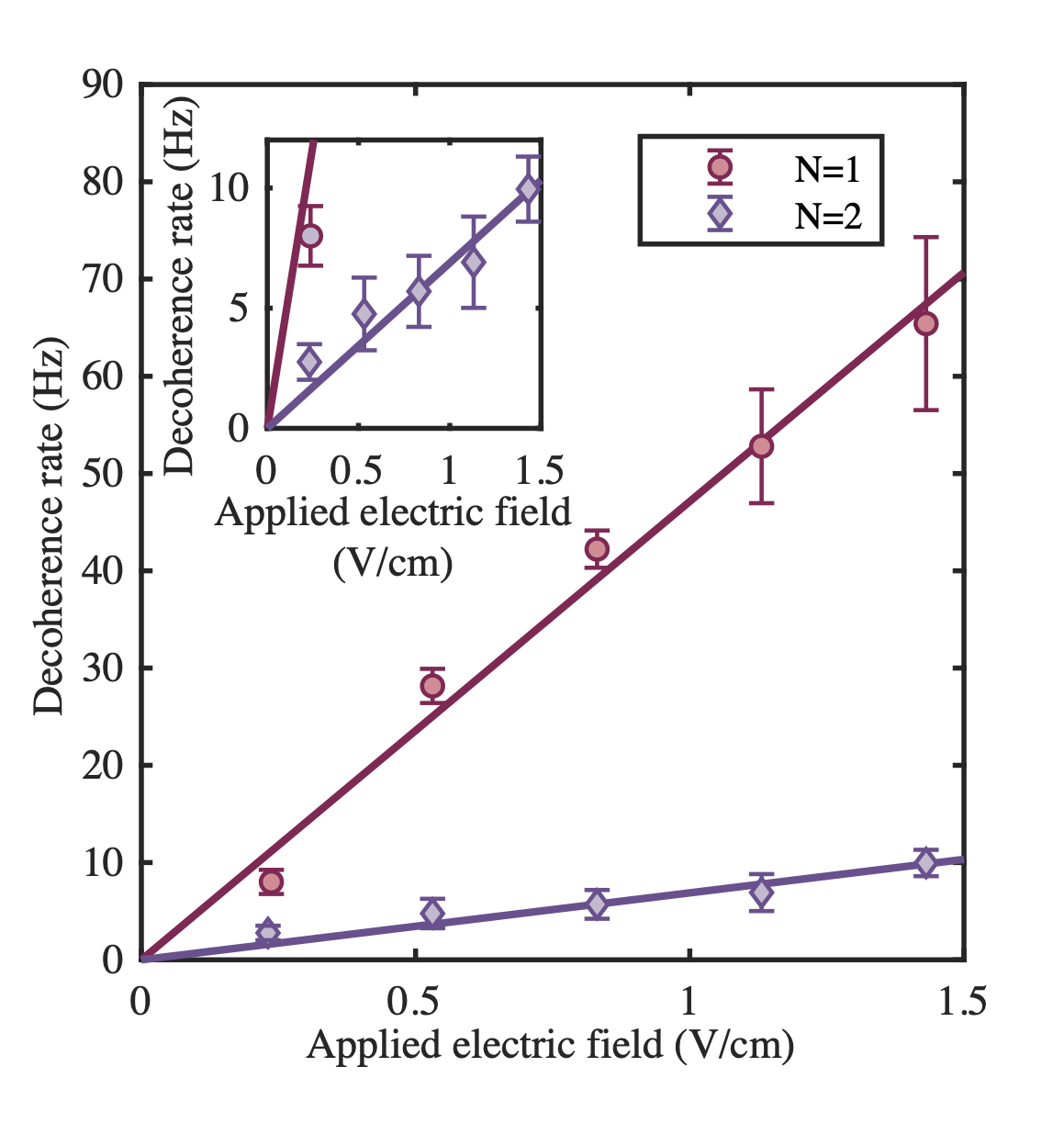
The creation of controllable quantum bits, or qubits, from molecular parity-doublets represents a significant step towards scalable quantum technologies. These states, exhibiting exceptional coherence, allow for the encoding and manipulation of quantum information. Recent experimental work has demonstrated precise control over these qubits, verifying a ratio of 6.75 for the electric field sensitivity between the N=1 and N=2 parity-doublet states – a result that strongly corroborates existing theoretical models. This level of control is crucial for building complex quantum systems capable of performing advanced simulations, potentially unlocking solutions to problems currently intractable for even the most powerful classical computers, and ultimately advancing the field of quantum information processing.
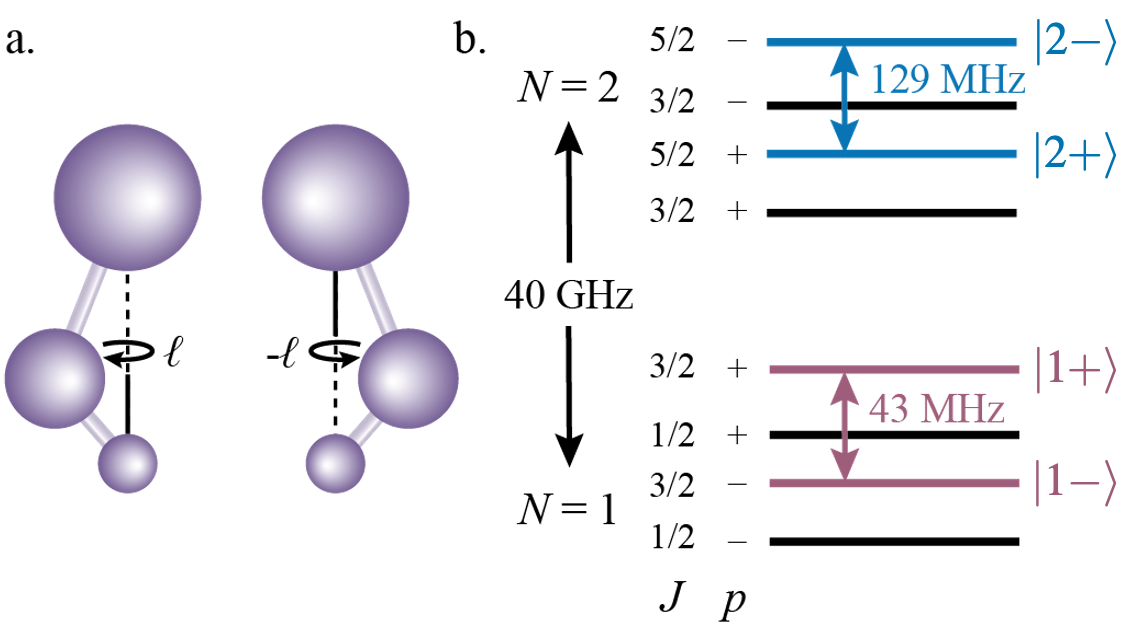
The pursuit of extended coherence times in complex systems mirrors a universal principle: all structures, even those seemingly stable, are subject to decay. This research, focusing on parity-doublet states within ultracold CaOH molecules, exemplifies this elegantly. The achieved longevity of these states-a significant step towards practical quantum simulation-doesn’t halt decay, but rather delays its manifestation. As Stephen Hawking once observed, “Look up at the stars and not down at your feet.” The researchers, by concentrating on fundamental properties and pushing the boundaries of control over molecular systems, are effectively ‘looking up’-seeking enduring principles within the inevitable passage of time, much like striving for graceful aging within a complex, evolving system. The AC Stark shift mitigation techniques represent a focused effort to manage the forces contributing to that decay, extending the system’s functional lifespan.
The Horizon Beckons
The extension of coherence times in these polyatomic systems is not an endpoint, but a shifting of the boundary. Uptime, even at these impressive durations, remains temporary. The observed resilience of parity-doublet states within optical tweezers does not negate the inevitable accrual of phase noise-it merely postpones the reckoning. Future investigations will undoubtedly focus on mitigating environmental disturbances, yet the very act of measurement introduces a new set of perturbations; latency is the tax every request must pay.
A critical challenge lies in scaling these demonstrations toward larger molecular assemblies. The complexities of inter-molecular interactions, and the resultant decoherence mechanisms, will likely prove more formidable than current single-molecule limitations. It is tempting to envision elaborate quantum simulations, but the system’s inherent fragility-its tendency towards entropy-demands a pragmatic assessment of achievable fidelity.
The pursuit of longer coherence is not solely a technical exercise. It is a confrontation with the fundamental asymmetry of time, a temporary stay against the decay of quantum information. Stability is an illusion cached by time, and the field must now grapple with the question of how much can be reliably extracted before the cache expires.
Original article: https://arxiv.org/pdf/2602.17540.pdf
Contact the author: https://www.linkedin.com/in/avetisyan/
See also:
- What Song Is In The New Supergirl Trailer (& What It Means For The DC Movie)
- Why is Tech Jacket gender-swapped in Invincible season 4 and who voices her?
- TV legend Carol Kirkwood reveals the reasons why she decided to retire after 28 years with BBC
- Dune 3 Gets the Huge Update Fans Have Been Waiting For
- Highly Anticipated Strategy RPG Finally Sets Release Date (And It’s Soon)
- How Blake Lively & Ryan Reynolds’ Kids Pranked Her on April Fool’s Day
- Kanye West’s Wife Bianca Censori Details New Marriage Milestone
- 49 Years Ago Today, Movie History Was Changed by a Film You’ve Never Even Seen
- Butcher’s Transformation Into A “Ruthless Killer” In The Boys Season 5 Explained By Karl Urban
- Starfield PS5 Won’t Play Off Physical Disc without a Download
2026-02-22 15:38