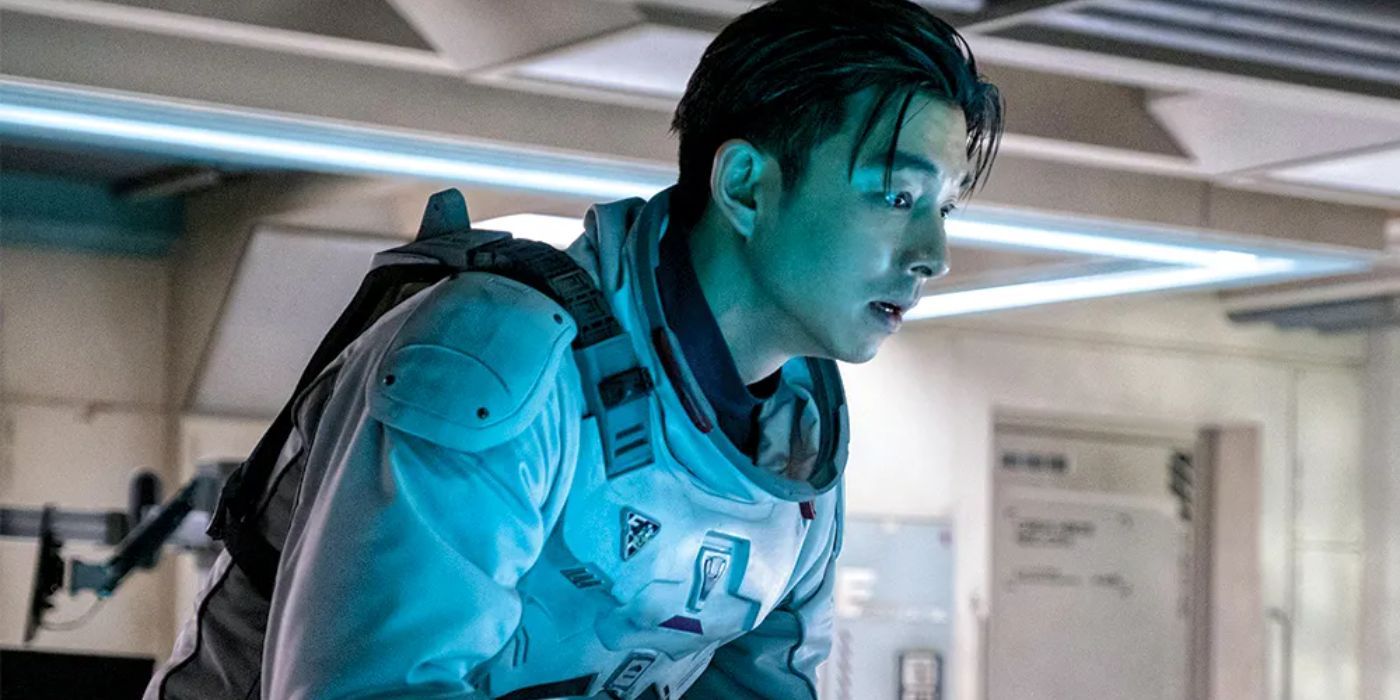
The 2021 Korean sci-fi series The Silent Sea isn’t your typical survival story filled with loud action and heroic feats. Instead, it’s a chilling thriller that feels incredibly realistic and unsettlingly quiet. It avoids the usual glamorous presentation and focuses on a more grounded, believable experience.
Unlike the optimistic vision of space travel in Star Trek, the reality for those doing the hard labor in space is likely to be harsh, dangerous, and uncaring about the well-being of individuals.
Many viewers initially dismissed The Silent Sea as another typical monster movie, but it’s actually a much more thoughtful and complex story. It perfectly captures the chilling feeling of being trapped in space, far from Earth, where the real threat isn’t hostile aliens, but the slow breakdown of the equipment keeping the crew alive. The show isn’t thrilling because of quick action or a fast pace; it’s captivating because of the intense, building tension that keeps you glued to the screen.
The Silent Sea Deals With Real Science And Real Stakes
What immediately sets this show apart from similar Western programs is its core motivation. The characters aren’t traveling to the moon out of a desire for discovery or exploration. They’re driven by a desperate need for water. The story begins not with a quest for new life, but with a depiction of Earth facing a severe water crisis.
The story takes place on a planet devastated by a massive drought, where water has become more valuable than gold – it’s now the main form of currency. Society is strictly divided based on a “Water Classification” system, which uses a social credit score to determine who receives clean water and who is forced to drink lower-quality supplies. This creates a very realistic and harsh reason for people to venture into space – pure economic necessity.
The astronauts on this mission aren’t naive dreamers seeking fame; they’re highly trained professionals – soldiers, scientists, and engineers – knowingly accepting an incredibly dangerous assignment. In return, they receive a ‘Gold Card,’ a special status that offers a small measure of protection for their families, potentially extending their survival for a few years. The mission is also plagued by excessive secrecy and numerous warning signs.
The team’s mission is to travel to the Balhae Lunar Research Station, a large facility on the far side of the moon. It was deserted five years ago after an accident supposedly killed everyone there from a radiation leak. Their assignment seems straightforward: collect some unusual samples and return. However, the launch doesn’t go as smoothly as fans typically expect.
The mission began to unravel immediately after leaving Earth. It wasn’t a single, dramatic event that threatened it, but rather a chain of small mechanical problems – a dangerous pattern known as the “Swiss Cheese Model” of disaster. A structural issue during landing caused a crash, leaving the ship stranded on a lunar cliff edge and the crew with no way home.
The mission unexpectedly changes from simply recovering something to a desperate race against time. The show realistically depicts the grueling journey that follows: a 7.6-kilometer walk across the moon’s surface to reach the base. It’s not a fast-paced highlight reel; instead, the audience slowly watches as the astronauts’ oxygen levels dwindle, creating intense suspense.
The story makes viewers acutely aware of how vulnerable the characters are, turning even a basic walk into a tense calculation of how much air they have, how far they need to go, and the unsettling quiet of space. By the time the characters finally enter the abandoned station, the audience is holding its breath, anticipating that this hard-won haven might actually be a dead end.
The Fear of Physics Makes Survival Feel Heavier
What sets this series apart is its realistic portrayal of the moon’s environment. Many shows simplify things by pretending the moon has Earth-like gravity to save on production costs. However, The Silent Sea embraces the challenges of actually moving and operating under lunar gravity, creating a more believable and unsettling experience.
The filmmakers realized something important about the moon: while objects weigh less there, they don’t become lighter overall. This means it’s easy to start moving something, but very difficult to stop. You see this play out constantly in the film – the actors don’t move with elegance; instead, they jerk around and often lose their balance.
As a film lover, I’ve always been fascinated by how action sequences portray impact. When characters nail a jump, it’s not always graceful; their legs often wobble and strain under the force. And honestly, that’s what makes it so compelling! It’s not about perfect landings, it’s about the raw, shaky energy of the moment. Every move feels precarious, like a simple run could easily turn into a painful collision. That sense of real physical risk is what really gets my adrenaline pumping.
The stunt team created a sense of struggle by using intricate wire work, making the characters appear weak, weighed down, and unsteady. The train station, Balhae Station, is a stunning example of “Industrial Brutalism,” resembling an oil rig unexpectedly placed in a large pit.
As a film lover, I’m instantly drawn to locations that feel real, and this place definitely does. Forget polished surfaces and high-tech gadgets – everything here is raw and worn. We’re talking rough concrete walls, visible pipes, and that unsettling buzz of old fluorescent lights. It’s a world that’s beautifully broken, where you actually have to work things – cranking open doors with levers, fixing stuff with a soldering iron, getting your hands dirty. It’s wonderfully analog and feels like it’s barely holding on, and that’s exactly what makes it so compelling.
As a movie fan, one of the things that really struck me about this film was how real everything felt. When something went wrong, it didn’t feel like a convenient story moment, but like an actual malfunction. And the actors? They weren’t pretending to be exhausted – they were exhausted! They had these incredibly heavy spacesuits, almost 20 pounds, and you could see it in everything they did. The way they dragged their feet, leaned against walls, even just the effort in their breathing… it all felt completely genuine, like they were truly struggling in a harsh environment. It wasn’t acting, it was just…being. It made the whole thing so much more immersive.
The show’s sound design is remarkably subtle. Rather than using loud effects, outdoor scenes focus on what the characters would hear inside their helmets – their own breathing, the clicking of equipment, and even their heartbeats. This creates a more immersive and realistic experience by emphasizing internal sounds over external ones.
The experience inside the spaceship isn’t about what the characters see, but what they feel. Instead of hearing a clear impact when someone hits a wall, the audience feels a muffled vibration through the character’s suit. This creates a sense of chilling isolation. Even when the crew is close together, they’re truly alone, connected only by their radios. When the radio signal fails, the resulting silence is overwhelming, almost like a physical pressure. The story understands that silence can be far more impactful than any sound.
The show doesn’t follow typical movie tropes, even during decompression scenes. Instead of explosive hull breaches, viewers see a subtle leak – a misty condensation that forms when pressure rapidly drops. This creates a quiet, unsettling effect called adiabatic cooling. The fear doesn’t come from flying objects, but from watching a digital display count down to zero, realizing the situation is hopeless.
The Performances That Anchor Science of The Silent Sea
The unsettling atmosphere and mind-bending science wouldn’t matter if the actors didn’t convincingly portray the emotional toll of the mission. The Silent Sea is greatly enhanced by performances that realistically depict the complexities of working within a bureaucracy during a crisis, making the characters feel like genuine professionals struggling to cope with overwhelming challenges.
Gong Yoo, famous for his role in Goblin, plays Captain Han Yun-jae as a reserved and burdened leader. It’s a departure from his typical charismatic action roles; here, he portrays a man weighed down by the responsibilities of his position as a manager.
He primarily communicates through small movements of his eyes, hidden behind the limited view of his helmet visor – a lifetime of military training keeping fear in check. He deliberately avoids showing emotion, understanding that any sign of weakness could be fatal. His exhaustion reveals his driving force: securing better water access to save his ailing daughter, making his strict adherence to rules feel heartbreaking instead of mechanical.
Bae Doona plays Dr. Song Ji-an, an astrobiologist who approaches the mysteries of space with a hands-on, inquisitive nature. She acts as the viewers’ eyes and ears, but instead of being frightened by the strange discoveries – like water on the moon or unusual signs of life at the station – she quietly and quickly starts looking for answers herself.
She carefully clears the condensation from the window for a clearer view, studies the bodies with a puzzled expression, and asks for more information when everyone else wants to leave. This cold, analytical approach heightens the horror, as the audience experiences it through someone struggling to make sense of the senseless.
Right from the start, her doubts move the story forward. She’s always challenging the government’s version of events, which reflects how many people today don’t fully trust institutions when dealing with environmental problems. Things get even more intense for her when the mission hits close to home.
The situation is made even more stressful by the strict social rules among the crew. They have a very clear ranking system, which creates unspoken pressures and makes every decision more difficult. We see skilled individuals forced to follow poor instructions simply because of the hierarchy, adding a disturbing, corporate-like element to the story.
The characters don’t need to be friends, but they must rely on each other to get through their ordeal, and that tension is far more compelling than any sudden shock. The actors perfectly portray the bond of colleagues facing a terrible situation, making you truly feel the weight of every loss.
What really struck me about The Silent Sea is how realistically it portrays space travel. It doesn’t feel like a grand adventure, but a truly harsh and dangerous journey where one wrong move could be fatal. The filmmakers really leaned into the brutal realities – the constant pull of gravity, the oppressive silence, and how utterly drained the astronauts are. It all adds up to a viewing experience that feels incredibly intense, both physically and emotionally – I felt genuinely weighed down and trapped right alongside the crew.
The show’s creator, Park Eun-kyo, and director Choi Hang-yong tackled a critical environmental issue with a compelling mystery. They approached the frightening reality of the situation with respect, crafting a story that will keep viewers engaged and guessing until the very end.
Read More
- What Song Is In The New Supergirl Trailer (& What It Means For The DC Movie)
- Welcome to Demon School! Iruma-kun season 4 release schedule: When are new episodes on Crunchyroll?
- Why is Tech Jacket gender-swapped in Invincible season 4 and who voices her?
- Sydney Sweeney’s The Housemaid 2 Sets Streaming Release Date
- TV legend Carol Kirkwood reveals the reasons why she decided to retire after 28 years with BBC
- The Super Mario Galaxy Movie: 50 Easter Eggs, References & Major Cameos Explained
- Dune 3 Gets the Huge Update Fans Have Been Waiting For
- Highly Anticipated Strategy RPG Finally Sets Release Date (And It’s Soon)
- Crimson Desert – 15 Things I Wish I Knew Before Diving In
- New Pokemon Go Event Gives Players A Shot At 11 Rare Shiny Pokemon (With Boosted Odds)
2025-12-13 23:41