
The Pathologic games are famous for their innovative approach to role-playing games, particularly how they connect gameplay to storytelling. Recently, Alexander Souslov, the executive producer, and Nikolai Ponomarev, an engineer on the project, spoke with us about how the new Pathologic 3 aims to push the boundaries of both the series and the RPG genre itself.
Pathologic 3 focuses on how gameplay itself shapes the story. Could you give a specific example of a game mechanic and how it affects a player’s understanding of the game’s world or narrative?
You’re spot on – Pathologic deliberately uses gameplay to reflect what the main character is feeling. It’s hard to directly affect a player’s emotions, but things like movement speed can be surprisingly effective. Dankovsky, when feeling apathetic, moves very slowly, and that slowness is meant to be frustrating. The goal isn’t to punish the player with lower stats, but to make them feel that apathy – to want to escape it. Conversely, when Dankovsky is experiencing mania, he moves very quickly, but that speed is also unsettling. It creates a tense situation: you’re running, but your health is dropping rapidly. Will you escape the danger and find help, or will you collapse? The new travel system aims for a similar effect. The town is broken down into districts because Dankovsky sees it as a collection of separate places, each with a specific purpose. He’s an outsider, so he approaches the town as a logistical problem – how to get from place to place as efficiently as possible.

Will I escape the rioters and get the medicine I need, or will I be trapped and perish quickly?
Even if a player repeatedly makes incorrect decisions – for example, consistently misdiagnosing illnesses – can they still achieve some kind of resolution or ending to the game, even if that ending isn’t a positive one?
We wanted players to be able to truly fail and still experience the story through to a conclusion. Many games limit player freedom, only letting them choose how to follow a set path – like delaying a boss fight, but knowing they’ll eventually have to complete it. They also often avoid real consequences for failure, using save systems to rewind time. In Pathologic 3, we embrace mistakes. If your character dies – from suicide, a heart attack, or running out of time – that’s a valid part of the experience. Losing all your time results in the game deleting your saves, which is also a legitimate way to finish. Importantly, you don’t even need to diagnose the epidemic to succeed. Managing it through other means – like dealing with the Shabnak or issuing administrative orders – is perfectly viable. You can combine different approaches, like quarantines, vaccinations, and eliminating the Shabnak. Not every ending is happy; some are quite dark, but they are all valid conclusions to the game.
To what extent will the Powers That Be shape or steer events throughout the game?
We need to be careful not to reveal too much about the story. When you bring up ‘The Powers That Be,’ you’re touching on a key plot point, so we should warn players about spoilers. What’s interesting in this game is that it lets you experience what it’s like to be in a position of authority. The orders given by Bachelor Dankovsky are, in a way, a simulation of a medical dictatorship. Some of those orders are deliberately ridiculous, and even damaging. However, the townspeople don’t always follow them exactly as intended. The game aims to highlight the disconnect between a well-intentioned order and how useless it can become because of miscommunication and how people interpret things differently when carrying it out.
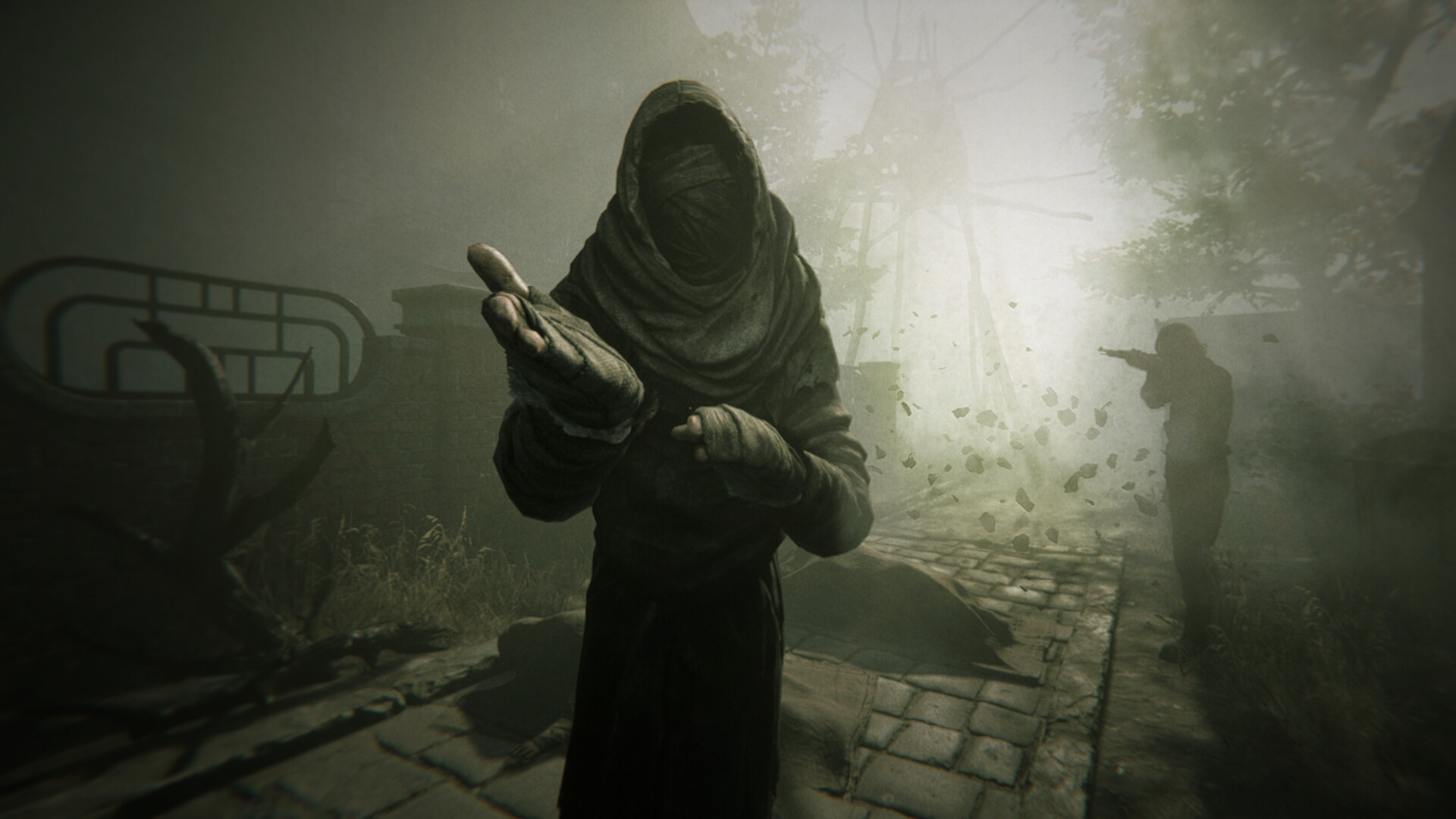
“In this instalment of the series, we are precisely allowing the player to be a figure of power.”
To what extent will players be able to react to, or challenge, the authority of those in power?
Warning: spoilers ahead! Think of the events in Pathologic 3 like a chess game with many powerful pieces – even multiple queens. Players can exploit the conflicts between these pieces to create their own strategies. What’s unique is that you can replay moves, so a careful player who manages their time effectively can essentially play the game however they choose. Just remember to pay attention to the clock – time is a crucial factor.
Considering the development and launch of Pathologic 2, what key takeaways shaped your approach to creating Pathologic 3?
We prioritized making the game run smoothly from the start. We learned this from our previous game, Pathologic – a game needs to be technically stable before people can even appreciate its story or graphics.
The demo for Pathologic 3 included content that hadn’t been shown anywhere else. Will we see that same content in the complete game, possibly reworked, expanded upon, or presented in a new way?
The complete game features a few extra scenes set in the Capital. We’ll be revisiting the Thanatica laboratory multiple times as Dankovsky and his team desperately search for a way to overcome death. Expect a notable chess-related storyline as well; chess is a recurring theme throughout the game.
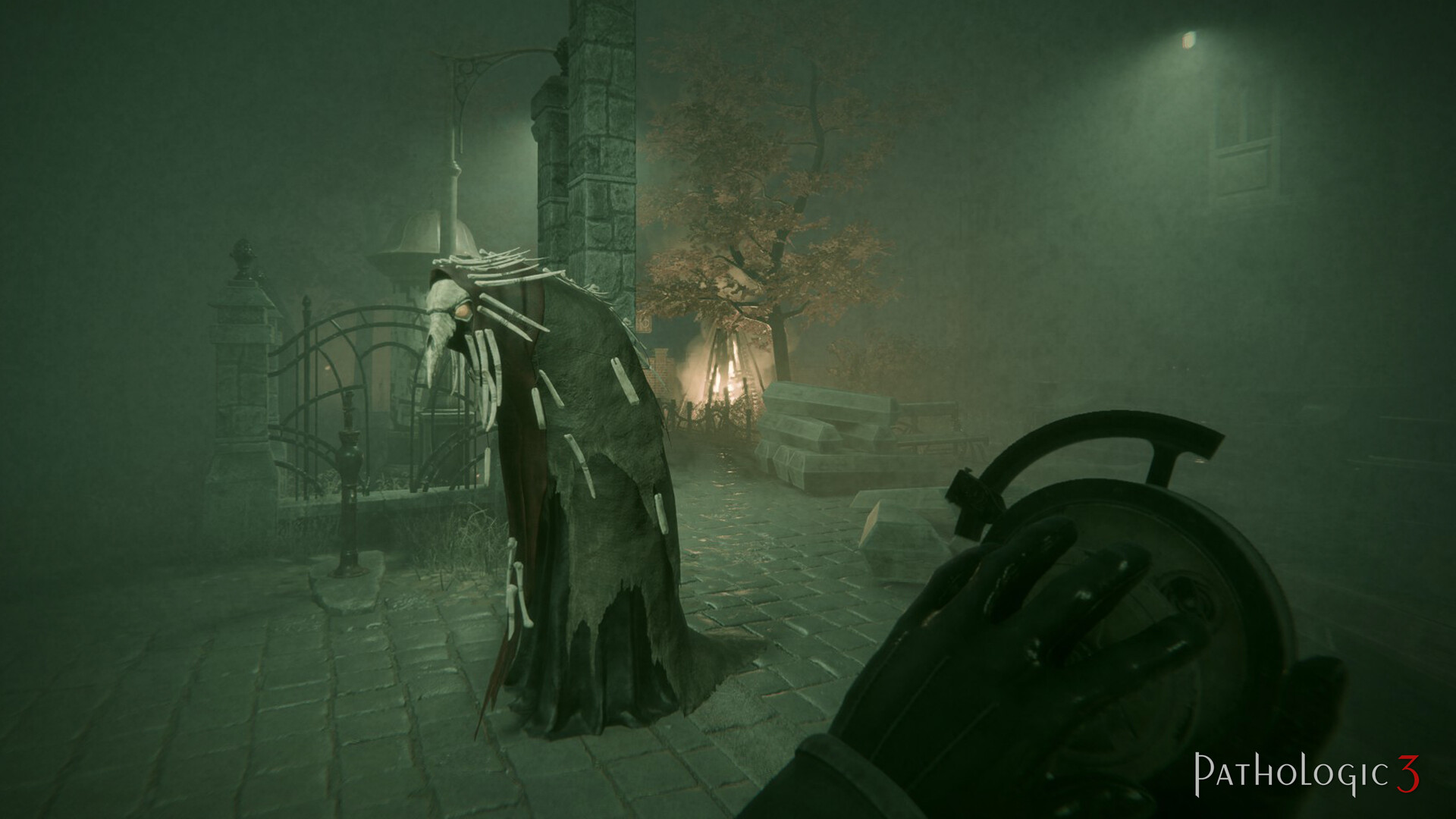
The game will feature a dedicated chess-themed section, as chess is a recurring element throughout.
Will Pathologic 3 feature any specific callbacks to the previous games, like familiar characters, places, or story elements, in addition to the overall shared atmosphere and ideas?
We mostly followed the storyline that was established in the original Pathologic game from 2005, but experienced through a new character’s perspective. While it’s their unique take on events, longtime fans will likely recognize many connections to previous games.
With Pathologic 3 now released, will there be any expansions, updates, or new content added after launch?
We’re working hard to fix the issues players have been finding since the game launched. We’re also starting to talk about what new content we could add beyond those fixes. Some planned stories and features didn’t quite make it into the initial release, so we’re considering those possibilities. Once we’ve finished polishing the game and resolving the bugs, we’ll create a clear plan for adding more content.
There is going to be a Pathologic 4, surely, right?
I will say cautiously – we have some IDEAS on that matter.
Okay, so as a game developer, everyone’s been asking about the PS5 Pro. Honestly, the upgraded GPU is a big deal for us. With the base PS5, we’re constantly making compromises – lowering resolutions, simplifying textures, or cutting back on effects – just to hit a stable framerate. The Pro gives us a lot more headroom. We can aim for higher resolutions, like native 4K, and really push the visual fidelity without sacrificing performance. It also means we can experiment with more complex effects and features we might have had to scale back on before. Basically, it lets us realize our creative vision more fully and deliver a better-looking, smoother-running game. It doesn’t magically solve all our problems, but it gives us significantly more power to work with.
We focused on the original PlayStation 5 model because our previous game, Pathologic 2, had some launch issues. With the third Pathologic, our priority was a stable release, so we built the main PS5 version specifically for that console.

“It’s very hard to beat ML-based temporal anti-aliasing (AA) with software-written heuristics”
What are your thoughts on PSSR? What kind of opportunities will this open for the game?
We aren’t supporting PlayStation’s PSSR technology on the PS5 Pro. We were interested in testing it to see if it could improve image smoothing (anti-aliasing) compared to what we currently offer. It’s difficult to surpass machine learning-based anti-aliasing with traditional, manually-tuned methods, as ML is a very powerful form of that tuning. We expect temporal anti-aliasing techniques like PSSR will continue to be used because of their ability to upscale images, perform multisampling, and reduce noise. However, we’d like to see alternatives based purely on machine learning for situations where temporal solutions aren’t ideal. If hardware manufacturers don’t create these, we hope they can be developed using new features in modern graphics programming and, ideally, in future consoles.
What resolutions and frame rates can players expect on PlayStation 5, Xbox Series S, Xbox Series X, and the upcoming PlayStation 5 Pro?
Both the PlayStation 5 and Xbox Series X generally aim for a 4K resolution at 30 frames per second, and usually achieve it. The upcoming PS5 Pro is expected to hit 4K more reliably thanks to its more powerful graphics processor. The Xbox Series S targets 1080p at 30 FPS, which it consistently maintains according to our testing. We originally aimed for 1440p on the Series S, but lowered it to 1080p to make the game run more smoothly and improve visual details.
Do you have plans to launch the game on Nintendo Switch 2?
We have such ambitions!
Read More
- Gold Rate Forecast
- Dune 3 Gets the Huge Update Fans Have Been Waiting For
- Looks Like SEGA Is Reheating PS5, PS4 Fan Favourite Sonic Frontiers in Definitive Edition
- Pluribus Star Rhea Seehorn Weighs In On That First Kiss
- Kelly Osbourne Slams “Disgusting” Comments on Her Appearance
- Arknights: Endfield – Everything You Need to Know Before You Jump In
- Antiferromagnetic Oscillators: Unlocking Stable Spin Dynamics
- Action Comics #1096 is Fun Jumping-On Point for Superman Fans (Review)
- 22 actors who were almost James Bond – and why they missed out on playing 007
- Tomodachi Life: Living the Dream ‘Welcome Version’ demo now available
2026-02-04 16:13