This year marks the 25th anniversary of Xbox, and it’s been quite a journey to reach this milestone.
Microsoft significantly challenged Sony’s long-held lead in the video game console market during the Xbox 360 era. Sony’s PlayStation 3 didn’t perform as well, giving Microsoft a strong opportunity to establish itself, and it’s been a major player ever since.
By 2026, the conversation around Microsoft and console gaming hasn’t changed much. Despite Microsoft’s public statements about supporting consoles, Xbox hardware sales have been steadily decreasing since the launch of the Xbox Series X|S. While Microsoft is still selling consoles, they aren’t making enough available in stores, which has led to speculation about the future of Xbox hardware.
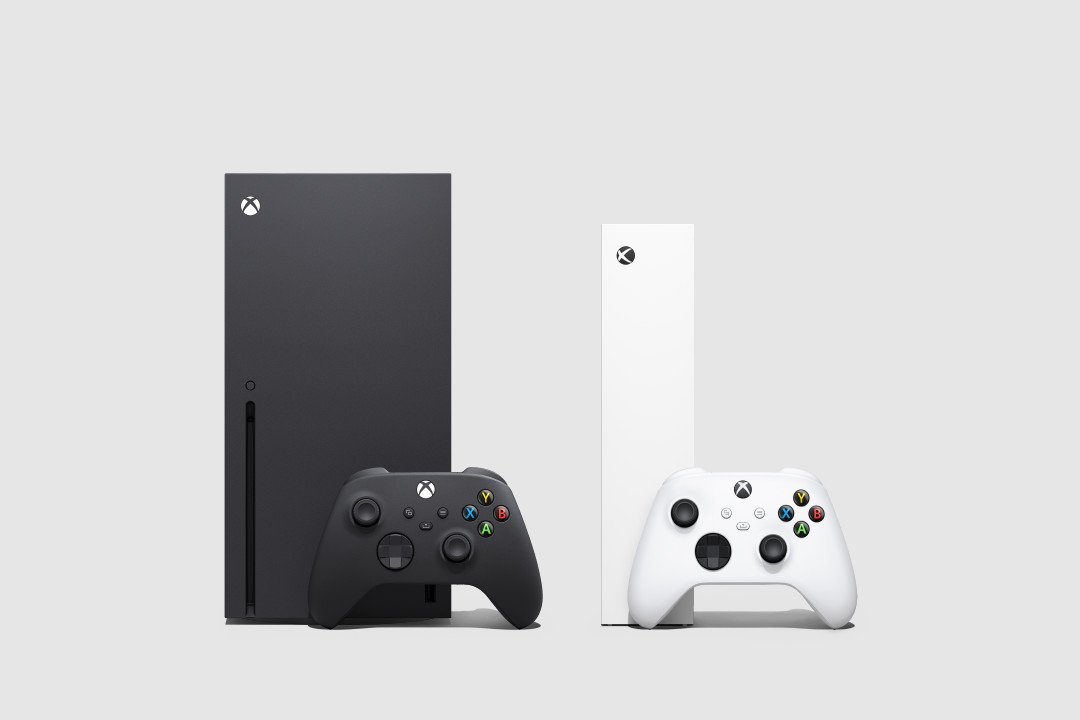
Microsoft will continue to sell Xbox consoles. As I reported previously, the next Xbox is expected to function much like a regular Windows PC, but designed for easy use in a living room and able to play games from older Xbox consoles. Microsoft confirmed this direction when announcing a long-term partnership with AMD for future Xbox consoles, specifically highlighting the ability to play games from previous generations.
The next Xbox will essentially be a full-fledged Windows computer, offering a completely open platform. This means you’ll be able to use popular game stores like Steam, GOG, Epic Games, and Battle.net, as well as everyday applications like Microsoft Office and Adobe Creative Suite. It will still play all your current Xbox games, but despite potentially lower component costs and tariffs, it’s expected to be a pricey console.
For years, Xbox has consistently trailed behind PlayStation and Nintendo in console sales. Now, it appears Xbox is focusing on integrating more closely with its PC gaming division, and it will be interesting to observe how this strategy develops.
You might be asking yourself, given Xbox’s current struggles, why game developers and publishers still release their games on the platform.
As a researcher, I’ve been looking into Xbox platform performance, and the data from Alinea Analytics is quite interesting. It suggests Xbox has a surprisingly strong and engaged user base – people really show up when a game catches their eye. This actually sparked my initial curiosity when I noticed PlayStation decided to release Helldivers 2 on Xbox. It seemed counterintuitive; if Xbox were truly struggling as many online commentators claim, why would Sony choose to publish a game on a supposedly failing platform?
It seems that the old “shooter box” stereotype may be real for Xbox.
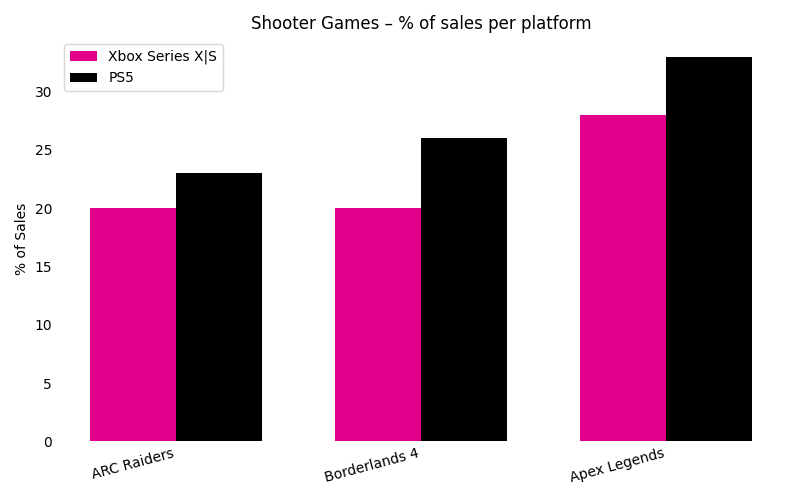
Microsoft keeps specific game performance and user numbers private. However, many believe PlayStation has three to four times as many console users as Xbox. Interestingly, even if that’s true, game sales don’t always match up with this difference in player numbers.
PlayStation probably chose to release Helldivers 2 on Xbox because Xbox players clearly enjoy shooter games. This preference likely stems from the popularity of games like Call of Duty on the Xbox 360, as well as franchises like Halo and Gears of War. Currently, popular shooter games – including upcoming titles like Borderlands 4 and ARC Raiders, and ongoing games like Apex Legends – are downloaded at roughly the same rate on both Xbox Series X|S and PlayStation 5.
If download numbers simply reflected how many people had each platform installed, we’d expect to see a much larger difference between them.
Xbox players’ preferences are also noticeable in games played alone or in role-playing games, where the PlayStation 5 sells significantly more copies.
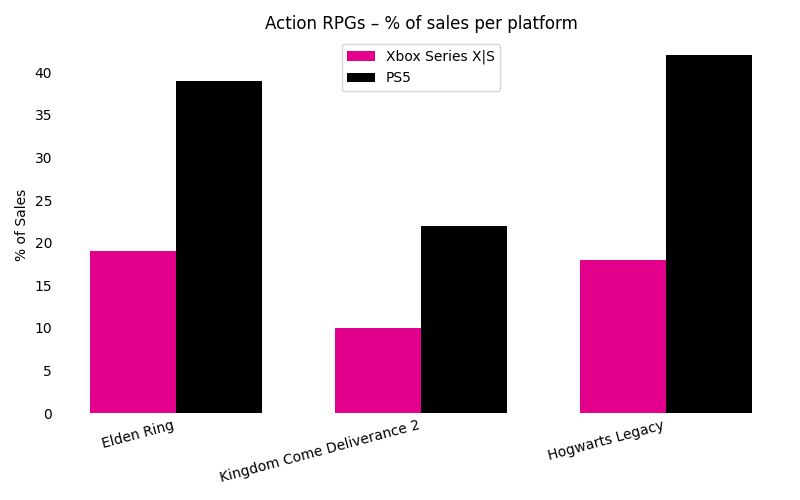
Games like Elden Ring and Hogwarts Legacy demonstrate a player base that closely reflects the difference in console ownership. For instance, Elden Ring has twice as many players on PlayStation, and Hogwarts Legacy has an even larger advantage in sales on that platform.
PlayStation’s success is likely due to its strong focus on action, role-playing games, and attracting a wide range of players, giving it a leading position in these genres. Microsoft is making a big effort to bring popular RPG franchises back to Xbox, with games like Persona and Final Fantasy now appearing on the platform more often. However, it’s a tricky situation – it’s unclear whether Microsoft needs to attract more RPG fans *before* these games sell well on Xbox, or vice versa. Reports suggest that Final Fantasy 16 didn’t sell particularly well on Xbox, which isn’t surprising considering it was released on almost every other system first. Microsoft will likely continue to face challenges building a dedicated audience for genres where PlayStation is already dominant, like RPGs and fighting games.
Xbox has clearly focused heavily on shooter and racing games, particularly with titles like Forza Horizon. While Halo and Forza Horizon 6 are coming to PlayStation this year, Sony is acknowledging Xbox players’ strong preference for shooters. Currently, Helldivers 2 remains popular on Xbox, and Sony plans to release Bungie’s new shooter, Marathon, on Xbox as well.
Platforms seem to have unique user habits
More investigation is needed, and there are other factors to think about, but it appears each gaming platform excels with different types of games. Steam clearly dominates the indie game market and also attracts players who enjoy a wide variety of titles. While PlayStation and Xbox focused on hugely popular games like Fortnite and Call of Duty, Steam built a loyal audience of players who regularly buy many different games, and they’re now seeing the rewards. It’s also likely that PlayStation attracts a younger audience, which means many of its users may not play mature-rated shooter games.
Having a diverse range of games is crucial for any platform. Xbox Game Pass, for instance, has been intentionally designed to offer a wide variety of genres and game sizes. However, this approach could create a problem: if players get used to waiting for games to be included in the subscription service, they might be less likely to purchase games directly. Steam faces a similar challenge, as many users now wait for its big sales instead of buying new releases.
Xbox still has a lot of potential to earn significant revenue, especially when compelling games are released. Interestingly, while Xbox Cloud Gaming is a major area for growth, it might not be ideal for fast-paced online shooter games. However, Microsoft could find a strong audience for role-playing games (RPGs) through this service. The upcoming reveal of the highly anticipated RPG *Fable* at the January Xbox Developer_Direct suggests that Xbox Cloud Gaming could become a popular way for players to experience the game.
Read More
- What Song Is In The New Supergirl Trailer (& What It Means For The DC Movie)
- One of Hulu’s Best New Shows Lands on Disney+ Ahead of Season 2
- Gold Rate Forecast
- Eurogamer Gives ARC Raiders 2/5 Over AI Voices, Dropping Metacritic Score from 94 to 84
- Why Gideon Emerges as Resident Evil Requiem’s Most Compelling Character
- One of the Best PS3 Games Released Today 17 Years Ago, but Sony Pulled the Plug
- Spaceballs 2 Finally Gets the Major Update Fans Have Been Waiting For
- Ariana Grande and More Celebs React to Golden Globes 2026 Nominations
- Dust Bunny: Bryan Fuller Reveals Influences Behind New Mads Mikkelsen Horror Movie
- Christian Siriano Teases Iconic Looks for Emmys 2025
2026-01-08 22:10