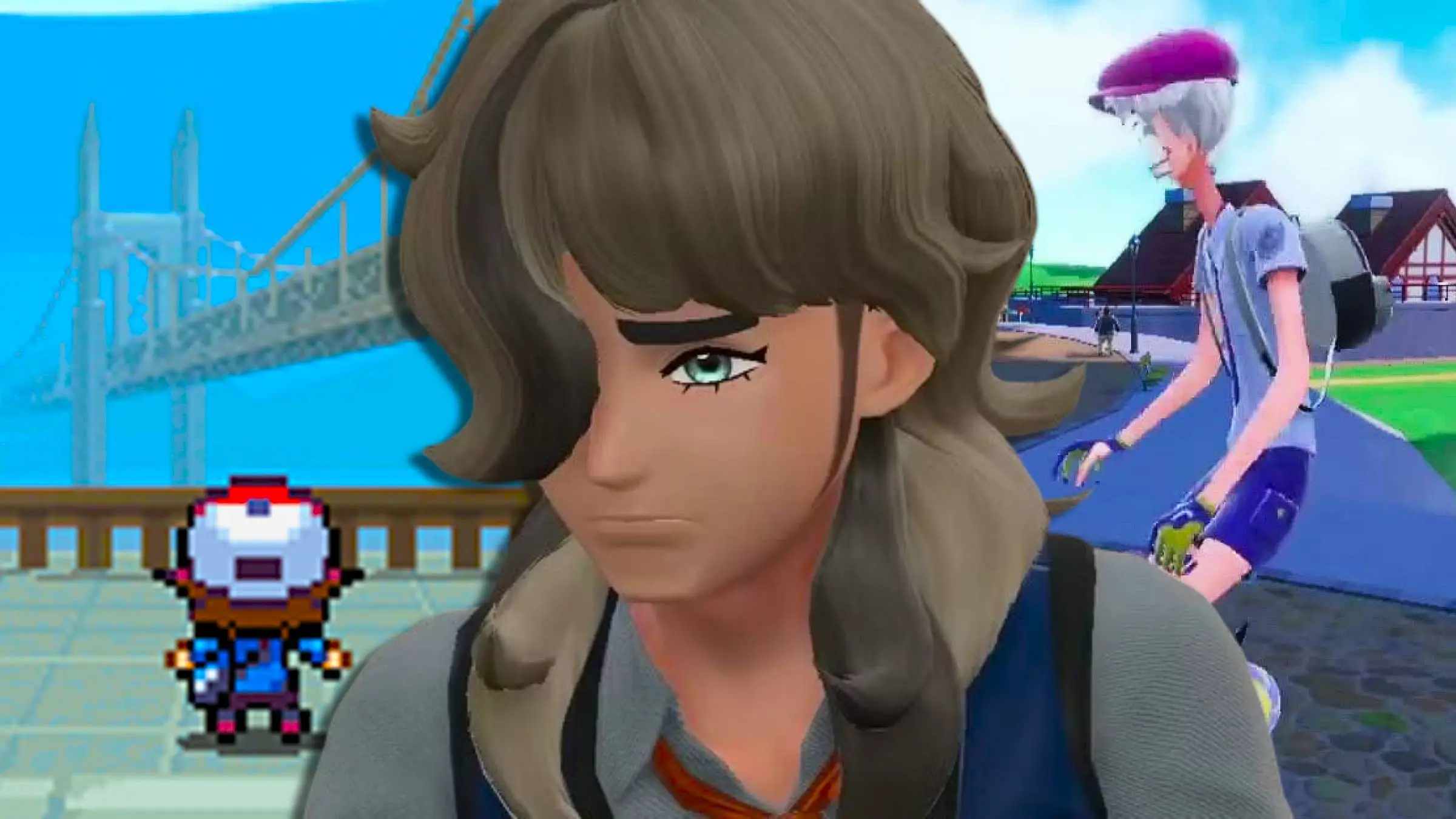
It’s hard to believe Pokémon is celebrating its 30th anniversary! It’s definitely the game series I’ve played the most in my life, and it consistently brought me joy for years. I have so many great memories of playing Pokémon under the covers, especially remembering the excitement of finally catching a Croagunk in Pokémon Pearl. Pokémon will always hold a special place in my heart. Its music is one of the few things that can reliably cheer me up, and its comforting gameplay feels like a warm escape.
Thinking about the 30th anniversary of Pokémon is tough for me. While I have a lot of fond memories, modern Pokémon games have so many flaws that I wonder if my nostalgia is just clouding my judgment. I keep asking myself if I simply enjoyed it more as a child, or if the series has always had these problems. And I wonder if there’s any hope for the future of Pokémon after so many disappointments. These thoughts run through my head even as I try to relax by listening to the music from Pokémon Diamond and Pearl. But after a lot of consideration, I think I’ve finally found some answers.
Modern Pokémon Games Are Getting Worse
I used to worry that my fond memories of Pokémon weren’t accurate, colored by nostalgia and how much I loved the games as a kid. But after replaying some of the older versions – like Ruby on the Game Boy Advance and Pokémon Black on the DS – I realized the issue isn’t with my memory. The newer Pokémon games just aren’t as good as the originals. It’s no surprise Pokémon is still so popular – those early games were truly amazing.
Game Freak didn’t just make bug collecting fun in their games; they made players genuinely care about both the process and the Pokémon they caught. They also skillfully designed the games to appeal to players of all ages, with the turn-based battles being a great example of how easy to pick up, yet surprisingly complex, the gameplay could be. A lot of thought went into creating interesting regions, both visually and in terms of gameplay, and filling them with diverse activities – from ship battles and Pokémon contests to peaceful safari explorations and unique catching methods.
Early Pokémon games on consoles before the Nintendo 3DS successfully became more complex while still capturing the original’s charm and sense of discovery, largely through introducing new creatures to collect. However, starting with Pokémon X & Y and becoming more pronounced in Sword and Shield, the series began to decline. The traditional turn-based battles became too easy, and powerful abilities constantly favored the player, turning the story into a series of simple fights geared only towards young children. It’s hard to consider modern Pokémon among the best turn-based RPGs when the game practically tells you what moves to make.
Recent Pokémon games have unfortunately lost much of what made the older ones great. Things like diverse environments, carefully crafted regions, and the excitement of discovering new Pokémon are missing, replaced by unnecessary features and mechanics. The switch to large, empty areas has diminished the series’ once-renowned and detailed world design. Including almost every Pokémon ever created means there’s little sense of novelty, and a lack of engaging side activities leaves the core gameplay feeling repetitive and basic. Beyond these issues, the games have also lost their unique artistic style and aren’t even particularly polished technically. The fundamental concept of Pokémon isn’t flawed; the problem is how drastically the series has changed.
Pokémon Is In Desperate Need Of Reinvention

The main problem with Pokémon games is that they’re still being made with the same limited budgets and development timelines as games from the Game Boy Advance era, even though they’re trying to deliver more complex experiences on modern hardware. This leads to issues with graphics and performance, as seen in games like Legends: Z-A and the core series titles. Ultimately, these constraints stifle innovation and prevent the games from truly evolving.
The surprising reason Pokémon is starting to feel stale is its resistance to change. It’s disappointing because the character designs and some of the new Pokémon show potential. However, a clear lack of innovation and failure to fully utilize what makes Pokémon special exposes these games as ultimately empty. This series desperately needs a fresh start; it’s so stuck in its old ways that it struggles to progress and improve.
The new Pokémon Legends: Z-A perfectly illustrates this point. Its city setting had the potential to be really interesting, showing how Pokémon live and interact in an urban environment and even change it to feel more like their natural home. Having a city as the main region in a Pokémon game is a daring and exciting concept, especially considering the creativity seen in older games. Unfortunately, the game’s city feels generic and lacks engaging activities, and doesn’t really showcase how Pokémon could have uniquely shaped the environment.
Pokémon May Never Change For The Better

What’s frustrating is that I don’t really believe things will improve. Pokémon isn’t struggling financially – it’s still incredibly successful, with each new game selling millions of copies. In fact, Scarlet and Violet managed to sell 10 million copies in just three days, even though critics didn’t like it and the game still has major technical problems. And that’s not even considering the revenue from things like the anime and trading card game, which bring in so much money that it easily covers the game’s development costs.
The Pokémon video game series has been incredibly successful, selling over 489 million copies worldwide – making it the fourth best-selling franchise of all time. Given this success, there’s little justification for the current state of the games, especially with ample funds available for improvement. The Pokémon Company doesn’t really need to make changes; they’re guaranteed massive sales regardless. From a business perspective, keeping production costs low actually increases profits when fans will buy the game no matter what. It’s simply a matter of maximizing return on investment.
Some might worry this could damage the Pokémon brand and cause fans to stop buying the games, but this decline in quality has actually been happening for over a decade. It’s not a sudden change, and many of us have already noticed it. A big reason for this is the lack of strong competition in the mainstream gaming market; we’re largely limited to whatever The Pokémon Company releases. It’s unfortunate, especially considering Pokémon’s once-amazing history, but it seems the series is stuck on this path.
I truly love Pokémon, despite its flaws, and I want future games to be amazing. I want new players to experience the same joy I felt playing years ago – that cozy feeling of getting lost in the game. Thankfully, Game Freak’s next game, Beast of Reincarnation, suggests they’re still capable of creating something special. While it’s unclear what Pokémon will look like on the next Nintendo Switch, I hope it recaptures the magic of the earlier games and moves away from the recent focus on profit.
Is the Pokémon franchise losing its appeal? Share your thoughts in the comments and join the discussion on the ComicBook Forum!
https://comicbook.com/gaming/feature/every-pokemon-mobile-game-ranked-worst-to-best/embed/#
Read More
- Gold Rate Forecast
- Kelly Osbourne Slams “Disgusting” Comments on Her Appearance
- ’90s Cartoon Reboot & TMNT Connection!
- Guardians of the Globe Members We Want to See in Invincible Season 4
- Hideo Kojima Says He Was Never Told About The Matrix Creators Wanting Him to Make a Game
- One of Hulu’s Best New Shows Lands on Disney+ Ahead of Season 2
- Dune 3 Gets the Huge Update Fans Have Been Waiting For
- Lies of P Has Sold More Than 4 Million Copies
- NASA Astronaut Butch Wilmore Retires 4 Months After Return From Space
- How Kylie Jenner Helped Khloe Kardashian Amid Tristan Thompson Scandal
2026-02-19 20:47