Author: Denis Avetisyan
New research reveals how the rotation of a black hole subtly alters the quantum behavior of superconducting materials.
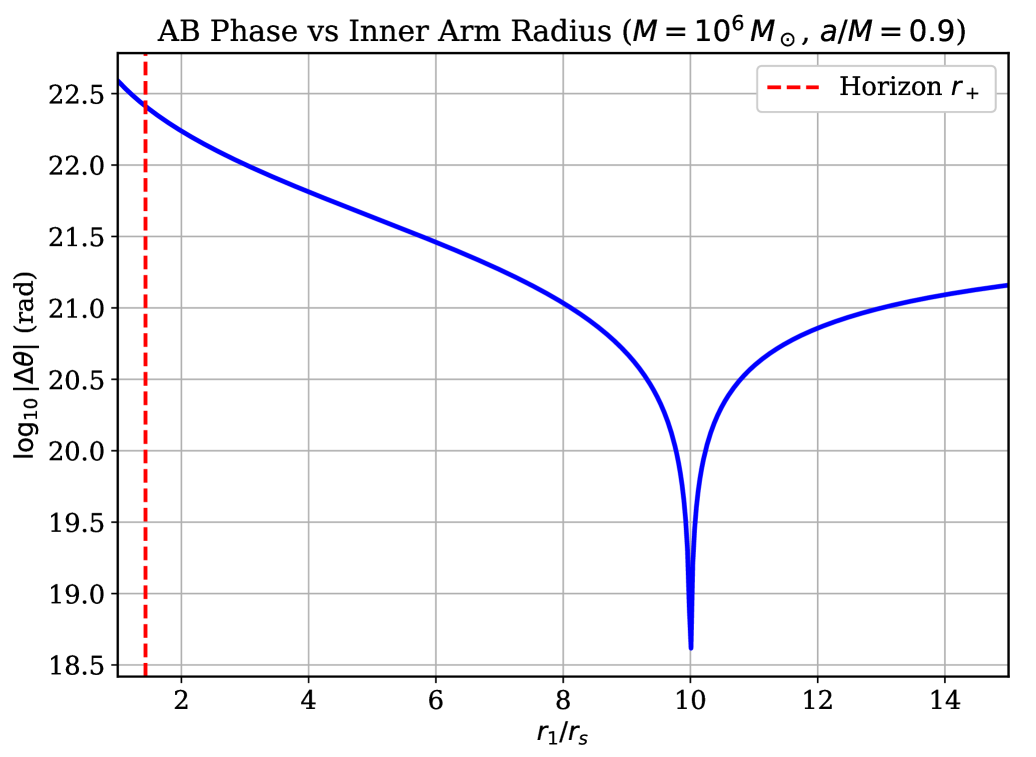
This theoretical study demonstrates a measurable phase shift in Cooper pairs due to frame-dragging in Kerr spacetime, extending the Aharonov-Bohm effect into the realm of strong-field gravity.
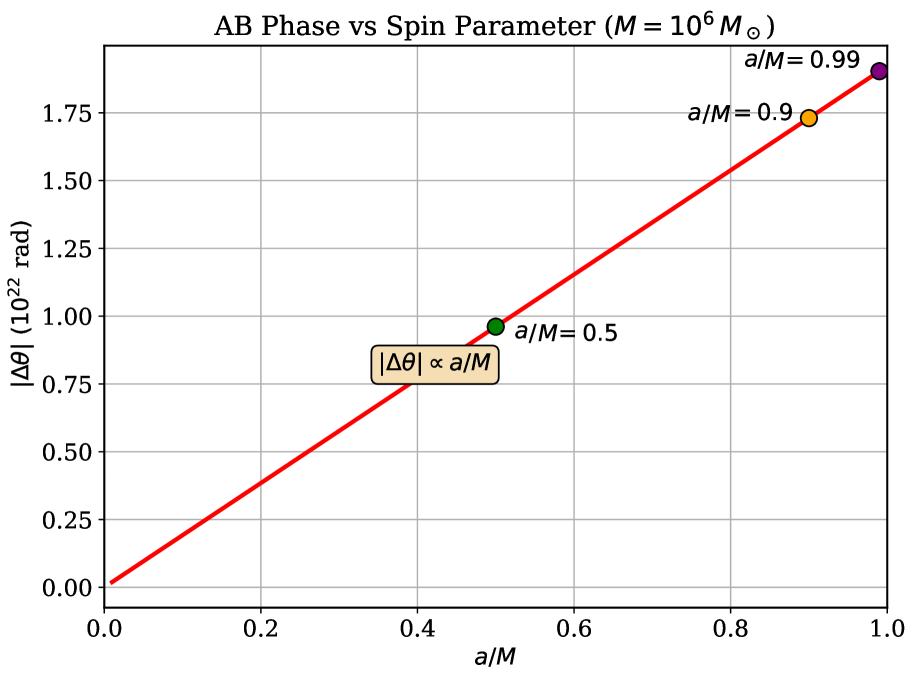
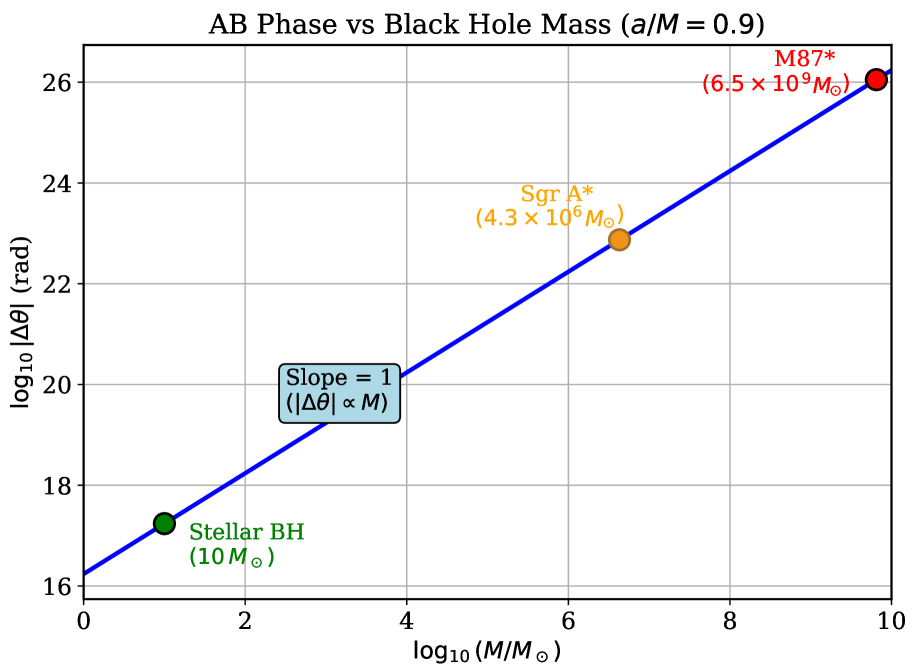
Reconciling quantum mechanics and general relativity remains a central challenge in physics, prompting investigations into subtle connections between these frameworks. This is explored in ‘Aharonov-Bohm Effect for Cooper Pairs in Kerr Spacetime: Gravitomagnetic Phase Shifts from Frame Dragging’, which theoretically investigates the effect of spacetime curvature on the quantum phase of Cooper pairs propagating near a rotating black hole. The authors demonstrate that frame-dragging generates a measurable Aharonov-Bohm phase shift-scaling with black hole mass and spin-potentially reaching magnitudes of \sim 10^{27} radians near supermassive black holes. Could this framework provide a pathway to observing quantum coherence linked to spacetime geometry, complementing emerging gravitational wave astronomy?
The Subtle Dance of Spacetime & Phase
The Aharonov-Bohm effect, initially observed with charged particles interacting with electromagnetic potentials, reveals a profound truth: physical effects aren’t always determined by forces at a location, but by the overall phase of a particle’s wave function accumulated along its path. This suggests that fundamental forces may operate not through direct contact, but via subtle influences on quantum phase. The initial demonstration highlighted that even in regions free of magnetic fields, a particle’s behavior can be altered by potentials existing elsewhere, demonstrating the importance of potential fields themselves as physical entities. This principle extends beyond electromagnetism, hinting at a deeper connection between phase and all fundamental forces, including gravity, where spacetime curvature acts as a gravitational potential. The implication is that spacetime distortions, even in the absence of direct gravitational interaction, could induce measurable phase shifts in quantum systems, potentially revealing a novel way to probe the very fabric of reality.
The Gravitational Aharonov-Bohm (AB) Effect necessitates a nuanced comprehension of how mass and energy warp the fabric of spacetime, as this distortion directly influences the phase of quantum particles. Unlike conventional electromagnetism where fields are added to a flat background, gravity is the curvature of spacetime itself; therefore, any particle traversing a region with gravitational potential experiences a phase shift not due to a direct force, but due to the altered geometry of its path. Calculating this effect demands solving Einstein’s field equations to accurately map the spacetime metric and then integrating the particle’s wave function along geodesics – the shortest paths within that curved space. The subtlety lies in the fact that this phase shift occurs even in regions seemingly devoid of gravitational forces, provided a closed path exists encircling a mass distribution; it’s a manifestation of gravity’s influence on the very structure of space, rather than a classical interaction.
The detection of a gravitational Aharonov-Bohm (AB) effect presents an extraordinary experimental hurdle, necessitating innovative methods to directly interrogate the fabric of spacetime. Unlike electromagnetic AB effects, gravity’s influence is mediated by spacetime curvature, creating a phase shift so subtle it requires exquisitely sensitive instruments. Current theoretical models predict this phase shift could be remarkably large – potentially reaching 10^{24} radians – in the vicinity of supermassive black holes like Sagittarius A*. This immense value, while promising for detection, also underscores the challenge: existing interferometry techniques are not designed to measure such extreme phase differences, demanding the development of entirely new approaches to probe gravitational effects on quantum particles and, ultimately, reveal the hidden connections between gravity and quantum mechanics.
Spacetime’s Geometry: A Blueprint for Influence
The Kerr metric, a solution to Einstein’s field equations, describes the spacetime geometry surrounding a rotating, uncharged black hole. Unlike the simpler Schwarzschild metric which applies to static, spherically symmetric masses, the Kerr metric accounts for the angular momentum of the black hole, represented mathematically by a rotation parameter a. This parameter directly influences the shape of the event horizon and the ergosphere, a region where spacetime is dragged along with the black hole’s rotation. The metric’s complexity arises from its use of Boyer-Lindquist coordinates, necessary to accurately represent the rotating spacetime. Calculations based on the Kerr metric are essential for modeling accretion disks, jet formation, and the orbits of particles and light around rotating black holes, providing predictions that differ significantly from those derived using the Schwarzschild metric.
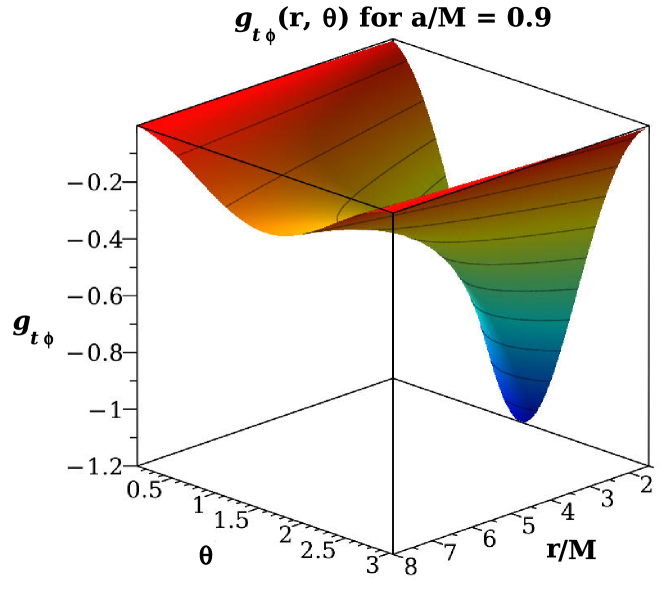
Gravitoelectromagnetism (GEM) posits formal mathematical analogies between the equations governing electromagnetism and those of gravitation, specifically utilizing a weak-field approximation of general relativity. This framework extends Newtonian gravity by introducing a gravitational vector potential, A_{\mu}, analogous to the electromagnetic four-potential. Consequently, a ‘gravitomagnetic field’, \mathbf{B}_g, arises from moving masses, similar to the magnetic field generated by moving charges. While the gravitational constant, G, and the speed of light, c, appear in the GEM equations, resulting in significantly weaker effects than their electromagnetic counterparts, this formalism allows for the calculation of effects like frame-dragging and gravitational analogs of electromagnetic phenomena. The equations are typically expressed in a form mirroring Maxwell’s equations, enabling the application of established electromagnetic techniques to gravitational problems within the specified weak-field limit.
Frame dragging, a prediction of gravitoelectromagnetism, describes the distortion of spacetime caused by the rotation of massive objects. This effect directly influences the Gravitational Aharonov-Bohm (AB) Effect, whereby the phase of a particle is altered as it travels through the distorted spacetime. Quantitative analysis demonstrates that the AB phase shift experienced by particles near M87*, a supermassive black hole, can be substantial, reaching magnitudes on the order of 1 x 10^{27} radians. This significant phase shift arises from the strong frame-dragging effects induced by the black hole’s rotation and provides a measurable consequence of the coupling between rotation and spacetime geometry.
Quantum Probes: Cooper Pairs and the Search for Subtle Shifts
Cooper pairs, formed by two electrons bound together via phonon interactions in superconducting materials, exhibit macroscopic quantum coherence, allowing them to act as sensitive probes of external fields. This sensitivity arises from the quantum mechanical phase of the pair’s wavefunction; even minute changes in the experienced potential, including those induced by gravitomagnetic fields, manifest as measurable phase shifts. Unlike classical particles, the wavefunction of a Cooper pair isn’t localized, but extends across a macroscopic distance – the coherence length – making them uniquely susceptible to effects that alter their phase, such as distortions in spacetime. The ability to precisely measure these phase changes forms the basis for utilizing Cooper pairs in the detection of subtle gravitational phenomena, specifically through devices like Superconducting Quantum Interference Devices (SQUIDs).
Ginzburg-Landau Theory (GLT) provides a phenomenological description of superconductivity, focusing on the superconducting order parameter, \Psi(r), which quantifies the density of superconducting Cooper pairs. GLT posits that the free energy of a superconductor is minimized when \Psi(r) takes on a complex value, representing both the amplitude and phase of the Cooper pair condensate. Spatial variations in \Psi(r) are governed by a complex Ginzburg-Landau equation, incorporating parameters like the coherence length, ξ, and the penetration depth, λ. The theory successfully predicts many superconducting phenomena, including the Meissner effect, vortex formation, and the critical fields H_{c1} and H_{c2}, and forms the basis for understanding how Cooper pairs respond to external fields, including those arising from spacetime distortions.
The Gravitational Analog of the Aharonov-Bohm (AB) Effect, predicted by general relativity, proposes that a superconducting loop will exhibit a phase shift in Cooper pairs due to spacetime distortion, measurable via a Superconducting Quantum Interference Device (SQUID). SQUID technology provides the necessary sensitivity to detect these minute phase changes induced by gravitational fields. Maintaining Cooper pair coherence is critical for accurate measurement; calculations indicate a minimum separation distance of 10 r_s is required between the constituent particles of the Cooper pair. This distance ensures that tidal forces, resulting from the spacetime curvature, remain negligible and do not disrupt the quantum state of the pair, thereby enabling a reliable detection of the gravitational phase shift.
Cosmic Signatures: Black Holes, the CMB, and the Fabric of the Early Universe
The Event Horizon Telescope’s groundbreaking images of supermassive black holes, like those at the center of M87 and Sagittarius A*, aren’t simply visually stunning; they represent a powerful validation of Einstein’s theory of general relativity and, specifically, the Kerr metric. This metric describes the spacetime geometry around rotating black holes, predicting phenomena like frame-dragging – the twisting of spacetime itself. The observed shadow of the black hole, its size and shape, align remarkably well with predictions derived from the Kerr metric, confirming the existence of an ergosphere – a region where spacetime is dragged along with the black hole’s rotation – and the expected distortions of light around these objects. These observations demonstrate that the universe behaves as general relativity predicts even in the most extreme gravitational environments, offering compelling evidence for the accuracy of \text{Kerr metric} and solidifying its status as the most accurate description of rotating black holes.
The Cosmic Microwave Background, a relic glow from the early universe, isn’t merely a snapshot of the infant cosmos; it also holds potential clues about the influence of rotating masses throughout cosmic history. Scientists theorize that supermassive black holes, possessing immense spin, could have imprinted subtle polarization patterns onto the CMB as their rotational energy interacted with photons shortly after the Big Bang. Detecting these faint ‘cosmic fingerprints’ requires extremely precise measurements of the CMB’s polarization, a challenging endeavor currently undertaken by advanced observatories. While still highly speculative, a positive detection would not only confirm the existence of rotating supermassive black holes in the early universe, but also provide a novel method for probing the distribution of dark matter and testing fundamental predictions of general relativity regarding spacetime curvature and angular momentum. The search for these subtle effects represents a fascinating intersection of cosmology, astrophysics, and gravitational physics.
Tidal forces, the differential gravitational pull on an object’s near and far sides, are not simply a consequence of gravity’s strength but are fundamentally shaped by the geometry of spacetime itself, as described by the Kerr Metric. This metric, which details the spacetime around rotating black holes, dictates how these forces stretch and compress objects venturing too close. Consequently, accurate interpretation of astrophysical observations-from the disruption of stars nearing supermassive black holes to the orbital dynamics of binary systems-requires a precise understanding of these tidally-induced distortions. The magnitude and pattern of these forces aren’t just proportional to mass; they’re intricately linked to the object’s spin and the curvature of spacetime, allowing scientists to probe the very fabric of the universe through the observation of extreme gravitational environments. F_{tidal} = \frac{2GMm}{r^3} accurately captures the essence of tidal forces, but the Kerr Metric adds critical nuances for rotating systems.
Beyond Detection: Hawking Radiation, Future Implications, and the Limits of Our Understanding
The theoretical framework surrounding black holes took a dramatic turn with Stephen Hawking’s prediction of radiation emanating from these cosmic entities, a phenomenon now known as Hawking radiation. This radiation isn’t simply material escaping the black hole’s gravity, but rather arises from quantum effects near the event horizon, as predicted by the Kerr metric which describes rotating black holes. Specifically, virtual particle pairs constantly appearing and disappearing in the vacuum of space can be separated by the black hole’s intense gravity; one particle falls in, while the other escapes as Hawking radiation. Investigating this radiation – though incredibly challenging due to its faintness – promises to unlock crucial insights into the intersection of quantum mechanics and general relativity, potentially revealing the fundamental quantum properties of black holes and how they warp the fabric of spacetime. Such research could also provide a pathway to understanding information loss paradoxes and the ultimate fate of black holes as they evaporate over vast timescales.
The successful detection of the Gravitational Aharonov-Bohm (AB) Effect promises a paradigm shift in gravitational wave astronomy. While current detectors rely on massive, cataclysmic events like black hole mergers, the Gravitational AB Effect reveals a subtler interaction between gravity and quantum mechanics, potentially unveiling gravitational waves generated by far less dramatic phenomena. This effect, analogous to its electromagnetic counterpart, demonstrates that gravity can influence particles even in regions seemingly devoid of a gravitational field, opening the possibility of detecting waves currently beyond the sensitivity of existing instruments. Exploiting this principle could allow astronomers to map gravitational fields with unprecedented precision, probing the distribution of dark matter, investigating the early universe, and ultimately, revealing new facets of the cosmos previously hidden from view. This new window into gravitational phenomena could complement and enhance the capabilities of current and future observatories, ushering in a golden age of gravitational wave astronomy.
The pursuit of understanding phenomena like Hawking radiation and the Gravitational AB Effect extends far beyond confirming existing theories; it delves into the very foundations of cosmological understanding. Investigations into these areas promise potential breakthroughs regarding the universe’s earliest moments, offering clues to conditions immediately following the Big Bang and potentially resolving inconsistencies in current models of cosmic inflation. Furthermore, anomalies observed in galactic rotation curves and the distribution of mass suggest the existence of dark matter, a substance that doesn’t interact with light; research into subtle gravitational effects could reveal properties of dark matter particles or even suggest modifications to general relativity that account for these observations. Ultimately, this line of inquiry isn’t merely about validating the Standard Model of particle physics – it actively seeks evidence of physics beyond it, potentially uncovering new particles, forces, and dimensions that reshape our understanding of reality itself.
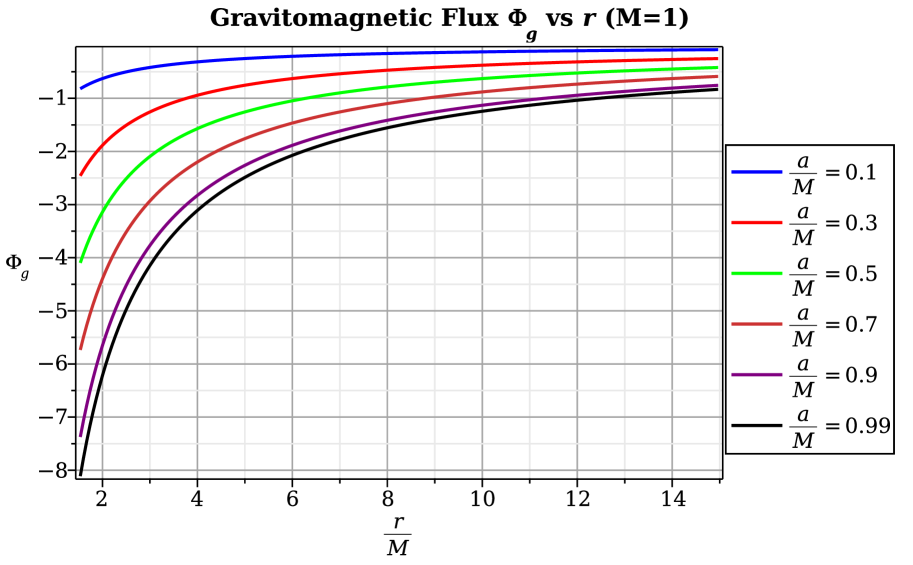
The exploration of quantum phenomena within the warped spacetime of a Kerr black hole, as detailed in this work, reveals an intrinsic order arising from fundamental physical principles. The gravitomagnetic phase shift experienced by Cooper pairs isn’t imposed, but rather emerges as a natural consequence of frame-dragging and the interplay between gravity and quantum coherence. This echoes Leonardo da Vinci’s observation: “Simplicity is the ultimate sophistication.” The study doesn’t attempt to control quantum behavior, but to understand how local rules – in this case, the geometry of spacetime and the properties of Cooper pairs – give rise to complex, observable effects. This exemplifies how self-organization, driven by underlying constraints, yields elegant and predictable results, mirroring the inherent order found in nature itself.
Where Does the Current Flow?
This work, concerning phase shifts for Cooper pairs navigating frame-dragging, suggests a curious truth: influence, not control, governs quantum behavior within curved spacetime. The calculation reveals a gravitational analog to the Aharonov-Bohm effect, yet the interpretation extends beyond simple analogy. Every connection carries influence; the black hole doesn’t force a phase shift, it merely alters the potential landscape. The resultant coherence, or lack thereof, emerges from the interactions of the pairs with this altered geometry.
A natural progression lies in considering realistic accretion disk environments. The idealized Kerr metric offers a clean starting point, but the presence of plasma, magnetic fields, and other astrophysical complexities will introduce decoherence mechanisms. Identifying the interplay between gravitational and electromagnetic influences on quantum coherence represents a significant challenge. The question isn’t whether gravity can create an AB effect, but how readily environmental noise obscures it.
Ultimately, the true value of this line of inquiry isn’t predicting measurable interference patterns (though that remains a worthy goal). Instead, it’s the subtle reminder that self-organization is real governance without interference. The universe doesn’t require a conductor; it achieves order through the emergent properties of local interactions.
Original article: https://arxiv.org/pdf/2602.20337.pdf
Contact the author: https://www.linkedin.com/in/avetisyan/
See also:
- The Super Mario Galaxy Movie: 50 Easter Eggs, References & Major Cameos Explained
- All 13 Smash Bros. Characters in the Super Mario Galaxy Movie
- 10 Best Free Games on Steam in 2026, Ranked
- Sydney Sweeney’s The Housemaid 2 Sets Streaming Release Date
- Welcome to Demon School! Iruma-kun season 4 release schedule: When are new episodes on Crunchyroll?
- WTH?! Twitter Drops Fake Daredevil: Born Again Season 2 Spoilers as Character Return Confirmed
- Why is Tech Jacket gender-swapped in Invincible season 4 and who voices her?
- Dune 3 Gets the Huge Update Fans Have Been Waiting For
- Highly Anticipated Strategy RPG Finally Sets Release Date (And It’s Soon)
- How Blake Lively & Ryan Reynolds’ Kids Pranked Her on April Fool’s Day
2026-02-26 02:11