Thief VR: Legacy of Shadow is a letdown. While the game had a lot of potential before it came out, developed by Maze Theory for Vertigo Games, finishing it left us feeling more relieved than satisfied.
Thief VR: Legacy of Shadow picks up the story from the last game in 2014. You play as Magpie, a clever thief who unexpectedly gains powers from ancient technology. This connection also gives her the voice of the previous hero, Garrett, inside her head.
The story puts you in the role of someone stealing valuable ancient objects from a cruel leader. He’s planning a dangerous ritual during the blood moon, connected to powerful, lost technology. It sounds like trouble!
You’ll carefully move through abandoned mansions and pubs now used as bases by different groups, stealing anything you can get your hands on while staying hidden from guards and using the shadows to your advantage.

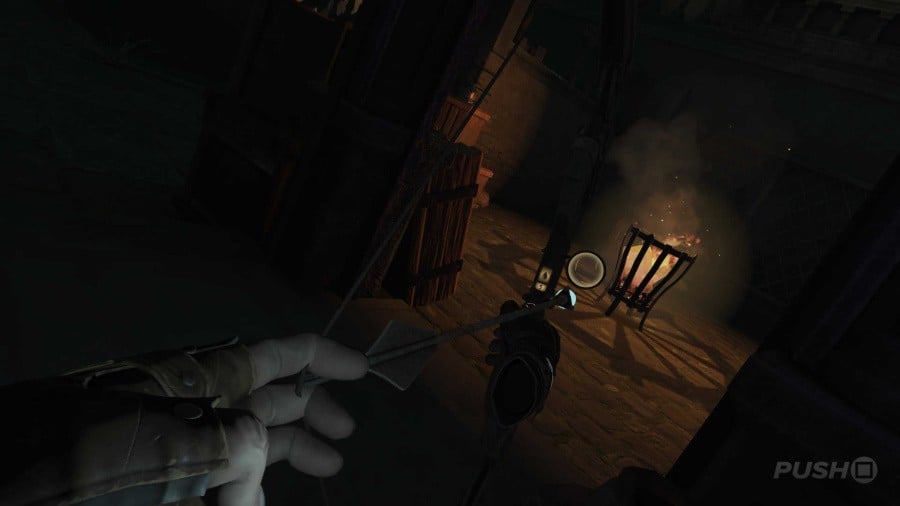
Thief VR immediately feels promising. Similar to other games from Vertigo Games on PSVR2, like Metro Awakening and Arizona Sunshine 2, it creates a strong sense of atmosphere, with a dark and gritty visual style reminiscent of Dishonored.
We loved the feel of the first few stages – climbing pipes and grabbing items from open windows was a blast. It was also really satisfying to discover secret paths and find new keys.
Each stage usually has several different ways to enter, and although it’s not as large or detailed as a major game, it’s enjoyable to find these entrances yourself.
Thief VR feels remarkably smooth and natural to play. Climbing, opening doors, searching drawers, and even aiming your bow all work seamlessly, creating a really satisfying experience.

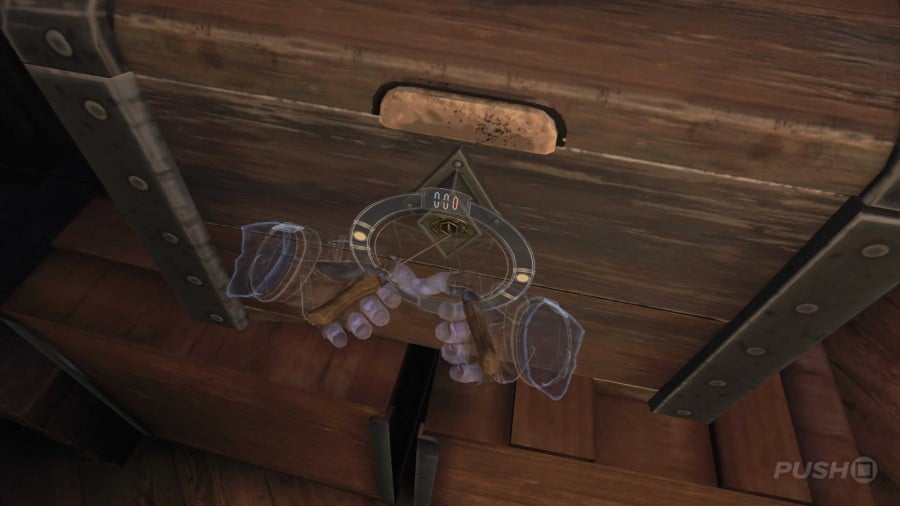
We especially loved the lock-picking feature. While the game initially shows you a visual guide to line up the picks, we disabled it for a more realistic experience. Instead, we relied on the controller’s vibrations to feel when the lock was opening – it’s surprisingly satisfying and never gets boring.
You’ll also have fun experimenting with different arrow types. Your bow can use water arrows to put out fires, or rope arrows to climb buildings, which encourages exploration and interaction with the game world.
You can hide in the shadows, and a gem on your right hand shows how visible you are. While the darkness feature is neat, we wish there was a way to adjust the overall brightness, as it doesn’t always get dark enough.
With the helpful Keeper technology, you can use Keeper Sight to reveal hidden secrets. This will highlight things like secret passages, disguised as false walls or moving bookshelves, and even valuables hidden behind pictures. It always pays to carefully examine your surroundings!

The game seems fine at first, but more problems become noticeable as you play further into it.
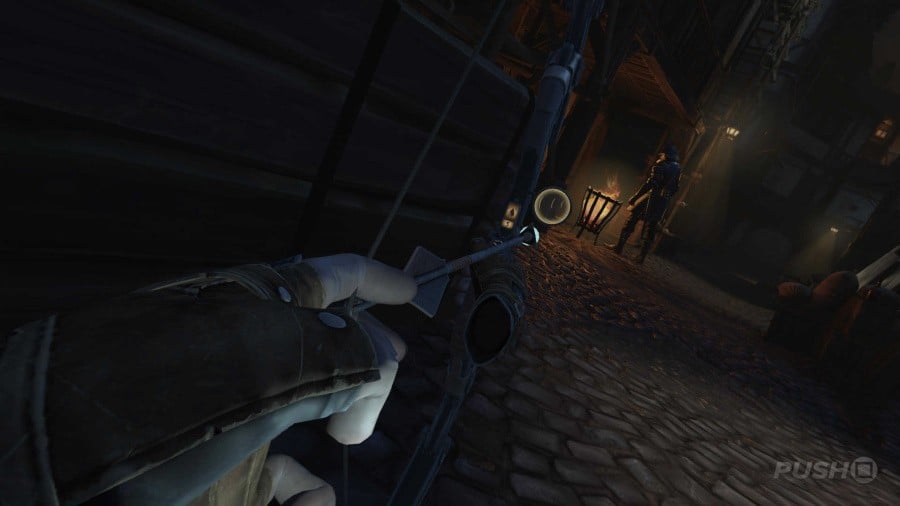
The enemy AI is very basic. Sometimes they’re slow to react to your presence, and other times they seem to notice you instantly. They follow set routes and won’t pursue you if you move away, nor will they alert other enemies if they see you.
So, enemies will charge right at me. Usually, I can either duck out of sight for a bit and they’ll lose interest, or I can quickly block their attack and then take them down. It’s pretty basic, but it works!
You can also silently take out guards from behind with your truncheon, but that’s pretty much all you can do with them.
You can move bodies into the shadows to conceal them, but it’s only useful if another guard’s patrol route overlaps the area, otherwise no one will discover them.
Stealth is central to any Thief game, so we didn’t anticipate a lot of direct fighting. However, we were hoping for enemies that presented a slightly bigger challenge to keep things exciting.
To make matters worse, we also came across numerous glitches during our playthrough.
Sometimes, we got stuck and couldn’t pick up objects or use our weapon, forcing us to start the game over. On other occasions, our character would suddenly become very short, and we couldn’t change our height by crouching or standing. This also meant restarting the game to fix it.
We noticed a frustrating problem with how the game saves progress. Every time we had to restart the game, we were forced to watch the same cutscene again and replay the entire level from the beginning – there’s no option to continue from where we last stopped.
However, this did allow us to test how replayable the levels are. As we noted before, each level features multiple ways to enter and plenty of hidden secrets to find.
After looking closely, we realized the levels weren’t dense enough to make replaying them worthwhile. You can experience pretty much everything the levels have to offer in just one playthrough.
Every level includes different challenges. Successfully completing some of these challenges will give you lasting benefits, such as beginning each level with extra water arrows or landing more quietly after falling from heights.

Everything you steal in the game is connected to a core goal. While you’re asked to collect half of all the items in each level, collecting more is just for players who like to find everything. Importantly, the items you collect can’t be used to improve your character or buy anything back at your base.
Although missions offer different approaches – like entering through a window instead of a sewer – there’s ultimately only one way to successfully complete each one.
Honestly, I was pretty let down by how short the game felt. And the ending? It just felt like they ran out of ideas and recycled a couple of levels we’d already played, which was a real letdown after everything we’d built up to.
Read More
- The Super Mario Galaxy Movie: 50 Easter Eggs, References & Major Cameos Explained
- 10 Best Free Games on Steam in 2026, Ranked
- Surprise Isekai Anime Confirms Season 2 With New Crunchyroll Streaming Release
- Why is Tech Jacket gender-swapped in Invincible season 4 and who voices her?
- ‘Project Hail Mary’: The Biggest Differences From the Book, Explained
- Sydney Sweeney’s The Housemaid 2 Sets Streaming Release Date
- Skate 4 – Manny Go Round Goals Guide | All of the Above Sequence
- Preview: Sword Art Online Returns to PS5 as a Darker Open World Action RPG This Summer
- 10 Best Supporting Actress Oscar Wins That Are Indisputable
- The Punisher: One Last Kill Trailer Review: MCU Special Could Be a Game Changer
2025-12-08 15:38