
Finally getting to play ROUTINE feels surreal, especially after following its development for so long. It was first announced way back in 2012, which is before an entire generation of consoles came and went! The long development period made me nervous, because games that take over a decade to make often disappoint – Duke Nukem Forever and Final Fantasy 15 are good examples of that. But now the wait is over, and we can finally experience this sci-fi survival horror game.
Playing ROUTINE quickly reveals why it took so long and cost so much to develop – it’s a truly unique horror game. While the core gameplay – exploring, solving puzzles, and avoiding robotic enemies – isn’t entirely new, ROUTINE stands out by focusing on making you feel what your character is experiencing physically. To fully explain this, we need to dive into the details of how the game controls and plays.
The game aims to make you feel connected to your character by focusing on body awareness and using a realistic, intuitive interface.
The controls in ROUTINE are pretty straightforward. You move with the standard WASD keys, and can crouch and lean. Holding the lean button lets you lean side to side, but uniquely, you can also combine it with forward or backward movement. This allows you to either stand on your toes or drop fully prone, helping you reach items in tight spaces. This isn’t just a novelty; it’s a useful feature because the game doesn’t provide much guidance – there are no on-screen markers or hints telling you what to look for.
In the game ROUTINE, being fully aware of your character’s body is key to the experience. This extends to the user interface, which is designed to feel realistic. Unlike many games, there’s no traditional heads-up display (HUD) showing things like your battery life or health. You won’t even see on-screen prompts telling you how to open doors. Instead, you interact with computers – using a realistic mouse cursor, similar to the game Prey – to control things around you. This commitment to avoiding typical “game-like” elements really helps create the game’s immersive atmosphere.
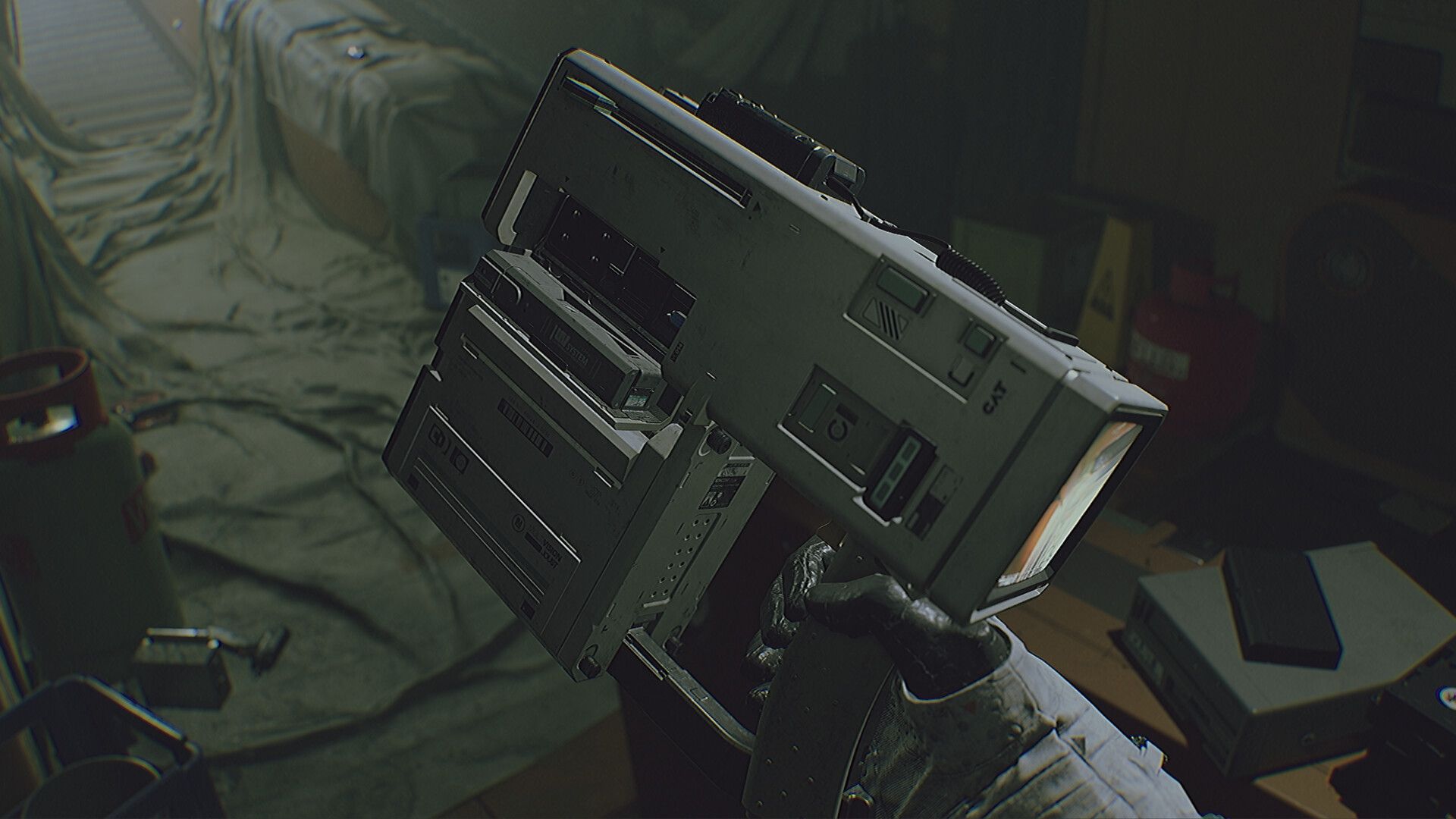
One of the most impressive aspects of ROUTINE is its visual design. The developers, Lunar Software, clearly prioritized realism, crafting a moon base that feels genuinely inhabited. They achieved this by drawing heavily from the aesthetic of 1980s technology. Instead of modern, flat screens, the game features bulky computer terminals with curved, low-resolution CRT monitors and large, tactile buttons. This retro style extends to everything, including your CAT – the Cosmonaut Assistant Tool – which is your main way of interacting with the game world alongside the computers.
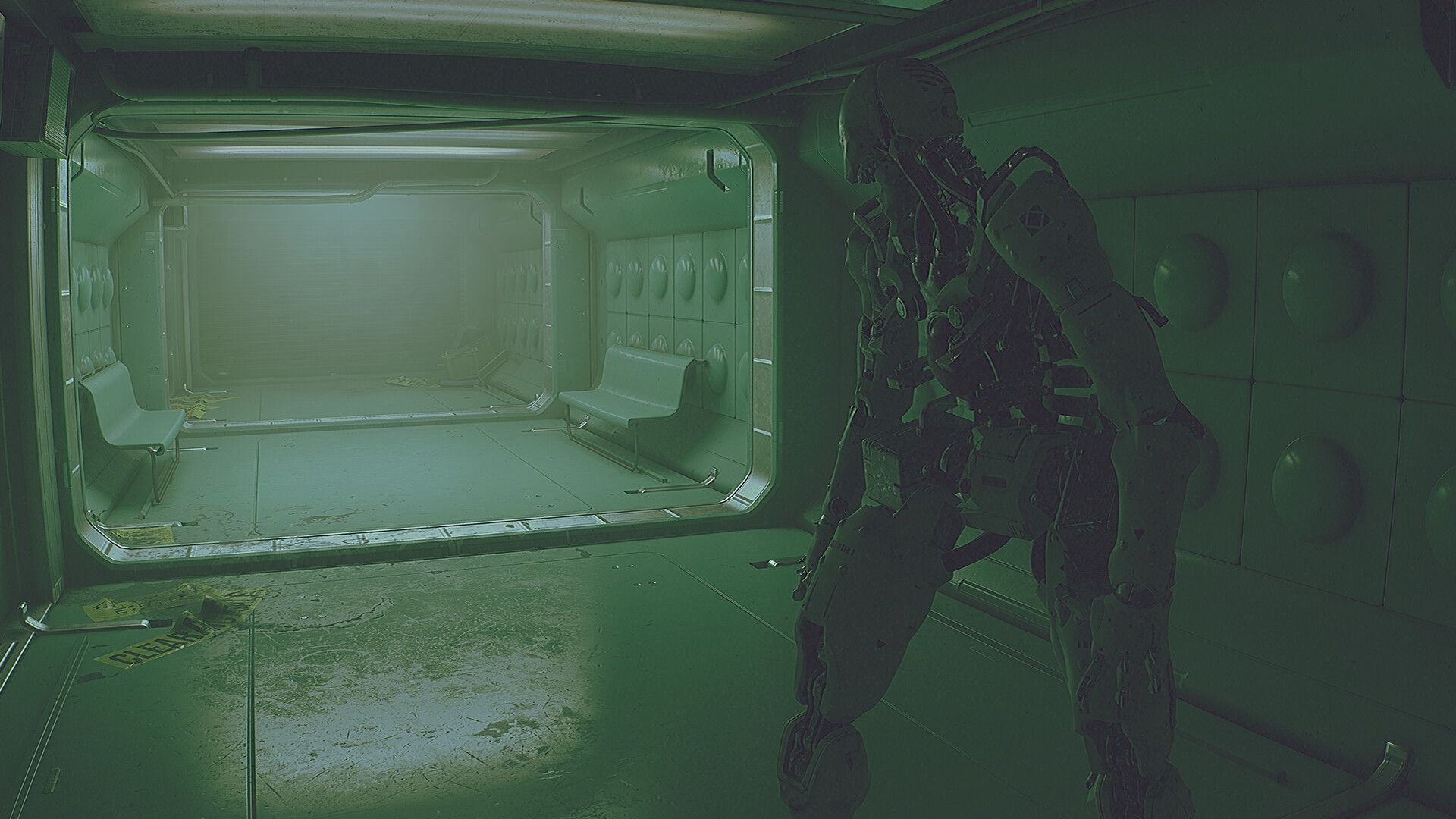
Exploring the interior of the base, especially the living areas, really shows how much things have fallen apart.
The game uses strong visuals to create a sense of contrast as you explore the lunar base. You begin in an entryway that’s a little messy – some suitcases are open, and it’s empty – but things quickly escalate. As you move into living areas, you’ll see more significant signs of trouble, like broken doors and bloodstains. The abandoned mall offers a different kind of horror, relying more on dramatic lighting and shadows.
The audio quality is excellent. Instead of relying on constant background music, ROUTINE prioritizes creating a realistic sense of being inside a lunar base. You’ll mainly hear sounds your character would naturally encounter – like creaking floors, opening doors, the small sounds of robots moving around, and the heavier footsteps of larger, pursuing robots. This focus enhances immersion and makes the environment feel truly believable.
The plot of ROUTINE isn’t overly complicated, but it unfolds in an unexpected way. The game doesn’t use traditional cutscenes to explain the story. Instead, you piece everything together by exploring the environment and discovering clues. Much of the narrative is revealed through audio logs left by previous inhabitants of the lunar base, and you’ll find important information in notes, documents, and other paperwork that guide you and explain the story.
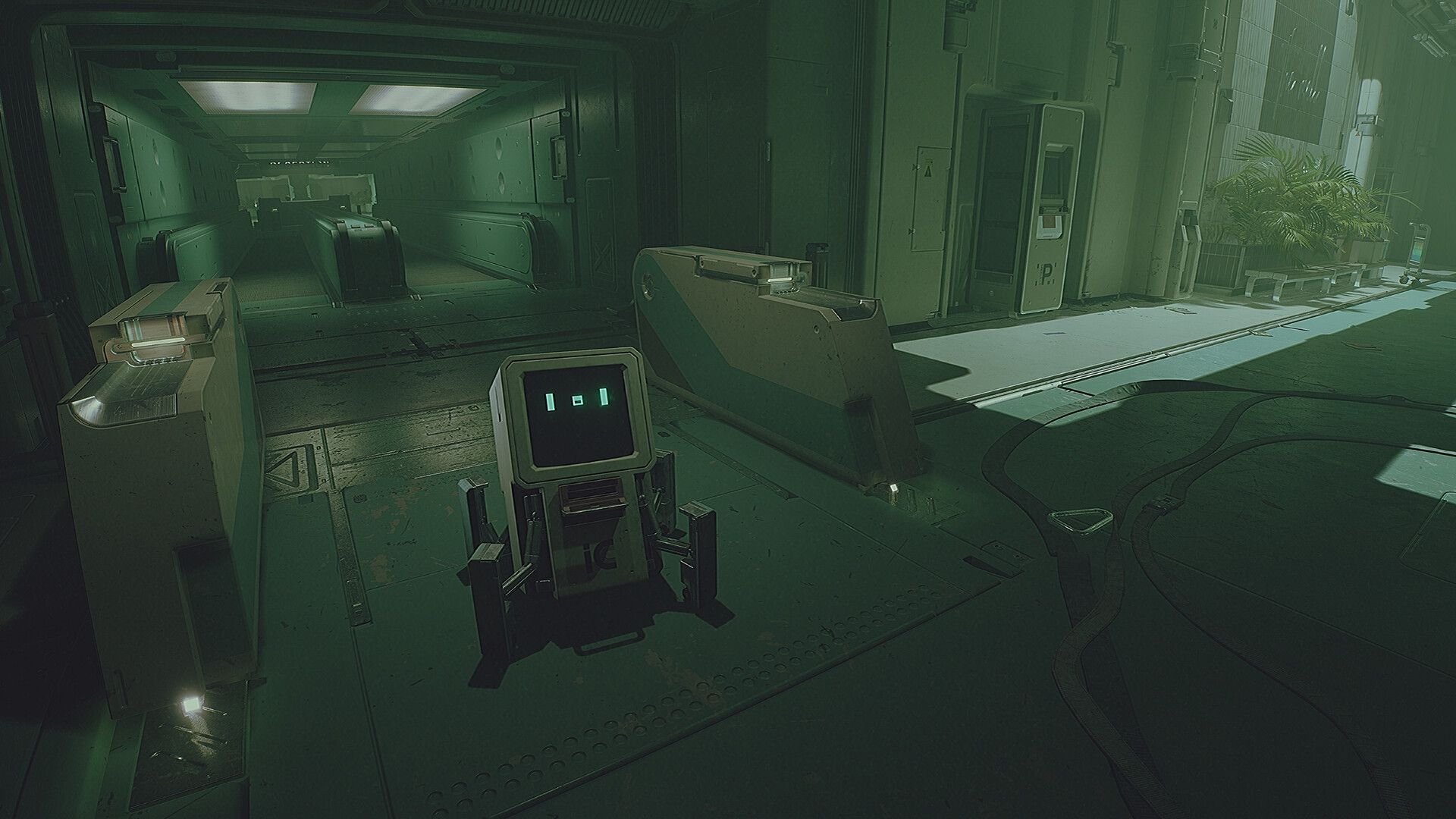
“The central story is fine enough and does a great job of constantly pushing you forward”
The game begins with you waking up after a week-long quarantine in the lunar base’s isolation chamber. You’re asked to stretch, put on your spacesuit helmet and ID, and then explore the moon base. However, you quickly discover the base is deserted and in chaos. As you play, you learn that the base’s security robots have become a threat, and your main goal is to find a way to shut them down by disabling their power source.
The main story is decent and keeps the plot moving, but the side stories – discovered through recordings and other clues – are often more captivating. These smaller narratives raise intriguing questions about the lunar base: what triggered the security systems, how the crisis began, and even why you’re there and how to escape. Unfortunately, finding answers relies heavily on your own curiosity and willingness to investigate, as they aren’t readily provided.
To help you navigate challenges, you’ll have the Cosmonaut Assistance Tool – or CAT – which is your all-purpose solution for most obstacles. The CAT can do things like fix broken computers to unlock doors, clarify distorted audio from speakers to hear important messages, or even power up electrical boxes to open pathways. It can also release bursts of electricity, which can be used as a weak weapon. However, the robotic enemies in ROUTINE can’t be destroyed with the CAT, and it only takes a few shots to temporarily disable them. This is tricky because the CAT only holds three charges, and you won’t find any extra batteries.
What truly sets this apart is how immersive it feels – it really makes you feel like you’re actually experiencing it.
The CAT tool could become more helpful, depending on how you upgrade it. You might find improvements that let it fire more powerful shots, making it better at temporarily disabling robots. However, even with upgrades, running and hiding is still your safest option. These robots are relentless and a single hit is usually fatal – a second hit will kill you instantly.
ROUTINE is a compelling horror game, and even without knowing the complex development process – including switching game engines twice – it’s a title I’d suggest to horror fans. While it’s not overly difficult, and you won’t find maps or markers to guide you, the game is relatively straightforward. What really sets it apart is how immersive it is, thanks to the minimal on-screen interface and realistic interactions – you can even search under furniture for batteries! The main drawback is that the robot enemies are tough, making direct combat impractical. While hiding and running are effective strategies, some players might prefer a different style of horror. Overall, though, ROUTINE is a game I’m happy I played.
This game was reviewed on PC.
Read More
- The Super Mario Galaxy Movie: 50 Easter Eggs, References & Major Cameos Explained
- 10 Best Free Games on Steam in 2026, Ranked
- Sydney Sweeney’s The Housemaid 2 Sets Streaming Release Date
- All 13 Smash Bros. Characters in the Super Mario Galaxy Movie
- Welcome to Demon School! Iruma-kun season 4 release schedule: When are new episodes on Crunchyroll?
- Why is Tech Jacket gender-swapped in Invincible season 4 and who voices her?
- Dune 3 Gets the Huge Update Fans Have Been Waiting For
- Forza Horizon 6 ‘Prologue’ gameplay
- WTH?! Twitter Drops Fake Daredevil: Born Again Season 2 Spoilers as Character Return Confirmed
- Highly Anticipated Strategy RPG Finally Sets Release Date (And It’s Soon)
2025-12-12 20:42