Author: Denis Avetisyan
A novel experiment leveraging neutron interferometry could reveal the elusive interactions between ordinary matter and the hidden sector of dark matter.
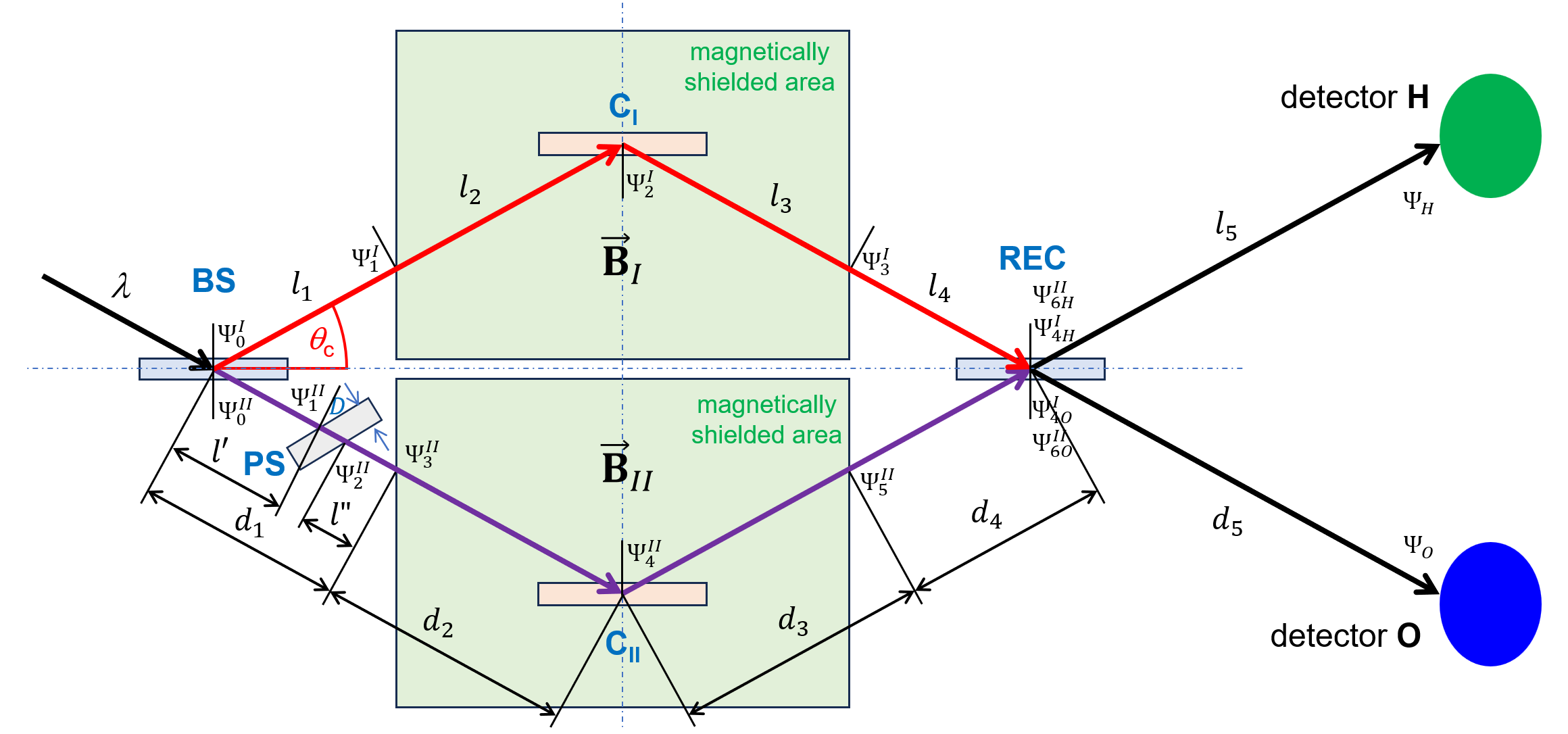
This review details a proposed setup to detect neutron-mirror neutron mixing and explore potential explanations for the neutron lifetime anomaly.
The nature of dark matter remains one of the most compelling mysteries in modern physics, challenging our understanding of the universe’s composition. In the article ‘Neutron interferometry as a dark matter detector’, we explore a novel approach to probing the dark sector by searching for evidence of mirror neutrons-hypothetical counterparts to ordinary neutrons that interact weakly with our world. Our analysis details an interferometer design utilizing bandpass multilayers to sensitively detect neutron-mirror neutron mixing, demonstrating its potential to explore a considerable range of mixing parameters with existing neutron sources. Could this setup provide the first direct observation of mirror matter and illuminate the composition of the elusive dark universe?
The Unseen Architecture of Reality
Observations of galactic rotation curves and the cosmic microwave background reveal a startling discrepancy: the visible matter in the universe accounts for only a small fraction of the total mass needed to explain its structure and behavior. This unseen mass, dubbed dark matter, constitutes approximately 85% of the universe’s total matter content and exerts gravitational influence on visible matter, shaping the large-scale structure of galaxies and galaxy clusters. While its existence is inferred through these gravitational effects, direct detection of dark matter particles has remained elusive, prompting a vigorous search employing increasingly sensitive detectors and innovative theoretical models. The nature of this enigmatic substance remains one of the most profound mysteries in modern cosmology, driving research across multiple disciplines in physics and astronomy.
Despite decades of intensive effort, the direct detection of dark matter remains one of the most significant challenges in modern physics. Experiments designed to observe the faint interactions between dark matter particles and ordinary matter – utilizing increasingly sensitive detectors shielded deep underground to minimize background noise – have consistently returned null results. This lack of conclusive evidence has forced physicists to re-evaluate fundamental assumptions and explore increasingly innovative detection strategies. Current research pushes the boundaries of experimental physics, employing novel materials, advanced signal processing techniques, and exploring previously unconsidered interaction models, all in the pursuit of unveiling the nature of this elusive substance that comprises a substantial portion of the universe’s mass.
The persistent mystery of dark matter may find resolution not through direct detection, but via a ‘mirror sector’ – a theoretical realm of particles that interact amongst themselves with forces similar to those governing ordinary matter, yet interact with our world only very weakly. This hypothesis proposes dark matter isn’t simply invisible, but exists in a parallel reality, exchanging particles with the visible universe through subtle interactions. Researchers are now exploring the possibility of detecting these ‘messenger’ particles, potentially revealing the nature of dark matter by observing the faint traces of its mirrored existence. This approach shifts the focus from seeking direct collisions to identifying extremely rare events mediated by particles that bridge the gap between the visible and hidden sectors, promising a novel pathway to unraveling one of cosmology’s greatest enigmas.
The quest to understand dark matter demands a departure from conventional detection strategies, prompting physicists to devise increasingly sophisticated experimental techniques. Current approaches, largely focused on weakly interacting massive particles (WIMPs), have yet to yield definitive results, fueling exploration into alternative detection paradigms. These include utilizing ultra-sensitive detectors shielded deep underground to minimize background noise, employing novel materials with enhanced sensitivity to potential dark matter interactions, and leveraging astrophysical observations to indirectly infer dark matter’s presence through gravitational effects or annihilation products. Furthermore, researchers are investigating the potential for axion detection using resonant cavities and exploring the use of quantum sensors to amplify faint signals. The development of these innovative technologies isn’t merely about finding dark matter; it’s pushing the boundaries of precision measurement and materials science, potentially unlocking discoveries far beyond the realm of particle physics.
Probing the Hidden Symmetry: Neutron Interferometry
Neutron interferometry offers a high degree of sensitivity in the search for neutron-mirror neutron mixing due to its reliance on wave-like properties and the principle of quantum superposition. Unlike scattering experiments that rely on measurable energy loss, interferometry assesses phase shifts in neutron waves, allowing for the detection of exceedingly small effects. The technique involves splitting a neutron beam, directing the resulting waves along separate paths, and then recombining them to create an interference pattern. Any mixing with a mirror neutron state alters the phase of the neutron wave, resulting in a shift in the interference pattern that can be precisely measured. This phase sensitivity is orders of magnitude greater than that achievable with traditional methods, making neutron interferometry uniquely suited to probe mixing amplitudes predicted to be below 10^{-{10}} eV.
Neutron interferometry leverages the wave-particle duality of neutrons to create a highly precise measurement apparatus. The technique splits a \text{NeutronBeam} into two spatially separated paths, then recombines them. Due to the wave nature of neutrons, these paths interfere, producing a measurable interference pattern. Any alteration to a neutron’s properties – such as phase shift induced by interaction with a mirror sector – affects this interference pattern. The resulting pattern’s sensitivity stems from the constructive and destructive interference of the recombined waves; even extremely subtle changes in the neutron’s wave function are amplified in the final signal, allowing for detection of minute effects.
The experimental setup utilizes a meticulously characterized neutron beam to enhance the detection of potential mirror neutron interactions. This beam is modeled as a GaussianWavePacket, allowing precise quantification of the neutron’s spatial distribution and momentum spread. Furthermore, the NeutronPolarization is carefully controlled; specifically, maintaining a high degree of polarization maximizes the sensitivity to phase shifts induced by mixing with mirror neutrons, as the interaction strength is polarization-dependent. Accurate knowledge of both the wave packet characteristics and polarization state are crucial for distinguishing a genuine signal from background noise and systematic uncertainties in the interference pattern.
The neutron interferometry experiment is configured to detect neutron-mirror neutron mixing parameters with a precision relevant to dark matter searches. Specifically, the apparatus is designed to achieve a sensitivity to mixing amplitudes exceeding 2 \times 10^{-{10}} \text{ eV} and mass splittings greater than 10^{-8} \text{ eV}. These thresholds are motivated by theoretical models suggesting that observable effects from mirror sector interactions, potentially revealing dark matter candidates, would manifest within this energy range. Achieving this sensitivity necessitates precise control over the neutron wavefunction, including its GaussianWavePacket characteristics and NeutronPolarization, to minimize systematic errors and maximize the signal from any observed mixing.
Engineering Precision: The Experimental Architecture
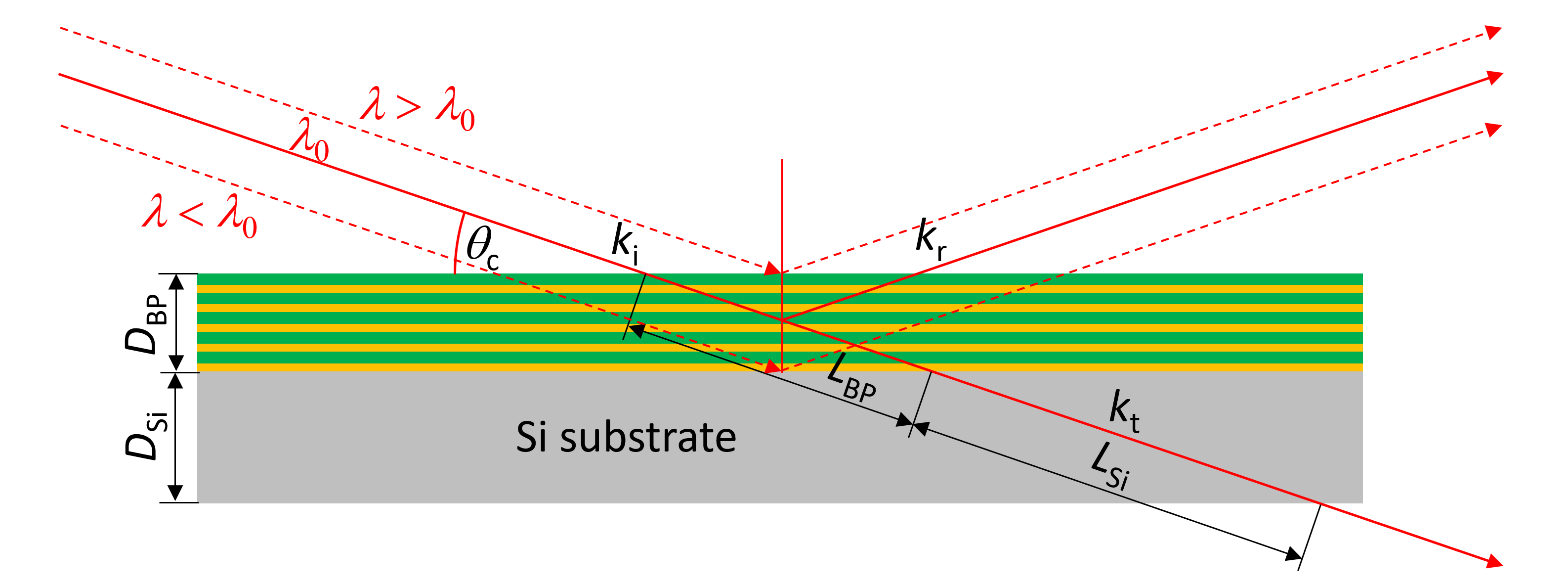
The NeutronInterferometer employs BandpassMultilayers as wavelength selectors for the incident neutron beam. These multilayers are constructed through a precise MirrorLayerDesign process, involving the alternating deposition of materials with differing scattering lengths. This design creates a periodic structure that exhibits constructive interference for neutrons within a specific wavelength range, effectively filtering the beam. The bandwidth of the selected wavelengths is determined by the layer thickness, spacing, and material choices, and is a critical parameter in optimizing the interferometer’s resolution and sensitivity to specific phenomena. The selection of appropriate multilayer parameters is thus integral to the experimental design and data interpretation.
The PhaseShifter employed in the NeutronInterferometer introduces a controlled phase shift to one or both neutron beams, thereby increasing the instrument’s sensitivity to small variations in the quantum mechanical phase of the neutrons. This is achieved through precise control of the scattering length, typically using a material with a varying potential. The induced phase shift \Delta \phi is directly proportional to the thickness and the change in scattering length density of the phase-shifting material. By modulating this phase shift, the interferometer’s output signal exhibits greater contrast for subtle effects, such as weak gravitational gradients or minute changes in the neutron’s interaction with a sample, which would otherwise be difficult to detect.
Magnetic shielding is implemented to mitigate the impact of external magnetic fields on the neutron beam, which could otherwise introduce noise and systematic errors into the interference pattern. The shielding consists of multiple layers of μ-metal, a nickel-iron alloy exhibiting high magnetic permeability. This configuration diverts stray magnetic fields around the sensitive components of the interferometer, maintaining a stable magnetic environment with field strengths below 5 milligauss. Precise control of the magnetic environment is critical, as neutrons possess a magnetic moment and are therefore susceptible to deflection or phase shifts caused by external magnetic gradients, directly impacting the accuracy of the experimental results.
The neutron mirrors employed in the interferometer exhibit a reflectivity of 88% for the selected neutron wavelengths. Alongside reflection, a portion of the neutron beam is absorbed within the mirror layers, with estimates placing this absorption between 1.3% and 1.9%. These reflectivity and absorption values are not sources of error, but rather established parameters that are explicitly accounted for during the data analysis process. Precise knowledge of these values is crucial for accurate determination of the interference signal and for normalization of the measured data, ensuring the extraction of meaningful physical results.
The analysis of the neutron interference pattern relies on sophisticated data processing techniques to extract meaningful results. A critical component of this process is the implementation of an absorption correction algorithm. Neutron absorption within the experimental materials, particularly the multilayer mirrors, reduces signal intensity and distorts the observed interference pattern. This correction accounts for the wavelength-dependent absorption coefficients of each material, effectively normalizing the data and improving the accuracy of quantitative measurements. The algorithm models absorption as a function of material composition, thickness, and neutron wavelength, allowing for precise compensation of signal loss and enabling the detection of subtle effects that would otherwise be obscured.
Unveiling the Invisible: The Echo of a Hidden Universe
The elusive nature of dark matter may be illuminated through the observation of mirror neutron mixing, a theoretical phenomenon positing the existence of a parallel neutron that interacts with standard matter only via gravity and weak interactions. Detection of this mixing-where a standard neutron oscillates into its mirror counterpart-would represent a pivotal confirmation of a dark matter candidate not requiring the introduction of entirely new particles, but rather a different sector of existing ones. This would bypass many of the challenges associated with Weakly Interacting Massive Particle (WIMP) searches, offering a compelling alternative explanation for the missing mass in the universe and resolving a longstanding mystery in cosmology. The observation wouldn’t simply confirm the existence of dark matter; it would strongly suggest a hidden sector governed by similar forces to those we observe, dramatically altering our understanding of fundamental physics and the composition of the cosmos.
The meticulously crafted experimental setup, initially designed to detect the subtle signature of mirror neutron mixing, possesses a versatility extending far beyond this single search. The techniques for shielding against background radiation, the precise measurement of neutron interactions, and the advanced data analysis pipelines are readily adaptable to probing a wider range of phenomena predicted by beyond-the-Standard-Model physics. Researchers can leverage this framework to investigate the existence of axions, search for evidence of sterile neutrinos, or even constrain models of weakly interacting massive particles (WIMPs). This adaptability represents a significant advantage, allowing for a cost-effective and efficient exploration of the dark matter landscape and other elusive particles that may hold the key to unlocking the universe’s greatest mysteries.
Future iterations of mirror neutron experiments are poised for substantial gains in sensitivity through targeted improvements in both data analysis techniques and hardware components. Researchers are actively developing more sophisticated algorithms to filter background noise and more accurately identify potential signal events, effectively extracting fainter signals from the data. Simultaneously, advancements in detector design – including optimized materials and geometries – aim to increase the rate of neutron interactions and minimize systematic uncertainties. These combined efforts are projected to push the experimental limit on the mirror neutron mixing amplitude – currently at 2 \times 10^{-{10}} \text{ eV} – potentially revealing the elusive interaction that could confirm a dark matter candidate and unlock deeper insights into the universe’s composition.
The pursuit to detect mirror neutron mixing isn’t merely a search for a novel particle interaction; it signifies a crucial advancement in cosmology’s attempt to map the universe’s hidden components. Current models estimate that ordinary, visible matter constitutes only a small fraction of the total mass-energy density, with the remainder attributed to dark matter – a substance detectable only through its gravitational effects. This research, by providing a potential pathway to directly observe dark matter interactions – should mirror neutrons exist and interact with those of ordinary matter – offers a unique opportunity to move beyond indirect detection methods. Establishing evidence for this mixing would not only validate a specific dark matter candidate but also illuminate the fundamental asymmetries that may have shaped the universe’s evolution, potentially resolving long-standing questions about its composition and future.
The pursuit of dark matter detection, as detailed in this study of neutron interferometry, reveals a humbling truth about the structures humans attempt to impose upon the universe. This experiment, seeking to observe neutron-mirror neutron mixing, isn’t about building a detector so much as cultivating an environment where subtle interactions might reveal themselves. It’s a recognition that order is just cache between two outages-a momentary stability wrested from inherent chaos. Hannah Arendt observed, ‘The moment we no longer have a living relationship to the past, we are condemned to repeat it.’ This echoes the core challenge: to discern genuine signals from the noise, learning from the history of failed detections and adapting to the unpredictable behavior of the quantum realm.
Beyond the Interference Pattern
The proposition to leverage neutron interferometry as a dark matter detector doesn’t resolve the mystery, it relocates the question. The anticipated observation of neutron-mirror neutron mixing isn’t a discovery so much as a refinement of the boundaries of ignorance. Any signal, however statistically significant, will merely establish a lower bound on mixing parameters, opening a new, finer-grained search space. It’s a predictable recursion. The instrument doesn’t find dark matter; it defines the volume in which it remains hidden.
The sensitivity of the proposed setup hinges on the precise characterization of neutron wave packet evolution, a realm where even seemingly minor systematic errors become existential threats. Stability is merely an illusion that caches well. Furthermore, the reliance on theoretical models of mirror matter introduces a dependence on assumptions that, while internally consistent, may bear little resemblance to the underlying reality. A guarantee is just a contract with probability.
Future iterations will inevitably involve increasingly complex interferometers, pushing the boundaries of quantum control and data analysis. But the true advancement lies not in achieving higher precision, but in accepting the inherent limitations of any such endeavor. Chaos isn’t failure-it’s nature’s syntax. The next step isn’t a more perfect instrument; it’s a more honest interpretation of the noise.
Original article: https://arxiv.org/pdf/2602.17218.pdf
Contact the author: https://www.linkedin.com/in/avetisyan/
See also:
- What Song Is In The New Supergirl Trailer (& What It Means For The DC Movie)
- Why is Tech Jacket gender-swapped in Invincible season 4 and who voices her?
- TV legend Carol Kirkwood reveals the reasons why she decided to retire after 28 years with BBC
- Dune 3 Gets the Huge Update Fans Have Been Waiting For
- Highly Anticipated Strategy RPG Finally Sets Release Date (And It’s Soon)
- How Blake Lively & Ryan Reynolds’ Kids Pranked Her on April Fool’s Day
- Kanye West’s Wife Bianca Censori Details New Marriage Milestone
- 49 Years Ago Today, Movie History Was Changed by a Film You’ve Never Even Seen
- Butcher’s Transformation Into A “Ruthless Killer” In The Boys Season 5 Explained By Karl Urban
- Starfield PS5 Won’t Play Off Physical Disc without a Download
2026-02-21 09:25