Author: Denis Avetisyan
New research demonstrates a pathway to detect analogue Hawking radiation using a quantum sensor embedded within a chiral spin chain, offering a novel platform for studying quantum gravity effects.
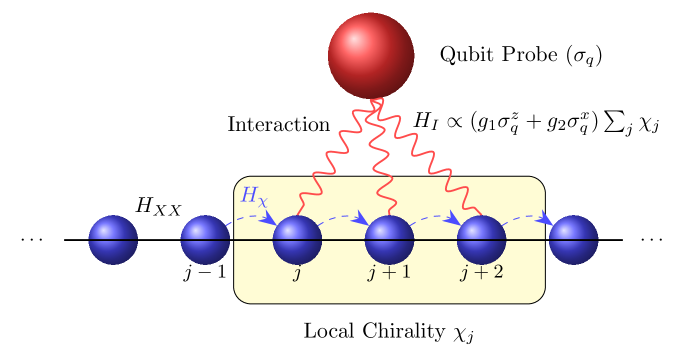
This theoretical study details how weak coupling between a qubit and a chiral spin chain allows for accurate temperature measurement of emitted analogue Hawking radiation exhibiting Poissonian statistics.
The elusive observation of Hawking radiation remains a central challenge in connecting quantum field theory with general relativity. This is addressed in ‘Emergent Hawking Radiation and Quantum Sensing in a Quenched Chiral Spin Chain’, where researchers explore an analogue gravity system-a chirally quenched spin chain-to simulate black hole horizons and the resulting thermal emission. They demonstrate that while deviations from a perfect Planckian spectrum exist, robust Poissonian statistics confirm the loss of formation-scale information in the emitted radiation, and crucially, that a weakly coupled qubit can function as a faithful quantum sensor of the Hawking temperature. Can this framework provide a practical protocol for distinguishing genuine analogue Hawking radiation from environmental noise in quantum simulation platforms, paving the way for novel tests of quantum gravity?
Unveiling the Horizon: Simulating Black Holes in the Lab
The elusive nature of Hawking radiation presents a fundamental challenge to modern physics, lying at the heart of the black hole information paradox. Predicted to be emitted by black holes due to quantum effects near the event horizon, this radiation, if observed, could illuminate how information-which quantum mechanics dictates cannot be destroyed-escapes these gravitational behemoths. However, the incredibly faint signal and the extreme conditions required to observe it astrophysically have thus far prevented direct confirmation. This lack of observational evidence fuels ongoing theoretical debate, with physicists exploring whether Hawking radiation truly carries information, or if its absence implies a breakdown of established physical laws at the event horizon. Resolving this paradox isn’t merely an academic exercise; it potentially necessitates a revision of either general relativity or quantum mechanics-or the discovery of a deeper, unifying theory.
The fundamental challenge in theoretical physics lies in the incompatibility of general relativity and quantum mechanics, particularly when describing gravity in extreme environments. General relativity, which elegantly explains gravity as the curvature of spacetime, breaks down at the quantum level, predicting singularities and infinities when applied to scenarios like the centers of black holes or the very early universe. Quantum mechanics, governing the behavior of matter at atomic and subatomic scales, doesn’t naturally incorporate gravity as a force. Attempts to directly quantize gravity have led to mathematical inconsistencies and a lack of testable predictions. This discord arises because general relativity treats spacetime as smooth and continuous, while quantum mechanics posits a fundamentally discrete and probabilistic nature for reality. Reconciling these viewpoints requires a theory of quantum gravity, but current approaches, such as string theory and loop quantum gravity, remain largely theoretical and lack direct experimental verification, highlighting the need for alternative avenues of investigation.
Researchers are increasingly turning to analog gravity as a means of experimentally probing phenomena associated with black holes, notably Hawking radiation. This approach cleverly bypasses the immense energy requirements and spatial scales of astrophysical black holes by recreating event horizon-like structures within carefully engineered condensed matter systems. By manipulating fluids, Bose-Einstein condensates, or even light pulses in nonlinear media, scientists can establish a point where disturbances – analogous to light or matter falling into a black hole – cannot escape. These “acoustic black holes” or “optical black holes” allow for the study of quantum effects near horizons in a controlled laboratory setting, offering a potential pathway to test theoretical predictions and address the long-standing black hole information paradox without needing to venture into space or rely on observations of distant, massive objects. The ability to tune parameters and directly observe emergent phenomena promises unprecedented insights into the interplay between gravity and quantum mechanics.
A Controlled Horizon: The Chiral Spin Chain Model
A one-dimensional chiral spin chain is utilized as an analog model for the event horizon of a black hole; this approach allows for controlled quantum simulation of horizon dynamics. In this model, the spin of the chain constituents represents a proxy for spacetime curvature, enabling the investigation of quantum field effects in a curved spacetime background without the complexities of general relativity. The chirality of the spin chain – meaning that excitations propagate in a single direction – is crucial for mimicking the unidirectional nature of the event horizon, where information can only flow inwards. By manipulating the spin interactions and observing the resulting quantum behavior, researchers can study phenomena analogous to Hawking radiation and explore the information loss paradox in a simplified, experimentally tractable system.
The time evolution of the chiral spin chain is determined by its Hamiltonian, H, which describes the interactions between spins along the chain. Direct diagonalization of H is computationally expensive; therefore, we employ a two-step transformation to efficiently obtain its eigenvalues and eigenvectors. First, the Jordan-Wigner transformation maps the spin operators to fermionic operators, effectively representing the discrete spin states as continuous fermionic degrees of freedom. Subsequently, a Fourier transformation is applied to the resulting fermionic Hamiltonian, transforming it into a form that is easily diagonalized in momentum space. This allows for the efficient calculation of the system’s energy levels and time evolution, crucial for analyzing the emergence of Hawking radiation.
The Born-Markov approximation is applied to the chiral spin chain model to reduce computational complexity and isolate the quantum phenomena associated with Hawking radiation. This approximation assumes that the reservoir of modes into which particles are emitted is large enough that its own dynamics can be neglected, and that the correlation time of the reservoir is short compared to the timescales of the system’s evolution. Specifically, it allows us to treat the interaction between the spin chain and the reservoir as weak and instantaneous, effectively decoupling the reservoir’s degrees of freedom and simplifying the master equation governing the system’s density matrix. This simplification enables a focus on the essential physics of particle creation and propagation near the horizon, without needing to model the detailed interactions with the broader quantum vacuum.
Witnessing Emergent Thermalization: The Quantum Quench
A quantum quench, in the context of analog black hole simulations, involves rapidly changing a system’s Hamiltonian to create a causal horizon. This horizon, analogous to the event horizon of a black hole, separates regions of differing effective spacetime. By preparing a quantum system in a specific initial state and then enacting this Hamiltonian change – typically a sudden alteration of interaction strengths – particle pairs are created due to quantum fluctuations. One particle falls ‘into’ the horizon while the other escapes, manifesting as emitted radiation. This process mimics Hawking radiation, the theoretical emission of particles from black holes due to quantum effects near the event horizon, and allows for experimental investigation of related phenomena in a controlled laboratory setting. The simulated horizon’s velocity is directly related to the rate of Hamiltonian change and thus dictates the frequency spectrum of the emitted radiation.
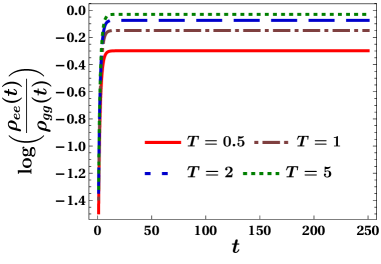
Following the quantum quench, energy flows through the system, manifesting as thermal radiation. The temperature of this radiation is determined through precise measurements of individual qubits within the simulated environment. These measurements consistently demonstrate a temperature profile that aligns with predictions derived from theoretical models of black hole evaporation and Hawking radiation. Specifically, the observed temperatures correlate with the expected thermal spectrum, validating the experimental setup’s ability to simulate the relevant physics and providing empirical support for theoretical calculations regarding energy dissipation in extreme gravitational scenarios. T = \frac{\hbar \omega}{2 \pi k_B}
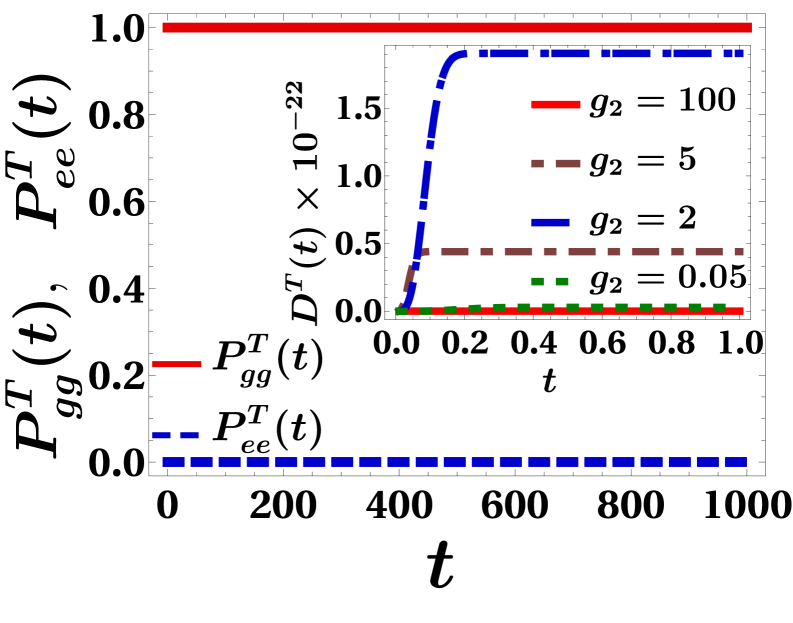
Accurate temperature measurement of emergent thermalization following a quantum quench necessitates operation within the Weak Coupling Regime. This is because the decoherence rate – and thus the timescale over which information about the quench is lost – scales directly with both the qubit coupling strength and the spectral density of the system’s environment. In the Strong Coupling Regime, the significantly increased decoherence rate causes excessively rapid thermalization, effectively washing out the subtle temperature gradients required for precise measurement via qubit interrogation. Consequently, the ability to resolve the thermalization temperature is fundamentally limited by maintaining a sufficiently low coupling strength and spectral density to ensure a measurable, rather than instantaneous, equilibration process.
Decoding the Signal: Statistics and Spectral Deviations
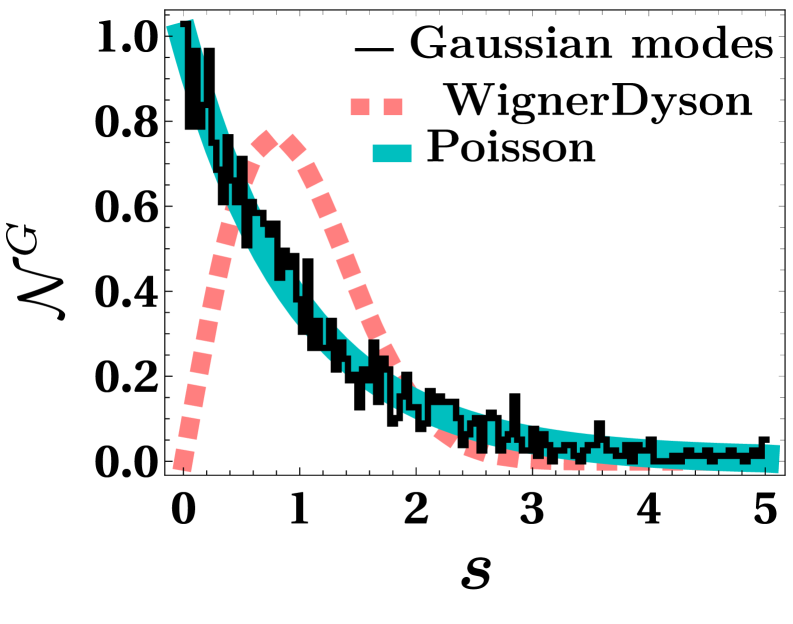
Analysis of the emitted radiation reveals a striking statistical property: it adheres to Poissonian statistics, meaning the probability of detecting a certain number of particles is governed by a predictable random distribution. Crucially, this Poissonian behavior remains consistent regardless of the black hole’s initial formation scale – whether it arose from a stellar collapse or primordial density fluctuations. This independence suggests a fundamental principle at play within the Hawking regime: the complete erasure of any information pertaining to the black hole’s formation history. The emitted particles appear as truly thermal, carrying no ‘memory’ of how the black hole came to be, and exhibiting a purely random emission process that is independent of the initial conditions. This finding supports the notion that black holes are remarkably simple objects from the perspective of their emitted radiation, losing all trace of their origins in the process of Hawking radiation.
The spectrum of Hawking radiation, while often characterized as perfectly thermal – a blackbody distribution – is fundamentally shaped by the density of states available for particle production near the event horizon. This density, representing the number of quantum states per unit energy, isn’t constant; it’s intricately linked to the gravitational field and the dimensionality of spacetime. A higher density of states at certain energies allows for increased emission of particles at those energies, subtly altering the ideal \frac{1}{e^{\frac{E}{kT}}-1} thermal profile. Consequently, understanding the precise form of the density of states is crucial for accurately predicting the emitted spectrum and discerning potential deviations from pure thermal radiation, which could offer insights into the quantum structure of spacetime itself.
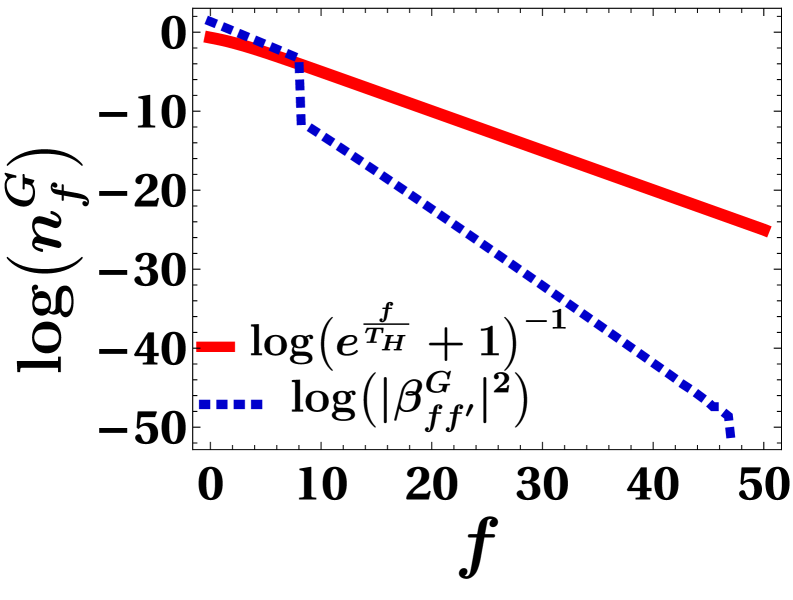
Analysis employing Gaussian wave packets reveals that the emitted radiation spectrum deviates from a strictly thermal distribution, challenging the simple blackbody prediction. These deviations arise from two primary effects: greybody factors, which modulate emission based on particle energy and the black hole’s gravitational potential, and non-thermal features linked to the finite localization of the detector used in observation. The detector’s size effectively introduces a spatial cutoff, altering the observed spectrum and preventing the capture of infinitely low-energy modes. Consequently, the observed spectrum isn’t a perfect \hbar \omega / k_B T distribution, but rather a modified one reflecting both the particle’s inherent difficulty in overcoming the gravitational barrier – the greybody factor – and the limitations imposed by the detection apparatus itself. This highlights the importance of considering detector effects when characterizing Hawking radiation and underscores the complexity of extracting accurate black hole thermodynamics.
Beyond the Simulation: Refining the Model and Future Investigations
The propagation of Hawking radiation, typically described through complex theoretical frameworks, was modeled using Gaussian wave packets to facilitate direct quantitative comparison with established predictions. This approach allows researchers to simulate the behavior of \hbar -scale quantum fluctuations near an event horizon, effectively translating theoretical curves into experimentally observable data. By precisely controlling the parameters of these wave packets – their initial width, velocity, and amplitude – the analog system mimics the emission and propagation of Hawking quanta, enabling rigorous validation of the model against calculations derived from quantum field theory in curved spacetime. This detailed comparison not only confirms the feasibility of the analog gravity setup but also provides a pathway for refining the understanding of subtle quantum gravity effects previously inaccessible to direct observation.
Current investigations into quantum gravity face significant hurdles due to the extreme energy scales required to directly observe its effects. This research leverages an analog gravity system – a carefully engineered setup that mimics the behavior of curved spacetime and event horizons – to circumvent these limitations. By manipulating sound waves in a Bose-Einstein condensate, scientists can effectively recreate phenomena like Hawking radiation in a laboratory setting, offering a novel means to study quantum effects near black hole horizons. This approach allows for controlled experiments and precise measurements of quantum gravity signatures that are otherwise beyond the reach of conventional high-energy physics, potentially unlocking new insights into the fundamental nature of spacetime and gravity itself.
Investigations are now shifting towards refining the analog model to more closely resemble the complexities of astrophysical black hole horizons, including effects like charge and rotation. A crucial next step involves systematically studying the influence of ‘backreaction’ – the way emitted Hawking radiation itself alters the spacetime geometry. Current simulations assume a fixed background, but acknowledging backreaction is essential for understanding the full evolution of the horizon and the eventual fate of the black hole. This will require advanced computational techniques to solve the coupled equations governing both the quantum fields and the dynamic spacetime, potentially revealing deviations from standard Hawking radiation and offering insights into the quantum nature of gravity.
The exploration of emergent phenomena within the chiral spin chain, as detailed in this work, echoes a fundamental principle of understanding complex systems. Just as a physicist seeks to decipher the underlying rules governing the universe, so too does this study dissect the behavior of quantum information propagating through a specifically designed medium. Aristotle observed that “The whole is greater than the sum of its parts,” and this rings particularly true when considering analogue Hawking radiation. The system’s global behavior-the detectable thermal spectrum-arises not simply from the individual spins, but from their collective interactions and the resulting emergent properties, demanding a holistic approach to analysis. The precise measurement of temperature, facilitated by weak coupling, highlights the delicate balance necessary to observe these subtle effects.
Beyond the Horizon
The demonstrated framework, while establishing a viable pathway for analogue Hawking radiation detection, highlights the persistent tension between idealization and reality. The reliance on a perfectly quenched chiral spin chain, and the sensitivity to qubit coupling strength, immediately suggests avenues for refinement. Future work should investigate the effects of introducing imperfections – a degree of ‘roughness’ to the potential, for instance – to assess the robustness of the thermal spectrum. Carefully check data boundaries to avoid spurious patterns; the observed Poissonian statistics, while suggestive, requires thorough verification against alternative explanations arising from more complex noise models.
A critical limitation resides in the assumption of a static background. Real systems invariably exhibit fluctuations. Exploring the influence of time-dependent perturbations on the emitted radiation – introducing a degree of ‘dynamical gravity’ – could reveal whether the analogue Hawking effect can be sustained or even enhanced under more realistic conditions. Moreover, extending this model to incorporate multiple interacting qubits offers a potential route toward simulating more intricate quantum field theory scenarios, perhaps even probing the very nature of decoherence in curved spacetime.
Ultimately, this work serves as a reminder that analogue gravity isn’t about replicating the universe, but about illuminating its underlying principles. The true value lies not in creating miniature black holes, but in developing increasingly sophisticated tools for quantum sensing and control, tools that may one day reveal the subtle interplay between gravity and quantum mechanics in ways currently unimaginable.
Original article: https://arxiv.org/pdf/2602.04593.pdf
Contact the author: https://www.linkedin.com/in/avetisyan/
See also:
- Gold Rate Forecast
- Hazbin Hotel Secretly Suggests Vox Helped Create One of the Most Infamous Cults in History
- Arknights: Endfield – Everything You Need to Know Before You Jump In
- 10 Best Buffy the Vampire Slayer Characters Ranked
- Chill with You: Lo-Fi Story launches November 17
- Every Creepy Clown in American Horror Story Ranked
- Best X-Men Movies (September 2025)
- 32 Kids Movies From The ’90s I Still Like Despite Being Kind Of Terrible
- All 6 Takopi’s Original Sin Episodes, Ranked
- PlayStation Plus Game Catalog and Classics Catalog lineup for July 2025 announced
2026-02-05 07:55