
Ever since the original Star Trek introduced us to Starfleet – the future organization dedicated to peace and helping others across the galaxy – fans have debated whether it’s truly a diplomatic group or a military one. While the characters within Starfleet consistently portray it as a peaceful organization focused on exploration and science, a closer look reveals many military aspects, like ranks, uniforms, military courts, and powerful warships. The show has explored this question for decades, with Starfleet’s enemies often claiming it acts more like an invading force than a benevolent one.
After over 60 years, Star Trek seems to have settled a longstanding discussion. The introduction of a War College within Starfleet Academy confirms what fans have believed for a while: while Starfleet doesn’t necessarily call itself a military organization, it operates as one in practice. This wasn’t a mistake, though. It was intentional, stemming from Gene Roddenberry’s own complex ideas about the organization from the start.
Roddenberry’s Uneasy Relationship with the Military

Gene Roddenberry, a veteran of World War II, became strongly opposed to militaristic approaches after his experiences in the war. When he developed Star Trek, he envisioned Starfleet as a more advanced and thoughtful version of Earth’s military – an organization dedicated to exploring the universe, negotiating peaceful solutions, and making scientific breakthroughs. While Starfleet officers carried weapons, their main purpose wasn’t to be soldiers. They were explorers who would defend themselves if necessary, but exploration came first.
Roddenberry, the creator of Star Trek, strongly disliked many of the creative decisions made in Star Trek II: The Wrath of Khan. The film, directed by Nicholas Meyer, featured a strong nautical theme – using naval language and even referencing Starfleet as a “fleet.” Roddenberry apparently disagreed with this portrayal of Starfleet, though it’s understandable why a powerful enemy like Khan would view them as a military force.
Once Star Trek started focusing more on military themes, it was impossible to ignore. The show’s new uniforms, emphasis on rank, and constant strategizing made it clear what direction it was heading – it had become a military show, plain and simple.
A Contradiction Star Trek Never Fully Resolved
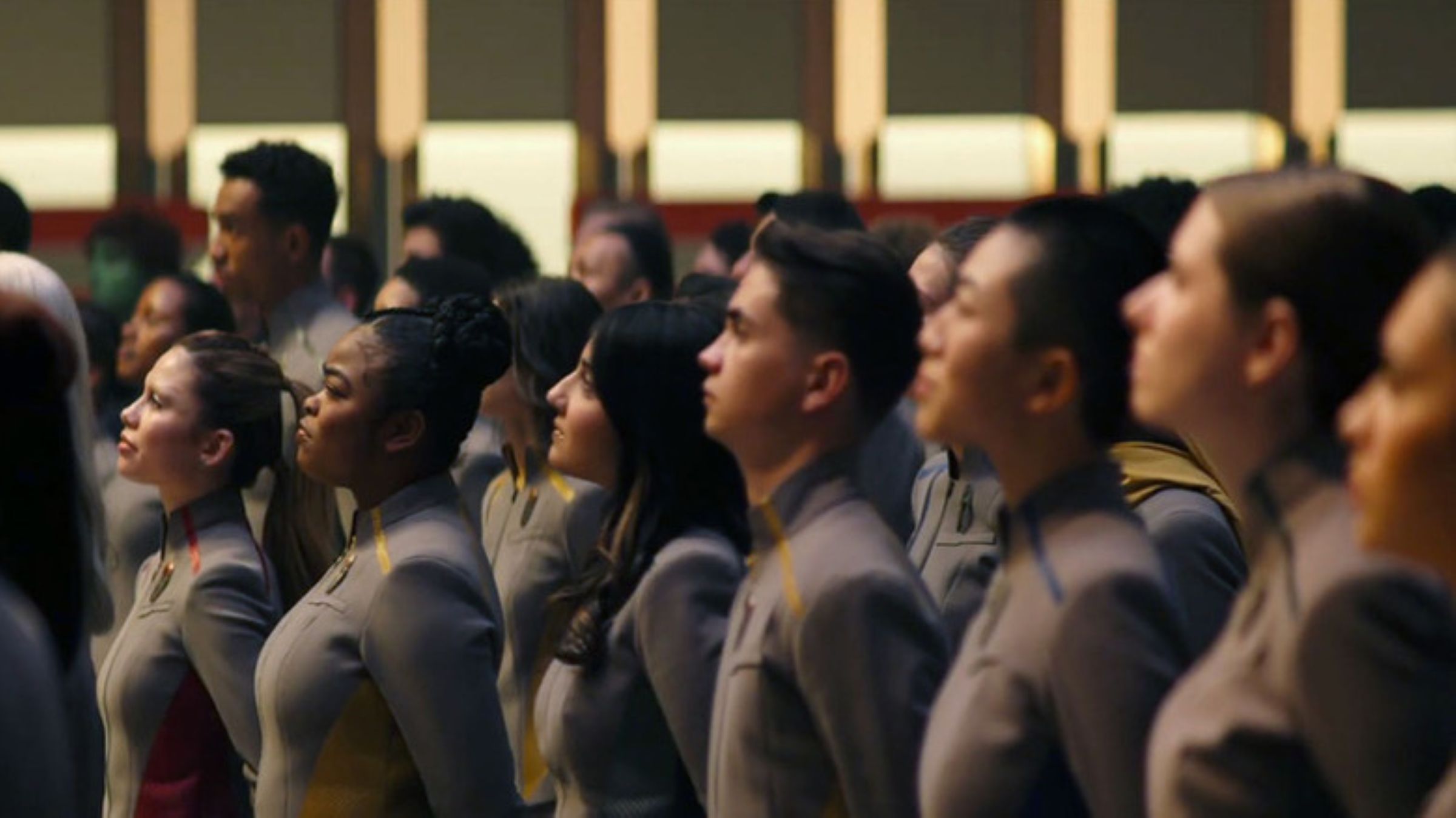
It often seems like Star Trek has tried to avoid acknowledging the military side of Starfleet. While high-ranking officials insisted on peaceful intentions, they simultaneously deployed powerful warships to the Klingon border, capable of immense destruction. Yet, Starfleet consistently maintained it wasn’t a military organization, despite engaging in war, having a strict chain of command, and training officers for battle. They wanted to have it both ways – to be a peaceful exploration force that also acted like an army.
It almost sounds funny, but this ongoing discussion is likely a key reason why Star Trek remains so popular. The fact that people disagree about its meaning mirrors the complexities of real life and international politics. This debate has become a core part of the show, constantly revisited but never fully resolved – until now.
Starfleet Academy’s War College Changes Everything
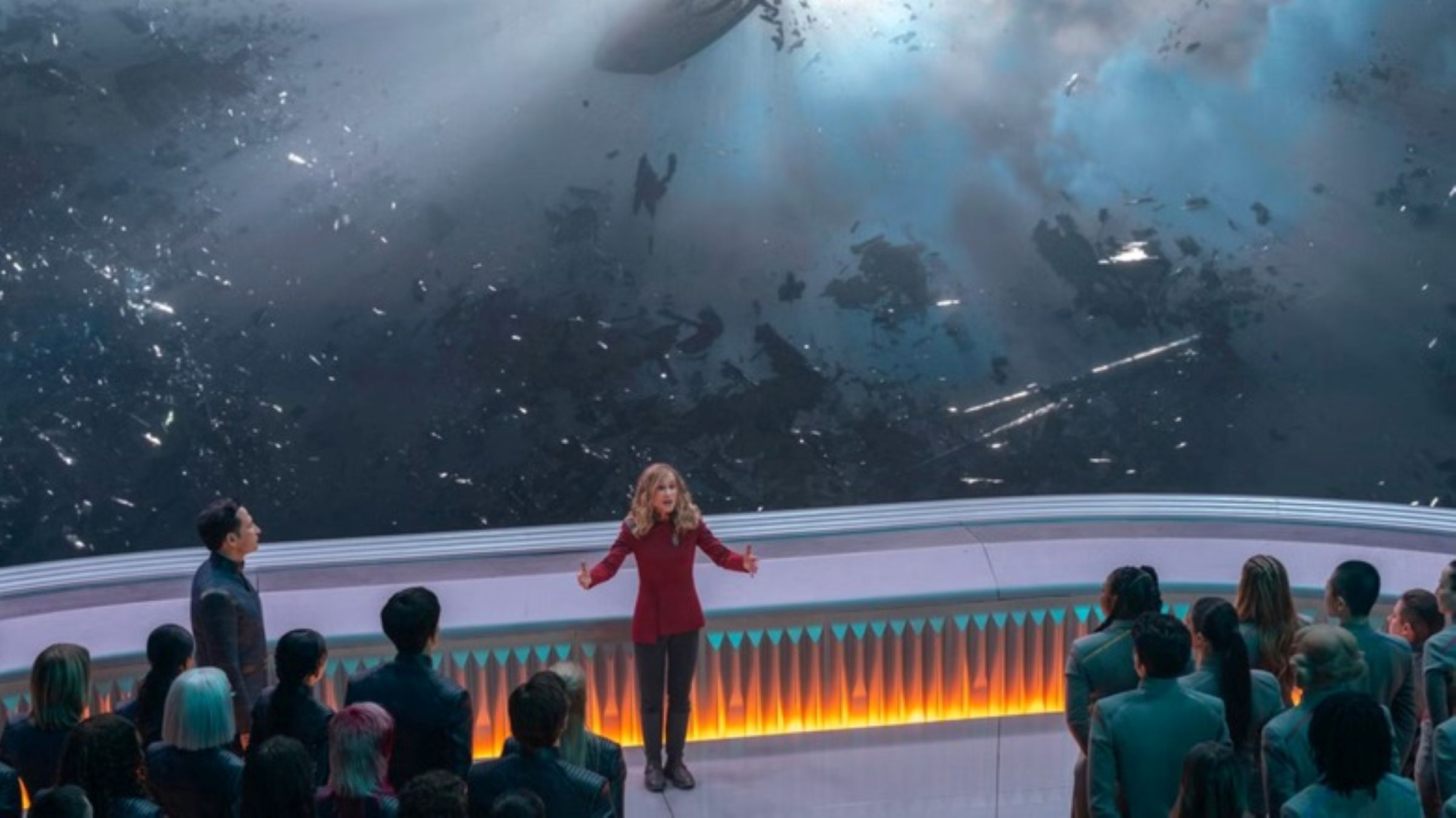
Series like Deep Space Nine directly addressed the conflict between Starfleet’s ideals and the harsh realities of war. Using the Dominion War as a setting, the show explored how Starfleet compromised its principles and grappled with the consequences of its actions during wartime.
Starfleet Academy has taken things a step further. Following the devastating ‘Burn’ – an event in the early 31st century that destroyed most of the dilithium used for warp travel – the show introduces a ‘War College’. This institution, where cadets are specifically trained for combat, emerged from this difficult time and now exists within the Academy. While it might seem like a minor detail, the War College actually changes how we understand Starfleet’s core purpose.
The War College specializes in the study of strategy, conflict, and warfare, preparing officers for leadership positions within the military. Importantly, it’s part of the Starfleet system – similar to Starfleet Academy, it provides training for future officers. Graduates from both schools will eventually serve together in Starfleet, with those from the War College likely focusing on security and defense roles.
This one storytelling choice achieves more than years of conversations ever did. It finally admits that Starfleet is about both discovering new things and protecting others – both diplomacy and fighting, science and strategy. By showing different ways officers can train, Star Trek doesn’t have to ignore the fact that Starfleet sometimes has to fight. It’s realistic – things aren’t always simple. Being ready for war doesn’t mean Starfleet gives up on peace, but it does mean they can be honest about their strength and purpose when conflict arises.
This is a shift from Gene Roddenberry’s initial vision, but it’s a welcome change, acknowledging how the Star Trek universe has developed. The future humans of this series have repeatedly faced major crises, making Starfleet’s military function more important than ever. Past conflicts like the Earth-Romulan War, the Klingon War, and the Dominion War, along with constant dangers like the Borg, proved that technology and optimism weren’t always enough to save the day.
The introduction of a War College in Star Trek subtly reveals that Starfleet actively prepares for conflict. This doesn’t necessarily mean Starfleet wants war, but it does confirm that it operates as a military force, even if its ideals are peaceful.
What I really appreciate about this new direction for Star Trek is that it moves beyond just debating rules and regulations. It actually starts tackling some genuinely compelling questions. Like, how can a group committed to peace possibly justify having the means to wage war? And how do you get soldiers, trained for battle, to work alongside explorers? But most importantly, what happens when those two very different goals come into conflict? It’s a shift that makes the show much more thought-provoking.
According to showrunners Alex Kurtzman and Noga Landau, the War College isn’t just a location—it adds important drama to the story, as every school story needs a competitive rival. Fans are especially excited to see the Starfleet Academy cadets compete against the War College students in a Parrises squares tournament. Let’s go, cadets!
Rather than abandoning Gene Roddenberry’s original ideas, Star Trek is simply acknowledging a more complex reality. Starfleet Academy and the values of exploration, inclusivity, and teamwork are still central to the stories, but the show no longer suggests these things can exist without challenges or conflict.
Starfleet is finally being shown as a realistic organization, built on both optimistic ideals and practical needs. Despite everything, it remains true to its core values, but is now acknowledging its willingness to fight to protect them, no matter the sacrifice.
What do you think? Leave a comment below and join the conversation now in the ComicBook Forum!
Read More
- Gold Rate Forecast
- Dune 3 Gets the Huge Update Fans Have Been Waiting For
- Action Comics #1096 is Fun Jumping-On Point for Superman Fans (Review)
- Hazbin Hotel Secretly Suggests Vox Helped Create One of the Most Infamous Cults in History
- 5 Weakest Akatsuki Members in Naruto, Ranked
- Dungeon Stalkers to end service on June 9
- Jack Osbourne Shares Heartbreaking Tribute to Late Dad Ozzy Osbourne
- Disney Promotes Thomas Mazloum To Lead Parks and Experiences Division As Josh D’Amaro Prepares To Become CEO
- 22 actors who were almost James Bond – and why they missed out on playing 007
- Antiferromagnetic Oscillators: Unlocking Stable Spin Dynamics
2026-01-22 17:11