
Throughout its history, Star Trek has created many memorable characters, but Star Trek: The Next Generation is often considered to have featured some of the most compelling villains. The series didn’t just build upon the characters and stories of the original Star Trek; it also introduced new elements that became central to the entire franchise. TNG’s success paved the way for other excellent Star Trek shows, like Star Trek: Voyager.
Both The Next Generation and Voyager added elements to the Star Trek universe that are still being explored in new shows, like the recent series Starfleet Academy. In Episode 8, “The Life of the Stars,” Starfleet Academy features a character with a history in Voyager, and this storyline unexpectedly brings attention back to a major villain from Star Trek: The Next Generation.
The Lonely (Eternal) Life of The Doctor

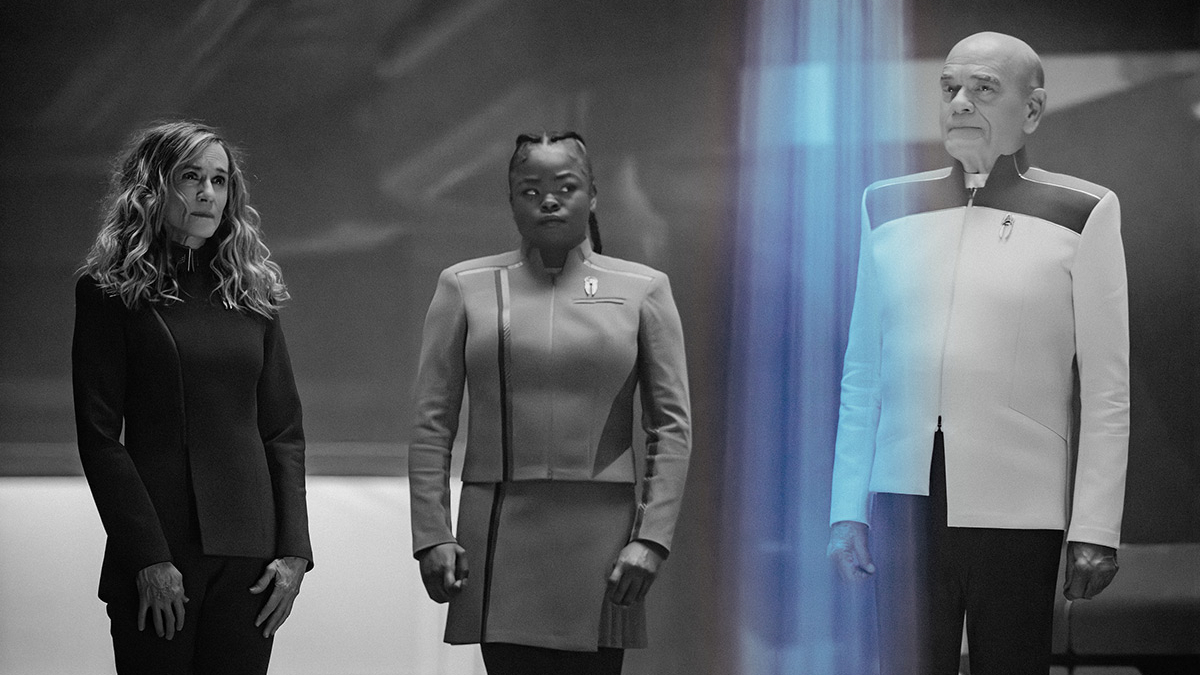
In “The Life of the Stars,” a storyline follows SAM (Kerrice Brooks), a unique holographic lifeform from Kasq who attends Starfleet. When SAM begins to experience dangerous malfunctions, the Doctor (Robert Picardo) brings her back to her home world, hoping her creators, known as the Makers, can help. Unfortunately, the Makers determine that SAM’s condition is irreversible and that she will cease to exist after only 209 days.
The Doctor’s disappearance has a profound effect on the Doctor. Originally appearing in Star Trek: Voyager, he was created as a holographic healer and became the ship’s sole medical officer when it found itself stranded far from home in the Delta Quadrant. His time on Voyager – and the relationships he built with the crew – allowed him to grow and change, but that was only the beginning. He continued serving Starfleet as an active program from the 24th to the 32nd century, even appearing at Starfleet Academy. However, in “The Life of the Stars”, we finally see the emotional toll that over 800 years of existence has taken on him.
SAM’s death makes the Doctor face his own painful past. He realizes that losing people he cared about – like his daughter Belle and, eventually, everyone on the Voyager – has caused him to avoid getting close to others. He admits that his ability to cope with living forever relies on not forming emotional attachments, stating, “The only thing that allows me to bear my infinity is not having to love anyone.”
The Doctor finally understands what SAM truly needs: a childhood. He collaborates with the Makers to rebuild her, and then spends seventeen years – equivalent to two weeks on Earth – raising her as a father. SAM’s problems stemmed from a lack of formative experiences, and she needed the chance to grow up like a normal person. Through this process, the Doctor reconnects with his own humanity, and SAM experiences the love and support of a family.
The Doctor’s Story Is A Reflection of Q

This Starfleet Academy episode focused on The Doctor, but a particularly striking line – “The only thing that allows me to bear my infinity is not having to love anyone” – resonated beyond just his character’s story. It speaks to a universal feeling about connection and loneliness.
The Doctor has effectively become Starfleet’s longest-lived member. With over eight centuries of experience, he’s gained a unique, almost god-like perspective. According to information revealed in Starfleet Academy, he briefly approached a level of power similar to that of Q, another immensely powerful being from Star Trek.
Q, the powerful and often mischievous character from Star Trek: The Next Generation, played brilliantly by John de Lancie, has become a beloved figure in the franchise. He’s fascinated by humanity – our strengths and flaws – and often tests us as if we’re on trial. While those who encounter Q, like Captain Picard, are intrigued, they’re also often shocked by his unconventional and sometimes undignified behavior. Many of their lively discussions center on Q’s inability to understand that flaws, imperfections, and the fact that we all eventually die are essential parts of what it means to be human.
Having seen countless sci-fi villains, this one really struck me. This particular Q isn’t just a Q, he’s a chilling example of what happens when ultimate power isn’t tempered with empathy. Thinking about The Doctor’s encounters with other Q, it becomes obvious: this Q is a deeply damaged being, utterly lacking in love or genuine connection. Unlike most of his kind – those Q who share a collective consciousness and even form loving relationships – this one is tragically, and terrifyingly, alone. He’s the dark side of omnipotence, and it’s a truly unsettling portrayal.
The Doctor shares similarities with Q, but unlike Q, he values connection and has formed close relationships, like those with Belle and SAM. This creates a fantastic opportunity for a future Star Trek episode where the Doctor and Q meet, allowing the show to explore their contrasting views on immortality and how to live a timeless life. It would be truly exceptional science fiction.
You can watch Starfleet Academy and Star Trek: Voyager on Paramount+. Join the conversation and share your thoughts about Star Trek on the ComicBook Forum!
Read More
- Gold Rate Forecast
- Hazbin Hotel Secretly Suggests Vox Helped Create One of the Most Infamous Cults in History
- Every Creepy Clown in American Horror Story Ranked
- 22 actors who were almost James Bond – and why they missed out on playing 007
- Chill with You: Lo-Fi Story launches November 17
- Everything We Know About Gen V Season 3 (& Why It’ll Be a Very Different Show)
- Jack Osbourne Shares Heartbreaking Tribute to Late Dad Ozzy Osbourne
- Kingdom Come: Deliverance 2 – Legacy of the Forge DLC Review – Cozy Crafting
- Jason Statham’s Hit Creature Feature Is Heading to Streaming for Free
- Best X-Men Movies (September 2025)
2026-03-03 20:15