It’s well known that Star Trek has evolved significantly since its beginnings with The Original Series. Looking back almost 60 years, today’s Star Trek shows are vastly different from the original’s ‘space western’ vibe – especially since Discovery premiered in 2017. This shift has left many longtime Trek fans feeling disappointed with the franchise’s new direction. Of course, some change is natural after over half a century on television; it’s unrealistic to expect a show that debuted six decades ago to stay the same. Advances in technology alone would inevitably change its look and special effects. However, recent Star Trek series seem to have moved further away from the established feel of the universe compared to earlier spin-offs.
For sixty years, the story of Star Trek evolved gradually. Each new series – like The Next Generation improving on the original, Deep Space Nine delving into Federation politics and war, and Enterprise showing the beginnings of Starfleet – added something fresh, but rarely made drastic changes. However, Star Trek: Starfleet Academy appears to be dramatically reshaping the political world of Star Trek much more quickly.
After only six episodes, the latest Star Trek series has introduced two major events that could change the entire galaxy. This shows the show is willing to make big changes to the Star Trek universe much faster than previous series did.
Starfleet Academy Introduces a New Center for the Federation
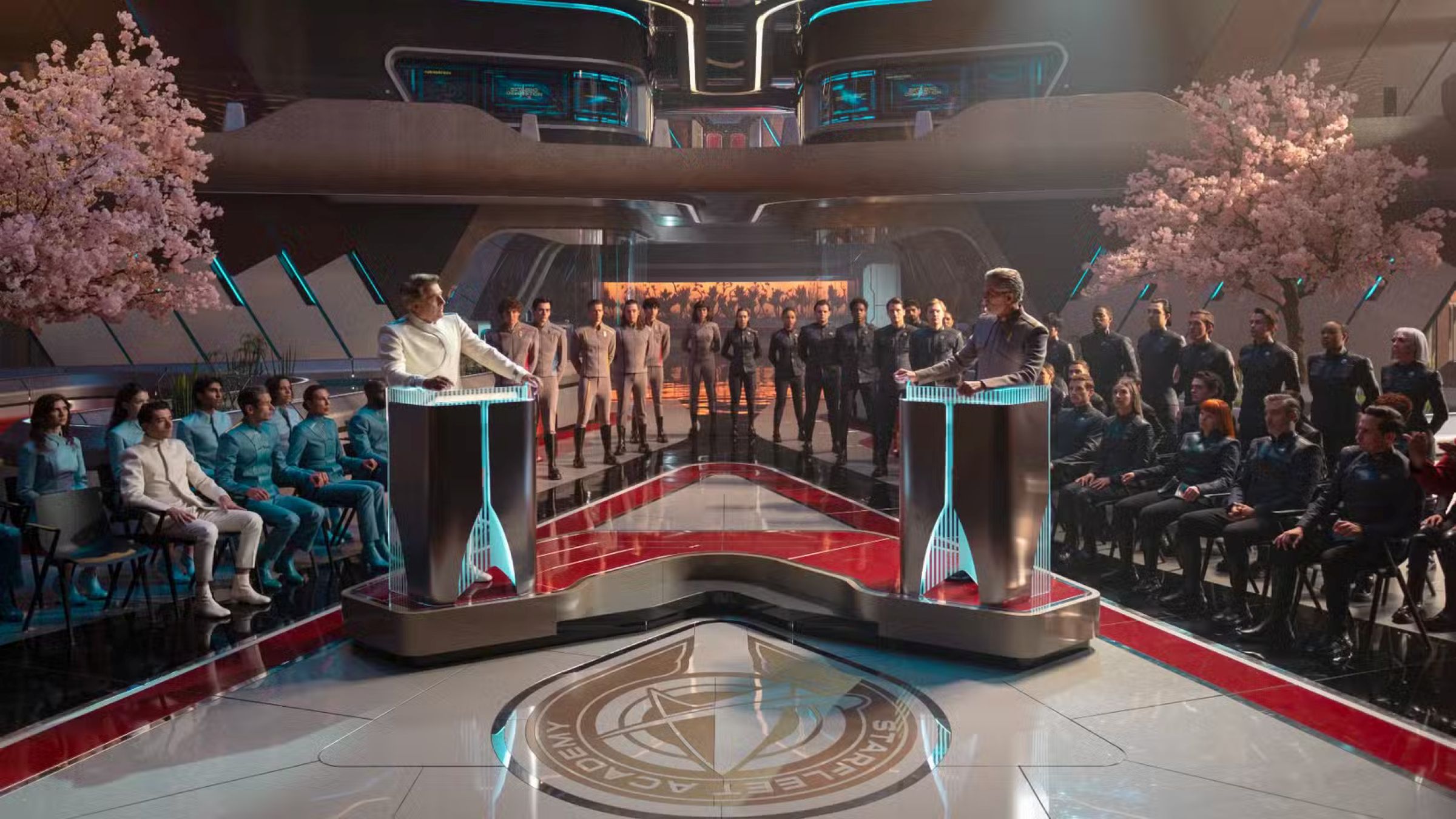
The biggest news was the Federation’s official announcement that Betazed would be the location of their new headquarters. This is especially exciting for fans who have followed the series for a long time.
For many years, Earth served as the central hub for the Federation – it was a convenient location for filming and, within the show’s story, humanity was considered a key founder. Throughout the various series, from the original to The Next Generation, Deep Space Nine, and later installments, Starfleet Command and the Federation’s leaders were consistently located in San Francisco. That all changed with the event known as the Burn.
The Burn, a disaster that destroyed nearly all the dilithium in the galaxy (the energy source for warp speed), almost caused the Federation to fall apart. With faster-than-light travel severely limited, many planets left the Federation to focus on their own survival, and even Earth withdrew. This forced the remaining Federation leaders to move their headquarters off-world.
After things finally started to calm down and warp travel was slowly coming back online, the Federation began the long process of recovery. Everyone naturally expected headquarters to return to Earth once things were stable again.
The new Starfleet Academy immediately suggests a fresh direction for the series. Moving Federation Headquarters to Betazed isn’t just a sign of a new era; it’s a clear move away from stories focused solely on Earth. After the Burn, the Federation is reimagining itself as a genuine alliance of worlds, rather than appearing, as it sometimes did before, like a human-led organization with colonial tendencies. Selecting Betazed – a planet famed for its empathy and diplomatic tradition – feels more fitting than simply returning to Earth out of habit and strongly emphasizes this change.
Betazed was deeply affected by both the Dominion War and the chaos following the Burn. When interstellar travel became unsafe, and especially due to threats from groups like the Vanari Ral, the Betazoids used their powerful telepathy to create a psychic shield around their system, protecting themselves. Because of these experiences, they’ve been understandably cautious about outsiders. It was only recently, with a new generation of Betazoids eager to rebuild relationships, that they agreed to reduce their defenses.
Choosing Betazed as the Federation’s new capital signals a focus on recovery and fresh starts for the direction Star Trek is taking. Traditionally, a change of this magnitude – moving the Federation headquarters – would have been reserved for the dramatic conclusion of a major season-long story arc.
This idea is introduced and fully developed within just one episode, and surprisingly, it happens in only the second episode – before we’ve even gotten to know all the main characters.
Star Trek Now has A New Home for the Klingon Empire

The Federation’s sudden relocation was unexpected, but the discovery about the Klingons two episodes later was even more shocking.
As a huge fan of Star Trek, I was really shaken up by episode 4, ‘Vox in Excelso’. It confirmed something I’d feared – Qo’noS, the Klingon homeworld, was completely destroyed by the Burn. It’s heartbreaking to think about; the remaining Klingons are now refugees, scattered throughout the galaxy, desperately trying to piece their civilization back together after such a devastating loss. It’s a really powerful and tragic moment for a proud people.
The reveal was deeply emotional. While we didn’t often see the Klingon homeworld of Qo’nos on screen after The Next Generation, it represented the Klingons’ strong traditions and proud culture. Throughout shifting galactic alliances, the decline of their empire, and even their eventual acceptance into the Federation, Qo’nos remained a constant symbol. This new information suggested the ‘Burn’ and its consequences were far more catastrophic than anyone realized. The Klingons hadn’t just been weakened; they had been utterly devastated by the event.
The conflict with the Klingons, which could have spanned many episodes, was quickly resolved in just one. The Klingons stubbornly refused the Federation’s offer of a new, Qo’nos-like planet, clinging to their pride. The Federation cleverly turned the situation around by pretending the Klingons had invaded their territory and were fighting them for the planet. This allowed the Klingons to accept the new world as a victory, resulting in a positive outcome for their people.
Starfleet Academy Has a Faster, Bolder Kind of Storytelling

As a lifelong Trek fan, I’m really noticing a big change in how the newer shows are handling their stories. Honestly, either of these recent developments would have been huge events for an entire season in older Trek. Back in the day, they used to build things up slowly. I remember Deep Space Nine taking three whole seasons to set up the Dominion War, and The Next Generation spent years carefully reshaping the Klingons, really focusing on Worf and their relationship with the Federation. Even Discovery, which was more focused on ongoing storylines, spread its biggest changes over several seasons. It feels like things are moving much faster now!
Starfleet Academy is progressing rapidly. By the fourth episode, the series had already established a new home world for the Federation and integrated a former enemy into its ranks. The show makes you feel like the galactic political situation is actively changing, rather than just being hinted at through backstory.
This storyline perfectly matches the show’s overall idea. With the galaxy recovering after the Burn, rebuilding and adapting are essential. It’s natural that civilizations wouldn’t be able to stay the same. Focusing on the experiences of Starfleet cadets is key, as the show follows the next generation of officers as they come of age. Their lives are full of rapid change and their first experiences with galactic politics. These cadets aren’t being trained to maintain the old ways; they’re preparing to lead a galaxy that’s broken but trying to heal. These massive shifts are central to their lives, shaping the world they’re growing up in and defining the show’s new era.
Why It Matters

What’s truly impressive about the new Starfleet Academy isn’t just the big changes they’re making, but how quickly they’re embracing them – it shows a lot of confidence. The writers are willing to take risks and try new things with Star Trek storytelling, challenging what we thought we knew. The series is also shifting the focus away from Earth as the central point of everything, and even our understanding of Star Trek culture is evolving. These aren’t the only reveals either – we’ve already learned that Garak later became an Ambassador, Uhura achieved the rank of Captain, and we’ve gotten glimpses into what happened to Sisko in the future.
This quick pace of development hints that even bigger surprises are still ahead. Considering how much new story material was introduced in just six episodes, it’s hard to predict what will happen in the final episode of the series.
Starfleet Academy isn’t just teaching cadets about the galaxy – it’s actively changing it for them. This bold approach could be ushering in the most exciting and innovative period in the history of Star Trek.
What do you think? Leave a comment below and join the conversation now in the ComicBook Forum!
Read More
- Gold Rate Forecast
- Looks Like SEGA Is Reheating PS5, PS4 Fan Favourite Sonic Frontiers in Definitive Edition
- Pluribus Star Rhea Seehorn Weighs In On That First Kiss
- Dune 3 Gets the Huge Update Fans Have Been Waiting For
- Arknights: Endfield – Everything You Need to Know Before You Jump In
- 22 actors who were almost James Bond – and why they missed out on playing 007
- Kelly Osbourne Slams “Disgusting” Comments on Her Appearance
- Antiferromagnetic Oscillators: Unlocking Stable Spin Dynamics
- 5 Weakest Akatsuki Members in Naruto, Ranked
- 10 Steamiest Erotic Thriller Movies of the 21st Century
2026-02-15 03:13